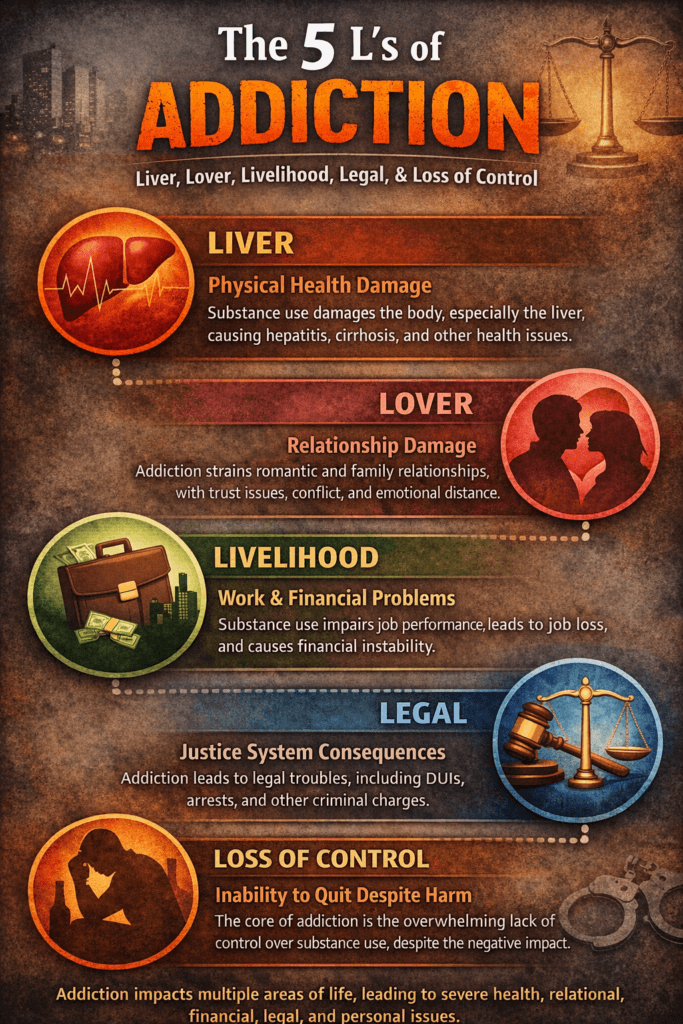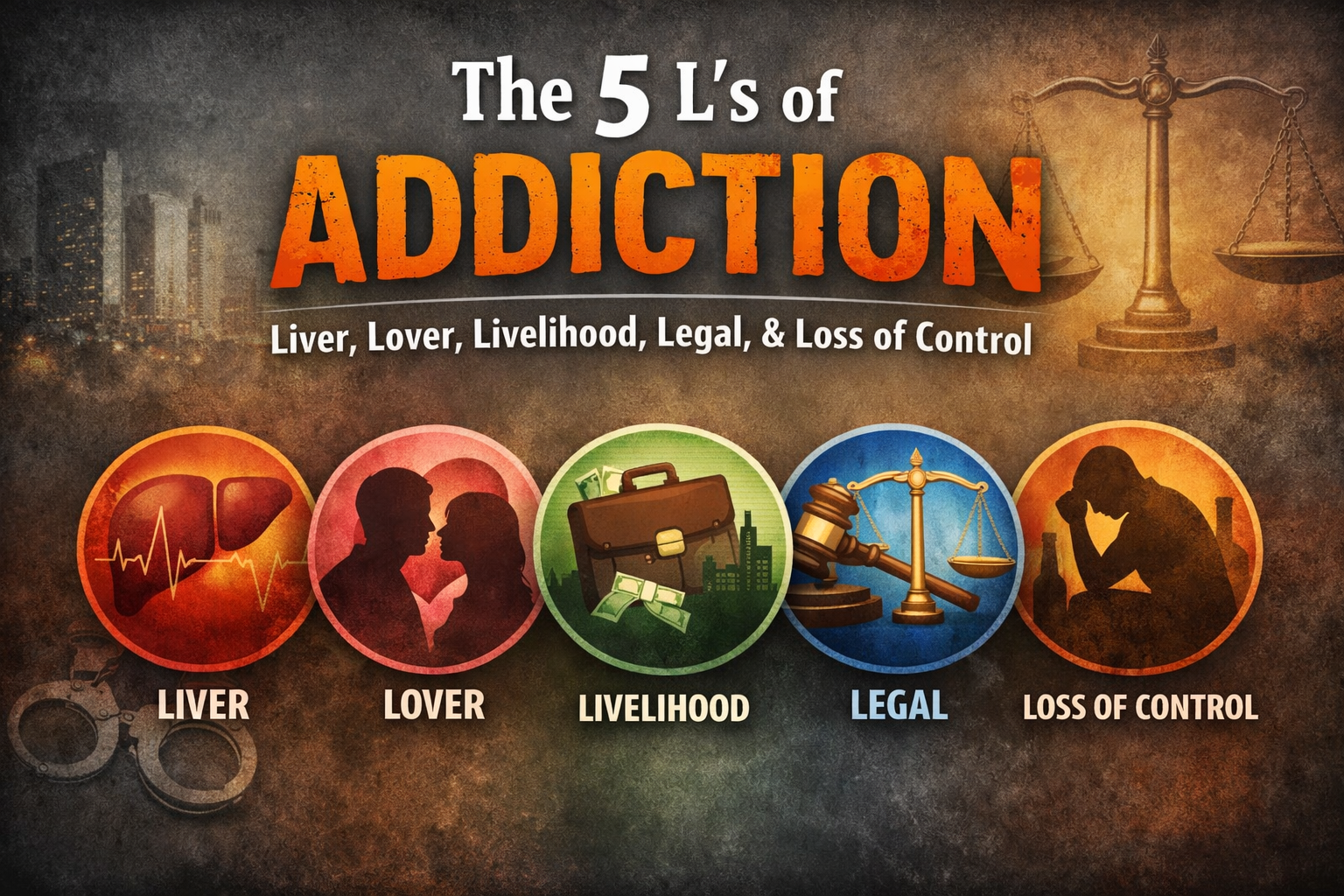
The 5 L’s of Addiction—Liver, Lover, Livelihood, Legal, and Loss of Control—provide a practical framework for understanding how substance use disorders affect multiple dimensions of life simultaneously. Rather than viewing addiction solely as a health issue, this model highlights its widespread impact on physical well-being, relationships, stability, societal standing, and personal autonomy. Each “L” represents a warning domain where early signs of harm often emerge, making the framework especially useful for education, prevention, and early intervention. By recognizing these interconnected consequences, individuals, families, and professionals can identify risk sooner and respond with informed, compassionate strategies before problems escalate.
The 5 L’s of Addiction: Liver, Lover, Livelihood, Legal, and Loss of Control
Addiction rarely affects just one area of life. Instead, it creates a ripple effect that disrupts physical health, relationships, stability, and personal autonomy. The “5 L’s” framework—Liver, Lover, Livelihood, Legal, and Loss of Control—offers a practical way to understand how substance use disorders progressively impact multiple life domains. This model is especially useful in clinical education, recovery coaching, and self-assessment because it translates complex addiction pathology into real-world consequences that individuals and families can recognize early.
1. Liver — Physical Health Consequences
The liver represents the body’s biological burden. Many substances—especially alcohol, opioids, stimulants, and sedatives—stress metabolic systems and immune regulation. Over time, repeated exposure can lead to inflammation, fatty liver disease, hepatitis, cirrhosis, or metabolic dysfunction. The “Liver” category symbolizes not only hepatic injury but overall physiological deterioration, including cardiovascular strain, neurological impairment, and weakened immunity. Physical decline is often one of the earliest measurable signs that substance use has crossed from recreational to harmful.
2. Lover — Relationship Damage
Addiction disrupts attachment, communication, and trust. Romantic partners, family members, and close friends may notice mood swings, secrecy, withdrawal, or conflict escalation. Over time, emotional intimacy may be replaced by isolation or codependency patterns. The “Lover” domain highlights that addiction is rarely an individual condition—it is a relational disorder affecting entire support systems. Repairing this domain often requires therapy, boundary-setting, and rebuilding trust through consistent behavior change.
3. Livelihood — Work and Financial Stability
Substance use frequently undermines occupational functioning. Individuals may experience declining productivity, missed deadlines, absenteeism, impaired decision-making, or workplace accidents. Financial strain can follow due to job loss, medical costs, or spending on substances. In this sense, the “Livelihood” L reflects how addiction compromises long-term goals, professional identity, and economic security. Many people first seek treatment after noticing their work performance deteriorating.
4. Legal — Consequences with the Justice System
Legal consequences often emerge when addiction progresses. Driving under the influence, possession charges, public intoxication, or behavioral disturbances can lead to fines, probation, or incarceration. Legal involvement not only affects freedom but can also limit employment, housing, and educational opportunities. This domain emphasizes that addiction intersects with social systems, not just health systems, reinforcing why prevention and early intervention matter.
5. Loss of Control — The Core Feature of Addiction
At the center of the 5 L’s is the defining hallmark of addiction: impaired control over substance use despite negative consequences. Individuals may intend to cut down but find themselves unable to do so, using more than planned or returning after attempts to quit. Neurobiologically, this reflects changes in reward circuitry, stress pathways, and executive function. Clinically, “Loss of Control” signals that substance use is no longer a voluntary behavior but a compulsive pattern requiring structured support.
Why the 5 L’s Framework Matters
The strength of this model lies in its simplicity and clinical usefulness. Patients, families, and professionals can quickly assess severity by asking:
- Are physical health markers worsening?
- Are relationships strained?
- Is work or school performance declining?
- Are legal risks increasing?
- Is control over use decreasing?
If multiple domains are affected, intervention should be prioritized. The framework also helps reduce stigma by reframing addiction as a multisystem condition, not a moral failing.
Recovery Perspective
Importantly, the 5 L’s can also be reversed in recovery:
- Liver → Healing
- Lover → Reconnection
- Livelihood → Stability
- Legal → Restoration
- Loss of Control → Empowerment
Recovery is not merely abstinence—it is the restoration of functioning across these life domains.
Conclusion
The “5 L’s of Addiction” provides a concise yet comprehensive lens for understanding how substance use disorders unfold in real life. By recognizing early warning signs across health, relationships, work, legal standing, and self-control, individuals and professionals can intervene sooner and more effectively. Addiction thrives in silence and fragmentation, but frameworks like the 5 L’s promote awareness, early action, and hope—reminding us that recovery is possible when we address the whole person, not just the substance.
Self-Management Strategies to Prevent the 5 L’s of Addiction: Protecting Liver, Lover, Livelihood, Legal Status, and Control
Addiction prevention is most effective when individuals actively manage their own habits, environments, and decision-making patterns before consequences accumulate. The **5 L’s model—Liver, Lover, Livelihood, Legal, and Loss of Control—**helps people recognize how substance use can affect multiple life domains. Self-management strategies act as protective skills that strengthen resilience, promote insight, and reduce risk. Rather than relying solely on external interventions, these techniques empower individuals to maintain stability across physical health, relationships, career, legal standing, and behavioral control.
1. Protecting the Liver: Health Monitoring & Body Awareness
Physical self-awareness is a powerful early warning system. Individuals can protect their health by tracking sleep, hydration, nutrition, mood, and substance intake patterns. Scheduling routine medical checkups, liver function labs when indicated, and honest self-screening for tolerance or withdrawal symptoms helps detect problems early. Mind-body practices such as exercise, breathwork, and stress-reduction techniques also lower reliance on substances as coping tools. When people learn to accurately interpret their body’s signals, they intervene before damage escalates.
2. Protecting the Lover: Relationship Self-Regulation
Healthy relationships require emotional regulation and accountability. Self-management in this domain includes practicing honest communication, pausing before reacting, setting boundaries, and recognizing when stress or cravings influence interactions. Journaling emotional triggers, using grounding techniques, and scheduling regular check-ins with loved ones can strengthen trust. When individuals intentionally nurture connection, they reduce isolation—a major risk factor for substance misuse.
3. Protecting Livelihood: Structured Routine & Responsibility
Addiction often thrives in chaos. Establishing structured daily routines supports stability and productivity. Time-blocking work tasks, maintaining consistent sleep schedules, setting professional goals, and reviewing weekly responsibilities can reinforce purpose and direction. Self-monitoring tools such as planners, habit trackers, or digital reminders help individuals recognize early signs of decline—like missed deadlines or reduced focus—before they escalate into serious consequences.
4. Protecting Legal Standing: Risk-Awareness Skills
Preventing legal consequences requires foresight and decision-making skills. Individuals can develop protective habits, such as planning transportation for social events, understanding local substance laws, and identifying high-risk environments. Practicing refusal skills and rehearsing exit strategies for risky situations strengthens autonomy. When people anticipate potential consequences and plan ahead, they reduce impulsive decisions that could jeopardize their freedom or reputation.
5. Protecting Control: Cognitive Self-Management
Loss of control is the central feature of addiction, but it can be guarded against through intentional cognitive strategies. These include:
- Recognizing craving patterns and triggers
- Using delay techniques (“wait 20 minutes” rule)
- Practicing cognitive reframing
- Setting personal limits and accountability checks
- Tracking frequency and quantity of use
Mindfulness training, motivational self-talk, and relapse-prevention planning help strengthen executive function and decision-making. The goal is not perfection—it is awareness plus response.
Integrated Prevention Approach
The most effective self-management plans address all five domains simultaneously. For example, improving sleep supports emotional regulation, which strengthens relationships, which reduces stress, which decreases substance cravings. Each domain reinforces the others, forming a protective network rather than isolated strategies. This systems-based approach mirrors how addiction develops—across interconnected life areas—and is therefore more effective than focusing on a single symptom.
Practical Daily Checklist
A simple daily self-scan can reinforce prevention:
- Did I care for my physical health today?
- Did I communicate respectfully with others?
- Did I meet responsibilities?
- Did I avoid high-risk situations?
- Did I maintain control over my choices?
Consistent reflection strengthens insight, which is one of the strongest predictors of long-term behavioral stability.
Conclusion
Preventing the 5 L’s of addiction is not about willpower alone—it is about skills. Self-management strategies give individuals the tools to monitor health, sustain relationships, protect stability, avoid legal harm, and maintain behavioral control. When practiced consistently, these habits create a strong internal support system that reduces vulnerability to substance misuse. In this way, prevention becomes an active process of self-leadership, resilience, and intentional living.
Family Support Strategies to Prevent the 5 L’s of Addiction: Liver, Lover, Livelihood, Legal, and Loss of Control
Addiction prevention is most effective when families function as protective systems rather than passive observers. While individual choices matter, research and clinical practice consistently show that supportive family environments reduce the likelihood of substance misuse and its consequences. The **5 L’s framework—Liver, Lover, Livelihood, Legal, and Loss of Control—**offers families a practical lens for recognizing risk and intervening early. By fostering communication, accountability, structure, and emotional safety, families can help prevent addiction from progressing across these five life domains.
1. Protecting the Liver: Family Health Monitoring
Families often notice physical or behavioral changes before individuals recognize them themselves. Loved ones can help prevent health damage by encouraging routine medical visits, supporting healthy sleep and nutrition habits, and observing warning signs such as fatigue, weight change, tremors, or frequent illness. Creating a household culture that values wellness—exercise, balanced meals, stress management—reduces reliance on substances as coping tools. Gentle concern, rather than confrontation, makes individuals more receptive to support.
2. Protecting the Lover: Strengthening Emotional Bonds
Secure relationships are one of the strongest protective factors against addiction. Families can nurture connection by prioritizing shared time, practicing active listening, and responding to stress with empathy instead of criticism. When individuals feel emotionally safe, they are less likely to seek escape through substances. Families should also model healthy conflict resolution, demonstrating that disagreements can be handled respectfully. This strengthens trust and reduces secrecy—both critical in prevention.
3. Protecting Livelihood: Supporting Stability and Responsibility
Family encouragement plays a major role in maintaining education, employment, and goal-setting. Loved ones can reinforce structure by celebrating achievements, helping organize schedules, or offering accountability check-ins for responsibilities. When early warning signs appear—missed work, declining grades, disorganization—families can address them early with supportive problem-solving rather than blame. This approach preserves motivation and prevents small setbacks from escalating into major disruptions.
4. Protecting Legal Standing: Setting Boundaries and Expectations
Clear family expectations about substance use and behavior reduce risk-taking. Households that establish consistent rules, consequences, and values help individuals understand limits before outside systems impose them. Families can also discuss legal risks openly—such as impaired driving or possession laws—so decisions are informed rather than impulsive. Importantly, boundaries should be paired with support: consequences should guide learning, not create shame or alienation.
5. Protecting Control: Encouraging Insight and Accountability
Loss of control is the defining feature of addiction, but families can help individuals recognize early signs before compulsive patterns develop. Supportive strategies include:
- Checking in about stress and coping habits
- Encouraging reflection on choices and consequences
- Supporting counseling or skill-building when needed
- Reinforcing progress rather than focusing only on mistakes
Families that normalize seeking help reduce stigma and make it easier for individuals to ask for support when they feel overwhelmed or tempted to use substances.
Family as a Protective Ecosystem
The most effective prevention occurs when families work as coordinated systems rather than reacting only during crises. Healthy family environments share several traits: predictable routines, open communication, emotional warmth, and consistent expectations. These elements foster psychological safety, strengthening resilience against peer pressure, stress, trauma, and environmental risk factors. In this sense, family support is not just emotional—it is neurological and behavioral protection.
Practical Family Check-In Questions
Families can use simple weekly conversations to monitor well-being:
- Are we noticing changes in mood or health?
- Are responsibilities being met?
- Are relationships supportive or strained?
- Are stress levels manageable?
- Do we feel in control of our decisions?
Regular dialogue promotes awareness and prevents denial or avoidance from taking hold.
Conclusion
Preventing the 5 L’s of addiction is not solely an individual responsibility—it is a shared effort shaped by family culture, communication, and support. Families who provide structure, empathy, and accountability help protect physical health, relationships, stability, legal safety, and personal control. By acting early and consistently, loved ones can transform the home into a powerful prevention environment—one where resilience is strengthened, risks are reduced, and healthy choices become the norm.
Community Resource Strategies to Prevent the 5 L’s of Addiction: Liver, Lover, Livelihood, Legal, and Loss of Control
Addiction prevention is most effective when communities function as coordinated support networks rather than isolated systems. While individuals and families play critical roles, community resources provide the infrastructure that sustains prevention, early intervention, and recovery. The **5 L’s framework—Liver, Lover, Livelihood, Legal, and Loss of Control—**illustrates how substance misuse affects multiple life domains. Community-level strategies can address each domain simultaneously by combining healthcare access, social support, education, employment pathways, and legal diversion programs. When communities align their resources, they reduce risk factors and strengthen protective factors across entire populations.
1. Protecting the Liver: Public Health & Medical Access
Community health systems serve as the first line of defense against physical harm from substance use. Accessible clinics, screening programs, vaccination initiatives, and early treatment services help detect problems before severe medical damage occurs. Mobile health units, school-based health centers, and harm-reduction education expand access for underserved populations. Public awareness campaigns about substance risks also empower residents to recognize warning signs early and seek care promptly.
2. Protecting the Lover: Social Connection Programs
Isolation increases vulnerability to addiction, while connection reduces it. Community centers, peer-support groups, mentorship programs, faith-based organizations, and recreational initiatives help individuals build meaningful relationships. These programs create environments where people feel seen, valued, and supported—reducing the emotional void that substances often fill. Strong community belonging acts as a psychological buffer against stress, trauma, and loneliness.
3. Protecting Livelihood: Employment & Education Resources
Stable employment and skill development are powerful prevention tools. Workforce training programs, job placement services, adult education classes, and financial literacy workshops provide pathways to independence and purpose. Communities that invest in economic opportunity reduce desperation, boredom, and hopelessness—conditions that often fuel substance misuse. Supporting local businesses and creating inclusive hiring initiatives for individuals in recovery also strengthens long-term stability.
4. Protecting Legal Standing: Diversion & Prevention Systems
Communities can reduce legal consequences related to substance use through prevention-focused policies. Drug courts, diversion programs, crisis intervention teams, and community policing partnerships help redirect individuals toward treatment instead of incarceration when appropriate. Educational workshops about legal risks and rights also improve decision-making. These approaches prioritize rehabilitation, reduce recidivism, and prevent minor mistakes from becoming lifelong legal barriers.
5. Protecting Control: Early Intervention & Behavioral Support
Loss of control is the defining hallmark of addiction, but community resources can intervene before compulsive patterns take hold. Schools, workplaces, and community organizations can offer screening tools, mental health counseling, stress-management classes, and resilience training. Public campaigns that normalize help-seeking reduce stigma and increase early treatment engagement. When individuals can access support easily and anonymously, they are more likely to seek help before crises develop.
Integrated Community Prevention Model
Effective prevention does not occur through a single program—it requires collaboration across sectors. Healthcare providers, educators, employers, law enforcement, policymakers, and community leaders must coordinate efforts. Integrated systems ensure that when one area identifies risk, another can respond. For example, a school counselor noticing behavioral changes can connect a student with health services, while workforce programs provide structure and purpose that reinforce recovery goals.
Community Self-Assessment Checklist
Communities can evaluate prevention strength by asking:
- Are healthcare and mental health services accessible?
- Are opportunities for social connection available to people of all ages?
- Are job training and education programs widely accessible?
- Are legal responses focused on prevention and rehabilitation?
- Are early-intervention services visible and stigma-free?
If gaps exist, targeted investment can significantly reduce substance-related harm.
Conclusion
Preventing the 5 L’s of addiction requires more than individual willpower—it requires community design. Communities that invest in healthcare access, social connection, education, employment, legal diversion, and early intervention create environments where healthy choices are supported and risky behaviors are less likely to escalate. When community systems work together, they not only prevent addiction-related consequences but also promote resilience, dignity, and opportunity for everyone. Strong communities don’t just respond to addiction—they prevent it.
Frequently Asked Questions
Here are some common questions:
1. What are the 5 L’s of Addiction?
The 5 L’s—Liver, Lover, Livelihood, Legal, and Loss of Control—are a framework for explaining how addiction affects different areas of a person’s life. Each “L” represents a domain where warning signs often appear, helping individuals and professionals recognize risk early.
2. Why is the liver included in this model?
The liver symbolizes physical health consequences. Many substances strain the body’s detoxification systems, and the liver is especially vulnerable. Damage in this domain signals that substance use is affecting overall health, not just behavior.
3. What does “Lover” mean in the 5 L’s?
“Lover” refers to relationships. Addiction can disrupt trust, communication, and emotional closeness with partners, family, and friends. Relationship strain is often one of the earliest visible signs of a developing problem.
4. How does addiction affect livelihood?
Substance use can impair concentration, motivation, and reliability, leading to poor work performance, job loss, or financial instability. The livelihood domain highlights how addiction impacts long-term stability and independence.
5. What types of legal problems are linked to addiction?
Legal consequences may include charges related to impaired driving, possession, public intoxication, or behavioral disturbances. These issues can affect employment opportunities, housing access, and future stability.
6. Why is “Loss of Control” considered the core feature?
Loss of control is central because it reflects the transition from voluntary use to compulsive behavior. When someone continues using despite negative consequences or failed attempts to stop, it indicates that addiction may be developing.
7. How can someone use the 5 L’s as a self-check tool?
A person can periodically assess each area by asking:
- Is my health declining?
- Are relationships strained?
- Is work or school performance slipping?
- Am I taking legal risks?
- Do I feel unable to stop or limit use?
Changes in multiple areas suggest it may be time to seek support.
8. Are the 5 L’s only for people with severe addiction?
No. The framework is designed for early detection as well as advanced stages. Even mild changes in a single domain can signal risk and enable early intervention before problems escalate.
9. Can the 5 L’s improve during recovery?
Yes. Recovery often reverses these effects. Health can stabilize, relationships can rebuild, employment can recover, legal issues can be resolved, and personal control can strengthen. The same domains that show decline can also track progress.
10. Who can benefit from learning this model?
The 5 L’s are useful for individuals, families, educators, healthcare professionals, counselors, and community leaders. Because the framework is simple and practical, it can be applied in education, prevention programs, counseling sessions, and self-reflection.
11. Is this framework a diagnostic tool?
No. The 5 L’s are an educational and awareness model, not a clinical diagnostic instrument. A formal diagnosis of substance use disorder should be made by a qualified professional using established criteria.
12. Why is this framework effective for prevention education?
It translates complex addiction science into real-life consequences that people understand. By connecting behavior to tangible outcomes—health, relationships, work, legal safety, and control—it makes risk more visible and actionable.
Conclusion
The strength of the 5 L’s framework lies in its clarity and real-world relevance. It reminds us that addiction is not defined only by substance use itself, but by the ripple effects that extend across health, relationships, work, legal safety, and behavioral control. When these areas begin to deteriorate, they signal a need for support—not judgment. Understanding the 5 L’s encourages proactive action, collaborative care, and stigma reduction, all of which are essential for effective prevention and recovery. Ultimately, this model reinforces a hopeful truth: when risks are recognized early and addressed holistically, individuals can protect these life domains and move toward stability, healing, and long-term well-being.
Video: The Domino Effect of Addiction (5L Framework) #HealthEducation #Recovery