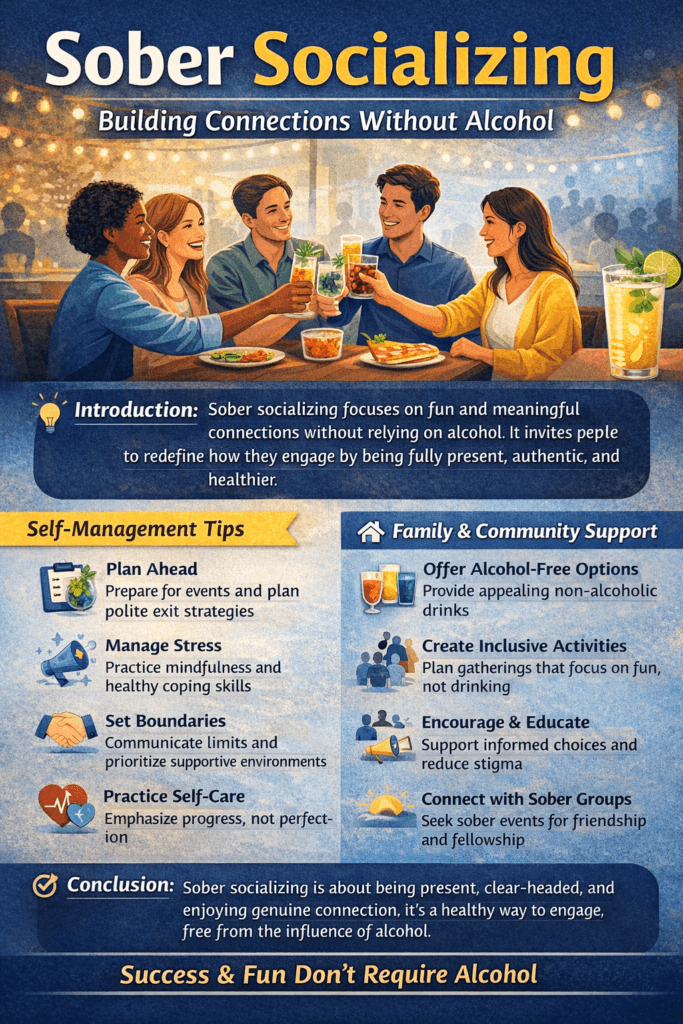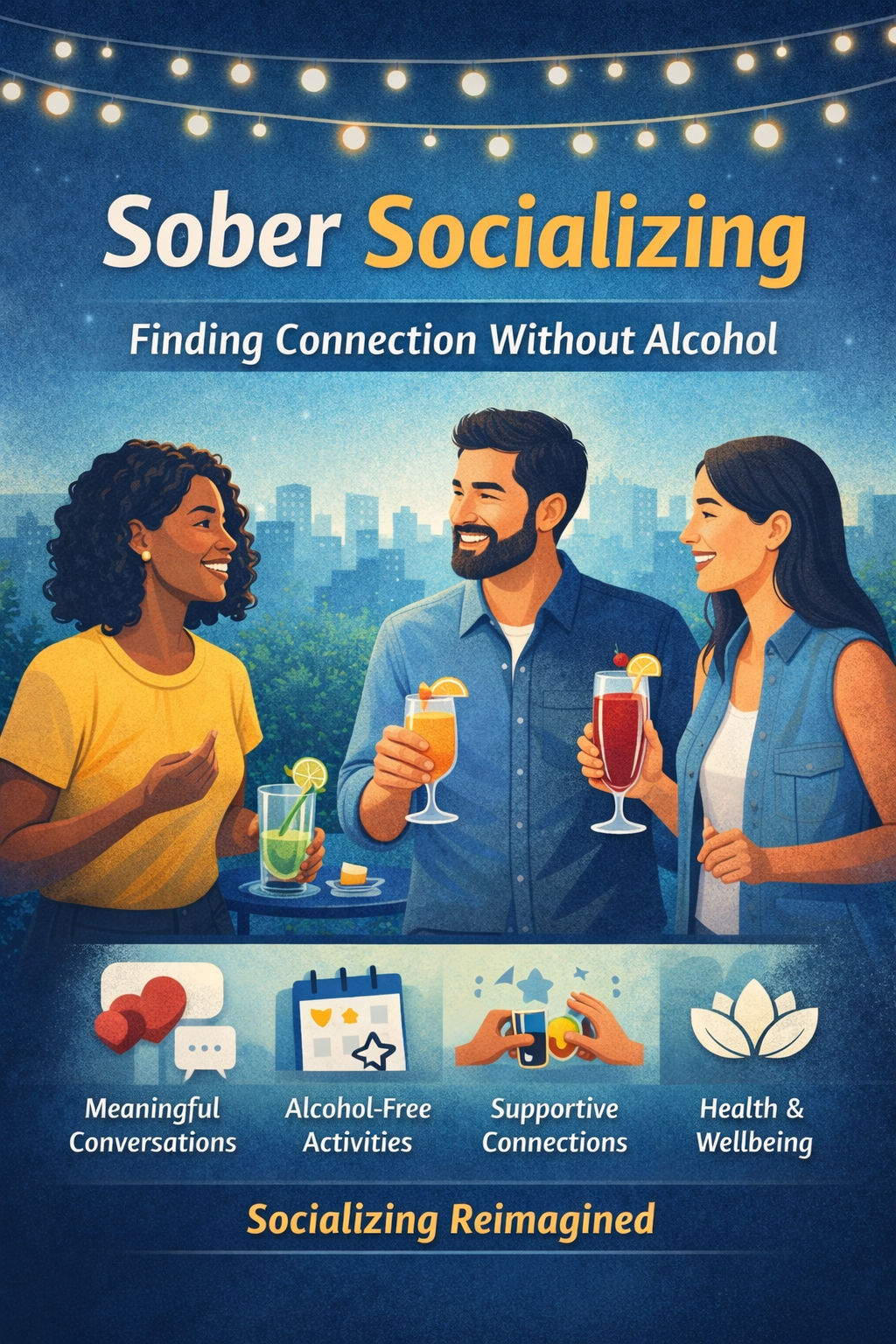
Sober socializing represents a meaningful shift away from alcohol-centered culture toward more intentional, health-focused ways of connecting. For individuals in recovery or those choosing an alcohol-free lifestyle, social situations can feel uncomfortable at first, especially when substances were previously used to manage anxiety, build confidence, or create a sense of belonging. Sober socializing encourages people to be fully present, develop genuine relationships, and build confidence rooted in self-awareness rather than intoxication. Over time, this approach strengthens emotional regulation, deepens connection, and redefines social fulfillment without relying on substances.
Sober Socializing: Building Meaningful Connections Without Alcohol
Sober socializing is the practice of engaging in social activities without relying on alcohol or other substances to feel comfortable, connected, or confident. For many people in recovery—or those rethinking their relationship with substances—social situations can feel intimidating at first. Alcohol has long been woven into celebrations, networking, and relaxation, making sobriety feel isolating if alternatives are not intentionally created.
At its core, sober socializing is about redefining connection. Instead of centering gatherings around drinking, the focus shifts to shared interests, authentic conversation, and meaningful experiences. This approach allows individuals to be fully present, emotionally aware, and aligned with their personal values. Over time, many people discover that connections formed without substances are deeper, more genuine, and more sustainable.
One challenge of sober socializing is navigating social pressure. Friends, coworkers, or family members may question sobriety or assume alcohol is necessary for fun. Learning to set boundaries and confidently communicate choices helps reduce discomfort. Simple responses, such as prioritizing health or personal goals, can normalize sobriety without requiring explanation or defense.
Sober social environments are expanding rapidly. Alcohol-free events, mocktail bars, fitness meetups, creative workshops, volunteer opportunities, and recovery-friendly communities offer spaces where sobriety is respected and celebrated. These settings reduce temptation while fostering a sense of belonging and support.
Sober socializing also strengthens emotional regulation. Without substances masking discomfort, individuals learn to manage anxiety, boredom, or social nerves through mindfulness, preparation, and self-awareness. This growth builds confidence and reinforces the understanding that enjoyment does not require intoxication.
Importantly, sober socializing is not about restriction—it is about freedom. Freedom to remember conversations, protect health, maintain clarity, and form relationships based on authenticity rather than chemical enhancement. For individuals in recovery, sober socializing supports relapse prevention. For others, it offers a healthier, more intentional way to connect.
As more people question alcohol-centered culture, sober socializing continues to gain momentum. It represents a shift toward connection rooted in presence, wellbeing, and shared humanity—proving that meaningful social lives do not require substances, only openness and intention.
Self-Management Strategies for Thriving in Sober Socializing
Sober socializing can feel challenging at first, especially for individuals who previously relied on alcohol to ease anxiety, boost confidence, or feel included. Self-management strategies help individuals navigate social settings with clarity, confidence, and emotional balance—without compromising sobriety or personal wellbeing.
Preparation is one of the most effective self-management tools. Knowing the type of event, potential triggers, and available alcohol-free options reduces uncertainty and stress. Bringing a non-alcoholic beverage, planning a polite exit strategy, or attending with a supportive friend can create a sense of control and safety.
Emotional awareness is equally important. Social discomfort, fear of judgment, or feelings of boredom are common in early sober social experiences. Practicing mindfulness techniques such as deep breathing, grounding, or self-talk helps regulate emotions in real time. Reminding oneself that discomfort is temporary reduces the urge to escape through substances.
Setting clear personal boundaries supports long-term success. This includes deciding in advance what situations feel supportive, how long to stay, and how to respond to offers of alcohol. Boundaries protect energy and reinforce self-respect, making sober choices feel intentional rather than restrictive.
Developing new social rituals also plays a key role. Replacing alcohol-centered habits with activities such as coffee meetups, fitness classes, creative hobbies, or volunteering helps rebuild a fulfilling social life. These alternatives encourage authentic connection while aligning with personal values and health goals.
Self-compassion is a foundational strategy. Sober socializing is a skill that improves with practice, not perfection. Allowing room for awkward moments, early exits, or changing preferences prevents shame and promotes resilience. Progress is measured by growth and self-awareness, not by comparison to past social habits.
Over time, self-management strategies transform sober socializing from a challenge into a strength. Confidence grows, connections deepen, and social experiences become more meaningful. With intention, preparation, and self-compassion, sober socializing becomes a powerful expression of autonomy, health, and personal empowerment.
Family Support Strategies in Sober Socializing
Sober socializing is often easier and more sustainable when families understand and actively support sobriety. For individuals in recovery or those choosing an alcohol-free lifestyle, family environments can either reinforce healthy choices or unintentionally create pressure. Thoughtful family support strategies help transform social gatherings into safe, inclusive, and empowering experiences.
One of the most important strategies is education and awareness. Families benefit from understanding that sobriety is not a limitation, but a health-based choice. Recognizing that social situations can be triggering helps families approach gatherings with empathy rather than assumptions. When family members understand the emotional and psychological aspects of sober socializing, they are better equipped to offer meaningful support.
Creating inclusive, alcohol-optional environments is another key strategy. This may involve offering appealing non-alcoholic beverages, planning activities that are not centered on drinking, or normalizing alcohol-free choices at events. Small adjustments communicate respect and reduce the need for individuals to explain or defend their sobriety.
Supportive communication plays a critical role. Families can avoid pressuring questions, jokes, or comments about drinking and instead check in privately with care and encouragement. Affirming sobriety choices reinforces confidence and strengthens trust. Listening without judgment helps individuals feel safe and supported.
Setting and respecting boundaries is equally important. Families should honor requests regarding event duration, topics of conversation, or the presence of substances. Respecting these boundaries reduces stress and empowers individuals to remain engaged without compromising their well-being.
Families also benefit from focusing on connection over consumption. Shifting attention to shared traditions, games, meals, storytelling, or outdoor activities reinforces the idea that meaningful connection does not require alcohol. This approach strengthens relationships and models healthier social norms for future generations.
Finally, families should seek support for themselves when needed. Family education programs, therapy, or peer groups can help loved ones navigate their own emotions and learn effective ways to support sobriety without enabling or overprotecting.
When families actively support sober socializing, they help create environments where recovery and well-being can thrive. These efforts not only protect sobriety but also deepen family bonds and redefine social connections around presence, respect, and shared values.
Community Resource Strategies for Supporting Sober Socializing
Sober socializing becomes far more accessible and sustainable when communities provide inclusive, alcohol-free spaces and resources. Because many social norms are centered around drinking, individuals choosing sobriety often face isolation or limited options. Community-based strategies help remove these barriers and create environments where connection, well-being, and sobriety can coexist.
One of the most impactful community strategies is creating alcohol-free social spaces. Sober cafés, mocktail bars, wellness studios, and community centers offer places where individuals can gather without pressure to drink. These environments normalize sobriety and allow people to socialize comfortably while staying aligned with their health goals.
Peer-led recovery and wellness groups also play a vital role. Community meetups focused on shared interests—such as fitness, art, book clubs, outdoor activities, or mindfulness—provide natural opportunities for connection without substance use. Peer support reduces isolation, builds accountability, and reinforces the idea that sober social lives can be active and fulfilling.
Healthcare systems and nonprofit organizations contribute by offering education and referral pathways. Workshops, online resources, and community outreach programs help individuals learn coping skills for social situations and identify sober-friendly events. When communities actively share these resources, help-seeking becomes easier and less stigmatized.
Workplaces and educational institutions can further support sober socializing by promoting inclusive event planning. Offering alcohol-free options at gatherings, recognizing recovery-friendly policies, and supporting employee or student wellness initiatives foster safer social environments. These efforts reduce pressure and encourage participation without compromising sobriety.
Faith-based organizations and volunteer networks also provide meaningful sober social opportunities. Service projects, support groups, and community events rooted in shared values offer purpose-driven connection. These spaces help individuals rebuild their identity and sense of belonging beyond a substance-centered culture.
Accessibility is essential to successful community support. Flexible scheduling, virtual events, low-cost programs, and transportation-friendly locations ensure sober social opportunities are available to diverse populations. When community resources reflect real-life needs, engagement and long-term participation increase.
Community resource strategies transform sober socializing from an individual challenge into a collective effort. By expanding alcohol-free options, promoting peer connection, and reducing stigma, communities help individuals build social lives grounded in presence, authenticity, and lasting well-being.
Frequently Asked Questions
Here are some common questions:
What is sober socializing?
Sober socializing refers to engaging in social activities without alcohol or other substances. It emphasizes meaningful connection, presence, and enjoyment without relying on substances to reduce anxiety, boost confidence, or feel included.
Is sober socializing only for people in recovery?
No. While it is especially important for individuals in recovery, sober socializing is also chosen by people focused on health, mental clarity, personal growth, or those rethinking alcohol-centered culture.
Why does sober socializing feel uncomfortable at first?
Many people associate alcohol with relaxation and social ease. Without it, anxiety or self-consciousness may surface. This discomfort is common and usually decreases as individuals build confidence and develop new coping and connection skills.
How can someone prepare for sober social events?
Preparation includes planning alcohol-free drinks, setting time limits, bringing a supportive friend, and having an exit strategy. Knowing personal boundaries ahead of time helps reduce stress and increase confidence.
What are common challenges in sober socializing?
Challenges may include social pressure, fear of judgment, boredom, or feeling disconnected. These challenges often reflect learned habits rather than actual limitations of sobriety and improve with experience.
How can people respond to pressure to drink?
Simple, confident responses work best, such as stating personal health goals or choosing not to drink. Detailed explanations are not required. Practicing responses in advance can ease anxiety.
Can sober socializing still be fun?
Yes. Many people report deeper conversations, better memories, and more authentic relationships when socializing sober. Fun becomes centered on connection and shared experiences rather than intoxication.
What types of activities support sober socializing?
Activities such as coffee meetups, fitness classes, creative workshops, volunteer work, outdoor events, and sober community gatherings provide natural opportunities for connection without substance use.
How can families support sober socializing?
Families can offer alcohol-free options, avoid pressuring comments, respect boundaries, and focus on activities that emphasize connection rather than drinking. Supportive environments reduce stress and strengthen relationships.
What role do community resources play?
Community resources such as sober events, peer support groups, alcohol-free venues, and recovery-friendly workplaces help normalize sober socializing and reduce isolation.
Does sober socializing help prevent relapse?
Yes. Sober socializing reduces exposure to triggers, strengthens coping skills, and builds supportive networks—key factors in relapse prevention and long-term wellbeing.
Is sober socializing a permanent lifestyle change?
For some, yes; for others, it is a flexible choice. The core goal is intentional, healthy engagement rather than reliance on substances. Each person defines what sober socializing means for them.
Conclusion
Sober socializing is not about restriction or loss, but about presence, clarity, and genuine connection. As individuals learn to navigate social spaces with confidence and self-awareness, relationships often become more meaningful and aligned with personal values. Supported by families, communities, and accessible resources, sober socializing strengthens wellbeing and reinforces long-term recovery. Ultimately, it demonstrates that meaningful social lives are built on shared experiences, respect, and authenticity—not alcohol.
Video: How to actually enjoy nights out without drinking #soberlife #tips #mentalhealth