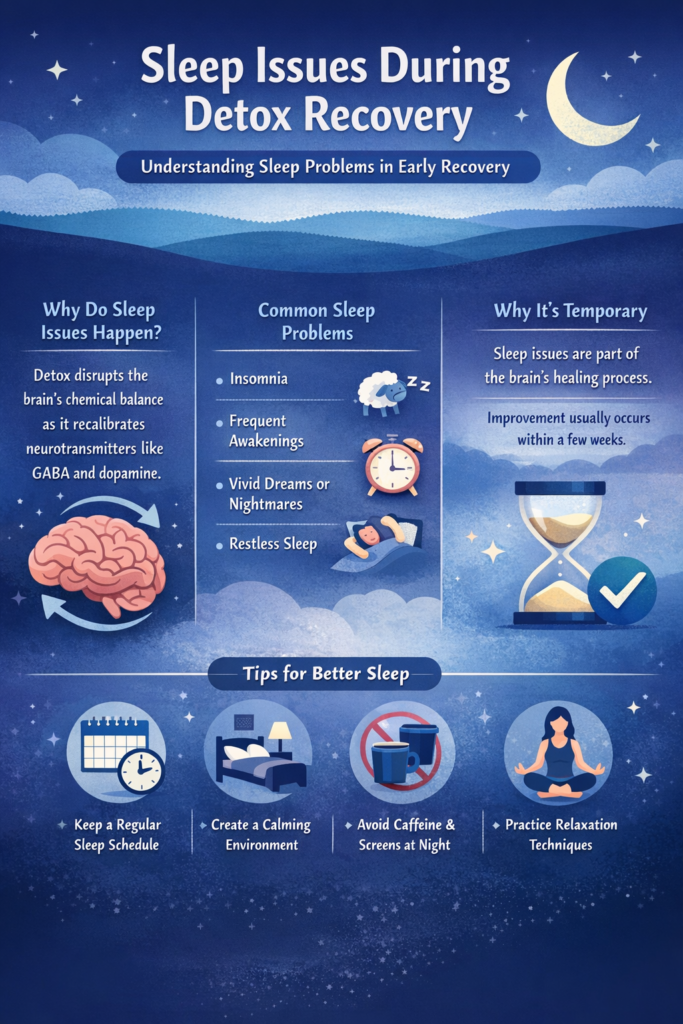
Sleep disturbances are common and challenging during detox and early recovery. As the body clears substances and the brain works to regain balance, normal sleep patterns are often disrupted, leading to insomnia, frequent awakenings, vivid dreams, or poor sleep quality. While frustrating, these issues reflect the brain’s active process of restoring neurotransmitters and healthy sleep cycles. Understanding this can help reduce anxiety and provide reassurance that sleep problems are temporary and part of the healing process, with improvement typically occurring over time.
Sleep and Detox During Recovery: Restoring the Brain and Body
Detox is often thought of as the process of removing substances from the body—but true recovery goes far beyond that. One of the most critical and often overlooked components of detox is sleep. During recovery, sleep becomes a central mechanism for healing, helping to restore brain function, regulate emotions, and rebuild physical health.
Understanding the relationship between sleep and detox can make the recovery process more manageable—and more effective.
Why Sleep Is Disrupted During Detox
In early recovery, sleep is often one of the first systems affected. Many individuals experience:
- Insomnia or difficulty falling asleep
- Frequent waking during the night
- Vivid dreams or nightmares
- Restlessness or fatigue
This disruption occurs because substances alter the brain’s natural sleep-wake cycle. Alcohol and drugs can suppress REM sleep and interfere with neurotransmitters that regulate rest. When substance use stops, the brain must rebalance—leading to temporary sleep disturbances.
The Brain’s Recovery During Sleep
Sleep is not just rest—it is active repair.
During sleep:
- The brain clears toxins and metabolic waste
- Neural connections are reorganized and strengthened
- Memory and learning processes are consolidated
- Emotional regulation systems are restored
In recovery, these processes are essential. The brain is working to repair the effects of substance use, and sleep provides the conditions for that healing to occur.
Sleep and Craving Regulation
Poor sleep can increase cravings and relapse risk. When sleep is disrupted:
- Stress hormones like cortisol increase
- Emotional reactivity becomes stronger
- Decision-making and impulse control weaken
This makes it harder to manage urges. Improving sleep helps stabilize mood and strengthens the brain’s ability to resist cravings.
Physical Healing and Energy Restoration
Detox places stress on the body, and sleep plays a key role in physical recovery.
Benefits of improved sleep include:
- Enhanced immune function
- Better energy levels
- Improved cardiovascular and metabolic health
- Reduced inflammation
As sleep improves, individuals often notice increased strength and overall well-being.
Strategies to Improve Sleep During Detox
1. Establish a Consistent Routine
Go to bed and wake up at the same time each day to regulate the body’s internal clock.
2. Create a Sleep-Friendly Environment
Keep the room dark, quiet, and cool. Limit distractions and screen use before bed.
3. Limit Stimulants
Reduce caffeine and nicotine, especially in the evening.
4. Use Relaxation Techniques
Deep breathing, meditation, or gentle stretching can help calm the nervous system.
5. Be Patient with the Process
Sleep may take time to normalize. Early disruption is common but typically improves with consistency.
When to Seek Additional Support
If sleep problems persist or significantly interfere with daily functioning, professional support may be helpful. Healthcare providers can assess for underlying issues and recommend safe, evidence-based treatments.
Final Thoughts
Sleep is not a luxury during detox—it is a necessity. It is one of the body’s most powerful tools for healing, supporting both brain recovery and emotional balance. While early sleep disturbances can be frustrating, they are often a sign that the brain is adjusting and beginning to repair.
Over time, as sleep improves, so does clarity, stability, and resilience. In recovery, rest is not just restorative—it is transformative.
Self-Management Strategies to Improve Sleep During Detox Recovery
Sleep disruption is one of the most common and challenging aspects of detox and early recovery. While the body is working to eliminate substances, the brain is also recalibrating neurotransmitters that regulate sleep, mood, and stress. As a result, insomnia, restlessness, and fatigue are often part of the process.
Although this phase can be frustrating, self-management strategies can significantly improve sleep quality and support overall recovery. Sleep is not just rest—it is a key part of healing.
1. Establish a Consistent Sleep Routine
The brain relies on regular patterns to regulate sleep.
- Go to bed and wake up at the same time every day
- Avoid large variations in sleep schedule, even on weekends
- Create a predictable nighttime routine
Consistency helps reset the body’s internal clock and improves sleep over time.
2. Create a Sleep-Friendly Environment
Your environment directly affects how easily you fall and stay asleep.
- Keep the room dark, cool, and quiet
- Use comfortable bedding
- Limit noise and distractions
A calm environment signals the brain that it’s time to rest.
3. Limit Stimulants and Disruptors
Certain substances can interfere with sleep, especially during detox.
- Reduce or avoid caffeine, particularly in the afternoon and evening
- Be mindful of nicotine, which can increase alertness
- Avoid heavy meals or excessive fluids close to bedtime
These adjustments help the body transition more easily into sleep.
4. Manage Screen Time Before Bed
Exposure to screens can delay sleep by affecting melatonin production.
- Avoid phones, tablets, and TV at least 30–60 minutes before bed
- Use dim lighting in the evening
- Replace screen time with calming activities
This supports the brain’s natural sleep signals.
5. Use Relaxation Techniques
Detox can increase anxiety and restlessness, making it harder to fall asleep.
Helpful techniques include:
- Deep breathing exercises
- Progressive muscle relaxation
- Meditation or mindfulness
These practices calm the nervous system and prepare the body for rest.
6. Get Daytime Light and Movement
Sleep is influenced by what happens during the day.
- Spend time in natural light, especially in the morning
- Engage in regular physical activity
- Avoid long daytime naps
These habits help regulate circadian rhythms and improve nighttime sleep.
7. Practice “Wind-Down” Routines
Transitioning into sleep should be gradual.
- Develop a calming pre-sleep ritual (reading, music, journaling)
- Avoid stimulating activities before bed
- Signal to your brain that the day is ending
Routines help the body shift from alertness to rest.
8. Avoid Forcing Sleep
Trying too hard to fall asleep can increase frustration and anxiety.
- If you can’t sleep after 20–30 minutes, get up and do something relaxing
- Return to bed when you feel sleepy
- Focus on rest, not perfection
Reducing pressure often makes sleep come more naturally.
9. Track Sleep Patterns
Monitoring your sleep can provide insight into what works.
- Keep a simple sleep journal
- Note bedtime, wake time, and quality of sleep
- Identify patterns or triggers that affect rest
Awareness helps guide adjustments and improvements.
10. Be Patient with the Process
Sleep recovery takes time. Early disruptions are common but temporary.
- Expect gradual improvement rather than immediate results
- Focus on consistency rather than perfection
- Recognize progress, even small changes
Patience supports long-term success.
Final Thoughts
Improving sleep during detox recovery is not about quick fixes—it is about consistent self-management that supports the brain’s natural healing process. Each healthy habit strengthens the body’s ability to regulate sleep and restore balance.
Over time, better sleep leads to improved mood, clearer thinking, and stronger resilience. And in recovery, those benefits are not just helpful—they are essential.
Family Support Strategies to Improve Sleep During Detox Recovery
Sleep disruption is one of the most challenging aspects of detox and early recovery. Insomnia, restlessness, and irregular sleep patterns are common as the brain and body work to rebalance after substance use. While these changes are temporary, they can feel overwhelming and may increase stress, irritability, and even relapse risk.
Family support plays a critical role in improving sleep during this phase. A supportive home environment can help regulate routines, reduce stress, and reinforce healthy sleep habits that promote healing.
1. Create a Calm and Supportive Home Environment
The home environment directly affects sleep quality.
Families can help by:
- Keeping noise levels low in the evening
- Reducing household disruptions at night
- Creating a peaceful, safe space for rest
A calm environment signals to the brain that it is time to relax and sleep.
2. Encourage Consistent Sleep Routines
Structure is essential for resetting the body’s internal clock.
Families can:
- Support regular bedtimes and wake times
- Help establish a predictable nightly routine
- Encourage consistency, even on weekends
Shared routines reinforce stability and improve sleep patterns.
3. Support Healthy Evening Habits
What happens before bedtime matters.
Families can encourage:
- Limiting screen time in the evening
- Avoiding stimulating activities late at night
- Engaging in calming activities like reading or quiet conversation
These habits help prepare the brain for sleep.
4. Be Mindful of Household Activities
Late-night activity can unintentionally disrupt sleep.
Consider:
- Keeping lights dim in shared spaces at night
- Avoiding loud conversations, TV, or music
- Being respectful of the individual’s sleep schedule
Small adjustments can make a significant difference.
5. Offer Emotional Support Without Pressure
Detox can bring anxiety, irritability, and frustration, especially when sleep is poor.
Families can help by:
- Listening without judgment
- Offering reassurance during difficult nights
- Avoiding pressure or criticism about sleep struggles
Emotional support reduces stress, which improves sleep.
6. Encourage Relaxation Techniques
Families can introduce or participate in calming activities.
Examples include:
- Deep breathing or mindfulness exercises
- Light stretching or relaxation routines
- Listening to calming music together
These practices help regulate the nervous system before sleep.
7. Promote Healthy Daytime Habits
Sleep is influenced by daytime behavior.
Families can support:
- Exposure to natural light during the day
- Encouraging physical activity
- Limiting long daytime naps
Healthy daytime routines improve nighttime sleep.
8. Avoid Enabling Unhealthy Sleep Patterns
While support is important, it’s also important to reinforce healthy habits.
Families should:
- Avoid encouraging excessive daytime sleeping
- Support structure rather than irregular patterns
- Gently guide toward consistent routines
Balance is key to long-term improvement.
9. Be Patient with the Process
Sleep recovery does not happen overnight.
Families can:
- Understand that sleep disturbances are temporary
- Recognize gradual improvements
- Offer consistent support without frustration
Patience reduces pressure and supports healing.
10. Encourage Professional Support When Needed
If sleep problems persist or worsen, additional help may be necessary.
Families can:
- Suggest speaking with a healthcare provider
- Support attendance at appointments
- Reinforce the importance of safe, evidence-based care
Professional guidance can provide additional tools and reassurance.
Final Thoughts
Improving sleep during detox recovery is not just an individual effort—it is a shared process shaped by the environment and relationships at home. Families can create conditions that support rest, reduce stress, and promote healing.
Through consistency, understanding, and encouragement, families can help transform restless nights into restorative sleep. And in recovery, that rest becomes a powerful foundation for long-term success
Community Resource Strategies to Improve Sleep During Detox Recovery
Sleep disruption is one of the most common challenges during detox and early recovery. While individuals and families play important roles in improving sleep, community resources provide additional layers of support that can make a significant difference. Access to structured programs, professional guidance, and supportive environments helps individuals stabilize sleep patterns and strengthen overall recovery.
Improving sleep is not just a personal effort—it is supported by the systems and resources available within the community.
1. Access Community Health and Wellness Programs
Many communities offer programs focused on overall health, including sleep.
These may include:
- Wellness workshops on sleep hygiene
- Stress management and relaxation classes
- Educational sessions on recovery and brain health
These programs provide practical tools and increase understanding of how sleep supports recovery.
2. Utilize Behavioral Health Services
Professional support can be essential for addressing persistent sleep issues.
Community-based services may offer:
- Counseling or therapy for insomnia and anxiety
- Cognitive-behavioral therapy for insomnia (CBT-I)
- Support for co-occurring mental health conditions
These services help individuals develop effective, evidence-based sleep strategies.
3. Participate in Peer Support Groups
Peer groups provide emotional support and shared experiences.
Benefits include:
- Learning how others manage sleep challenges
- Reducing isolation during difficult nights
- Gaining encouragement and accountability
Hearing from others in recovery can normalize sleep disruptions and offer practical solutions.
4. Engage in Community Fitness and Activity Programs
Physical activity supports better sleep and overall well-being.
Community resources may include:
- Fitness classes
- Walking groups or recreational programs
- Yoga or mindfulness sessions
Regular movement helps regulate sleep cycles and reduce stress.
5. Access Safe and Stable Housing Resources
A stable living environment is essential for quality sleep.
Community support may include:
- Transitional or sober living programs
- Housing assistance services
- Safe, structured living environments
Reducing environmental stressors improves the ability to rest and recover.
6. Use Relaxation and Mindfulness Resources
Many communities provide access to relaxation-based programs.
Examples:
- Meditation groups
- Mindfulness workshops
- Guided relaxation sessions
These resources help calm the nervous system and prepare the body for sleep.
7. Leverage Digital and Telehealth Resources
Technology expands access to sleep and recovery support.
Available options include:
- Online therapy or coaching
- Sleep tracking apps and digital tools
- Virtual support groups
These resources provide flexible, ongoing support outside traditional settings.
8. Access Medical Support When Needed
Some sleep disturbances during detox may require medical attention.
Community healthcare providers can:
- Evaluate sleep issues
- Provide guidance on safe treatments
- Monitor recovery progress
Professional oversight ensures that sleep problems are addressed appropriately.
9. Participate in Structured Daily Programs
Programs such as outpatient treatment or recovery groups provide routine.
Benefits include:
- Consistent daily schedules
- Reduced idle time
- Improved regulation of sleep-wake cycles
Structure helps reset the body’s internal clock.
10. Stay Connected to Long-Term Community Support
Sleep improvement is an ongoing process.
Maintaining connection to community resources helps:
- Reinforce healthy habits
- Provide continued accountability
- Support long-term recovery goals
Consistency and connection are key to sustained progress.
Final Thoughts
Improving sleep during detox recovery is not just about individual habits—it is about access to supportive environments and resources that reinforce healing. Community support provides the structure, education, and connection needed to restore healthy sleep patterns.
When individuals are supported not only at home but also within their communities, recovery becomes more stable and sustainable. And with better sleep comes greater clarity, resilience, and the strength to continue moving forward.
Frequently Asked Questions
Here are some common questions:
1. Why do I have trouble sleeping during detox?
Sleep problems occur because substances disrupt the brain’s natural sleep-wake cycle. During detox, the brain is recalibrating neurotransmitter levels, such as GABA and dopamine, which can temporarily cause insomnia, restlessness, or irregular sleep.
2. Is insomnia normal during early recovery?
Yes, insomnia is very common. Many people have difficulty falling or staying asleep during the first days or weeks of detox. This is a normal part of the brain adjusting and usually improves over time.
3. How long do sleep problems last during detox?
Sleep disturbances can last from a few days to several weeks, depending on factors like the substance used, duration of use, and overall health. Most people begin to see improvement within 2–4 weeks.
4. Why do I have vivid dreams or nightmares?
Substances like alcohol suppress REM sleep. When you stop using, the brain often experiences a “REM rebound,” leading to vivid dreams or nightmares. This is a sign that normal sleep cycles are being restored.
5. Can poor sleep increase relapse risk?
Yes. Lack of sleep can increase stress, irritability, and cravings while reducing impulse control. Improving sleep is an important part of maintaining recovery.
6. What are the most common sleep issues during detox?
Common issues include:
- Insomnia (difficulty falling asleep)
- Frequent waking during the night
- Restlessness or discomfort
- Nightmares or vivid dreams
- Daytime fatigue
7. Should I take sleep medication during detox?
This depends on individual circumstances. Some medications may be helpful under medical supervision, but self-medicating can be risky. It’s important to consult a healthcare provider before using sleep aids.
8. What can I do naturally to improve sleep?
Helpful strategies include:
- Keeping a consistent sleep schedule
- Creating a calm, dark sleep environment
- Practicing relaxation techniques
- Avoiding caffeine and screens before bed
These support the brain’s natural sleep recovery process.
9. Why do I feel tired but still can’t sleep?
This happens because the brain is still in a state of imbalance. Even though your body is fatigued, the nervous system may be overactive, making it hard to fall asleep.
10. Is it okay to nap during the day?
Short naps (20–30 minutes) can help, but long or frequent naps may disrupt nighttime sleep. It’s best to balance rest with maintaining a consistent sleep routine.
11. When should I seek professional help for sleep issues?
You should seek help if:
- Sleep problems persist beyond several weeks
- Insomnia is severe or worsening
- Sleep issues interfere with daily functioning
A healthcare provider can offer safe and effective treatment options.
12. Will my sleep ever return to normal?
Yes, for most people, sleep improves significantly with time and consistency in recovery. The brain is highly adaptable and can restore healthy sleep patterns.
Conclusion
While sleep issues during detox recovery can be difficult, they are often a sign that the brain and body are actively healing. With time, consistency, and supportive strategies, sleep patterns typically improve, leading to better mood, clearer thinking, and stronger overall recovery. Patience is essential, as progress may be gradual and uneven. By prioritizing healthy sleep habits and seeking support when needed, individuals can move through this phase more effectively. Ultimately, restoring sleep is not just about rest—it is a critical step in rebuilding physical health, emotional balance, and long-term stability in recovery.
Video: Why Your Sleep Is Broken During Recovery (It’s Actually Healing) #recovery #sleep #sobriety