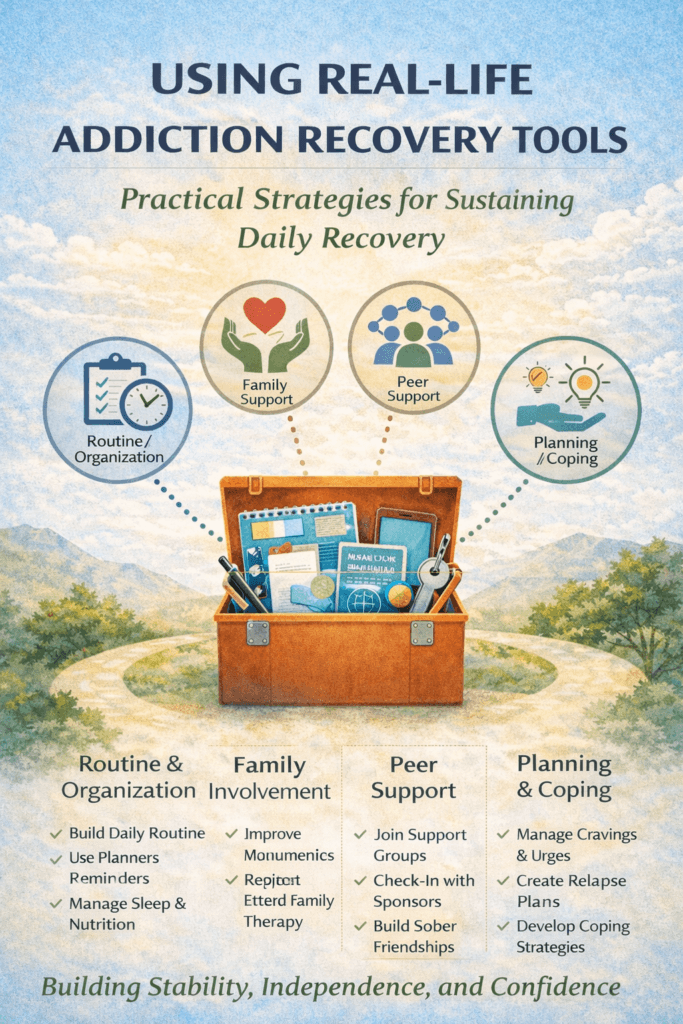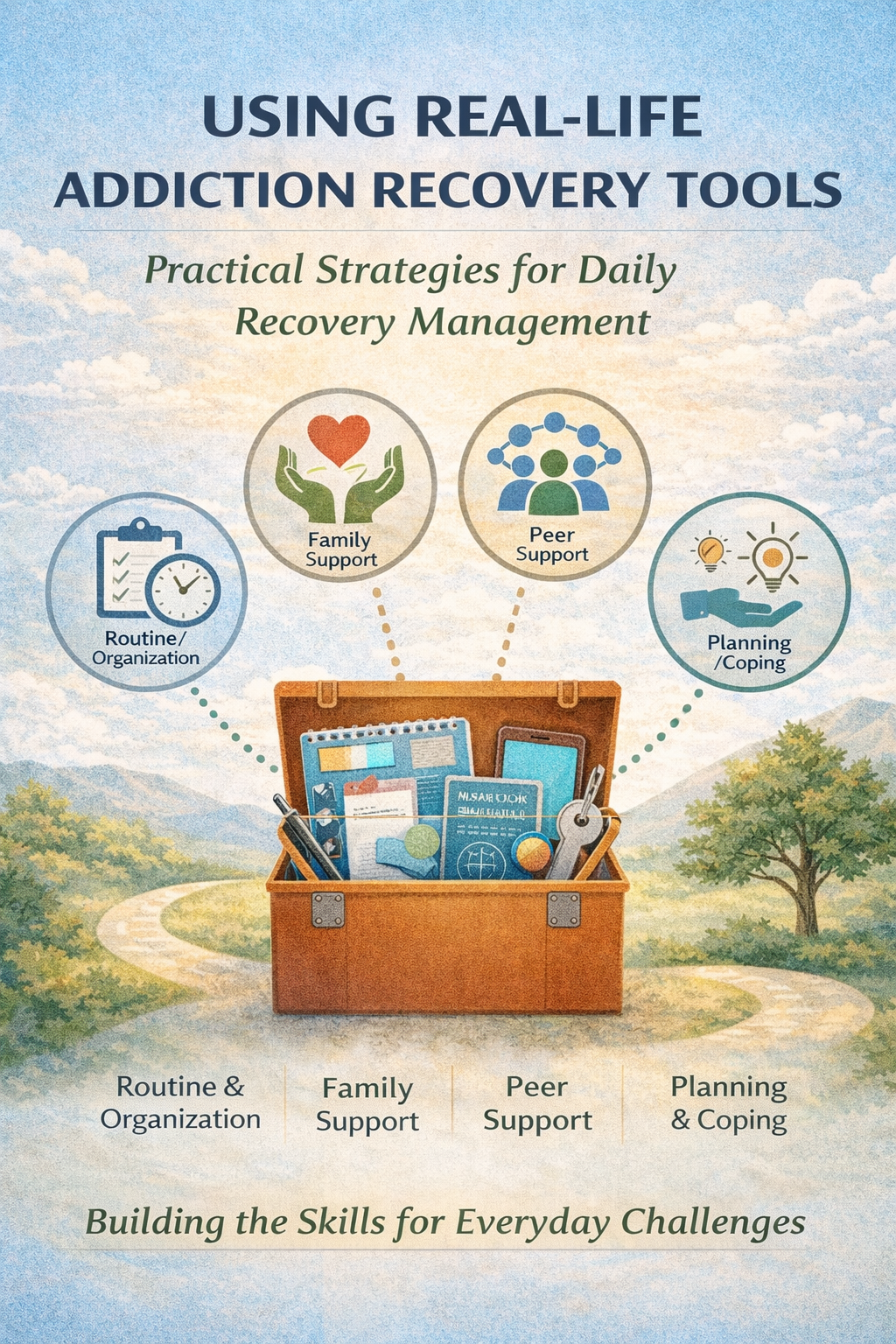
Using real-life addiction recovery tools for management is essential for turning recovery principles into everyday practice. Addiction often disrupts healthy coping, decision-making, and daily structure, making it difficult to manage stress and responsibilities without substances. Real-life recovery tools—such as routines, coping strategies, communication techniques, support systems, and planning tools—help individuals respond effectively to challenges as they arise. These tools support self-management, strengthen family involvement, and connect individuals to community resources, allowing recovery to function in real-world settings rather than only in treatment environments.
Real-Life Addiction Recovery Tools: Practical Strategies for Daily Management
Addiction recovery is lived one day at a time, in real situations that involve stress, emotions, responsibilities, and relationships. While insight and motivation are important, long-term recovery depends on real-life management tools—practical strategies that help individuals navigate daily challenges without returning to substance use. These tools translate recovery principles into everyday action.
One of the most essential recovery tools is structure and routine. Consistent wake times, meals, work schedules, therapy appointments, and sleep routines help regulate mood and reduce decision fatigue. Structure creates predictability, which stabilizes the nervous system and lowers relapse risk during early and long-term recovery.
Emotional regulation tools are equally critical. Many individuals used substances to cope with anxiety, anger, shame, or sadness. Real-life tools such as deep breathing, grounding exercises, journaling, mindfulness practices, and emotion labeling help individuals pause and respond rather than react. These tools increase tolerance for discomfort and reduce impulsive behaviors.
Craving and trigger management tools support recovery in high-risk moments. Techniques like urge surfing, delay-and-distract strategies, coping cards, and personalized relapse prevention plans help individuals ride out cravings until they pass. Removing high-risk cues, planning for social situations, and having an exit strategy further strengthen recovery management.
Another practical area is the development of decision-making and problem-solving tools. Addiction often reinforces short-term thinking. Recovery tools such as pros-and-cons lists, HALT check-ins (hungry, angry, lonely, tired), and values-based decision frameworks help individuals make choices aligned with long-term goals rather than immediate relief.
Social and support tools are vital in real-world recovery. Regular check-ins with sponsors, peers, therapists, or trusted family members provide accountability and encouragement. Learning how to ask for help, set boundaries, and communicate needs clearly transforms relationships into protective supports rather than stressors.
Self-care and health management tools form the foundation of daily stability. Adequate sleep, balanced nutrition, physical activity, medication adherence, and medical follow-up improve emotional regulation and cognitive functioning. When basic needs are met, recovery becomes more manageable.
Finally, tracking and reflection tools help individuals measure progress and stay motivated. Recovery journals, habit trackers, goal lists, and weekly check-ins highlight growth that may otherwise go unnoticed. Recognizing progress reinforces confidence and commitment.
Real-life addiction recovery tools are not about perfection—they are about consistency, adaptability, and support. When these tools are practiced daily, recovery moves beyond crisis control and becomes a sustainable, empowered way of living.
Self-Management Strategies: Using Real-Life Tools to Sustain Addiction Recovery
Successful addiction recovery depends on the ability to manage daily life without relying on substances. Self-management strategies transform recovery from a concept into a lived practice by using real-life tools that support emotional balance, decision-making, and personal responsibility. These strategies empower individuals to take active control of their recovery in real-world situations.
One of the most effective self-management strategies is building structure through daily routines. Tools such as planners, calendars, habit trackers, and reminder apps help organize sleep, meals, work, therapy, and recovery activities. Consistent routines reduce chaos, lower stress, and minimize decision fatigue—common triggers for relapse.
Emotional self-regulation tools are central to self-management in recovery. Techniques like mindfulness exercises, deep breathing, grounding skills, journaling, and mood tracking help individuals recognize emotions early and respond in healthy ways. Using these tools daily increases emotional awareness and reduces impulsive reactions linked to cravings.
Another key self-management strategy involves using tools for craving and impulse control. Urge surfing, delay techniques, distraction plans, and coping cards help individuals pause before acting on cravings. Self-check tools such as HALT (hungry, angry, lonely, tired) allow individuals to identify unmet needs that may be driving urges and address them proactively.
Goal-setting and progress-tracking tools strengthen accountability and motivation. Breaking recovery goals into small, achievable steps using checklists or recovery journals builds confidence and reinforces consistency. Tracking progress also helps identify patterns, strengths, and areas that need additional support.
Decision-making tools support long-term thinking in daily life. Writing out pros and cons, using values-based decision frameworks, or consulting trusted supports before major decisions helps align actions with recovery goals rather than short-term relief.
Support and communication tools are essential to self-management. Scheduling regular check-ins with peers, sponsors, or therapists, setting boundaries, and practicing assertive communication prevent isolation and reduce emotional overload. Asking for help becomes a strength rather than a weakness.
Self-management strategies work best when tools are practiced consistently and adapted to individual needs. Over time, these real-life recovery tools build confidence, resilience, and independence. Recovery is not just about avoiding relapse; it is about actively managing life with clarity, balance, and purpose.
Family Support Strategies: Using Real-Life Tools to Strengthen Addiction Recovery Management
Family involvement can be one of the most powerful influences in addiction recovery when it is guided by healthy strategies and practical tools. Family support strategies help translate care and concern into effective, real-life actions that promote stability, accountability, and emotional safety. When families use recovery tools intentionally, they become partners in healing rather than sources of conflict or stress.
One essential family support strategy is the use of structured communication tools. Addiction often damages communication through secrecy, blame, or emotional reactivity. Tools such as scheduled check-ins, family meetings, shared calendars, and written agreements help keep conversations focused and respectful. Using “I” statements and active listening techniques reduces defensiveness and builds trust.
Boundary-setting tools are critical for healthy family involvement. Clear boundaries protect both the individual in recovery and family members from enabling, resentment, or burnout. Written boundary plans, consequence agreements, and family recovery contracts clarify expectations and responsibilities. Consistent boundaries reinforce accountability while preserving supportive relationships.
Another important strategy is using education-based support tools. Families who learn about addiction as a chronic, treatable condition are better equipped to respond effectively. Educational workshops, counseling sessions, recovery literature, and family support groups provide tools for understanding cravings, relapse risk, and recovery stages. Knowledge replaces fear and judgment with empathy and realistic expectations.
Emotional regulation and self-care tools are equally important for families. Stress, anxiety, guilt, and anger are common among loved ones. Tools such as mindfulness practices, therapy, journaling, and peer support groups help family members manage their own emotions. When families practice self-care, they model healthy coping and maintain their long-term capacity to support one another.
Families can also use collaborative planning tools to support recovery management. Relapse prevention plans, crisis response plans, and trigger-management strategies developed together reduce uncertainty during high-risk moments. Shared problem-solving promotes teamwork and reduces blame.
Finally, positive reinforcement tools strengthen motivation and connection. Celebrating progress, acknowledging effort, and tracking milestones help rebuild trust and reinforce recovery behaviors. Encouragement and consistency are often more effective than criticism or control.
Family support strategies are most effective when paired with practical tools and ongoing communication. By using real-life recovery tools thoughtfully, families help create stable environments where recovery can grow, resilience can strengthen, and healing can extend to everyone involved.
Community Resource Strategies: Using Real-Life Tools to Manage Addiction Recovery
Addiction recovery is strengthened when individuals are supported not only by personal effort and family involvement, but also by community-based resources that provide structure, opportunity, and connection. Community resource strategies focus on using real-life tools—services, programs, and networks—that help individuals manage recovery in everyday environments where stressors, responsibilities, and triggers exist.
One of the most important community recovery strategies is learning how to navigate and access support systems. Many individuals in recovery struggle with asking for help or understanding available services. Real-life tools such as recovery resource lists, case management, peer recovery coaches, and community navigators help individuals connect to treatment, healthcare, housing, food assistance, and transportation. Knowing how and when to use these tools reduces crisis-driven decision-making.
Peer support resources are among the most effective recovery tools available. Recovery community centers, mutual-support groups, and peer-led programs provide shared understanding, accountability, and hope. Learning how to participate actively—attending meetings, reaching out during cravings, and building sober connections—turns peer support into a daily management tool rather than a last resort.
Employment and vocational resources also play a critical role in recovery management. Community job training programs, workforce development centers, and supported employment services provide tools that help individuals rebuild structure, confidence, and financial stability. Using resumes, job coaches, skill-building workshops, and accountability check-ins supports responsibility and routine, which are protective factors in recovery.
Another essential area is housing and basic-needs support tools. Stable housing, access to food, healthcare, and transportation reduce survival stress that can increase relapse risk. Learning how to use budgeting tools, housing applications, benefit programs, and tenant responsibilities supports independence and long-term stability.
Community resources also offer wellness and lifestyle tools that support emotional and physical health. Gyms, recreation centers, educational classes, faith-based organizations, volunteer programs, and creative spaces provide healthy outlets for stress and identity development. These tools help individuals replace substance-centered routines with meaningful activities.
Finally, community engagement and service opportunities function as advanced recovery tools. Volunteering, mentoring, advocacy, and recovery leadership roles foster purpose, accountability, and a sense of belonging. Giving back reinforces a sense of recovery identity and strengthens commitment to long-term change.
Community resource strategies teach individuals to use real-world tools to manage recovery outside treatment settings. When recovery is supported by accessible services, peer networks, and meaningful community roles, individuals gain not only support but the skills and confidence needed to sustain recovery in everyday life.
Frequently Asked Questions
Here are some common questions:
What are real-life addiction recovery tools?
Real-life addiction recovery tools are practical strategies and resources used in everyday situations to support sobriety and emotional stability. They include routines, coping skills, planning tools, support systems, and relapse prevention strategies that help individuals manage stress, cravings, and responsibilities.
Why are real-life tools important in addiction recovery?
Recovery happens outside of treatment settings. Real-life tools help individuals apply recovery skills in everyday settings where triggers, stressors, and decisions arise. These tools support consistency, independence, and long-term stability.
How do daily routines function as recovery tools?
Daily routines reduce chaos and uncertainty by creating structure. Consistent sleep, meals, work, therapy, and recovery activities help regulate mood, reduce stress, and limit exposure to high-risk situations.
What tools help manage cravings and urges?
Craving management tools include urge surfing, delay-and-distract techniques, grounding exercises, coping cards, and personalized relapse prevention plans. These tools help individuals pause and allow cravings to pass without acting on them.
How does self-management fit into real-life recovery tools?
Self-management tools help individuals monitor emotions, manage stress, set goals, and make intentional decisions. Examples include journaling, mood tracking, checklists, planners, and values-based decision-making strategies.
What role does family play in using recovery tools?
Families can use tools such as structured communication, boundary agreements, shared schedules, and relapse response plans to support recovery. Healthy family involvement reinforces accountability while maintaining emotional safety.
How do peer support tools help in recovery management?
Peer support tools include support groups, sponsors, recovery coaches, and sober social networks. These tools reduce isolation, promote accountability, and provide guidance from individuals with lived experience of recovery.
Are community resources considered recovery tools?
Yes. Community resources such as recovery community centers, employment programs, housing services, healthcare access, and transportation assistance are essential tools for reducing stress and supporting independence.
How can tools help prevent relapse?
Recovery tools address the underlying triggers of relapse—stress, emotional overwhelm, isolation, and poor decision-making. By providing healthy responses and support systems, tools reduce reliance on substances during difficult moments.
Can recovery tools be personalized?
Absolutely. Recovery tools are most effective when tailored to individual needs, preferences, and environments. What works for one person may differ for another, and tools can be adapted over time.
How often should recovery tools be used?
Recovery tools work best when used consistently, not only during crises. Daily practice builds habits, confidence, and resilience that strengthen long-term recovery.
What happens if someone stops using recovery tools?
Without consistent tool use, stress and triggers can build unnoticed, increasing relapse risk. Regular use helps maintain awareness and early intervention.
Do recovery tools replace treatment or therapy?
No. Recovery tools complement treatment and therapy by supporting daily management. Together, they form a comprehensive recovery approach.
What is the overall goal of using real-life recovery tools?
The goal is to empower individuals to manage life effectively, maintain sobriety, and build a stable, meaningful, and self-directed life in recovery.
Conclusion
Sustainable recovery is built on the consistent use of practical, real-world tools that support daily management and long-term stability. When individuals apply self-management strategies, engage supportive family tools, and utilize community resources, recovery becomes proactive rather than reactive. These tools reduce the risk of relapse, improve emotional regulation, and promote independence and confidence. Over time, real-life addiction recovery tools shift recovery from simply avoiding substance use to actively building a balanced, resilient, and purpose-driven life.
Video: Real Life Addiction Recovery Tools