Understanding the link between personality traits and substance use disorder (SUD) gives some pretty valuable insight into why some people are more likely to struggle with addiction than others. Knowing which personality factors play a part isn’t about blame. It’s about getting a clearer picture of mental health and taking steps toward prevention, early support, or even better treatment plans. I’m going to break down the personality traits most often seen in people dealing with substance use issues and why this information really matters for individuals, families, or anyone supporting someone in recovery.
Common Personality Traits Linked to Substance Use Disorder
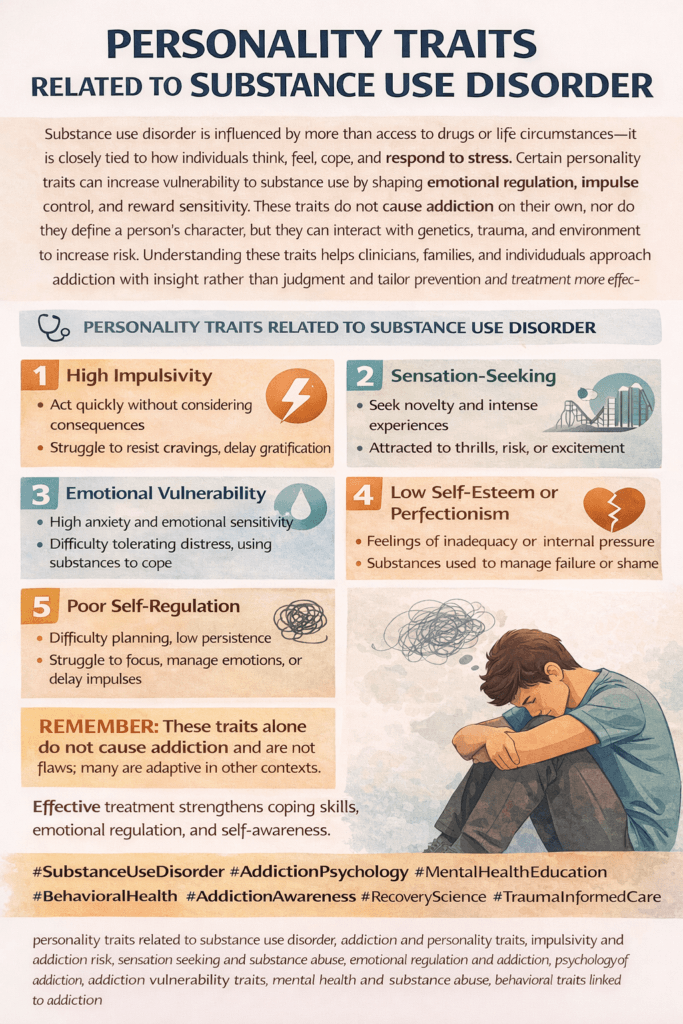
Researchers have found that certain personality traits tend to show up more in people with substance use disorder. Not everyone with these traits will face addiction, but spotting patterns can make support and prevention efforts more targeted and helpful. Here’s a straightforward rundown of the traits psychologists and addiction specialists often talk about:
- Impulsivity: Tendency to act without thinking things through, often making hasty decisions involving risky behaviors without considering consequences.
- Sensation Seeking: Feeling drawn to new, intense, or thrilling experiences, and sometimes getting bored easily with routine.
- Neuroticism: Often experiencing anxiety, mood swings, or emotional instability, which can push someone to seek comfort or escape.
- Low Conscientiousness: Difficulty with self-discipline, organization, or sticking to long-lasting plans.
- Social Alienation: Experiencing loneliness or facing challenges in connecting with others, sometimes driving people to substances for a sense of belonging or relief.
It’s important to remember that not everyone with substance use disorder will have all these traits, but these patterns come up a lot in formal research and in what I’ve seen when talking to recovery professionals.
The Science Behind Personality and Addiction
Studies in psychology and neuroscience support the connection between personality and addiction. Traits such as impulsivity and sensation seeking are influenced by both genetics and brain chemistry. For example, people who act impulsively might have lower activity in brain regions that control self-restraint. Sensation seekers may have brain reward systems that respond especially strongly to new experiences, including substance use.
One model often discussed is the “Big Five” personality traits: openness, conscientiousness, extraversion, agreeableness, and neuroticism. Research points to lower conscientiousness and higher neuroticism being especially common in people with SUD. Both nature (genes and brain chemistry) and nurture (life experiences) matter and usually work together to shape these tendencies.
How These Traits Influence the Path to Substance Use
Impulsivity is a major player. It’s common for someone dealing with addiction to describe themselves as an “all or nothing” person. Decisions often get made in the heat of the moment, leading to substance use without stopping to think through the risks or long-term impact.
Sensation seeking is just as important. People who thrive on novelty and excitement are naturally more likely to try drugs or alcohol, mainly because the unfamiliar offers a thrill or rush. They may find ordinary routines dull, leading them to seek out new experiences, sometimes at the risk of their well-being.
For people high in neuroticism, negative emotions like worry, frustration, or sadness can be overwhelming. Substances may seem like a quick way to relax or dull those feelings, but over time, this kind of coping can become a harmful habit, turning into dependency gradually and subtly.
Protective and Risk Factors: A Balanced View
Focusing only on risk can paint an overly negative picture. Some traits actually lower the chance of developing SUD. High conscientiousness—being careful, organized, and thoughtful—naturally helps people avoid substance problems, and high agreeableness—being easy to get along with—seems to encourage seeking help when needed. Social support, managing stress in healthy ways, and having a sense of purpose all act as protective buffers, too.
Genetics isn’t the whole story, and neither are life experiences. Even with some traits that can raise risk, there’s never a guarantee someone will develop SUD. Humans are incredibly flexible, and making positive changes—like building healthier routines, learning coping skills, or strengthening social ties—can make a real difference.
Challenges in Daily Life and Recovery
Personality traits shape not just why someone might start using substances but also how their recovery experience feels. Someone with high impulsivity may have trouble sticking to long-term treatment or sticking to a recovery plan, since boredom or restlessness can lure them back toward old behaviors—especially if recovery feels repetitive and slow.
Those with higher neuroticism might deal with sharper emotional ups and downs, particularly early in recovery. Anxiety, mood swings, and self-doubt can make therapy sessions or support group meetings stressful. These emotional struggles sometimes bring on shame or worry about relapse, making it extra important to provide judgment-free support and develop coping skills.
This isn’t just theory. Counselors and therapists often tailor their strategies to each person’s mix of traits, helping them discover tools and routines that really fit their thinking and emotional style.
Managing and Supporting Personality in Addiction Treatment
Recognizing the role of personality helps treatment providers create plans that truly address the whole person, not just the symptom of substance use. Here are a few approaches that can really help:
- Cognitive Behavioral Therapy (CBT): This kind of talk therapy works especially well for people who are impulsive, as it teaches them to slow down, think before acting, and practice new ways to face problems.
- Motivational Interviewing: Sensation seekers often respond well to setting their own goals and tapping into healthy sources of excitement. This approach helps them find fulfilling alternatives to substance use.
- Mindfulness: For people who struggle with neuroticism, learning to be aware of emotions without being swamped by them builds emotional stability. Practices like meditation and grounding exercises can build resilience.
- Social Skills Training: Those who feel socially alienated may benefit from group activities or therapy that focus on building connections in safe, understanding settings.
Personalized support through treatment means there’s a better shot at lasting recovery. Friends and family can help, too, by understanding their loved ones’ natural strengths and challenges, offering patience, encouragement, and grounding support.
Real-Life Examples of Personality and SUD
There are plenty of real-life examples where people’s natural styles and personalities have influenced their substance use journey. For example, someone who’s always looking for the next big thrill might experiment with anything that promises excitement—sometimes ending up hooked on substances as a result. Meanwhile, another person who struggles with anxiety or isolation may turn to substances to feel less lonely or simply to take the edge off daily stresses.
Recovery isn’t about changing who you are but channeling those traits in healthy ways. Many people in recovery wind up using their old strengths in positive directions. Sensation seekers might discover a love for adventure sports, creative arts, or travel. Impulsive types often succeed in energetic careers or busy volunteer gigs that let them make quick, meaningful impacts. With support, these tendencies can become building blocks for a better life.
Frequently Asked Questions
People often ask about the connection between personality and substance use disorder. Here are a few common questions with straightforward answers:
Question: If I have some of these traits, does it mean I’ll develop an addiction?
Answer: Not necessarily. These traits might crank up the risk, but your environment, social network, life choices, and coping skills matter just as much.
Question: Can personality traits shift or change as people get older?
Answer: Traits are usually pretty steady, but they can adjust with time, especially if someone works through therapy, picks up new habits, or learns from experience. Focusing on healthy routines really helps.
Question: Are there early signs that suggest substance use might be linked to someone’s personality style?
Answer: Watch for sudden interest changes, new risk-taking, or using substances as a main way of dealing with stress. Early honest conversations and support are often key.
Putting It All Together
Personality traits play a real role in how substance use disorder develops, but they’re just one piece of a complicated puzzle. Knowing about these traits is really helpful for prevention and support, and it can take some of the mystery and shame out of addiction. If you spot yourself in some of these patterns, or notice them in others, it’s okay to reach out for help or information. A little self-awareness and honest conversation go a long way toward recovery and a healthier future for everyone.
Video: These Traits Make Addiction More Likely #addiction #awareness #psychology