Negative thought patterns are among the most persistent barriers to lasting recovery in addiction therapy. Feelings of guilt, hopelessness, or self-blame can erode confidence, leading individuals to question their progress or relapse into harmful coping habits. Effective treatment goes beyond detoxification—it involves retraining the mind to recognize and challenge self-defeating beliefs. Through structured self-management, individuals learn to identify distortions and reframe thoughts with compassion. Family support provides emotional safety and encouragement, replacing judgment with empathy, while community resources offer peer mentorship, education, and inclusion, restoring hope and belonging. Together, these strategies create a holistic foundation for emotional resilience and sustainable recovery.
Transforming Negative Thought Patterns in Addiction Therapy
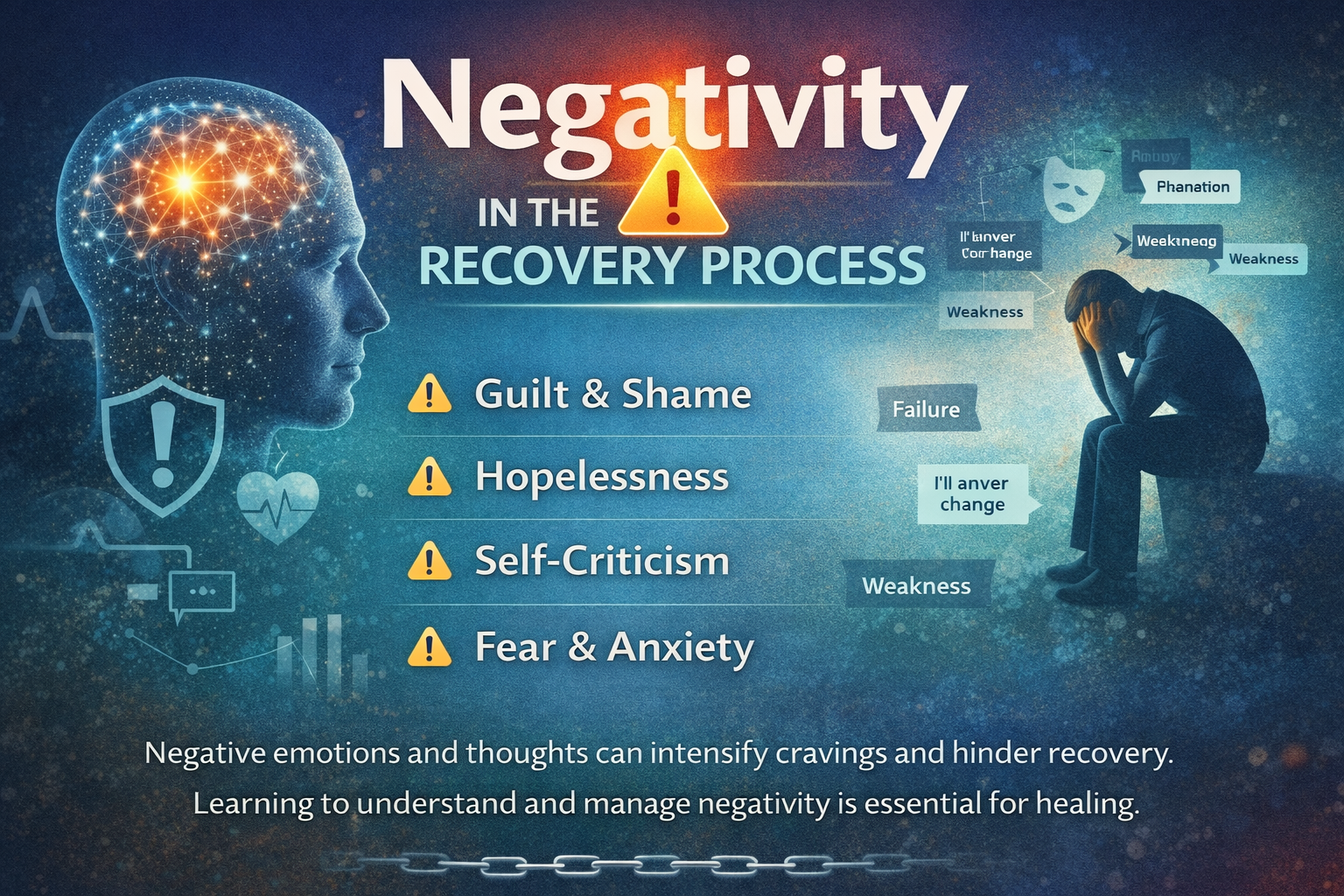
Negative thought patterns are among the most powerful forces driving addiction. Feelings of guilt, shame, hopelessness, and harsh self-criticism often fuel cravings, emotional distress, and relapse. Successful recovery requires more than stopping substance use — it involves retraining the mind to think in balanced, compassionate, and realistic ways. Addiction therapy focuses on helping individuals recognize harmful thinking habits, challenge them, and replace them with healthier perspectives that support long-term healing.
Recognizing Cognitive Distortions
The first step in changing negative thinking is learning to identify automatic thoughts that reinforce addiction. Common cognitive distortions include all-or-nothing thinking (“If I slip once, I’ve failed completely”), catastrophizing (“If I feel anxious, I’ll never recover”), labeling (“I’m broken forever”), and mind-reading (“Everyone can see I’m failing”). Through Cognitive Behavioral Therapy (CBT), individuals learn to pause, recognize these distortions, and test them against reality. Awareness creates the foundation for change.
Reframing and Thought Replacement
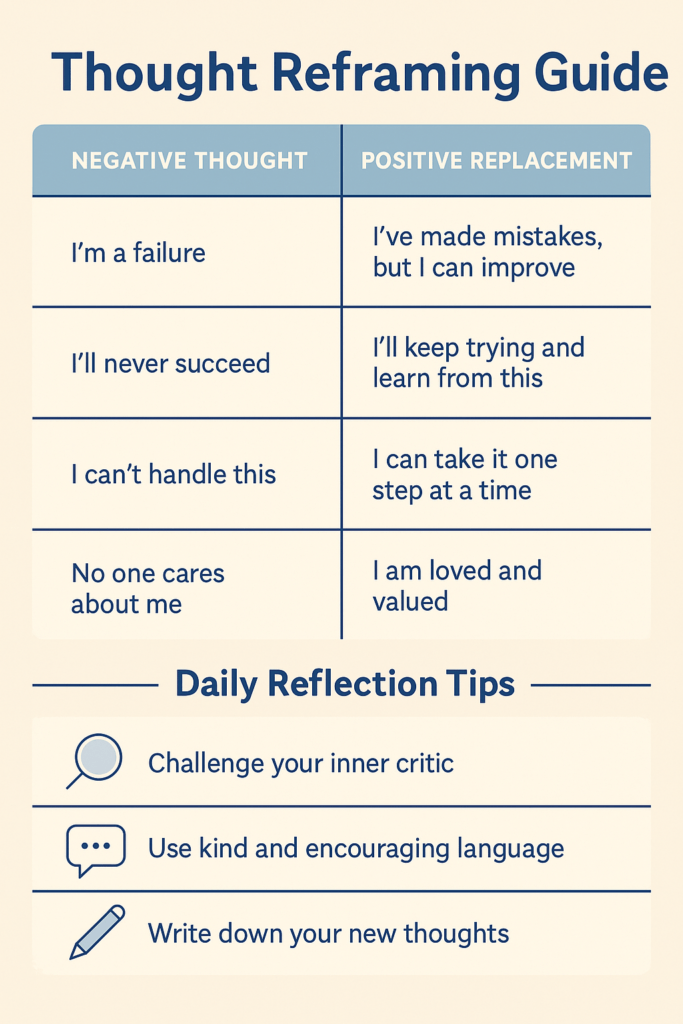
Once harmful patterns are identified, therapy teaches individuals how to replace them with balanced alternatives. A thought like “I ruined everything” becomes “I had a setback, but I can learn from it.” “I’ll never be strong enough” shifts to “I’m developing new coping skills.” Journaling, thought logs, and guided reflection help reinforce these new responses until they become natural mental habits.
Mindfulness and Emotional Regulation
Mindfulness practices help individuals observe thoughts without immediately reacting to them. Deep breathing, grounding exercises, and meditation teach the skill of noticing cravings or self-criticism as temporary mental events rather than facts. This reduces emotional reactivity, lowers anxiety, and creates space for healthier responses to stress.
Building Self-Compassion and Resilience
Negative thinking in addiction is often rooted in shame or trauma. Developing self-compassion counters the inner critic that drives emotional pain. Daily affirmations, self-care routines, creative expression, and reflection on progress strengthen resilience. As self-kindness grows, the urge to escape emotions through substances decreases.
Using Support Systems for Accountability
Family members, peer recovery groups, and sponsors help reinforce healthier thinking. Sharing reflections in group therapy, working with a recovery mentor, or participating in structured programs such as SMART Recovery provide encouragement and reality checks when distorted thinking recurs. Community validation strengthens confidence in new cognitive patterns.
Integrating Holistic and Community Approaches
Yoga, art therapy, outdoor activities, and service work promote reconnection with purpose and identity. These approaches help individuals move from self-blame toward self-understanding, reinforcing emotional healing alongside cognitive change.
Summary
Transforming negative thought patterns is a core element of addiction therapy. By recognizing cognitive distortions, practicing mindfulness, building self-compassion, and engaging supportive communities, individuals replace self-criticism with self-awareness. Recovery becomes not only freedom from substances, but freedom from the destructive beliefs that once fueled them.
Self-Management Strategies for Overcoming Negative Thought Patterns in Addiction Recovery
Negative thought patterns can quietly undermine addiction recovery. Self-criticism, hopelessness, guilt, and fear often trigger cravings, emotional distress, and relapse risk. While therapy provides guidance, long-term success depends on daily self-management skills that maintain mental balance, awareness, and resilience. Learning to recognize, redirect, and soften destructive thinking transforms recovery from constant struggle into sustainable growth.
Practice Daily Cognitive Awareness
Change begins with noticing thought patterns before they escalate. Keeping a simple thought journal helps track stressful moments, automatic reactions, and emotional responses. Identifying common distortions—such as catastrophizing, labeling, or all-or-nothing thinking—enhances insight. Using a basic CBT method to record the thought, name the distortion, and reframe it with realistic evidence interrupts harmful mental loops before they influence behavior.
Goal: Strengthen awareness and stop negative thinking early.
Develop Positive Self-Talk Habits
Inner dialogue shapes emotional strength. Replacing defeatist statements with supportive language retrains the brain toward resilience. Daily affirmations focused on effort rather than perfection encourage persistence. Speaking encouraging statements aloud — even briefly — reinforces confidence and motivation during challenging moments.
Goal: Shift internal language from self-criticism to empowerment.
Use Mindfulness to Stay Present
Mindfulness teaches observation without judgment. Short breathing exercises, grounding techniques, and guided meditation help individuals notice thoughts as passing experiences rather than absolute truths. This reduces anxiety, lowers emotional reactivity, and creates space for calm decision-making instead of impulsive coping.
Goal: Increase emotional stability and present-moment clarity.
Set Realistic Goals and Track Small Wins
Unrealistic expectations often fuel frustration and shame. Breaking recovery goals into small, achievable steps builds momentum. Tracking progress through habit charts or weekly reflections highlights growth that might otherwise go unnoticed. Celebrating effort reinforces self-efficacy and motivation.
Goal: Build confidence through steady, visible progress.
Cultivate Self-Compassion
Many negative thought patterns are rooted in shame. Practicing self-kindness, writing compassionate reflections, and acknowledging courage in recovery counteract the inner critic. Reframing setbacks as learning experiences rather than failures protects emotional health and helps prevent relapse.
Goal: Replace shame with understanding and self-respect.
Build Supportive Routines and Accountability
Connection disrupts isolation-driven negativity. Sharing thoughts in support groups, therapy, or with trusted peers provides perspective and encouragement. Speaking worries aloud often weakens their power. Accountability partners offer reassurance during discouraging periods.
Goal: Strengthen resilience through shared support.
Combine Lifestyle Wellness with Cognitive Tools
Physical well-being supports mental balance. Exercise, sleep, nutrition, and creative expression regulate stress hormones and stabilize mood. When the body is cared for, the mind becomes better able to manage emotional challenges.
Goal: Create a lifestyle that naturally reduces rumination and emotional volatility.
Summary
Preventing negative thought patterns in addiction recovery is an active, daily practice. Through awareness, reframing, mindfulness, self-compassion, and supportive routines, individuals learn to quiet the inner critic and strengthen self-trust. Over time, these strategies transform recovery from merely avoiding relapse into one that builds clarity, confidence, and lasting emotional freedom.
Family Support Strategies for Preventing Negative Thought Patterns in Addiction Recovery
Negative thought patterns—such as shame, hopelessness, and self-criticism—can quietly undermine addiction recovery. While therapy teaches individuals how to challenge destructive thinking, family environments strongly influence whether new, healthier mindsets take root. Families who communicate with empathy, reinforce progress, and model emotional balance help replace guilt with hope and fear with resilience. The goal is to create a home atmosphere that strengthens self-belief rather than self-doubt.
Foster Positive and Supportive Communication
Negative thinking grows in environments of criticism or silence. Encouraging, nonjudgmental language helps reverse this cycle. Using phrases like “You’re making progress” or “Setbacks don’t erase effort” reinforces growth. Avoiding labels such as “addict” or “failure” keeps focus on the person—not the problem. Active listening, without interrupting or correcting emotions, builds trust and emotional safety.
Goal: Help your loved one feel valued, understood, and safe to express emotions.
Help Identify and Gently Challenge Negative Thoughts
Families can reinforce cognitive tools learned in therapy by compassionately reframing self-defeating statements. When a loved one says, “I can’t change,” responding with “You’ve already started changing” encourages realistic optimism. Supporting thought journaling or casually modeling positive reframing in daily conversation strengthens new thinking habits.
Goal: Reinforce healthy cognitive patterns through everyday dialogue.
Provide Emotional Validation Instead of Immediate Fixing
Many people in recovery fear expressing difficult emotions. Validation builds confidence in emotional safety. Acknowledging feelings before offering advice teaches that emotions can be felt without becoming relapse triggers. Saying “That sounds painful—thank you for sharing it” promotes openness and trust.
Goal: Teach emotional expression without shame.
Encourage Positive Routines and Mindset Habits
Daily structure helps stabilize thinking patterns. Family rituals such as gratitude sharing, short walks, or evening check-ins reinforce consistency and optimism. Celebrating small wins—like attending therapy or managing stress—builds confidence and motivation.
Goal: Anchor positive thinking into daily life.
Model Healthy Self-Talk and Coping
Families influence recovery not only by what they say but also by how they manage stress. Demonstrating calm problem-solving, positive self-talk, and emotional regulation provides a living example of resilience. A steady presence teaches more than advice ever could.
Goal: Lead emotional balance through example.
Connect with Support and Education Resources
Families also need support. Joining family therapy, Al-Anon, SMART Recovery Family programs, or community education groups strengthens communication skills and boundary-setting. Shared learning prevents burnout and improves long-term recovery outcomes.
Goal: Build a knowledgeable, emotionally healthy support system.
Maintain Balance Between Support and Independence
Effective support empowers rather than controls. Encouraging accountability while respecting autonomy builds self-trust. Setting healthy boundaries prevents codependency and reinforces confidence.
Goal: Support independence, not dependence.
Summary
Families play a powerful role in preventing negative thought patterns during addiction therapy. Through compassionate communication, emotional validation, positive modeling, and consistent encouragement, families create environments where hope replaces shame and resilience replaces fear. When home support aligns with professional therapy and community resources, recovery becomes not a lonely struggle—but a shared journey toward lasting emotional strength.
Community Resource Strategies for Preventing Negative Thought Patterns in Addiction Recovery
Negative thought patterns—such as shame, hopelessness, and self-doubt—can weaken motivation and increase relapse risk during addiction recovery. While individual therapy teaches cognitive and emotional tools, community environments greatly influence whether positive thinking is sustained. Communities that provide connection, education, belonging, and accessible resources help individuals replace isolation with hope and self-criticism with confidence. Recovery strengthens when people feel supported not only in therapy rooms, but in everyday life.
Create Recovery-Oriented Community Programs
Isolation is one of the strongest triggers for negative thinking. Community recovery centers, drop-in spaces, and wellness programs provide safe environments in which individuals can share challenges and successes without judgment. Workshops in mindfulness, life skills, and self-esteem building reinforce emotional growth. Volunteer opportunities further strengthen purpose and self-worth by allowing individuals to contribute meaningfully to others.
Goal: Replace shame and isolation with belonging and empowerment.
Offer Peer Mentorship and Lived-Experience Networks
Seeing real recovery success helps transform hopelessness into possibility. Peer mentorship programs match individuals early in recovery with trained recovery coaches who provide guidance, encouragement, and perspective. Recovery speaker events and peer-led groups normalize setbacks while highlighting progress. Lived experience builds trust that professional systems alone cannot create.
Goal: Inspire positive thinking through relatable support.
Integrate Mental Health Education and Cognitive Skills Training
Communities can equip residents with tools to manage negative thoughts before they escalate. Public CBT-based workshops, mindfulness classes, and stress management programs teach practical skills for reframing harmful thinking. Schools and youth programs that introduce resilience training help prevent the development of self-defeating patterns early in life.
Goal: Make cognitive and emotional coping tools accessible to all.
Promote Inclusive and Stigma-Free Community Spaces
Stigma fuels shame, secrecy, and self-criticism. Communities that promote trauma-informed, recovery-friendly environments reduce these harms. Public awareness campaigns sharing recovery-positive stories help reshape public perception. Training for employers, faith leaders, and community staff helps ensure that individuals in recovery feel respected rather than judged.
Goal: Build cultures that support dignity and self-worth.
Encourage Family and Community Collaboration
Strong social networks reinforce healthy thinking. Family education programs teach loved ones how to respond compassionately to negative self-talk. Community counseling services and family support groups strengthen communication and shared understanding. When family and community deliver consistent messages of encouragement, new cognitive patterns become easier to maintain.
Goal: Create unified support systems that reinforce hope.
Leverage Technology for Connection and Positivity
Digital recovery platforms, virtual support groups, and mental wellness apps expand access to encouragement and tracking tools. Positive social media campaigns spread uplifting recovery narratives. When used ethically, technology strengthens connection rather than isolation.
Goal: Extend supportive environments beyond physical spaces.
Evaluate and Adapt Community Resources
Effective communities listen and evolve. Surveys, focus groups, and lived-experience advisory boards help identify barriers to positive recovery experiences. Adapting programs to cultural, economic, and emotional needs ensures long-term impact.
Goal: Maintain accountability and continuous improvement.
Summary
Preventing negative thought patterns in addiction recovery requires more than individual effort—it requires supportive environments where people feel valued, connected, and capable of change. Through peer mentorship, public education, stigma-free spaces, and accessible mental health resources, communities replace hopelessness with belonging and self-doubt with self-belief. When therapy, family support, and community engagement work together, recovery becomes not a solitary struggle, but a shared journey toward lasting resilience and hope.
A Compassionate Conversation Script for Supporting a Loved One in Addiction Recovery
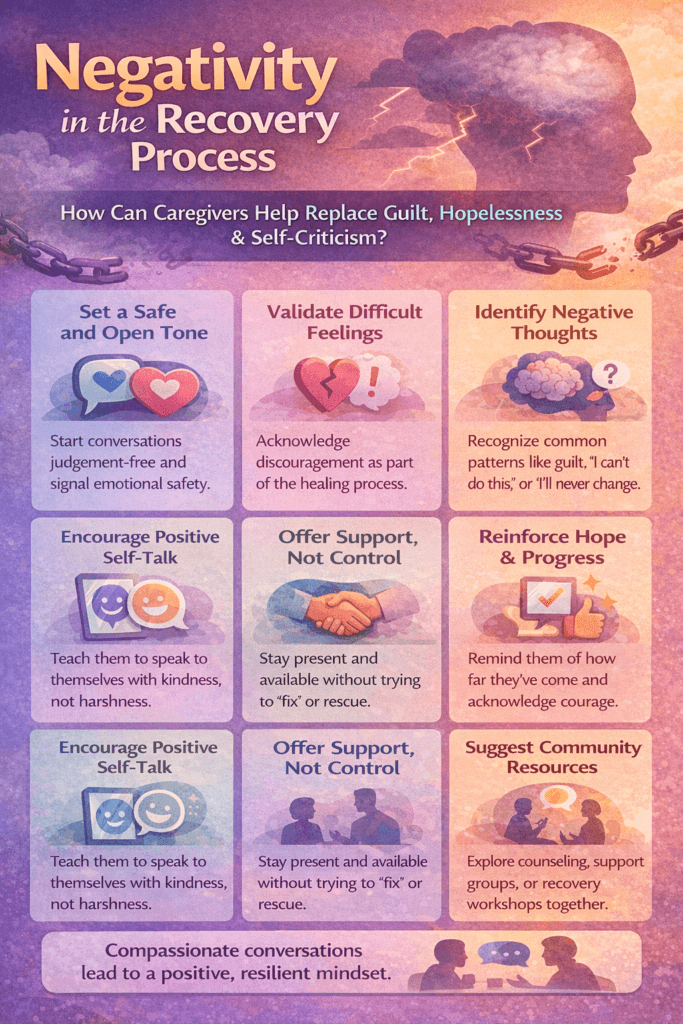
Families and close friends play a powerful role in shaping emotional recovery. During addiction therapy, many individuals struggle with negative thought patterns such as guilt, hopelessness, or harsh self-criticism. The way loved ones communicate can either reinforce these painful beliefs or gently replace them with hope and self-trust.
This compassionate conversation script is designed to help families and friends speak with warmth, emotional safety, and encouragement — without judgment, pressure, or control.
1. Setting the Tone: Safety and Openness
What to say:
“Hey, I just wanted to check in — not to judge or fix anything, but to listen. Therapy can bring up a lot of heavy feelings. You don’t have to go through them alone.”
Purpose:
Creates emotional safety and lowers defensiveness. Signals presence, not pressure.
2. Validating Their Feelings
What to say:
“It’s okay if you’re feeling discouraged or overwhelmed. What you’re doing takes strength. Anyone in your position would feel challenged at times.”
Purpose:
Normalizes emotional struggle and prevents shame from deepening.
3. Gently Identifying Negative Thoughts
What to say:
“Sometimes when things get hard, people start thinking things like ‘I’ll never change’ or ‘I always mess up.’ Have thoughts like that been showing up for you?”
(Pause and listen)
“Those thoughts don’t mean you’re failing — they’re just habits the mind forms when it’s tired or hurting.”
Purpose:
Encourages awareness of negative thinking without confrontation.
4. Reframing with Compassion
What to say:
“Can I share what I see? Even when you feel stuck, I notice how hard you’re trying. Every session you attend, every honest conversation — that’s progress. Recovery isn’t about perfection. It’s about showing up.”
Purpose:
Helps replace distorted self-views with a realistic, hopeful perspective.
5. Encouraging Positive Self-Talk
What to say:
“When that critical voice shows up, try talking to yourself the way you’d talk to someone you love. You deserve the same kindness you give others.”
Purpose:
Introduces self-compassion as a skill.
6. Offering Support Without Control
What to say:
“I’m here to talk, to take a walk, or just sit quietly. I won’t try to solve everything, but I’ll stay beside you while you work through this.”
Purpose:
Provides steady support without rescuing or directing.
7. Reinforcing Hope
What to say:
“You’ve already done things that took courage. The fact that you’re still showing up means change is happening — even if it feels slow.”
Purpose:
Counters hopelessness with evidence of progress.
8. Encouraging Professional and Community Support
What to say:
“These thoughts might be helpful to share with your therapist or group, too. They can give tools to manage them. If you’d like, we can explore a support group together.”
Purpose:
Connects emotional awareness to continued therapeutic growth.
9. Closing with Partnership
What to say:
“You’re not your past, and you’re not your thoughts — you’re someone growing through something hard. I’m proud of you. Let’s take this one day at a time together.”
Purpose:
Ends with belonging, dignity, and encouragement.
Key Communication Tips
• Speak calmly and warmly
• Focus on feelings, not fixing
• Use “we” and “you’re not alone” language
• Listen more than you advise
• Keep body language open and relaxed
Summary
Supporting a loved one in addiction recovery isn’t about having the perfect words — it’s about creating a space where painful thoughts feel safe to share, and hope feels possible again. When families speak with compassion, patience, and belief in growth, negative thinking loses its power and recovery gains strength.
Frequently Asked Questions
Here are some common questions:
1. What does “negativity in the recovery process” mean?
Negativity in recovery refers to recurring self-critical, hopeless, or guilt-based thoughts that interfere with healing. Common examples include believing you’ll never change, feeling ashamed of past behavior, or assuming relapse means total failure. These thoughts can weaken motivation and increase vulnerability to relapse if left unaddressed.
2. Why are negative thoughts so common during addiction recovery?
Addiction often damages self-esteem, relationships, and trust. During early recovery, the brain is also rebalancing stress and reward systems, which can heighten anxiety and emotional sensitivity. Negative thinking becomes a learned coping habit — but it can be retrained with therapeutic tools and support.
3. How do negative thought patterns affect relapse risk?
Negative thinking increases emotional distress, which can trigger cravings as a way to escape discomfort. Thoughts like “I already messed up” or “I’m not strong enough” may lead to giving up on recovery efforts. Managing these thoughts reduces relapse vulnerability.
4. Can negative thinking be changed, or is it permanent?
Negative thought patterns are not permanent. They are learned mental habits. Therapies such as Cognitive Behavioral Therapy (CBT), mindfulness practices, and self-compassion training help individuals recognize, challenge, and replace harmful thinking with balanced, realistic perspectives.
5. What are common negative thought patterns in recovery?
- All-or-nothing thinking: “If I slip once, I’ve failed.”
- Catastrophizing: “If I feel stressed, I’ll relapse.”
- Labeling: “I’m just an addict.”
- Mind-reading: “Everyone is judging me.”
- Hopelessness: “Recovery won’t work for me.”
Recognizing these patterns is the first step toward change.
6. How can families help reduce negative thinking in recovery?
Families help by using supportive language, avoiding blame, validating emotions, celebrating little progress, and encouraging therapy participation. A calm, nonjudgmental environment reduces shame and reinforces self-belief.
7. How can communities support positive thinking in recovery?
Communities can provide peer support groups, recovery centers, mental health workshops, stigma-reduction campaigns, and accessible counseling services. Belonging and shared experience counter isolation and hopelessness.
8. Does mindfulness really help with negative thoughts?
Yes. Mindfulness teaches individuals to observe thoughts without automatically believing or reacting to them. This reduces emotional reactivity and strengthens the capacity to choose healthier responses rather than succumbing to self-criticism.
9. What if negative thoughts feel overwhelming or constant?
If negative thinking feels persistent, professional support is essential. Therapists, counselors, or peer recovery coaches can provide structured tools to manage cognitive patterns safely and effectively.
10. How long does it take to change negative thought patterns?
Change happens gradually. Many people notice improvement within a few weeks of consistent CBT or mindfulness practice, but long-term transformation develops over months. Progress is measured in increased awareness, not perfection.
11. Can setbacks bring negative thinking back?
Yes. Stressful events or lapses can temporarily reactivate old thinking habits. This does not mean recovery has failed. Returning to coping tools, support systems, and therapy helps restore progress.
12. What is the most important message about negativity in recovery?
Negative thoughts are part of the healing process — not proof of failure. Learning to manage them builds emotional resilience, self-trust, and long-term stability in recovery.
Conclusion
Overcoming negative thought patterns in addiction therapy requires coordinated effort across personal, family, and community levels. Self-management empowers individuals to become active participants in reshaping their inner dialogue; families nurture trust and positive reinforcement; and communities supply structure, education, and connection to reduce stigma and isolation. When these supports align, recovery becomes not just the absence of addiction—but the presence of self-belief, purpose, and emotional balance. By addressing both mindset and environment, individuals can transform destructive thinking into a source of strength, paving the way for long-term healing and growth.
Video: Negativity in the Recovery Process