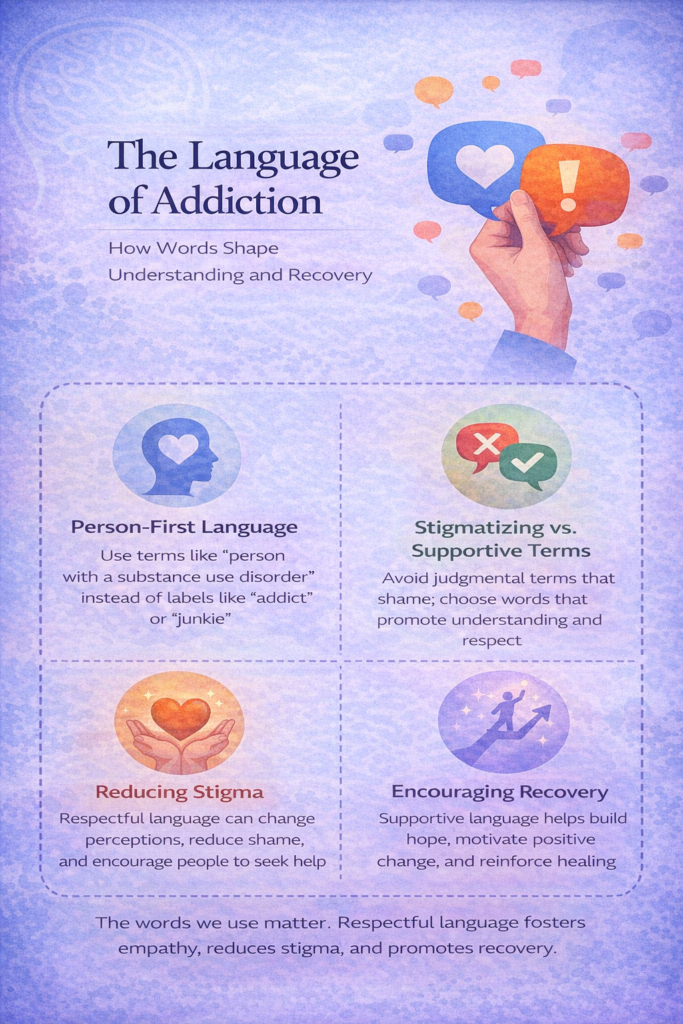
The language of addiction refers to the words and expressions used when discussing addiction, substance use, recovery, and the people affected by these challenges. The way addiction is described can strongly influence how it is perceived by individuals, families, healthcare professionals, and communities. Language has the power to shape attitudes and beliefs, either promoting understanding or reinforcing stigma. In the past, many commonly used terms carried negative or judgmental connotations that labeled individuals and contributed to shame and misunderstanding about addiction. Today, there is increasing recognition of the importance of using respectful, person-first language that acknowledges addiction as a complex medical and psychological condition rather than a moral weakness. By focusing on the individual instead of the disorder, people experiencing addiction can be treated with greater dignity and compassion. Using supportive and accurate language not only reduces stigma but also encourages open conversations, improves communication with healthcare providers, and helps individuals feel more comfortable seeking treatment and support.
The Language of Addiction: Understanding How Words Shape Recovery and Stigma
Language plays a powerful role in how society understands and responds to addiction. The words used to describe addiction, individuals struggling with it, and the recovery process can influence attitudes, beliefs, and treatment outcomes. The concept of “addiction language” refers to the terms and phrases used when discussing substance use, addictive behaviors, and recovery. Choosing respectful and accurate language can reduce stigma, encourage people to seek help, and promote a more compassionate understanding of addiction.
In recent years, healthcare professionals and recovery advocates have emphasized the importance of using person-centered and nonjudgmental language when talking about addiction.
Understanding Stigmatizing Language
Historically, many terms used to describe addiction carried negative or judgmental meanings. Words such as “addict,” “junkie,” or “abuser” often label individuals by their condition rather than recognizing them as people experiencing a health challenge.
Stigmatizing language can create barriers to recovery by:
- Increasing shame and embarrassment
- Discouraging individuals from seeking treatment
- Reinforcing negative stereotypes about addiction
- Affecting how healthcare providers and communities respond to those in need
Because of these impacts, many professionals now encourage more respectful language that focuses on the person rather than the disorder.
Person-First Language in Addiction
Person-first language emphasizes the individual rather than defining them by their addiction. This approach recognizes that addiction is a medical and psychological condition, not a person’s identity.
Examples of person-first language include:
- Saying “person with a substance use disorder” instead of “addict.”
- Saying “person in recovery” instead of “former addict.”
- Using “substance use” instead of “substance abuse.”
This type of language promotes dignity and reminds others that individuals struggling with addiction are more than their condition.
Language That Supports Recovery
Positive and supportive language can also encourage recovery and reinforce hope. Words that focus on growth, progress, and healing can help individuals feel motivated and supported.
Examples of supportive language include:
- Recovery instead of “clean” or “dirty.”
- Return to use instead of “relapse” in some contexts
- Treatment and recovery journey rather than punishment or failure
Using encouraging language helps shift the focus from blame to healing and personal development.
Why Addiction Language Matters
Language shapes how addiction is understood by families, communities, and healthcare systems. When addiction is discussed using respectful and accurate terms, it becomes easier to recognize it as a health condition that requires support and treatment rather than judgment.
Positive language can also improve communication between individuals in recovery, healthcare professionals, and loved ones. This can lead to stronger support systems and more effective treatment outcomes.
Conclusion
The language used when discussing addiction has a powerful impact on how individuals are perceived and treated. By choosing respectful, person-first language, society can reduce stigma and create a more supportive environment for those struggling with addiction.
Understanding and using appropriate addiction language encourages compassion, promotes recovery, and reminds us that individuals experiencing addiction deserve dignity, respect, and the opportunity to heal.
Self-Management Strategies for Understanding the Language of Addiction
The words used to discuss addiction can strongly influence how individuals understand their experiences and how others respond to them. The language of addiction includes the terms and phrases used to describe substance use, recovery, and the people affected by addiction. In recent years, professionals have emphasized the importance of using person-centered, respectful language that reduces stigma and encourages recovery. For individuals navigating addiction or recovery, learning how to understand and use healthy addiction language can be an important part of self-management and personal growth.
Self-management strategies can help individuals become more aware of the language they use about themselves and their experiences, promoting a more positive and supportive recovery journey.
Developing Awareness of Addiction Language
One of the first self-management strategies is developing awareness of how language shapes thoughts and attitudes. Individuals may notice that certain words they use about themselves—such as negative labels—can reinforce feelings of shame or hopelessness.
To build awareness, individuals can:
- Reflect on the words they use to describe themselves and their experiences
- Learn the difference between stigmatizing and supportive language
- Pay attention to how language affects emotions and motivation
Becoming aware of language patterns can help individuals adopt more empowering ways of speaking about their recovery.
Practicing Person-First Language
Person-first language emphasizes the individual rather than defining them by addiction. This approach supports self-respect and reminds individuals that addiction is a condition they experience, not their identity.
Examples of person-first language include:
- Saying “person in recovery” instead of labeling oneself as an addict
- Saying “person with a substance use disorder” instead of “substance abuser.”
- Referring to recovery progress rather than focusing only on past behaviors
Using person-first language can help individuals develop a healthier self-image and reinforce the idea that recovery and change are possible.
Replacing Negative Self-Talk
Negative self-talk can be common among individuals dealing with addiction. Words that reflect self-blame or failure can reduce confidence and make recovery feel more difficult.
Self-management strategies for improving self-talk include:
- Practicing positive affirmations about growth and recovery
- Focusing on personal progress rather than past mistakes
- Challenging negative thoughts with realistic and supportive statements
Changing internal language can improve emotional well-being and strengthen motivation for recovery.
Learning Recovery-Oriented Language
Recovery-oriented language focuses on hope, healing, and personal development. Individuals can strengthen their understanding of addiction language by learning terms that support recovery and reduce stigma.
Examples include:
- Recovery journey instead of “failure” or “punishment.”
- Return to use instead of viewing relapse as permanent failure
- Support and treatment instead of blame or judgment
Learning and using recovery-focused language can help individuals view recovery as a process of growth.
Engaging in Supportive Conversations
Another important self-management strategy is practicing healthy communication with others. When individuals use respectful and positive language in conversations, they help create a supportive environment for themselves and others.
Strategies include:
- Speaking openly about recovery experiences
- Avoiding stigmatizing terms when discussing addiction
- Encouraging respectful conversations about mental health and substance use
These communication habits promote understanding and reduce stigma.
Conclusion
Understanding the language of addiction is an important part of self-management and recovery. The words individuals use to describe themselves and their experiences can influence self-esteem, motivation, and emotional well-being. By developing awareness, practicing person-first language, replacing negative self-talk, learning recovery-oriented terms, and engaging in supportive conversations, individuals can create a healthier perspective on addiction and recovery.
Through mindful language choices, individuals can strengthen their sense of dignity, promote healing, and continue moving forward on their recovery journey.
Family Support Strategies for Understanding the Language of Addiction
Addiction affects not only individuals but also the families who care about them. One important yet often overlooked aspect of addiction is the language used to describe it. The words families use when discussing addiction can influence how individuals feel about themselves, how comfortable they are seeking help, and how supported they feel during recovery. The language of addiction includes terms that describe substance use, treatment, and recovery, and it can either reduce stigma or unintentionally reinforce shame.
Families who understand and use respectful, person-centered language can create a supportive environment that encourages open communication and healing. By adopting thoughtful communication strategies, families can play an important role in helping their loved ones feel understood and supported throughout the recovery process.
Learning About Person-First Language
One important strategy for families is to learn and use person-first language. Person-first language focuses on the individual rather than defining them by their addiction. This approach helps preserve dignity and reminds everyone that addiction is a condition, not a person’s identity.
Examples of person-first language include:
- Saying “person with a substance use disorder” instead of labeling someone as an addict
- Saying “person in recovery” rather than “former addict.”
- Referring to substance use rather than “substance abuse.”
Using respectful language can help reduce stigma and make individuals feel more comfortable discussing their struggles.
Avoiding Judgmental or Stigmatizing Terms
Families sometimes use language that unintentionally sounds critical or judgmental. Words such as “abuser,” “junkie,” or “failure” can increase feelings of shame and discourage open conversation.
A helpful family strategy is to focus on supportive and neutral language that emphasizes concern and care rather than blame. This approach encourages individuals to communicate honestly about their experiences and challenges.
Encouraging Open and Respectful Communication
Healthy communication is essential when discussing addiction. Families can support their loved ones by creating safe spaces where conversations about addiction and recovery can happen without fear of judgment.
Strategies for respectful communication include:
- Listening actively and patiently
- Asking questions with empathy rather than accusation
- Expressing concern in calm and supportive ways
- Encouraging open dialogue about recovery progress and challenges
These communication practices strengthen trust and improve understanding within the family.
Educating the Family About Addiction
Learning about addiction and the language surrounding it can help families respond more effectively. Education allows family members to understand that addiction is a complex medical and psychological condition rather than simply a lack of willpower.
Families may benefit from:
- Attending addiction education programs
- Participating in family counseling or support groups
- Reading reliable information about addiction and recovery
Education helps families use language that promotes healing rather than stigma.
Supporting Positive and Recovery-Focused Language
Families can also encourage language that focuses on hope and recovery. Recovery-focused language emphasizes growth, progress, and the possibility of change.
Examples include:
- Talking about recovery journeys instead of failures
- Recognizing progress and small achievements
- Encouraging positive discussions about treatment and support
Using encouraging language can help motivate individuals and reinforce their commitment to recovery.
Conclusion
Understanding the language of addiction is an important step for families who want to support their loved ones effectively. The words families choose can influence how individuals feel about themselves and their willingness to seek help. By learning person-first language, avoiding judgmental terms, encouraging respectful communication, educating themselves about addiction, and using recovery-focused language, families can create a compassionate and supportive environment.
Through thoughtful communication and understanding, families can play a meaningful role in reducing stigma and helping their loved ones move toward recovery and healthier lives.
Community Resource Strategies for Understanding the Language of Addiction
The way addiction is discussed in communities can strongly influence how individuals struggling with substance use are perceived and treated. The language of addiction refers to the words and terms used to describe addiction, recovery, and the people affected by it. When communities use stigmatizing language, it can create barriers that discourage individuals from seeking help. However, when respectful and person-centered language is promoted, it can reduce stigma and support recovery. Community resources play an important role in educating the public about addiction language and encouraging healthier communication.
By providing education, outreach programs, and support services, communities can help individuals understand addiction as a health condition and create environments where people feel comfortable seeking treatment and support.
Community Education and Awareness Programs
One of the most effective ways communities can promote understanding of addiction language is through education and public awareness programs. Schools, community centers, healthcare organizations, and public health agencies can provide information about addiction and the importance of respectful communication.
These programs may include:
- Workshops on addiction and recovery language
- Public awareness campaigns that address stigma
- Educational seminars about mental health and substance use disorders
- Training sessions for teachers, healthcare providers, and community leaders
When community members understand how language can influence attitudes, they are more likely to use respectful and supportive terms.
Training for Healthcare and Social Service Professionals
Healthcare professionals, counselors, and social service providers often communicate with individuals affected by addiction. Training programs can help these professionals use person-first and recovery-oriented language that promotes dignity and understanding.
Professional training may focus on:
- Using person-first language when discussing addiction
- Avoiding stigmatizing terms in clinical and community settings
- Communicating with empathy and respect
- Promoting recovery-focused conversations
These strategies help ensure that individuals seeking help feel respected and supported.
Support Groups and Recovery Communities
Community-based support groups and recovery programs can also encourage positive language about addiction. In these environments, individuals share experiences and learn how to speak about addiction in ways that promote healing and self-respect.
Support groups often encourage:
- Respectful communication among participants
- Sharing personal recovery journeys
- Learning recovery-focused terminology
- Encouraging empathy and mutual support
These supportive environments help individuals feel less stigmatized and more confident discussing their recovery.
Public Campaigns to Reduce Stigma
Community initiatives aimed at reducing stigma can help reshape the way addiction is discussed. Public campaigns often emphasize that addiction is a treatable health condition rather than a moral failure.
Examples of community initiatives include:
- Media campaigns promoting respectful addiction language
- Community events focused on recovery awareness
- Partnerships between healthcare organizations and local communities
- Educational materials that explain addiction and recovery
These efforts encourage communities to adopt language that supports healing and understanding.
Collaboration Between Community Organizations
Collaboration among schools, healthcare providers, recovery organizations, and local governments can strengthen community strategies for understanding addiction language. By working together, these organizations can create consistent messaging that promotes respect and compassion.
Community collaboration can lead to:
- Coordinated educational programs
- Shared resources for addiction awareness
- Increased access to recovery support services
- Community environments that encourage open discussion about addiction
This collective approach helps create communities that are informed, supportive, and compassionate.
Conclusion
The language used to discuss addiction can significantly influence how individuals struggling with substance use are treated and how comfortable they feel seeking help. Community resources play a crucial role in promoting respectful, person-centered language that reduces stigma and encourages recovery.
Through educational programs, professional training, support groups, public awareness campaigns, and interorganizational collaboration, communities can foster understanding and compassion. When communities choose words that promote dignity and hope, they help create environments where individuals affected by addiction feel supported and empowered to pursue recovery.
Frequently Asked Questions
Here are some common questions:
1. What is the language of addiction?
The language of addiction refers to the words and terms used to talk about addiction, substance use, and recovery. The language people use can influence how individuals with addiction are viewed and how comfortable they feel seeking help.
2. Why is the language used in addiction important?
Language is important because it can either reduce stigma or reinforce negative stereotypes. Respectful and person-centered language helps individuals feel supported and encourages open discussions about treatment and recovery.
3. What is person-first language in addiction?
Person-first language focuses on the individual rather than defining them by their condition. For example:
- Saying “person with a substance use disorder” instead of “addict.”
- Saying “person in recovery” instead of “former addict.”
This approach promotes dignity and respect.
4. What are examples of stigmatizing addiction language?
Some commonly used terms can unintentionally create stigma. Examples include:
- “Addict”
- “Junkie”
- “Drug abuser”
- “Dirty” when referring to drug test results
These terms can make individuals feel judged or ashamed.
5. What are examples of supportive addiction language?
Supportive language focuses on recovery and respect. Examples include:
- A person with a substance use disorder
- Person in recovery
- Substance use instead of substance abuse
- Positive or negative test result instead of clean or dirty
These terms help create a more compassionate conversation.
6. How does stigmatizing language affect people with addiction?
Stigmatizing language can increase shame, guilt, and discrimination. It may discourage individuals from seeking treatment or talking openly about their struggles.
7. Who should use respectful addiction language?
Everyone can benefit from using respectful addiction language, including:
- Families and friends
- Healthcare professionals
- Teachers and counselors
- Community leaders and organizations
- Media and journalists
Using respectful language helps create a supportive environment for recovery.
8. How can families learn better addiction language?
Families can improve their understanding by:
- Learning about addiction as a health condition
- Attending education programs or support groups
- Practicing person-first language in conversations
These strategies help reduce stigma and improve communication.
9. How does language support recovery?
Positive language can help individuals feel valued, respected, and hopeful. When people feel supported rather than judged, they may be more motivated to seek treatment and continue their recovery journey.
10. What is the overall goal of using better addiction language?
The goal is to reduce stigma, promote understanding, and support recovery. Thoughtful language encourages compassion and helps create communities where individuals struggling with addiction feel safe seeking help.
Conclusion
Recognizing the importance of the language used to discuss addiction can help create more supportive and compassionate environments for those affected. When individuals, families, and communities use respectful and person-first language, it helps reduce shame and encourages open conversations about recovery and treatment. By choosing words that promote dignity and understanding, society can improve attitudes toward addiction and support individuals on their journey toward healing and recovery.
Video: Stop Using These Words About Addiction #MentalHealthEducation #Recovery