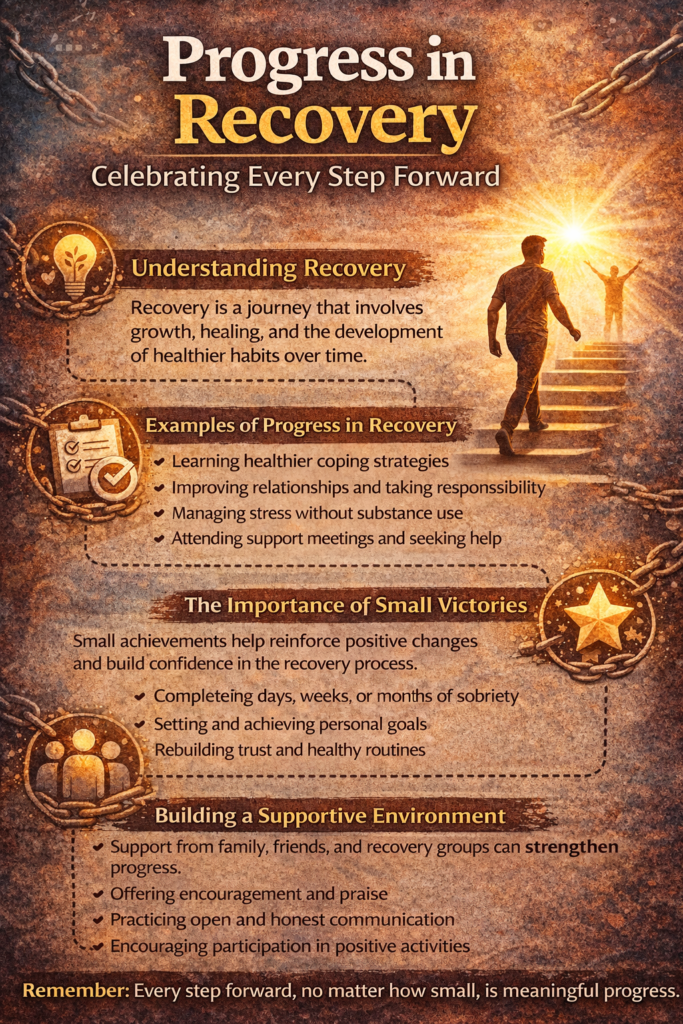
Recovery from addiction is a journey that involves personal growth, emotional healing, and the gradual development of healthier habits over time. Rather than happening all at once, recovery unfolds step by step as individuals learn new ways to manage stress, process emotions, and navigate life’s challenges without returning to harmful behaviors. Progress in recovery is measured not only by major milestones, such as extended periods of sobriety, but also by the small and meaningful steps individuals take each day to improve their lives. These steps may include practicing healthier coping strategies, rebuilding trust and communication with family and friends, setting personal goals, and making daily choices that support physical and emotional well-being. Each positive decision contributes to a stronger foundation for lasting change. Recognizing that recovery is a gradual and ongoing process helps individuals remain patient and compassionate with themselves as they grow. By focusing on steady improvement rather than perfection, people in recovery can continue moving forward with hope, resilience, and a commitment to long-term wellness and stability.
Progress in Recovery: Celebrating Every Step Forward
Recovery from addiction is often described as a journey rather than a single event. It involves learning new habits, healing from past struggles, and building a healthier lifestyle over time. One of the most important aspects of this journey is recognizing progress in recovery, even when the steps forward feel small. Every effort made toward healing—whether it is attending a support meeting, choosing a healthier coping strategy, or simply getting through a difficult day without relapse—represents meaningful progress.
Understanding and celebrating these steps can help individuals stay motivated and strengthen their commitment to long-term recovery.
Understanding What Progress Looks Like
Progress in recovery does not always happen in dramatic or immediate ways. Instead, it often appears through gradual improvements in behavior, mindset, and daily choices. Some people may expect recovery to follow a straight path, but in reality, it often involves challenges, setbacks, and learning experiences along the way.
Examples of progress in recovery may include:
- Developing healthier coping strategies
- Improving relationships with family and friends
- Taking responsibility for personal actions
- Managing stress without relying on substances
- Seeking help and support when needed
These changes may take time, but each step contributes to a stronger foundation for lasting recovery.
The Importance of Small Victories
Small achievements can play a powerful role in the recovery process. When individuals recognize and celebrate these moments, they reinforce positive behaviors and build confidence in their ability to continue moving forward.
Examples of small victories may include:
- Completing a week or month of sobriety
- Attending therapy or support meetings consistently
- Setting and maintaining personal boundaries
- Reconnecting with supportive relationships
- Developing healthier routines and habits
Acknowledging these milestones helps individuals focus on growth rather than perfection.
Overcoming Challenges Along the Way
Recovery is rarely free of obstacles. Stress, emotional triggers, and life changes can create moments of difficulty. However, facing these challenges can also strengthen recovery when individuals use healthy strategies to manage them.
Helpful approaches may include:
- Practicing stress-management techniques
- Seeking support from counselors or recovery groups
- Reflecting on personal goals and motivations
- Learning from setbacks rather than becoming discouraged
Each challenge overcome becomes part of the progress that strengthens long-term resilience.
Building a Supportive Environment
Support from others can significantly influence progress in recovery. Family members, friends, counselors, and community programs can provide encouragement and accountability during difficult moments.
Supportive environments often include:
- Open communication and understanding
- Access to counseling or recovery programs
- Positive relationships that encourage healthy habits
- Communities that promote recovery and well-being
These support systems help individuals stay focused on their goals and maintain their progress.
Moving Forward in Recovery
Progress in recovery is measured not only by time but also by growth, learning, and commitment to change. Each positive decision, no matter how small it may seem, contributes to a stronger and healthier future.
By recognizing achievements, learning from challenges, and continuing to seek support, individuals can maintain momentum in their recovery journey. Over time, these steps add up to meaningful transformation, allowing people to rebuild their lives and move toward long-term healing and well-being.
Recognizing Growth: Self-Management Strategies to Acknowledge Progress in Recovery
Recovery is a gradual process that involves rebuilding habits, healing emotionally, and learning new ways to respond to life’s challenges. While the journey may include setbacks and obstacles, recognizing personal growth along the way is essential to maintaining motivation and long-term success. Self-management strategies can help individuals track their progress, celebrate achievements, and stay focused on their recovery goals.
By learning to acknowledge even small improvements, individuals strengthen their confidence and reinforce the positive changes they are making.
Practicing Self-Reflection
Self-reflection is a powerful strategy for recognizing progress in recovery. Taking time to look back on past challenges and compare them with current behaviors can highlight how much growth has taken place.
Individuals can practice self-reflection by:
- Thinking about how their coping strategies have improved
- Recognizing situations, they now handle more effectively
- Noticing changes in emotional responses and decision-making
Regular reflection helps individuals see that recovery is not just about avoiding harmful behaviors but also about personal growth and emotional development.
Keeping a Recovery Journal
Journaling is another effective self-management tool that allows individuals to document their recovery journey. Writing about daily experiences, emotions, and achievements helps people identify patterns of improvement over time.
A recovery journal can include:
- Personal goals and milestones
- Challenges faced and how they were handled
- Positive changes in thoughts or behaviors
- Gratitude for supportive relationships or accomplishments
Reviewing journal entries over time can provide encouragement and remind individuals of the progress they have made.
Setting Realistic and Achievable Goals
Setting realistic goals allows individuals to measure their progress and maintain motivation throughout the recovery process. Goals should be specific, manageable, and focused on healthy behaviors rather than perfection.
Examples of recovery goals might include:
- Attending regular support meetings
- Practicing healthy coping techniques during stressful situations
- Strengthening relationships with supportive people
- Maintaining daily routines that support well-being
Achieving these goals reinforces confidence and demonstrates that progress is possible.
Celebrating Small Milestones
Acknowledging milestones is an important way to stay motivated during recovery. Celebrating small victories helps individuals focus on their achievements rather than only on the challenges they face.
Examples of milestones may include:
- Reaching a certain number of days or months in recovery
- Successfully managing a difficult emotional situation
- Rebuilding trust with family or friends
- Maintaining healthy habits and routines
Celebrating these moments reminds individuals that each step forward contributes to long-term success.
Practicing Self-Compassion
Recovery can be emotionally demanding, and individuals may sometimes be overly critical of themselves when progress feels slow. Self-compassion is a self-management strategy that encourages patience and understanding during difficult moments.
Practicing self-compassion involves:
- Accepting that setbacks can be part of the recovery process
- Speaking to oneself with kindness rather than harsh judgment
- Focusing on growth rather than perfection
This mindset allows individuals to continue moving forward without becoming discouraged by temporary challenges.
Moving Forward with Confidence
Acknowledging progress in recovery is an essential part of maintaining motivation and building resilience. Through self-reflection, journaling, goal setting, and self-compassion, individuals can recognize the meaningful changes they are making in their lives.
Recovery is not defined by perfection but by the consistent effort to grow, heal, and move forward. By actively recognizing progress, individuals can strengthen their commitment to recovery and continue building a healthier and more fulfilling future.
Healing Together: Family Support Strategies to Acknowledge Progress in Recovery
Recovery from addiction is a long and often challenging journey that involves personal growth, emotional healing, and lifestyle changes. While much of the focus is placed on overcoming obstacles, it is equally important to recognize and celebrate progress along the way. Families play a powerful role in this process. When loved ones acknowledge achievements, offer encouragement, and create supportive environments, they help strengthen motivation and reinforce positive change.
Family support strategies can help individuals in recovery recognize their accomplishments and maintain confidence as they continue moving forward.
Recognizing and Celebrating Milestones
One of the most effective ways families can support recovery is by acknowledging milestones and achievements, no matter how small they may seem. Recovery often involves gradual improvements, and recognizing these moments helps reinforce positive behaviors.
Families can celebrate milestones by:
- Recognizing days, months, or years of sobriety
- Offering words of encouragement for healthy decisions
- Celebrating personal achievements, such as attending counseling or support meetings
- Acknowledging efforts to rebuild relationships and responsibilities
These celebrations remind individuals that their hard work and commitment are meaningful.
Offering Encouragement and Positive Reinforcement
Encouragement from family members can have a powerful impact on a person’s confidence during recovery. Positive reinforcement helps individuals stay motivated and reminds them that their efforts are noticed and appreciated.
Supportive encouragement may include:
- Expressing pride in their progress
- Acknowledging the effort it takes to maintain recovery
- Offering reassurance during difficult moments
When individuals feel supported and valued, they are more likely to continue making healthy choices.
Practicing Open and Honest Communication
Healthy communication helps families recognize progress while also addressing challenges that may arise during recovery. Open conversations create a safe space for individuals to share their experiences, successes, and concerns.
Families can promote healthy communication by:
- Listening without judgment or criticism
- Encouraging honest discussions about recovery experiences
- Providing emotional support when challenges arise
These conversations strengthen trust and allow families to celebrate growth together.
Supporting Healthy Routines and Habits
Families can also support progress in recovery by encouraging positive daily habits. Healthy routines provide stability and help individuals maintain focus on their recovery goals.
Examples of supportive actions include:
- Encouraging participation in recovery meetings or therapy
- Promoting healthy activities such as exercise or hobbies
- Supporting balanced routines that include rest, work, and social connection
These habits reinforce positive changes and help individuals maintain long-term progress.
Practicing Patience and Understanding
Recovery is not always a straight path. There may be moments of struggle or setbacks along the way. Families who practice patience and understanding can help individuals continue moving forward without feeling discouraged.
Supportive patience includes:
- Recognizing that recovery takes time
- Avoiding unrealistic expectations
- Focusing on growth rather than perfection
This approach allows individuals to learn from challenges while continuing to build confidence in their recovery journey.
Strengthening Recovery Through Family Support
Acknowledging progress in recovery is essential for maintaining motivation and emotional resilience. When families celebrate milestones, encourage positive behaviors, and provide consistent support, they help individuals recognize the meaningful progress they are making.
Recovery is not only an individual achievement but often a shared journey of healing for the entire family. Through understanding, encouragement, and patience, families can help create an environment where growth is recognized and long-term recovery becomes possible.
Community Support Matters: Strategies to Recognize Progress in Recovery
Recovery from addiction is a long-term journey that requires encouragement, accountability, and ongoing support. While individual effort is essential, community resources play a powerful role in helping individuals acknowledge and sustain their progress in recovery. Communities that provide supportive programs, recognition opportunities, and recovery-focused environments can help individuals stay motivated and feel valued for the positive changes they are making.
By connecting individuals with supportive networks and resources, communities can help reinforce progress and promote long-term recovery success.
Providing Recovery Support Groups
Support groups are one of the most important community resources for individuals in recovery. These groups create safe spaces where people can share experiences, celebrate milestones, and encourage one another.
Support groups help individuals:
- Recognize their progress through shared experiences
- Celebrate sobriety milestones and personal achievements
- Receive encouragement from others who understand the recovery journey
Being surrounded by peers who recognize progress can strengthen motivation and reduce feelings of isolation.
Offering Recovery Recognition Programs
Some communities offer programs that acknowledge recovery milestones, such as sobriety anniversaries, personal achievements, or successful completion of treatment programs. Public recognition of these milestones can be powerful in reinforcing positive change.
Examples of recognition may include:
- Celebrations of sobriety anniversaries
- Certificates or awards for recovery milestones
- Community events honoring individuals in recovery
These programs help individuals feel proud of their progress and inspire others who may be beginning their recovery journey.
Providing Counseling and Recovery Services
Community counseling services and recovery centers can help individuals track and understand their progress in recovery. Professional counselors and recovery coaches often work with individuals to set goals, reflect on improvements, and identify areas for continued growth.
Through these services, individuals can:
- Monitor emotional and behavioral progress
- Develop strategies to maintain long-term recovery
- Celebrate personal growth and positive changes
Professional support helps individuals recognize that recovery involves many forms of progress beyond simply remaining substance-free.
Creating Opportunities for Community Involvement
Communities can also acknowledge progress in recovery by encouraging individuals to engage in meaningful community activities. Volunteer work, mentorship programs, and recovery advocacy efforts allow individuals to see the positive impact they can have on others.
Community involvement may include:
- Mentoring individuals who are beginning their recovery journey
- Participating in community service or outreach programs
- Sharing recovery experiences at community events or workshops
These opportunities allow individuals to transform their recovery progress into positive contributions to the community.
Building Recovery-Friendly Environments
A recovery-friendly community promotes understanding, compassion, and support for individuals working toward healthier lives. When communities reduce stigma and encourage recovery conversations, individuals feel safer sharing their progress and seeking help when needed.
Communities can foster supportive environments by:
- Promoting mental health and recovery awareness campaigns
- Supporting recovery centers and treatment programs
- Encouraging workplaces and organizations to support recovery efforts
These initiatives help normalize recovery and celebrate the progress individuals make along the way.
Moving Forward Together
Acknowledging progress in recovery is essential for maintaining motivation and confidence. Community resources such as support groups, counseling services, recognition programs, and volunteer opportunities provide powerful ways to celebrate and reinforce positive change.
When communities actively support recovery and recognize the progress individuals make, they help create environments where healing, growth, and long-term success become possible. Through shared support and understanding, communities can play a vital role in helping individuals continue their recovery journey.
Frequently Asked Questions
Here are some common questions:
1. What does progress in recovery mean?
Progress in recovery refers to the positive changes a person makes as they overcome addiction and build a healthier life. This can include improvements in behavior, emotional health, relationships, and coping skills—not just maintaining sobriety.
2. Is recovery progress always steady?
No, recovery is rarely a straight path. There may be ups and downs, challenges, and learning experiences along the way. Progress is still possible even when setbacks occur, as long as individuals continue working toward healthier choices.
3. What are examples of progress in recovery?
Examples of progress may include:
- Maintaining sobriety for a period of time
- Learning healthier ways to cope with stress
- Rebuilding trust with family and friends
- Attending counseling or support meetings
- Developing healthier daily routines
Each of these steps reflects growth and commitment to recovery.
4. Why is it important to recognize progress in recovery?
Recognizing progress helps individuals stay motivated and confident in their ability to change. Celebrating achievements, even small ones, reinforces positive behaviors and encourages continued effort toward long-term recovery.
5. What are small victories in recovery?
Small victories are everyday accomplishments that show positive change. These might include:
- Completing a day, week, or month without substance use
- Successfully managing a stressful situation
- Setting and maintaining personal boundaries
- Asking for help when needed
These victories help build confidence and resilience.
6. How can someone track their recovery progress?
People can track their progress through:
- Journaling their experiences and emotions
- Setting personal recovery goals
- Reflecting on past challenges and improvements
- Working with counselors or recovery coaches
Tracking progress helps individuals see how far they have come.
7. What role do support systems play in recovery progress?
Support systems such as family, friends, recovery groups, and counselors provide encouragement, accountability, and guidance. These relationships can help individuals stay motivated and recognize their progress.
8. Can setbacks happen during recovery?
Yes, setbacks can occur and are sometimes part of the recovery process. What matters most is learning from those experiences and continuing to move forward with renewed commitment to recovery.
9. How can families support someone’s recovery progress?
Families can support recovery by:
- Recognizing milestones and achievements
- Offering encouragement and understanding
- Practicing open communication
- Supporting healthy routines and activities
A supportive environment helps reinforce positive change.
10. Why is patience important in recovery?
Recovery takes time because individuals are rebuilding habits, relationships, and emotional health. Patience allows people to focus on steady growth rather than expecting immediate or perfect results.
Conclusion
Recognizing progress in recovery is essential for maintaining motivation and confidence throughout the healing process. Each positive step—whether it involves managing stress in healthier ways, strengthening support systems, or maintaining sobriety—contributes to lasting change. Recovery may include challenges, but every effort made toward growth and self-improvement helps build a stronger foundation for the future. By acknowledging progress and celebrating achievements along the way, individuals can continue moving forward with hope, resilience, and a renewed sense of purpose.
Video: That Feeling When the Work Actually Pays Off #RecoveryWins #HealingJourney