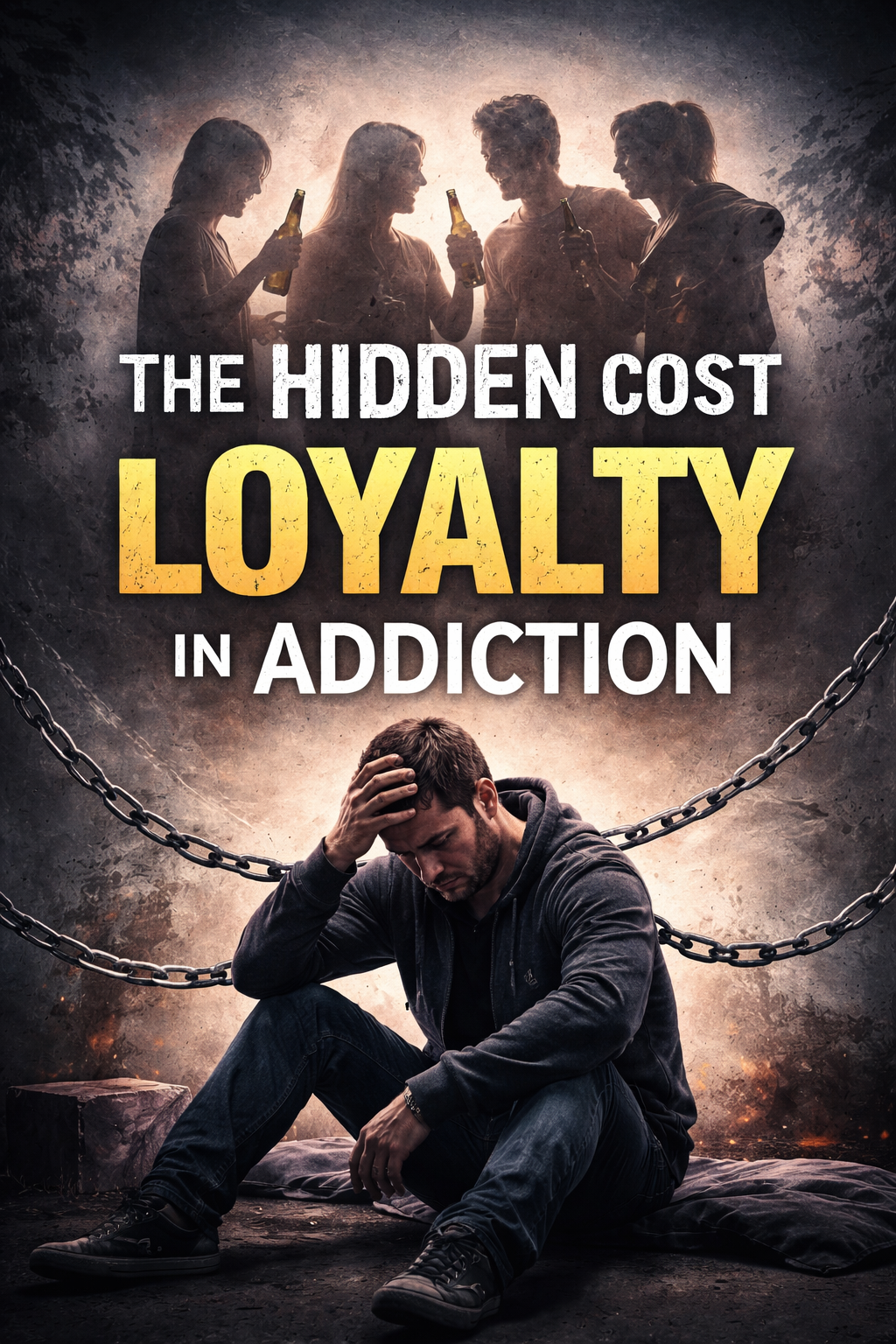
Loyalty is often regarded as a positive and admirable trait—one that reflects commitment, trust, and emotional connection. However, within the context of addiction, loyalty can take on a more complex and sometimes harmful role. Individuals may find themselves deeply tied to people, environments, or behaviors that reinforce their addiction, making change feel like betrayal rather than growth. This form of misplaced loyalty can create powerful psychological barriers, as it intertwines identity, belonging, and coping mechanisms with harmful patterns. Understanding the hidden cost of loyalty in addiction is essential, as it reveals how something inherently positive can unintentionally sustain cycles of dependence and hinder the process of recovery.
The Hidden Cost of Loyalty in Addiction
Loyalty is often seen as a virtue—something that reflects commitment, strength, and integrity. In many areas of life, loyalty helps build trust and maintain meaningful relationships. However, in the context of addiction, loyalty can take on a different and more complex role. What is typically a positive trait can quietly become a barrier to change, keeping individuals stuck in harmful patterns long after they recognize the need for something different.
The hidden cost of loyalty in addiction lies in what—or who—that loyalty is directed toward. For some, it may be loyalty to people who share or enable addictive behaviors. For others, it may be loyalty to routines, identities, or even the addiction itself. Over time, these attachments can create a powerful emotional pull that makes letting go feel like betrayal rather than growth.
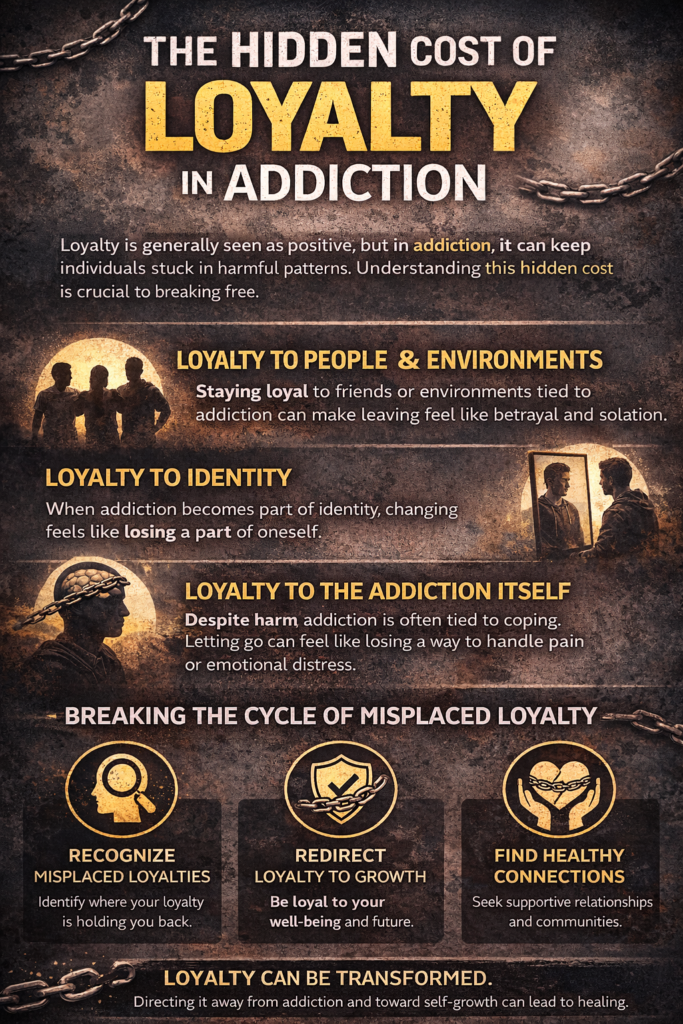
Loyalty to People and Environments
Addiction often develops within a social context. Friendships, relationships, or environments that revolve around substance use or addictive behaviors can reinforce a sense of belonging. Leaving these environments may feel like abandoning not just a habit, but a community or identity.
This creates an internal conflict:
- “If I change, who will I lose?”
- “Am I betraying people who stood by me?”
As a result, individuals may remain in unhealthy situations out of a sense of obligation, even when those environments contribute to ongoing harm.
Loyalty to Identity
Over time, addiction can become intertwined with a person’s sense of self. Individuals may begin to see themselves through the lens of their addiction, leading to beliefs such as:
- “This is just who I am.”
- “I’ve always been this way.”
This form of loyalty is subtle but powerful. Letting go of the addiction may feel like losing a part of oneself, even if that part is harmful. Change then becomes not just difficult, but existentially uncomfortable.
Loyalty to the Addiction Itself
Addiction often serves a purpose—it may provide relief from emotional pain, stress, or trauma. In this sense, individuals may develop a kind of emotional loyalty to the addiction because it has “helped” them cope.
This creates a paradox:
- The addiction is harmful
- But it also feels necessary
Letting go can feel like giving up a coping mechanism without a clear replacement, making the idea of recovery feel risky or even threatening.
The Role of Guilt and Obligation
Loyalty in addiction is frequently reinforced by guilt. Individuals may feel they “owe” something—to people, to their past, or to the patterns they’ve maintained.
Thoughts like:
- “I can’t just walk away.”
- “I’ve come this far, I can’t stop now.”
These beliefs can trap individuals in cycles of behavior that no longer serve them, turning loyalty into a form of self-sabotage.
Breaking the Cycle of Misplaced Loyalty
Recovery often requires redefining loyalty—not abandoning it, but redirecting it.
This includes:
- Being loyal to your well-being and future
- Recognizing that growth is not betrayal
- Allowing yourself to outgrow environments that no longer support you
It also involves building new forms of connection that support healthier behaviors and identities.
Reframing Loyalty as Self-Respect
One of the most important shifts in recovery is understanding that choosing yourself is not selfish—it is necessary. Loyalty does not have to mean staying the same; it can mean honoring your need for change.
Healthy loyalty might look like:
- Setting boundaries with people or environments
- Seeking support that aligns with recovery
- Letting go of patterns that no longer serve you
The Cost of Staying the Same
The longer misplaced loyalty goes unexamined, the higher the cost:
- Continued emotional and physical harm
- Lost opportunities for growth
- Deepening dependence on addiction
Recognizing this cost is often the turning point—where loyalty to the past is replaced by commitment to the future.
Final Thought
Loyalty is not the problem—it’s where it’s placed. In addiction, misplaced loyalty can quietly keep people stuck, disguising itself as strength when it is actually holding them back.
Recovery begins when loyalty shifts inward—
when staying true no longer means staying the same,
but becoming who you are meant to be.
Reclaiming Yourself: Self-Management Strategies for Overcoming the Hidden Cost of Loyalty in Addiction
Loyalty is often praised as a strength—something that reflects commitment, resilience, and integrity. However, in the context of addiction, loyalty can quietly become a barrier to recovery. Whether it is loyalty to people, environments, identities, or even the addiction itself, these attachments can make change feel like betrayal.
Understanding the hidden cost of loyalty is the first step. The next—and most important—is learning how to manage it in a way that supports growth rather than prevents it.
Recognizing Where Your Loyalty Is Placed
The foundation of self-management begins with awareness. Loyalty in addiction is often automatic and unquestioned.
Ask yourself:
- What or who am I staying loyal to?
- Is this loyalty helping me grow—or keeping me stuck?
- What am I afraid will happen if I let go?
This reflection helps shift loyalty from an unconscious pattern to a conscious choice.
Reframing Loyalty as Self-Responsibility
One of the most powerful mindset shifts is redefining loyalty. Instead of viewing change as a betrayal, begin to see it as a matter of self-responsibility.
Replace:
- “I’m being disloyal by changing”
With: - “I’m being responsible for my well-being.”
This cognitive shift reduces guilt and allows space for healthier decisions.
Managing Guilt and Emotional Conflict
Letting go of unhealthy loyalty often brings guilt, even when change is necessary. This emotional conflict can pull individuals back into old patterns.
Self-management strategies include:
- Acknowledging guilt without letting it control decisions
- Reminding yourself that growth may feel uncomfortable, but it is not wrong
- Practicing self-compassion instead of self-criticism
Guilt does not always mean you are doing something wrong—it can mean you are doing something different.
Setting Boundaries with People and Environments
Breaking loyalty patterns often requires clear boundaries. This may involve distancing yourself from relationships or environments that reinforce addiction.
Examples include:
- Limiting time with people who encourage harmful behaviors
- Avoiding environments tied to past habits
- Communicating your needs clearly and respectfully
Boundaries are not rejection—they are protection.
Developing New Sources of Connection
One reason loyalty is hard to break is that it is often tied to a sense of belonging. Removing those connections without replacing them can lead to isolation.
Self-management involves actively building new, supportive connections, such as:
- Support groups or recovery communities
- Therapy or counseling relationships
- Healthy friendships aligned with your goals
Connection should not be sacrificed—it should be redirected.
Separating Identity from Addiction
When loyalty is tied to identity, change can feel like losing yourself. A key strategy is learning to separate who you are from what you’ve experienced.
Practice reframing:
- “I am not my addiction—I am someone working through it.”
This creates space for growth and reduces the fear associated with change.
Replacing Old Coping Mechanisms
If loyalty to addiction is rooted in its role as a coping tool, removing it without replacement can feel overwhelming. Self-management requires developing healthier coping strategies.
These may include:
- Emotional regulation techniques (journaling, mindfulness)
- Physical outlets (exercise, movement)
- Creative or purposeful activities
Recovery is not just about removing something—it’s about replacing it with something sustainable.
Practicing Small, Consistent Changes
Breaking loyalty patterns does not happen all at once. It requires gradual, consistent effort.
Start with:
- One boundary
- One new habit
- One supportive connection
Small actions build confidence and reduce the emotional intensity of change.
The Shift from Loyalty to Growth
At its core, recovery involves redefining what it means to be “loyal.” Instead of staying tied to the past, loyalty becomes a commitment to your future.
Final Thought
The hidden cost of loyalty in addiction is not always obvious—it often feels like strength when it is actually holding you back. But loyalty is not something you have to lose. It is something you can redirect.
You can be loyal to your healing.
You can be loyal to your growth.
And most importantly, you can be loyal to yourself.
Supporting Change: Family Strategies for Understanding the Hidden Cost of Loyalty in Addiction
Loyalty is often seen as one of the strongest bonds within families. It represents love, commitment, and standing by one another through difficult times. However, in the context of addiction, loyalty can become complicated. What is meant to protect and support can sometimes unintentionally enable harmful behaviors or keep individuals stuck in cycles they are trying to escape.
Understanding the hidden cost of loyalty in addiction is essential for families. It allows loved ones to recognize when loyalty shifts from supportive to counterproductive, and to redirect it in ways that promote healing and growth.
Recognizing When Loyalty Becomes Enabling
Families often show loyalty by protecting, covering up, or making excuses for a loved one’s behavior. While this may come from a place of care, it can unintentionally reinforce addiction.
Examples include:
- Minimizing the severity of the problem
- Shielding the individual from consequences
- Providing support that enables continued use
A key strategy is learning to ask:
“Is this helping them recover, or helping them stay the same?”
Shifting Loyalty from the Addiction to the Person
One of the most important mindset changes for families is separating the individual from the addiction. Loyalty should not be directed toward maintaining harmful patterns—it should be directed toward the person’s well-being and recovery.
This means:
- Supporting healthy choices, not harmful ones
- Encouraging growth rather than preserving comfort
- Recognizing that change may feel uncomfortable but is necessary
Loyalty becomes most powerful when it supports who the person can become, not who they are in addiction.
Setting Healthy Boundaries
Boundaries are essential in preventing loyalty from becoming enabling. Many families fear that setting limits means withdrawing support, but in reality, boundaries are a form of structured care.
Healthy boundaries might include:
- Refusing to provide financial support that enables substance use
- Not participating in behaviors that reinforce addiction
- Clearly communicating expectations and consequences
Boundaries communicate: “I care about you, but I cannot support what harms you.”
Managing Guilt Within the Family
Families often experience guilt when they begin to change their approach. Thoughts like “I’m abandoning them” or “I should be doing more” can make it difficult to set limits.
It is important to understand:
- Supporting recovery may feel harder than enabling
- Guilt does not always mean you are doing something wrong
- Healthy support sometimes requires difficult decisions
Managing this guilt allows families to remain consistent in their support.
Encouraging Independence and Responsibility
Loyalty can sometimes lead families to take on too much responsibility for the individual’s life. While this may feel helpful, it can prevent the person from developing accountability and self-management skills.
Supportive strategies include:
- Encouraging decision-making and responsibility
- Allowing natural consequences when appropriate
- Supporting efforts toward independence
Recovery is strengthened when individuals learn to take ownership of their actions.
Promoting Open and Honest Communication
Misplaced loyalty can create patterns of silence or avoidance within families. Open communication helps break these patterns and creates space for understanding.
Effective communication includes:
- Speaking honestly but respectfully
- Avoiding blame or judgment
- Expressing concern while maintaining empathy
This fosters trust and reduces the need for secrecy.
Seeking Support as a Family
Families do not have to navigate this process alone. Support groups, counseling, and educational resources can help families understand addiction and develop healthier ways of supporting their loved one.
Examples include:
- Family therapy
- Support groups like Al-Anon
- Educational workshops on addiction
These resources provide guidance, reduce isolation, and help families stay grounded in effective strategies.
Redefining Loyalty as Support for Growth
At its core, the goal is not to eliminate loyalty—but to redefine it. Loyalty in addiction recovery means supporting change, even when it is difficult.
It means:
- Standing by someone while encouraging growth
- Choosing long-term well-being over short-term comfort
- Accepting that love sometimes requires limits
Final Thought
The hidden cost of loyalty in addiction is not always obvious—it often feels like love, protection, or commitment. But when loyalty keeps someone stuck, it no longer serves its intended purpose.
Families have the power to transform loyalty into something stronger—
not loyalty to the addiction,
but loyalty to healing, growth, and a better future.
Breaking the Cycle: Community Strategies to Address the Hidden Cost of Loyalty in Addiction
Addiction does not exist in isolation—it is shaped and sustained by the environments, relationships, and communities individuals are part of. One of the most overlooked influences in this process is loyalty. While often seen as a positive and stabilizing force, loyalty within certain social and community contexts can unintentionally reinforce addictive behaviors. Whether it is loyalty to peer groups, cultural norms, or shared environments, these bonds can make change feel like betrayal.
Understanding the hidden cost of loyalty in addiction requires looking beyond the individual and examining the role of community systems. When communities recognize how loyalty can both support and hinder recovery, they can begin to create structures that redirect loyalty toward healing and growth.
Recognizing Community-Level Loyalty Patterns
In many communities, addiction is intertwined with social identity and belonging. Peer groups, neighborhoods, or subcultures may normalize or even encourage certain behaviors, making it difficult for individuals to step away.
Community awareness involves asking:
- What behaviors are being normalized or overlooked?
- Are there unspoken expectations to “fit in” that reinforce addiction?
- How does belonging influence decision-making?
By identifying these patterns, communities can begin to shift norms in healthier directions.
Creating Alternative Support Networks
One of the most effective ways to address misplaced loyalty is by providing alternative sources of belonging. When individuals leave environments tied to addiction, they need new spaces where they feel accepted and supported.
Community strategies include:
- Recovery community centers
- Peer support groups and mentorship programs
- Safe, substance-free social spaces
These alternatives help individuals transfer loyalty from harmful environments to supportive communities.
Promoting Positive Peer Influence
Peer influence is powerful. Communities can harness this by encouraging positive role models and peer leaders who promote recovery-oriented values.
This can involve:
- Highlighting recovery success stories
- Training peer mentors with lived experience
- Encouraging group accountability in supportive settings
When recovery becomes visible and valued, loyalty begins to shift naturally.
Reducing Stigma Around Change
A major barrier to breaking loyalty ties is the fear of judgment or rejection. Communities that stigmatize change—viewing it as abandonment or weakness—make recovery more difficult.
To counter this, communities can:
- Normalize personal growth and change
- Celebrate individuals who pursue recovery
- Challenge narratives that equate loyalty with staying the same
Reducing stigma allows individuals to choose growth without fear of social loss.
Providing Integrated Support Services
Addiction is often linked to broader challenges such as mental health issues, unemployment, or housing instability. Communities can reduce reliance on harmful loyalty networks by offering comprehensive, integrated services.
These may include:
- Mental health counseling
- Job training and employment programs
- Housing and case management support
When individuals have access to resources, they are less dependent on environments that reinforce addiction.
Encouraging Healthy Boundaries at a Community Level
Communities can also model and reinforce the importance of boundaries. This includes setting expectations that support recovery while discouraging harmful behaviors.
Examples include:
- Community policies that discourage substance use in shared spaces
- Clear expectations within support programs
- Encouraging respectful accountability among peers
These boundaries help redefine what it means to belong.
Outreach and Engagement for Those at Risk
Individuals deeply embedded in loyalty-driven environments may not actively seek help. Community outreach is essential in bridging this gap.
Effective outreach strategies include:
- Mobile support services
- Collaboration with local organizations and leaders
- Engagement through schools, workplaces, and community events
Meeting individuals where they are reduces barriers to change.
Redefining Loyalty as Commitment to Growth
Ultimately, communities have the power to reshape how loyalty is understood. Instead of loyalty being tied to staying in the same patterns, it can be reframed as a commitment to collective well-being and growth.
This shift encourages:
- Supporting individuals who choose recovery
- Valuing health and stability over harmful traditions
- Building cultures that evolve rather than remain stuck
The Role of Community in Sustainable Recovery
Recovery is not just an individual achievement—it is supported or hindered by the surrounding environment. Communities that provide connection, resources, and acceptance make it easier for individuals to leave behind harmful forms of loyalty.
Final Thought
The hidden cost of loyalty in addiction often lies in its invisibility—it feels like belonging, even when it causes harm. But communities have the power to transform loyalty into something stronger and healthier.
Not loyalty to harmful patterns,
but loyalty to people’s potential, growth, and recovery.
And when communities make that shift,
they don’t just support recovery—they make it possible.
Frequently Asked Questions
Here are some common questions:
1. What does “loyalty” mean in the context of addiction?
In addiction, loyalty refers to emotional attachment or commitment to people, environments, identities, or behaviors that may reinforce addictive patterns—even when they are harmful.
2. How can loyalty become harmful in addiction?
Loyalty becomes harmful when it keeps individuals stuck in unhealthy situations, such as staying connected to people or environments that encourage substance use or prevent change.
3. Why do people feel loyal to harmful behaviors or environments?
Loyalty is often tied to:
- A sense of belonging
- Fear of losing relationships
- Emotional attachment
- Past experiences or shared history
These factors make it difficult to walk away, even when change is needed.
4. Can someone be “loyal” to their addiction itself?
Yes. Addiction often serves as a coping mechanism, providing relief from stress, trauma, or emotional pain. This can create a form of emotional dependence or loyalty to the addiction.
5. How does loyalty affect recovery?
Loyalty can act as a psychological barrier to recovery by:
- Creating guilt about change
- Reinforcing old habits
- Preventing individuals from leaving harmful environments
6. Why does change feel like betrayal in addiction?
Change can feel like betrayal because it may involve:
- Distancing from relationships
- Leaving familiar environments
- Letting go of an established identity
This creates internal conflict between growth and belonging.
7. What is “misplaced loyalty”?
Misplaced loyalty is loyalty directed toward things that no longer serve a person’s well-being, such as toxic relationships, harmful routines, or addictive behaviors.
8. How does guilt play a role in loyalty and addiction?
Guilt can make individuals feel they owe loyalty to people or situations, even when those connections are harmful. This guilt can prevent them from making necessary changes.
9. Can family loyalty contribute to addiction?
Yes. Family dynamics may unintentionally reinforce addiction through:
- Enabling behaviors
- Avoiding difficult conversations
- Prioritizing harmony over change
10. How do social groups influence loyalty in addiction?
Peer groups can create strong pressure to conform. Loyalty to these groups may make individuals feel they must maintain certain behaviors to belong, even if those behaviors are harmful.
11. What are the signs that loyalty is keeping someone stuck?
Common signs include:
- Feeling guilty about making positive changes
- Staying in unhealthy relationships or environments
- Fear of losing identity or belonging
- Prioritizing others’ expectations over personal well-being
12. How can someone begin to break unhealthy loyalty patterns?
Steps include:
- Identifying where loyalty is misplaced
- Setting boundaries
- Seeking healthier support systems
- Reframing change as growth, not betrayal
13. Does breaking loyalty mean abandoning people?
Not necessarily. It means changing the relationship dynamic or setting boundaries. In some cases, distance may be necessary, but the goal is self-protection—not rejection.
14. What role does identity play in loyalty and addiction?
When addiction becomes part of identity, letting go can feel like losing a part of oneself. This makes change emotionally difficult and reinforces loyalty to the addiction.
15. What is the most important takeaway about loyalty in addiction?
The key takeaway is that loyalty itself is not the problem—misplaced loyalty is. Recovery involves redirecting loyalty toward personal well-being, growth, and a healthier future.
Conclusion
The hidden cost of loyalty in addiction lies in its ability to disguise itself as strength while quietly preventing change. When loyalty is directed toward harmful relationships, environments, or behaviors, it can keep individuals trapped in patterns that no longer serve their well-being. Recognizing this dynamic allows for a critical shift—from viewing change as betrayal to understanding it as an act of self-preservation and growth. By redefining loyalty as a commitment to one’s health, future, and recovery, individuals can begin to break free from these constraints. Ultimately, recovery is not about abandoning loyalty, but about redirecting it toward what truly supports healing and long-term transformation.
Video: