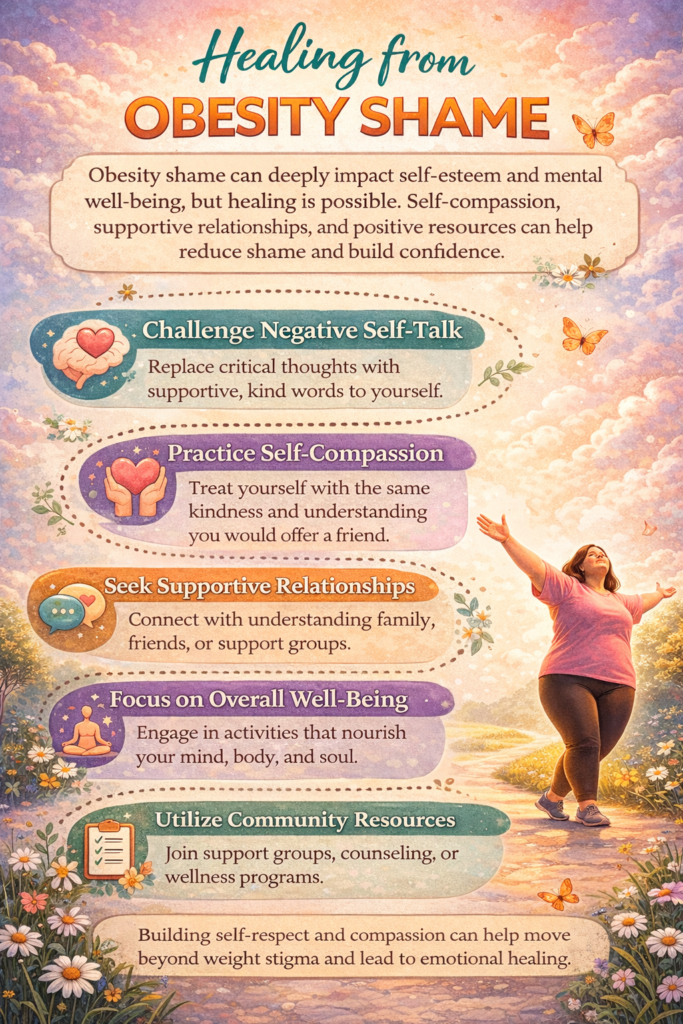
Obesity shame can have a strong impact on a person’s emotional well-being, self-esteem, and overall quality of life. Many individuals living with obesity face stigma, judgment, and negative stereotypes that may lead to feelings of embarrassment, guilt, or self-blame. Over time, these experiences can cause people to internalize harmful beliefs about their bodies and personal worth. Healing from obesity shame involves recognizing these influences, challenging negative self-perceptions, and developing a more compassionate relationship with oneself. This process focuses not only on physical health but also on emotional healing and rebuilding confidence.
Healing from Obesity Shame
Obesity is often discussed in terms of health, weight, and lifestyle, but one of the most painful aspects many people experience is shame. Individuals living with obesity may face stigma, judgment, and negative stereotypes from society, healthcare systems, and sometimes even from themselves. Over time, these experiences can create deep emotional wounds and feelings of unworthiness. Healing from obesity shame involves more than physical changes—it requires addressing the emotional impact, developing self-compassion, and rebuilding a healthy relationship with one’s body and identity.
Understanding Obesity Shame
Obesity shame often develops through repeated experiences of criticism, discrimination, or social pressure related to body size. Many individuals internalize these messages and begin to believe that their weight defines their worth as a person. This can lead to feelings of embarrassment, self-blame, and isolation.
Shame can affect mental health in several ways, including:
- low self-esteem
- anxiety or depression
- avoidance of social situations
- difficulty seeking medical care
- emotional eating or unhealthy coping habits
Recognizing the emotional effects of weight stigma is an important first step in the healing process.
Challenging Negative Self-Beliefs
One of the most important parts of healing from obesity shame is learning to challenge harmful beliefs about oneself. Many individuals develop internal narratives that equate body size with personal failure. These beliefs often come from external messages repeated over time.
Healing begins when individuals start to question these messages and replace them with more compassionate perspectives. Understanding that body weight can be influenced by genetics, environment, metabolism, mental health, and social factors can help reduce feelings of personal blame.
Practicing Self-Compassion
Self-compassion plays a key role in overcoming shame. Instead of responding to struggles with harsh criticism, individuals can practice kindness toward themselves.
Self-compassion strategies may include:
- acknowledging emotions without judgment
- replacing negative self-talk with supportive thoughts
- recognizing personal strengths beyond physical appearance
- accepting that healing takes time and patience
When individuals treat themselves with understanding and respect, they create space for emotional growth and healing.
Building a Supportive Environment
Healing from obesity shame is easier when individuals are surrounded by supportive and understanding people. Positive relationships can reinforce self-worth and provide encouragement during difficult moments.
Support may come from:
- trusted friends or family members
- therapists or counselors
- support groups focused on body image or health
- communities that promote body respect and mental well-being
These connections can help individuals feel less alone in their experiences and strengthen emotional resilience.
Focusing on Health Rather Than Shame
Shifting the focus from shame to overall well-being can be empowering. Instead of defining success by weight alone, individuals can prioritize habits that support both physical and emotional health.
Examples include:
- engaging in physical activity that feels enjoyable
- Practicing balanced nutrition
- improving sleep and stress management
- focusing on mental health and emotional healing
This approach emphasizes sustainable health and personal growth rather than judgment or punishment.
Conclusion
Healing from obesity shame is a deeply personal journey that involves rebuilding self-worth, challenging harmful beliefs, and developing compassion toward oneself. While societal stigma can make this process difficult, individuals can begin to reclaim their confidence and identity by focusing on emotional healing and supportive relationships. By prioritizing self-respect, mental well-being, and healthy habits, people can move beyond shame and cultivate a more positive, empowering relationship with themselves.
Self-Management Strategies for Healing from Obesity Shame
Obesity shame can have a deep emotional impact on individuals, affecting self-esteem, confidence, and mental health. Many people who experience weight stigma internalize negative messages about their bodies, leading to feelings of guilt, embarrassment, or self-blame. Healing from obesity shame is not only about physical health but also about rebuilding self-worth and developing a compassionate relationship with oneself. Self-management strategies can help individuals take active steps toward emotional healing, challenge harmful beliefs, and build healthier habits that support both mental and physical well-being.
Understanding the Impact of Obesity Shame
Before healing can begin, it is important to recognize how obesity shame develops and how it affects emotional health. Negative societal attitudes toward body size can cause individuals to believe that their worth is defined by their weight. Over time, these beliefs may lead to avoidance of social activities, difficulty seeking healthcare, and negative self-talk.
Self-management starts with awareness. Recognizing how shame influences thoughts, behaviors, and emotions allows individuals to begin to change harmful patterns and build a healthier mindset.
Strategy 1: Practicing Self-Awareness
Self-awareness helps individuals identify negative thoughts related to body image and self-worth. By paying attention to internal dialogue, people can begin to understand how shame affects their emotions and decisions.
Ways to increase self-awareness include:
- journaling about thoughts and feelings related to body image
- reflecting on situations that trigger feelings of shame
- identifying patterns of negative self-talk
- recognizing emotional responses connected to body image
This awareness allows individuals to challenge harmful beliefs and replace them with healthier perspectives.
Strategy 2: Challenging Negative Self-Talk
Many individuals struggling with obesity shame develop critical inner voices that reinforce feelings of inadequacy. Learning to challenge and reframe these thoughts is an important self-management skill.
Examples of healthier thought patterns include:
- replacing self-blame with understanding and compassion
- recognizing personal strengths unrelated to body size
- focusing on progress rather than perfection
- acknowledging that body weight does not define personal value
Changing internal dialogue can gradually shift self-perception and improve emotional well-being.
Strategy 3: Developing Healthy Coping Skills
Emotional stress related to shame can sometimes lead to unhealthy coping behaviors. Developing positive coping strategies can help individuals manage difficult emotions in healthier ways.
Helpful coping techniques may include:
- practicing mindfulness or meditation
- engaging in physical activities that feel enjoyable
- pursuing hobbies that build confidence and self-expression
- connecting with supportive friends or family members
Healthy coping skills strengthen emotional resilience and help reduce the influence of shame.
Strategy 4: Setting Personal Wellness Goals
Instead of focusing solely on weight, individuals can benefit from setting wellness goals that support overall health and personal growth. These goals may focus on behaviors rather than numbers on a scale.
Examples include:
- improving sleep habits
- practicing regular physical movement
- focusing on balanced nutrition
- developing stress management routines
Setting realistic goals helps individuals feel empowered and reinforces positive change.
Strategy 5: Practicing Self-Compassion
Self-compassion is essential for healing from shame. Many people treat themselves more harshly than they would treat others. Learning to respond to personal struggles with kindness and patience can help reduce feelings of guilt and self-judgment.
Self-compassion may involve:
- accepting imperfections as part of being human
- celebrating small achievements
- forgiving oneself for past struggles
- acknowledging progress during the healing journey
Over time, self-compassion can strengthen self-worth and emotional healing.
Conclusion
Healing from obesity shame requires more than physical changes—it involves rebuilding self-respect, challenging harmful beliefs, and developing healthier emotional habits. Through self-management strategies such as self-awareness, positive self-talk, healthy coping skills, wellness-focused goals, and self-compassion, individuals can gradually overcome the negative effects of shame. By focusing on personal growth and overall well-being, people can develop a healthier relationship with themselves and move toward a life defined by confidence, resilience, and self-acceptance.
Family Support Strategies for Healing from Obesity Shame
Obesity shame can have lasting emotional effects on individuals, often leading to low self-esteem, social withdrawal, and negative self-perception. Many people who struggle with obesity experience judgment or stigma that can deeply impact their confidence and mental health. In the process of healing from obesity shame, family support plays an important role. Families can provide encouragement, understanding, and emotional safety that help individuals rebuild their sense of self-worth. By learning supportive strategies and fostering positive communication, families can create an environment that promotes healing, acceptance, and overall well-being.
Understanding the Impact of Obesity Shame
Before families can provide effective support, it is important to understand how obesity shame affects individuals. Negative societal messages about body size may cause individuals to internalize feelings of guilt or embarrassment. This can lead to emotional distress, avoidance of social activities, or reluctance to seek healthcare.
Family members who recognize the emotional impact of obesity shame can respond with empathy and compassion rather than criticism or pressure. Understanding these challenges is the first step in creating a supportive and healing environment.
Strategy 1: Encourage Open and Respectful Communication
Open communication allows individuals to express their feelings without fear of judgment. Families can support healing by creating a safe space where conversations about body image, health, and emotions are welcomed.
Helpful communication practices include:
- listening without interrupting or criticizing
- acknowledging the individual’s feelings and experiences
- avoiding negative comments about weight or appearance
- focusing on emotional well-being rather than body size
Supportive conversations help individuals feel understood and respected.
Strategy 2: Promote Positive Body Respect
Families can help challenge harmful societal messages by encouraging a culture of body respect and acceptance. Rather than focusing on appearance, families can emphasize qualities such as kindness, strength, creativity, and personal achievements.
Promoting positive body respect may involve:
- avoiding body-shaming language
- modeling healthy attitudes toward body diversity
- celebrating personal strengths and accomplishments
- reinforcing that a person’s value goes beyond physical appearance
These practices help individuals build confidence and reduce internalized shame.
Strategy 3: Encourage Healthy Lifestyle Habits Together
Families can support physical and emotional health by adopting positive lifestyle habits together. When healthy behaviors are shared, individuals are less likely to feel singled out or judged.
Examples of supportive activities include:
- cooking balanced meals together
- participating in enjoyable physical activities
- encouraging stress management and relaxation
- creating healthy daily routines
This approach promotes overall wellness while strengthening family connections.
Strategy 4: Offer Emotional Encouragement
Emotional encouragement can help individuals rebuild self-confidence and resilience. Families can reinforce progress by recognizing efforts and celebrating small achievements.
Supportive actions may include:
- offering words of encouragement during difficult moments
- acknowledging personal growth and positive habits
- showing appreciation for efforts toward self-care and well-being
- expressing unconditional support and love
Consistent encouragement helps individuals feel valued and supported.
Strategy 5: Support Professional Guidance When Needed
In some cases, healing from obesity shame may require professional support. Therapists, counselors, or healthcare professionals can help individuals address body image concerns and develop healthier coping strategies.
Families can support this process by:
- encouraging access to professional counseling
- participating in family therapy if recommended
- supporting medical or mental health guidance
- reinforcing the importance of emotional well-being
Professional support can provide valuable tools for both individuals and families navigating this journey.
Conclusion
Healing from obesity shame is a gradual process that involves rebuilding self-confidence, challenging negative beliefs, and developing healthier emotional habits. Family support can make a significant difference in this journey by providing compassion, understanding, and encouragement. Through open communication, positive body respect, shared healthy habits, emotional support, and professional guidance when needed, families can help create a supportive environment that promotes healing. With patience and empathy, families can play an essential role in helping loved ones overcome shame and develop a stronger sense of self-worth and well-being.
Community Resource Strategies for Healing from Obesity Shame
Obesity shame is a deeply personal experience that can affect emotional well-being, self-esteem, and social confidence. Many individuals who live with obesity face stigma, discrimination, or negative stereotypes that can lead to feelings of embarrassment, isolation, and self-blame. Healing from obesity shame requires more than personal effort—it also involves access to supportive environments and helpful resources. Community resource strategies can play a significant role in this healing process by providing education, emotional support, and opportunities for personal growth. Communities that promote acceptance, mental health awareness, and healthy lifestyles can help individuals rebuild confidence and develop a more positive relationship with themselves.
Understanding the Role of Community Support
Communities influence how individuals view themselves and their health. When communities promote respect, understanding, and inclusion, they can reduce stigma and create safer spaces for individuals dealing with obesity shame. Community organizations, healthcare providers, and support networks can help people feel valued and supported rather than judged.
Community support can help individuals:
- reduce feelings of isolation
- gain access to helpful educational resources
- connect with others who share similar experiences
- build confidence and self-acceptance
These supportive environments encourage individuals to focus on healing rather than shame.
Strategy 1: Access Community Support Groups
Support groups within the community provide safe spaces where individuals can openly discuss experiences with body image, weight stigma, and emotional health. These groups allow people to share challenges and learn from others who have faced similar struggles.
Benefits of community support groups include:
- emotional encouragement from peers
- opportunities to share personal experiences
- learning coping strategies for managing shame
- building supportive social connections
Peer support can help individuals feel less alone and strengthen emotional resilience.
Strategy 2: Utilize Community Mental Health Services
Mental health professionals in community clinics or wellness centers can provide guidance for individuals struggling with body image concerns and obesity-related shame. Counseling and therapy can help individuals address negative beliefs about themselves and develop healthier perspectives.
Community mental health services may offer:
- individual counseling sessions
- group therapy focused on body image and self-esteem
- stress management and coping workshops
- referrals to specialized healthcare providers
Professional support can provide valuable tools for emotional healing and self-acceptance.
Strategy 3: Participate in Community Wellness Programs
Many communities offer wellness programs that focus on healthy living rather than weight stigma. These programs often encourage balanced nutrition, enjoyable physical activity, and overall well-being.
Examples of community wellness programs include:
- fitness classes designed for all body types
- nutrition education workshops
- mindfulness and stress management programs
- recreational activities that promote physical movement
These programs create positive experiences that support both physical and emotional health.
Strategy 4: Promote Education and Awareness in the Community
Community education plays an important role in reducing weight stigma and promoting acceptance. Schools, healthcare organizations, and community groups can host educational programs that address body diversity and respectful communication.
Awareness initiatives may include:
- public health campaigns promoting body respect
- workshops about the effects of weight stigma
- community discussions about mental health and body image
- educational resources about balanced health practices
Increasing awareness helps communities become more inclusive and supportive.
Strategy 5: Build Positive Community Connections
Developing supportive relationships within the community can strengthen emotional well-being and reduce feelings of shame. Positive social interactions can help individuals feel valued and connected.
Community connections may involve:
- participating in volunteer activities
- joining hobby or interest groups
- engaging in faith-based or cultural organizations
- attending community events and social gatherings
These connections foster a sense of belonging and help individuals focus on meaningful relationships rather than negative self-perceptions.
Conclusion
Healing from obesity shame is a complex journey that involves rebuilding confidence, challenging harmful beliefs, and creating supportive environments. Community resources play a vital role in this process by providing emotional support, educational opportunities, and access to wellness programs. Through support groups, mental health services, wellness initiatives, awareness programs, and positive social connections, communities can help individuals move beyond shame and toward self-acceptance. When communities promote understanding and respect, they create spaces where individuals can heal, grow, and develop a healthier sense of self-worth.
Frequently Asked Questions
Here are some common questions:
1. What is obesity shame?
Obesity shame refers to feelings of embarrassment, guilt, or self-blame related to body weight or body size. These feelings often develop because of societal stigma, negative stereotypes, or personal experiences of judgment from others.
2. Why do many people experience shame related to obesity?
Many individuals experience obesity shame due to social pressures that emphasize unrealistic body standards. Media messages, discrimination, and negative comments from others can cause people to internalize harmful beliefs about their worth and appearance.
3. How can obesity shame affect mental health?
Obesity shame can impact emotional well-being in several ways, including:
- low self-esteem
- anxiety or depression
- social withdrawal
- avoidance of healthcare or public settings
- unhealthy coping behaviors, such as emotional eating
Recognizing these effects is an important step toward healing.
4. What does healing from obesity shame involve?
Healing involves developing a healthier relationship with one’s body and self-image. This process may include practicing self-compassion, challenging negative beliefs, building supportive relationships, and focusing on overall well-being rather than judgment or criticism.
5. How can someone begin overcoming obesity shame?
People can start by:
- recognizing and challenging negative self-talk
- focusing on personal strengths and qualities beyond appearance
- setting realistic wellness goals
- practicing self-care and stress management
- seeking support from trusted individuals or professionals
Small steps toward self-acceptance can gradually reduce feelings of shame.
6. What role does self-compassion play in healing?
Self-compassion helps individuals treat themselves with kindness and understanding rather than harsh judgment. Learning to forgive past struggles and recognize personal growth can significantly improve emotional healing and self-worth.
7. Can support from others help with healing?
Yes. Support from family, friends, support groups, or mental health professionals can help individuals feel understood and valued. Positive relationships provide encouragement and help reduce feelings of isolation.
8. Should healing focus only on weight loss?
Healing from obesity shame focuses on overall well-being rather than weight alone. Emotional health, balanced habits, self-respect, and supportive environments are equally important aspects of the healing process.
9. When should someone seek professional help?
Professional help may be beneficial if obesity shame significantly affects mental health, relationships, or daily activities. Therapists or counselors can help individuals address body image concerns and develop healthier coping strategies.
10. Is it possible to fully overcome obesity shame?
Yes. Many individuals learn to rebuild self-worth and develop a positive relationship with their bodies over time. With self-compassion, support, and healthy coping strategies, people can move beyond shame and focus on personal growth and well-being.
Conclusion
Healing from obesity shame is a gradual journey that requires patience, self-compassion, and supportive environments. By acknowledging the impact of weight stigma, challenging harmful beliefs, and focusing on overall well-being, individuals can begin to rebuild their sense of self-worth. Support from family, communities, and mental health resources can further encourage this healing process. Ultimately, moving beyond shame allows individuals to focus on personal growth, health, and self-acceptance, creating a more positive and empowering relationship with themselves.
Video: Society Made Me Hate My Body #BodyImage #Healing