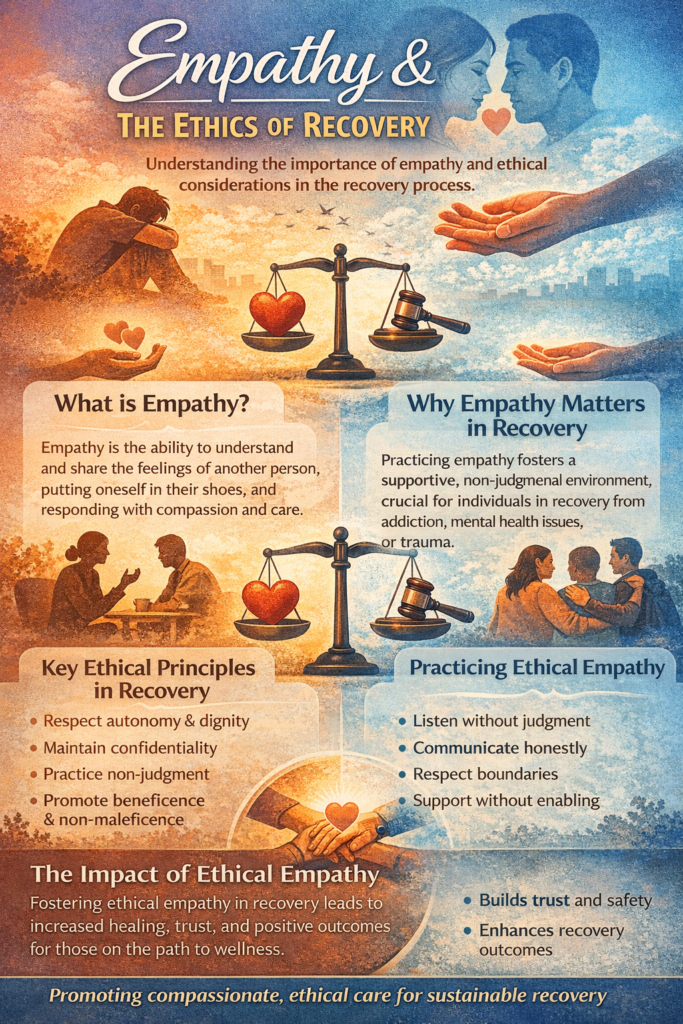
Addiction recovery is often approached through frameworks of responsibility, treatment, and behavioral change, yet these perspectives can overlook a critical ethical dimension: empathy. Empathy—the ability to understand and share the experiences of others—plays a central role in shaping how individuals, families, and societies respond to addiction. In environments where stigma and judgment are prevalent, a lack of empathy can create barriers to healing and reinforce cycles of shame and isolation. Understanding recovery through an ethical lens requires recognizing that compassion is not separate from accountability, but essential to it. By integrating empathy into recovery practices, we can move toward more humane and effective approaches that acknowledge the complexity of addiction.
The Ethics of Healing: Empathy as a Foundation for Addiction Recovery
Addiction recovery is often framed in terms of discipline, responsibility, and personal change. While these elements are important, they can overshadow a critical component of recovery: empathy. Empathy—the ability to understand and share the feelings of others—plays a vital ethical role in how society, families, and individuals approach addiction. In a world where stigma and judgment are common, empathy offers a pathway toward more humane and effective recovery practices. Understanding recovery through an ethical lens requires recognizing that compassion is not weakness, but a necessary condition for healing.
- Recovery involves:
- Personal responsibility
- Social support
- Ethical understanding
- Empathy bridges the gap between judgment and understanding
Understanding Empathy in Recovery
Empathy allows individuals and communities to move beyond blame and toward a deeper understanding of addiction as a complex human experience.
- Empathy involves:
- Recognizing emotional pain
- Understanding lived experiences
- Responding with compassion
- In recovery, it helps:
- Reduce stigma
- Build trust
- Encourage openness
The Ethical Importance of Empathy
From an ethical perspective, empathy shapes how we assign responsibility and respond to those struggling with addiction.
- Ethical questions include:
- Should addiction be treated as a moral failure or a health issue?
- What obligations do we have to support others in recovery?
- Empathy encourages:
- Fairness
- Compassionate care
- Reduced punitive responses
Empathy vs. Judgment
A judgment-based approach often leads to stigma, which can discourage individuals from seeking help. In contrast, empathy fosters connection and support.
- Judgment can lead to:
- Shame
- Isolation
- Avoidance of treatment
- Empathy promotes:
- Understanding
- Acceptance
- Engagement in recovery
Empathy in Self-Recovery
Empathy is not only directed toward others—it is also essential for how individuals treat themselves during recovery.
- Self-empathy includes:
- Recognizing personal struggles without harsh self-criticism
- Accepting setbacks as part of growth
- Benefits:
- Reduces shame
- Encourages persistence
- Supports long-term healing
Empathy in Families and Communities
Support systems are more effective when grounded in empathy rather than control or blame.
- Families can:
- Listen without judgment
- Offer consistent support
- Encourage accountability with compassion
- Communities can:
- Reduce stigma
- Provide inclusive support systems
- Promote understanding through education
Balancing Empathy and Accountability
Empathy does not mean removing responsibility. Ethical recovery requires a balance between compassion and accountability.
- Empathy ensures:
- Individuals are treated with dignity
- Accountability ensures:
- Individuals take responsibility for change
- Together, they create:
- A more effective and ethical recovery process
Challenges to Practicing Empathy
Despite its importance, empathy can be difficult to maintain in systems shaped by stigma and inequality.
- Barriers include:
- Cultural attitudes toward addiction
- Lack of education
- Fear and misunderstanding
- Overcoming these challenges requires:
- Awareness
- Education
- Systemic change
Conclusion
Empathy is not just a supportive tool in addiction recovery—it is an ethical necessity. It reshapes how we understand responsibility, reduces stigma, and creates conditions where recovery becomes possible. By integrating empathy into personal, familial, and societal responses, we move toward a more just and effective approach to healing rooted in deeper understanding. Empathy has the power to transform individuals, strengthen relationships, and reshape systems of care. Ultimately, ethical recovery requires both compassion and accountability, recognizing that lasting change depends not only on behavior but on how we choose to see, support, and respond to one another.
Practicing Compassion: Self-Management Strategies for Empathy and the Ethics of Recovery
Empathy is often discussed as something we extend to others, but in addiction recovery, it must also be actively practiced within oneself. Self-management strategies play a crucial role in helping individuals develop empathy, reduce self-judgment, and navigate recovery in an ethical and sustainable way. By learning to regulate thoughts, emotions, and behaviors with compassion, individuals can move away from shame-based recovery models and toward approaches grounded in understanding and growth.
- Recovery requires:
- Emotional awareness
- Behavioral regulation
- Ethical reflection
- Empathy begins with how individuals treat themselves and others
Understanding Self-Management and Empathy
Self-management involves the ability to control and respond to internal experiences in a healthy way. When combined with empathy, it allows individuals to approach recovery with compassion rather than criticism.
- Self-management includes:
- Emotional regulation
- Thought awareness
- Behavioral control
- Empathy adds:
- Understanding of personal struggles
- Compassionate responses to setbacks
Strategy 1: Practicing Self-Awareness Without Judgment
The first step in developing empathy is recognizing thoughts and emotions without immediately labeling them as “good” or “bad.”
- Techniques include:
- Reflecting on emotional triggers
- Identifying patterns of behavior
- Key shift:
- From self-criticism → self-understanding
- Benefit:
- Reduces shame and promotes honest self-reflection
Strategy 2: Reframing Negative Self-Talk
Many individuals in recovery struggle with harsh internal dialogue. Reframing these thoughts is essential for building self-empathy.
- Common thoughts:
- “I failed again.”
- “I’m not strong enough.”
- Reframed as:
- “I’m learning from this setback.”
- “Recovery takes time and effort.”
- Outcome:
- Encourages resilience and persistence
Strategy 3: Developing Emotional Regulation Skills
Empathy requires the ability to sit with difficult emotions rather than escaping them.
- Techniques include:
- Mindfulness and breathing exercises
- Journaling or reflection
- Pausing before reacting
- Benefits:
- Prevents impulsive behavior
- Builds tolerance for discomfort
Strategy 4: Practicing Perspective-Taking
Empathy involves understanding not only oneself but also others.
- Practice:
- Considering others’ experiences and struggles
- Reflecting on how actions affect others
- Helps:
- Improve relationships
- Strengthen social support systems
Strategy 5: Setting Compassionate Boundaries
Empathy must be balanced with self-protection. Boundaries ensure that compassion does not turn into self-neglect.
- Examples:
- Limiting exposure to harmful environments
- Saying no to situations that threaten recovery
- Ethical balance:
- Caring for others while protecting personal well-being
Strategy 6: Accepting Relapse as Part of Growth
Relapse can trigger intense self-judgment, but an empathetic approach reframes it as part of the learning process.
- Reframing relapse:
- Not failure, but feedback
- Benefits:
- Reduces shame
- Encourages continued effort
- Supports a long-term recovery mindset
Limits of Self-Management
While self-management is important, empathy and ethical recovery also depend on external support and systemic conditions.
- Limitations include:
- Lack of access to care
- Social stigma
- Environmental stressors
- Recovery requires:
- Personal strategies
- AND supportive systems
Conclusion
Self-management strategies are essential for cultivating empathy and supporting ethical recovery. By learning to approach oneself with understanding rather than judgment, individuals can build a stronger foundation for long-term healing. At the same time, empathy must extend beyond the individual to families, communities, and broader systems, emphasizing the need for a balance between self and society. Self-management fosters self-empathy, emotional resilience, and ethical awareness, all of which strengthen the recovery process. However, lasting recovery requires more than personal growth—it depends on compassion and accountability working together to create meaningful and sustainable change.
Caring with Purpose: Family Support Strategies for Empathy and the Ethics of Recovery
Addiction recovery is not only an individual journey—it is deeply shaped by the presence and actions of family. Families often serve as the first and most consistent source of support, yet their approach can either foster healing or unintentionally reinforce harm. Integrating empathy into family support creates a more ethical framework for recovery, one that balances compassion with accountability. By understanding addiction through empathy rather than judgment, families can help create an environment where recovery is both possible and sustainable.
- Family support influences:
- Emotional stability
- Motivation for recovery
- Long-term outcomes
- Empathy transforms support from control → understanding
Understanding Empathy in Family Support
Empathy allows families to move beyond blame and toward a deeper understanding of addiction as a complex human experience.
- Empathy involves:
- Listening without judgment
- Recognizing emotional pain
- Validating experiences
- In family settings, it helps:
- Build trust
- Reduce conflict
- Encourage openness
Strategy 1: Practicing Non-Judgmental Communication
Communication is one of the most powerful tools families have. An empathetic approach focuses on understanding rather than criticizing.
- Effective communication includes:
- Active listening
- Using supportive language
- Avoiding blame or shame
- Example:
- Instead of “Why did you do this?” → “What are you going through?”
- Outcome:
- Creates a safe space for honesty and connection
Strategy 2: Balancing Empathy with Accountability
Empathy does not mean ignoring harmful behavior. Ethical recovery requires families to support growth while maintaining responsibility.
- Families should:
- Encourage accountability
- Avoid enabling behaviors
- Examples of enabling to avoid:
- Covering up consequences
- Providing resources that support addiction
- Goal:
- Combine compassion with clear expectations
Strategy 3: Developing Emotional Awareness as a Family
Families must recognize not only the individual’s emotions but also their own responses to addiction.
- Important practices:
- Reflecting on personal reactions (anger, frustration, fear)
- Understanding how these emotions affect interactions
- Benefit:
- Prevents reactive or harmful responses
- Promotes intentional, empathetic support
Strategy 4: Creating a Supportive Environment
An empathetic family environment encourages recovery by reducing stress and promoting stability.
- Key elements:
- Consistency and routine
- Emotional safety
- Encouragement rather than criticism
- This environment helps:
- Reduce triggers
- Strengthen recovery efforts
Strategy 5: Encouraging Self-Empathy in the Individual
Families can model and promote self-empathy, helping individuals treat themselves with compassion during recovery.
- Ways to support:
- Reinforcing positive progress
- Normalizing setbacks as part of growth
- Impact:
- Reduces shame
- Encourages persistence
Strategy 6: Setting Healthy Boundaries
Boundaries are essential to protect both the individual and the family while maintaining ethical support.
- Boundaries may include:
- Limits on financial or emotional support
- Clear expectations for behavior
- Purpose:
- Prevent burnout
- Reinforce accountability
- Boundaries are:
- Not punishment, but structure for recovery
Challenges Families Face
Even with empathy, families may struggle due to external and internal pressures.
- Common challenges:
- Emotional exhaustion
- Lack of knowledge about addiction
- Social stigma
- These challenges can:
- Make empathy difficult to sustain
- Lead to frustration or withdrawal
Conclusion
Family support grounded in empathy is essential for ethical and effective addiction recovery. By shifting from judgment to understanding, families can create environments that encourage healing while still maintaining accountability. Empathy allows families to see addiction not as a failure, but as a complex struggle that requires compassion, structure, and shared effort. Effective family support depends on open communication, clear boundaries, and a consistent commitment to empathy. Rooted in both compassion and accountability, ethical recovery becomes a shared responsibility—one in which families play a vital role in supporting not just behavioral change, but the dignity and humanity of the individual.
Building Compassionate Systems: Community Resource Strategies for Empathy and the Ethics of Recovery
Addiction recovery does not occur in isolation—it is shaped by the systems and communities that surround individuals. Community resources, such as treatment centers, support groups, and outreach programs, play a critical role in shaping how recovery is experienced. When these resources are grounded in empathy and ethical principles, they move beyond simply treating addiction to supporting the whole person. Implementing empathy within community strategies helps reduce stigma, increase access to care, and create more humane and effective recovery systems.
- Community resources influence:
- Access to treatment
- Social support and connection
- Public attitudes toward addiction
- Empathy shifts systems from punishment → support
Understanding Empathy in Community Contexts
Empathy at the community level means designing systems that recognize the complexity of addiction and respond with compassion rather than judgment.
- Community empathy includes:
- Treating addiction as a health issue
- Understanding diverse lived experiences
- Providing non-judgmental support services
- Leads to:
- Increased trust in services
- Greater willingness to seek help
Strategy 1: Expanding Accessible and Inclusive Services
Empathetic communities prioritize making resources available to all individuals, regardless of background or circumstance.
- Key approaches:
- Low-cost or free treatment programs
- Mobile clinics and outreach services
- Inclusive care for diverse populations
- Ethical focus:
- Equity in access to care
- Outcome:
- Reduces barriers and increases participation in recovery
Strategy 2: Implementing Harm Reduction Programs
Harm reduction reflects an empathetic understanding that recovery is a gradual process, not an immediate transformation.
- Examples include:
- Safe-use education
- Overdose prevention programs
- Needle exchange services
- Benefits:
- Reduces immediate health risks
- Builds trust between individuals and systems
- Ethical perspective:
- Values human life and dignity over punishment
Strategy 3: Creating Community-Based Support Networks
Strong community connections are essential for recovery. Empathy-driven support networks reduce isolation and promote belonging.
- Types of networks:
- Peer support groups
- Community recovery programs
- Mentorship initiatives
- Benefits:
- Shared understanding
- Emotional support
- Accountability
- Strengthens collective responsibility for recovery
Strategy 4: Promoting Education and Reducing Stigma
Stigma is one of the biggest barriers to recovery. Community education can reshape how addiction is perceived.
- Focus areas:
- Addiction as a health condition
- The role of trauma and environment
- Importance of empathy in recovery
- Outcomes:
- Increased awareness
- Reduced discrimination
- Greater acceptance of treatment
Strategy 5: Integrating Holistic Support Services
Addiction is often connected to broader social issues. Ethical community strategies address these underlying factors.
- Integrated services include:
- Mental health care
- Housing assistance
- Employment support
- Benefits:
- Addresses root causes of addiction
- Supports long-term recovery
- Reflects an empathetic, whole-person approach
Strategy 6: Encouraging Ethical Policy and Advocacy
Community resources are shaped by policies, and ethical recovery requires advocating for systems that prioritize care over punishment.
- Policy goals:
- Expand funding for treatment programs
- Reduce criminalization of addiction
- Promote equitable healthcare access
- Ethical impact:
- Creates sustainable, system-wide change
Challenges in Implementing Empathy
Despite its importance, integrating empathy into community systems can be difficult.
- Common barriers:
- Limited funding and resources
- Cultural stigma
- Institutional bias
- These challenges can:
- Limit the effectiveness of programs
- Reinforce inequality
Conclusion
Community resources play a vital role in shaping addiction recovery, and when grounded in empathy, they create more ethical and effective systems of care. By prioritizing accessibility, harm reduction, education, and holistic support, communities can shift recovery from an individual burden to a shared responsibility. Empathetic communities help reduce stigma, improve access to care, and support sustainable recovery outcomes. However, achieving this requires a strong commitment to equity and the recognition that ethical recovery depends on collective effort and systemic compassion. Ultimately, lasting change emerges when communities work together to build inclusive systems that uphold dignity, promote healing, and support long-term recovery for all individuals.
Frequently Asked Questions
Here are some common questions:
1. What does “Empathy and the Ethics of Recovery” mean?
It refers to understanding addiction recovery through a moral and compassionate lens, where empathy plays a central role in how individuals, families, and society respond to addiction.
2. Why is empathy important in addiction recovery?
Empathy helps:
- Reduce stigma
- Build trust between individuals and support systems
- Encourage people to seek and stay in treatment
It creates an environment where individuals feel understood rather than judged.
3. How does empathy differ from sympathy in recovery?
- Empathy: Understanding and sharing someone’s experience
- Sympathy: Feeling pity or concern for someone
Empathy is more effective because it promotes connection and mutual understanding rather than distance.
4. Does empathy mean excusing harmful behavior?
No. Empathy does not remove accountability.
- It helps explain behavior
- But still supports responsibility for change
Ethical recovery requires a balance between compassion and accountability.
5. What are the ethical issues in addiction recovery?
Key ethical questions include:
- Is addiction a moral failure or a health condition?
- How should society treat individuals struggling with addiction?
- What responsibilities do communities have in supporting recovery?
These questions shape policies and treatment approaches.
6. How does stigma affect recovery?
Stigma can:
- Increase shame
- Prevent people from seeking help
- Reinforce cycles of addiction
Empathy helps reduce stigma and supports more effective recovery outcomes.
7. Can individuals practice empathy toward themselves?
Yes. Self-empathy is essential in recovery.
- It involves:
- Accepting mistakes without harsh judgment
- Recognizing struggles as part of growth
- It helps:
- Reduce shame
- Build resilience
8. How can families use empathy in supporting recovery?
Families can:
- Listen without judgment
- Validate emotions
- Encourage accountability with compassion
Empathy strengthens trust and communication within families.
9. What role does empathy play in community and healthcare systems?
Empathy in systems leads to:
- More inclusive and accessible care
- Reduced discrimination
- Better patient-provider relationships
It shifts systems from punitive to supportive approaches.
10. Can empathy improve recovery outcomes?
Yes. Research and practice show that empathetic environments:
- Increase treatment engagement
- Improve mental health
- Support long-term recovery
11. What are common barriers to empathy in recovery?
Barriers include:
- Cultural stigma around addiction
- Lack of education
- Bias and stereotypes
- Emotional burnout in caregivers
These barriers can limit effective support.
12. How can empathy be developed as a skill?
Empathy can be strengthened through:
- Active listening
- Perspective-taking
- Reflective practices (e.g., journaling)
- Education about addiction
It is both a natural trait and a learned skill.
13. What is the relationship between empathy and accountability?
Empathy ensures individuals are treated with dignity, while accountability ensures responsibility for change.
- Together, they create:
- Balanced recovery
- Ethical decision-making
14. Is empathy enough for recovery?
No. Empathy is essential but not sufficient on its own.
Recovery also requires:
- Treatment (therapy, medication)
- Support systems
- Structural and social changes
15. What is the key takeaway about empathy in recovery?
Empathy is not just a supportive tool—it is an ethical foundation for recovery.
- It transforms:
- How individuals see themselves
- How others respond to addiction
- It leads to:
- More humane
- More effective recovery systems
Conclusion
Empathy is not simply an emotional response in the context of addiction recovery—it is an ethical foundation that shapes how healing occurs. When individuals are met with understanding rather than judgment, they are more likely to engage in recovery and sustain long-term change. At the same time, empathy must be balanced with accountability to ensure that recovery remains meaningful and responsible. By embedding empathy into personal, familial, and societal approaches, we can challenge stigma, improve support systems, and create pathways to recovery that are both compassionate and just. Ultimately, ethical recovery is not only about overcoming addiction, but about transforming how we understand and respond to human struggle.
Video: