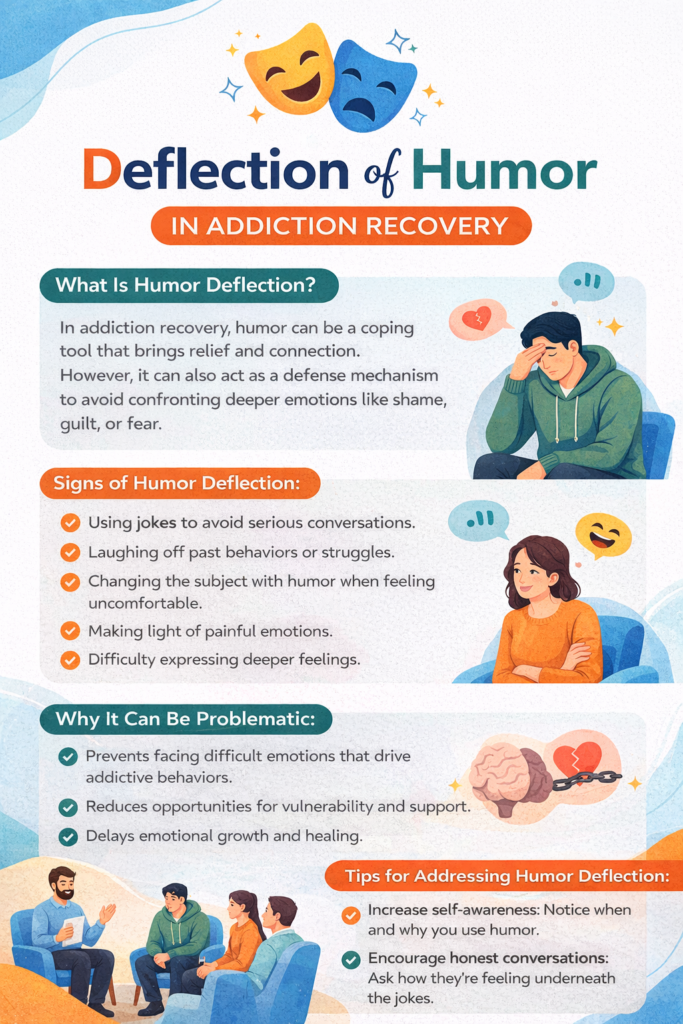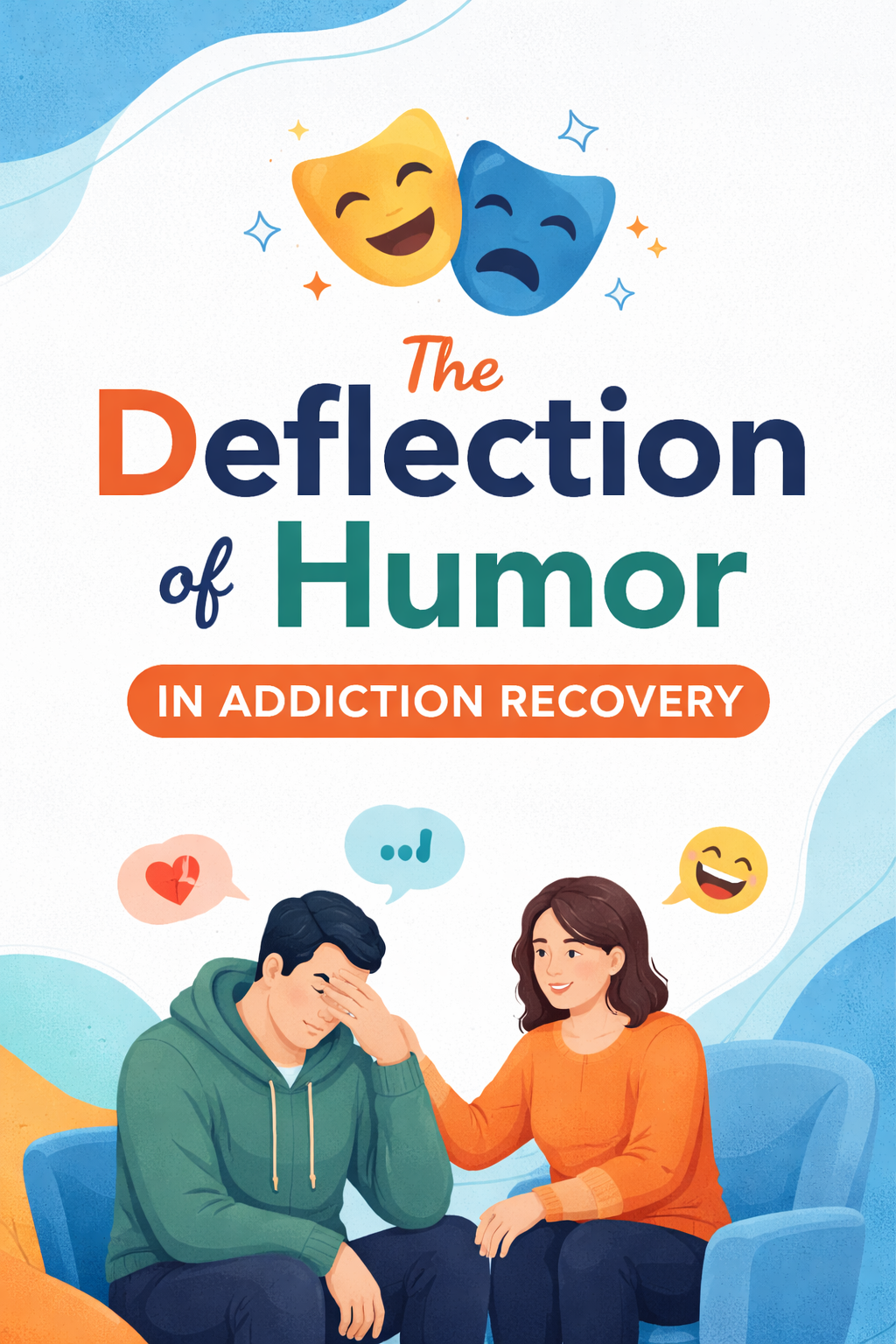
In addiction recovery, humor is often seen as a helpful coping tool that provides relief, connection, and a sense of lightness during difficult times. However, it can also function as a form of emotional avoidance. People may rely on jokes or sarcasm to avoid uncomfortable feelings such as shame, guilt, fear, or vulnerability. While this can ease tension in the moment, it may prevent deeper emotional processing that is essential for long-term recovery. Recognizing humor as both a coping strategy and a defense mechanism is important for developing self-awareness and supporting meaningful growth.
The Deflection of Humor in Addiction Recovery
Humor can be a helpful coping tool that brings relief and connection. However, it can also serve as an emotional deflection, allowing individuals to avoid difficult feelings such as shame, fear, or vulnerability. While it eases discomfort in the moment, it may hinder deeper emotional healing.
Recognizing this pattern is an important step in recovery. Humor itself is not the problem—it’s how and why it is used that matters. When humor consistently replaces honest expression, it can limit self-awareness and create barriers in relationships. Recovery requires individuals to face difficult emotions directly, and overreliance on humor can make that process more challenging.
Developing awareness around this behavior allows individuals to use humor more intentionally. Instead of avoiding emotions, they can first acknowledge and express them, then use humor in a balanced and supportive way. This shift helps maintain the benefits of humor while still allowing space for growth and healing.
Key Points
- Role of Humor in Recovery
- Can reduce stress and create a connection
- Helps ease difficult conversations
- When Humor Becomes Deflection
- Used to avoid uncomfortable emotions
- Replaces honest communication
- Masks deeper feelings like shame or fear
- Impact on Recovery
- Limits emotional processing
- Creates distance in relationships
- Slows personal growth
- Building Awareness
- Notice when humor is used during serious moments
- Reflect on underlying emotions
- Healthy Alternatives
- Practice open emotional expression
- Use mindfulness to sit with discomfort
- Develop other coping strategies
- Balanced Use of Humor
- Combine honesty with lightness
- Use humor to support—not avoid—healing
Key Takeaway:
Humor can be a powerful tool in recovery, but when used as deflection, it may hinder progress. By using humor with awareness and balance, individuals can support both emotional healing and genuine connection.
Laughing with Awareness: Self-Management Strategies for Humor in Addiction Recovery
Humor can be a powerful support in addiction recovery when used with intention. It can ease stress, strengthen connections, and make difficult moments more manageable. However, humor can also become a way to avoid deeper emotions, acting as a form of deflection rather than healing. Learning to recognize and manage this balance is an important part of recovery. By developing self-awareness and using intentional strategies, individuals can shift humor from avoidance to a healthy and supportive coping tool.
Building this awareness begins with noticing when and why humor is used. Often, jokes or sarcasm appear during uncomfortable conversations or when difficult emotions arise. Pausing to reflect on these moments—asking “What am I really feeling?”—can create space for more honest responses. Over time, this helps individuals acknowledge emotions rather than hide them. When combined with mindful communication, emotional labeling, and healthier coping strategies, humor can be used to support growth rather than block it. The goal is not to eliminate humor, but to use it alongside honesty, creating a recovery process that is both authentic and balanced.
Key Points
- Self-Awareness
- Notice when humor is used in uncomfortable situations
- Identify emotional triggers behind the behavior
- Emotional Labeling
- Name underlying feelings (e.g., anxiety, shame, fear)
- Acknowledge emotions before using humor
- Mindful Communication
- Respond honestly before using humor
- Balance openness with lightness in conversations
- Setting Boundaries with Humor
- Avoid self-deprecating or minimizing jokes
- Use humor in ways that support—not hinder—growth
- Alternative Coping Strategies
- Journaling, mindfulness, exercise, or talking with others
- Build a range of healthy emotional outlets
- Self-Compassion
- Replace self-criticism with understanding
- Reduce the need to hide behind humor
- Seeking Feedback
- Accept input from trusted peers or professionals
- Use feedback to increase awareness and adjust behavior
Key Takeaway:
Humor can be a valuable part of recovery when used with awareness. By balancing laughter with emotional honesty, individuals can turn humor into a tool for healing rather than a way to avoid it.
Supporting Understanding: Family Strategies for Navigating Humor in Addiction Recovery
In addiction recovery, humor can act as both a source of connection and a form of emotional avoidance. While it can bring relief and lighten difficult moments, it may also be used to deflect deeper feelings like fear, shame, or vulnerability. For families supporting a loved one, understanding this balance is essential. With awareness and the right approach, families can help ensure that humor strengthens relationships rather than creating distance.
Recognizing when humor becomes deflection is an important first step. Loved ones may notice jokes appearing during serious or emotional conversations. Instead of reacting with frustration, families can respond with empathy and gently guide the conversation toward honesty. Creating a safe, non-judgmental environment encourages openness and makes it easier for individuals to express their true feelings. At the same time, setting respectful boundaries and modeling healthy communication helps maintain focus on meaningful discussions. With patience, education, and support, families can play a key role in helping their loved one use humor in a balanced and healthy way throughout recovery.
Key Points
- Recognizing Deflective Humor
- Notice joking during serious or emotional moments
- Understand it may mask discomfort or vulnerability
- Empathetic Communication
- Respond with understanding, not criticism
- Gently redirect conversations toward honesty
- Creating a Safe Environment
- Encourage openness without judgment
- Practice active listening and patience
- Modeling Healthy Behavior
- Avoid using humor to deflect your own emotions
- Demonstrate honest and direct communication
- Setting Boundaries
- Address when humor disrupts meaningful conversations
- Maintain focus while respecting coping styles
- Encouraging Balanced Coping
- Support alternative ways to process emotions
- Promote connection through shared activities
- Practicing Patience
- Understand that recovery takes time
- View deflection as part of the learning process
- Family Education and Support
- Learn about defense mechanisms and recovery
- Seek counseling or support groups if needed
Key Takeaway:
Humor can support recovery when used with awareness, but it can also create barriers when used to avoid emotions. Families play a vital role in helping balance both—fostering honesty, connection, and long-term healing.
Building Awareness Together: Community Strategies for Addressing Humor as Deflection in Addiction Recovery
In addiction recovery, humor can serve both as a helpful coping tool and a subtle form of emotional avoidance. While it can ease tension and strengthen connections, it may also be used to deflect deeper emotions such as fear, shame, or vulnerability. Although this pattern is often addressed on an individual or family level, community resources play a vital role in helping people recognize and manage it. Through education, support systems, and accessible services, communities can create environments that encourage emotional honesty while still valuing the positive role of humor.
Raising awareness is a key first step. Many individuals are unaware that humor can function as a defense mechanism. Community programs—such as workshops, recovery groups, and public health initiatives—can help people distinguish between healthy humor and emotional deflection. Support groups, in particular, provide safe spaces where individuals can share experiences and receive gentle guidance toward deeper self-expression. With trained facilitators and supportive peers, conversations can move beyond surface-level humor to meaningful emotional exploration. By combining education, structured support, and a culture of openness, communities can help individuals use humor in a balanced way that supports, rather than hinders, recovery.
Key Points
- Education and Awareness
- Teach the difference between healthy humor and deflection
- Normalize conversations about emotional avoidance
- Reduce stigma through community programs
- Support Groups
- Provide safe spaces for sharing experiences
- Encourage emotional honesty alongside humor
- Use guided discussions to explore deeper feelings
- Training for Leaders
- Equip facilitators and professionals to recognize deflection
- Promote supportive, non-confrontational responses
- Strengthen group dynamics and effectiveness
- Skill-Building Programs
- Offer workshops on communication and emotional regulation
- Teach mindfulness and coping strategies
- Reduce reliance on humor as the primary defense
- Accessible Mental Health Services
- Provide counseling and therapy options
- Address underlying causes like trauma or shame
- Increase the availability of community-based support
- Digital and Online Resources
- Use apps, virtual groups, and educational content
- Offer flexible and private access to support
- Reach individuals hesitant to seek in-person help
- Promoting Authentic Connection
- Foster environments of openness and empathy
- Encourage honest conversations and peer support
- Build a sense of belonging within the community
- Collaboration Across Systems
- Connect healthcare, education, and social services
- Create consistent messaging and coordinated care
- Ensure comprehensive support networks
Key Takeaway:
Humor can be a valuable part of recovery, but when used as deflection, it may limit emotional growth. Communities play a crucial role in helping individuals use humor with awareness—supporting both connection and deeper healing.
Frequently Asked Questions
Here are some common questions:
1. What is the deflection of humor in addiction recovery?
It refers to using humor as a defense mechanism to avoid confronting difficult emotions such as shame, guilt, fear, or vulnerability during the recovery process.
2. Is humor always a bad thing in recovery?
No. Humor can be a healthy coping tool that reduces stress and builds connection. It becomes problematic only when it is used to consistently avoid emotional honesty.
3. Why do people use humor as deflection?
People often use humor to protect themselves from discomfort. It can feel safer to joke than to openly express painful or vulnerable emotions.
4. What are common signs of deflective humor?
- Making jokes during serious conversations
- Laughing off past struggles or harmful behaviors
- Changing the subject with humor
- Avoiding direct emotional expression
- Using sarcasm to mask true feelings
5. How does deflective humor affect recovery?
It can slow down recovery by preventing individuals from processing emotions, building self-awareness, and forming deeper connections with others.
6. Can deflective humor impact relationships?
Yes. It can create distance between individuals and their support systems, making it harder for others to understand their true feelings or provide meaningful help.
7. How can someone recognize if they are using humor to deflect?
By noticing patterns such as joking when feeling uncomfortable, avoiding serious topics, or feeling uneasy when conversations become emotional.
8. What are healthier alternatives to deflective humor?
- Openly expressing feelings
- Journaling emotions
- Practicing mindfulness
- Talking with a trusted person
- Engaging in therapy or support groups
9. How can support systems respond to deflective humor?
They can respond with empathy and gently redirect the conversation, encouraging honesty without criticizing the person’s use of humor.
10. Can humor still be part of recovery?
Absolutely. Humor can remain a positive and supportive tool when used alongside emotional awareness and honest communication.
11. Why is emotional honesty important in recovery?
Recovery involves addressing the underlying causes of addiction. Emotional honesty allows individuals to process these issues and develop healthier coping strategies.
12. Is it difficult to change this pattern?
It can be challenging because humor is often an automatic response. However, with self-awareness, practice, and support, individuals can learn to use humor in healthier ways.
Conclusion
The deflection of humor in addiction recovery highlights the delicate balance between coping and avoidance. While laughter can support healing, it should not replace honest emotional expression. Recognizing when humor is used to deflect allows individuals, families, and support systems to respond with greater intention and empathy. By encouraging openness, practicing self-awareness, and creating safe spaces for vulnerability, recovery can move beyond surface-level coping toward deeper, more authentic healing. Ultimately, when used with awareness, humor can remain a valuable part of recovery—one that complements, rather than conceals, the journey toward growth.
Video: