Online dating while sober presents a unique journey of self-discovery, vulnerability, and empowerment. For individuals in recovery, dating without substances means navigating emotions, relationships, and attraction with full awareness—something that can feel both refreshing and intimidating. The absence of alcohol or drugs removes the social buffer that often makes dating feel easier, exposing insecurities and potential triggers. Yet, this honesty also creates space for genuine connection, emotional clarity, and meaningful growth. By approaching dating with mindfulness, clear communication, and supportive networks, people in recovery can transform what once felt risky into a path of authentic bonding and self-respect.
Navigating Love and Connection Without Substances
Online dating has become one of the most common ways to meet potential partners. For individuals in addiction recovery, however, dating in the digital world presents unique emotional, social, and psychological challenges. Recovery involves rebuilding identity, emotional regulation, and self-worth — and dating introduces vulnerability, excitement, and uncertainty into that healing process. Understanding the challenges and opportunities of online dating while sober helps individuals protect their recovery while pursuing meaningful relationships.
Challenges of Online Dating in Recovery
Pressure and Triggers
Modern dating culture often revolves around social events where alcohol is present. First dates frequently take place at bars or restaurants, and casual phrases like “Let’s grab a drink” can feel uncomfortable or triggering. This pressure to fit in may cause anxiety for individuals committed to sobriety.
Honesty About Sobriety
Deciding when to share recovery status is a delicate balance. Disclosing too early may feel vulnerable; waiting too long may feel dishonest. Building confidence in sobriety as part of personal identity helps navigate this conversation with clarity and self-respect.
Navigating Emotional Vulnerability
Recovery teaches emotional management without substances. Dating introduces powerful emotions — excitement, rejection, attachment, or disappointment — which may feel more intense without chemical numbing. Strong self-awareness and coping strategies are essential.
Boundaries and Codependency
Early recovery often involves healing from unhealthy relationship patterns. Without clear boundaries, individuals may seek validation through relationships or fall into “rescue dynamics.” Maintaining personal stability must come before deep emotional commitment.
Opportunities in Sober Dating
Authentic Connections
Sobriety encourages honest communication and emotional clarity. Relationships formed without substances are built on genuine compatibility rather than impulsive or alcohol-fueled interactions.
Self-Discovery
Recovery is a process of rediscovering identity. Online dating becomes a platform to express interests, values, and confidence in healthier ways.
Growing Sober Dating Communities
Specialized apps and sober-friendly filters now make it easier to meet partners who respect sobriety. Platforms such as Loosid and Clean and Sober Love reflect a growing sober lifestyle movement.
Mindful Relationship Building
Clear thinking and emotional presence support healthier communication, mutual respect, and intentional relationship choices.
Self-Management and Support Strategies
Successful sober dating includes:
• Being transparent about sobriety early
• Planning alcohol-free dates
• Staying connected to sponsors or therapists
• Setting clear emotional and environmental boundaries
• Avoiding high-risk situations or partners
Support systems remain essential throughout the dating process.
Final Thought
Online dating in recovery may feel intimidating, but it also offers powerful opportunities for growth, authenticity, and connection. With self-awareness, honesty, and strong support networks, individuals can build relationships that enhance — rather than threaten — their sobriety. Dating becomes not a risk, but a celebration of healing, self-worth, and genuine love.
Building Healthy Relationships with Confidence and Emotional Clarity
Dating while sober presents both unique challenges and powerful opportunities for growth. For individuals in recovery, relationships are no longer built around substances but around authenticity, emotional awareness, and self-respect. This Sober Dating in Recovery Toolkit offers practical conversation guidance, safe-date ideas, boundary-setting exercises, and reflection prompts to help navigate romantic connections while protecting sobriety. With the right tools and support, dating can become an extension of healing rather than a threat to recovery.
1. Conversation Tips for Sober Dating
Open communication sets the tone for a healthy connection. Being honest about sobriety early helps establish trust without oversharing.
Keep disclosure simple, such as:
“I don’t drink — it’s an important part of my lifestyle.”
Focus early conversations on shared interests rather than your recovery story. Deeper discussions can unfold naturally as trust develops. Ask meaningful questions that reflect values and emotional maturity, such as:
“What do you enjoy doing for self-care?”
Most importantly, stay authentic. Sobriety is a strength, not a limitation. The right partner will respect and appreciate your clarity.
2. Safe and Sober Date Ideas
Choosing environments that support sobriety reduces pressure and increases comfort.
Coffee or tea meetups offer relaxed conversation without alcohol presence.
Museum or art gallery visits encourage creativity and shared curiosity.
Outdoor activities like hiking or walking promote emotional connection through movement.
Cooking or potluck nights create warmth and shared experience.
Bookstores or farmers’ markets support calm exploration.
Volunteering together builds shared purpose and gratitude.
Sober dating thrives in spaces that feel natural, relaxed, and substance-free.
3. Boundary-Setting Exercises
Boundaries protect emotional safety and stability in recovery.
Identify emotional limits by noticing topics or behaviors that feel triggering.
Write down three signs that indicate you feel overwhelmed in a dating situation.
Practice confident refusal, such as:
“I’m not comfortable with that.”
“I’d prefer we meet somewhere else.”
Set communication boundaries, including when to step back from unhealthy interactions. Boundaries are acts of self-respect, not rejection.
4. Reflection Prompts for Emotional Readiness
Healthy dating begins with self-awareness.
What qualities do I value most in a partner — and do I practice those qualities myself?
How do I handle disappointment without returning to old coping habits?
What does a healthy relationship look like at this stage of my recovery?
Am I emotionally ready to give and receive trust?
These reflections strengthen clarity and prevent impulsive relationship choices.
5. Support Resources for Sober Dating
No one navigates recovery alone. Support systems keep dating experiences grounded and safe.
Loosid – A sober social and dating platform.
Clean and Sober Love (CASL) – Dating for individuals in recovery.
SMART Recovery – Peer-based self-management support.
Therapists or sponsors – Safe spaces to process emotions and boundaries.
Final Thought
Sober dating is not about restriction — it is about freedom. Freedom to feel clearly, choose wisely, and build relationships rooted in respect rather than dependency. By practicing self-awareness, maintaining boundaries, and staying connected to supportive resources, individuals in recovery can create relationships that are not only safe but deeply fulfilling.
Supporting Someone Who’s Dating in Recovery: A Partner’s Guide
This guide is designed for partners and loved ones of individuals in recovery from addiction. It provides
insights on how to build healthy, respectful, and compassionate relationships that honor sobriety and
emotional well-being.
- Understanding Recovery and Sobriety
- Sobriety is more than abstaining from substances—it’s a process of rebuilding emotional, physical,
and mental balance. - Addiction recovery requires ongoing self-awareness, structure, and support. Your partner may still
be learning new coping skills. - Relapse prevention involves recognizing triggers, avoiding high-risk situations, and maintaining
accountability through therapy or peer support. - Respect the recovery journey as an act of strength and commitment—not a limitation.
2. Communication and Empathy
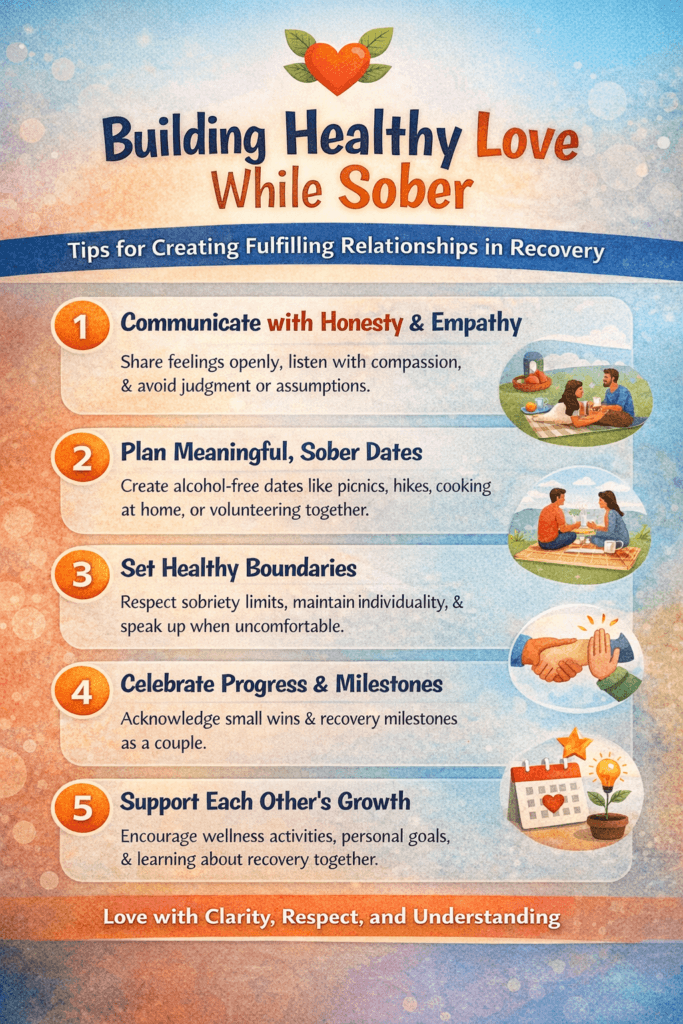
- Listen with empathy—ask how you can support rather than assuming what they need.
- Avoid judgmental language or minimizing past experiences.
- Encourage open conversations about triggers, boundaries, and recovery routines.
- Respect privacy—your partner’s recovery details are personal and should be shared only when
they feel ready. - Practice patience; trust takes time to rebuild and deepen in healthy relationships.
3. Healthy Boundaries for Both Partners
- Avoid enabling behaviors such as rescuing or covering up problems.
- Create space for individuality—each person should maintain hobbies, friendships, and self-care
routines. - Respect sobriety boundaries: avoid drinking or using substances around your partner.
- Communicate needs clearly and calmly when emotions run high.
- Know your limits—if your partner relapses, focus on supporting without losing your own stability.
4. Shared Activities and Growth
- Plan substance-free dates that promote connection and relaxation (e.g., hiking, cooking, art,
volunteering). - Engage in mindfulness or wellness practices together, like yoga or journaling.
- Celebrate milestones in recovery with positive reinforcement—acknowledge progress rather than
focusing on perfection. - Learn about recovery together through books, support groups, or workshops.
5. Resources for Partners
- Al-Anon and Nar-Anon – Support groups for families and loved ones affected by addiction.
- SMART Recovery Family & Friends – Focuses on communication and self-care for partners of
people in recovery. - Therapy or relationship counseling – Helps navigate trust, intimacy, and emotional safety.
- Educational materials – Books or podcasts on addiction and relationship healing.
Supporting someone in recovery requires compassion, patience, and balance. By respecting
boundaries, encouraging open communication, and nurturing shared growth, you can build a
relationship rooted in trust and emotional clarity. Recovery is not just their journey—it’s an opportunity
for both partners to grow stronger together
Building Connection in Recovery
Strengthening Trust, Communication, and Shared Growth
Relationships in recovery require intention, patience, and emotional awareness. When sobriety becomes part of a shared journey, couples have the opportunity to rebuild trust, deepen connection, and create healthy patterns that replace past instability. This Sober Relationship Workbook is designed for couples navigating recovery together. Through guided exercises, reflection prompts, and goal-setting tools, partners can strengthen communication, reinforce emotional safety, and support sobriety as a mutual commitment rather than an individual struggle.
1. Shared Understanding of Recovery
Every person experiences recovery differently. Couples benefit from openly discussing what sobriety means to each partner — emotionally, physically, and spiritually. Reflect together on how addiction previously affected the relationship and how recovery is changing it. Identify shared goals such as creating healthy routines, attending support groups, or practicing wellness activities. A shared understanding of recovery fosters unity rather than confusion.
2. Communication Check-Ins
Consistent emotional check-ins prevent misunderstandings and emotional distance. Couples can ask each other simple weekly questions, such as:
What emotion did you feel the most this week?
How supported did you feel by your partner?
What positive moment did we share recently?
Is there something we need to discuss more openly?
These check-ins encourage honesty, empathy, and emotional presence.
3. Joint Goal Setting
Recovery thrives when couples grow together. Create one shared wellness goal for the month, such as walking daily or journaling together. Each partner should also identify a personal growth goal for the next 30 days. Discuss one long-term shared vision — whether financial stability, service work, travel, or continued personal development. Goals create direction and shared purpose.
4. Reflection Exercises
Healthy love in recovery looks different than relationships shaped by addiction. Reflect together:
What does love look like for us in recovery?
How do we comfort each other without falling into old codependent habits?
What boundaries help us feel emotionally safe?
How can we celebrate progress and milestones together?
Reflection strengthens emotional maturity and prevents unhealthy patterns from returning.
5. Connection Rituals for Sober Couples
Daily and weekly rituals reinforce closeness. Consider:
Sharing weekly gratitude for one another
Planning a sober date night each week
Practicing brief mindfulness or breathing together
Exchanging written affirmations
Small rituals build consistency, affection, and emotional grounding.
6. Resources for Couples in Recovery
Support beyond the relationship strengthens stability. Helpful resources include:
Recovering Couples Anonymous (RCA) – A 12-step program for couples in sobriety
Couples therapy specializing in addiction recovery
SMART Recovery for Couples – Science-based communication tools
Educational books on codependency and relational healing
Final Thought
A healthy, sober relationship is built on communication, mutual respect, and shared purpose. By checking in regularly, setting meaningful goals, and celebrating progress, couples in recovery can deepen emotional connection while protecting sobriety. Recovery is not only about staying substance-free — it is about growing stronger together, one honest conversation at a time.
Frequently Asked Questions
Here are some common questions:
1. Should I start dating immediately after getting sober?
Most recovery professionals recommend waiting until emotional stability is established before entering new romantic relationships. Early recovery is a time for self-discovery and healing. Dating too soon can increase relapse risk or lead to emotional dependency.
2. Why are relationships different in sobriety?
Without substances, emotions are experienced more clearly and honestly. Communication becomes more direct, trust is built through consistency, and connection is based on authenticity rather than impulsivity or numbing.
3. How do I tell a partner that I’m sober?
Be simple and confident. You do not need to share your full recovery story right away. A statement like, “I don’t drink or use substances—it’s an important part of my lifestyle,” sets a healthy tone.
4. Can two people in recovery have a healthy relationship?
Yes. Many couples in recovery build strong, supportive partnerships. The key is maintaining individual recovery programs, healthy boundaries, and open communication.
5. What are common challenges in sober relationships?
Common challenges include emotional intensity, fear of vulnerability, rebuilding trust, managing triggers, and avoiding codependency. These improve with self-awareness and support.
6. How do we handle social situations involving alcohol?
Plan ahead. Choose sober-friendly environments, attend events with supportive friends, set exit strategies, and communicate openly about comfort levels.
7. What if my partner is not in recovery?
Healthy relationships are still possible. The partner must respect sobriety boundaries and avoid pressuring substance use. Mutual respect is essential.
8. How do we avoid codependency?
Maintain individual hobbies, friendships, recovery supports, and personal goals. Love in recovery thrives when both partners remain emotionally independent yet connected.
9. What if a relapse happens?
Relapse is a setback, not a failure. Seek professional and peer support immediately. Partners should offer encouragement while maintaining boundaries that protect their own well-being.
10. Can sober relationships be fun and romantic?
Absolutely. Sober love allows deeper intimacy, shared growth, meaningful experiences, and genuine joy without relying on substances.
11. Should couples in recovery attend therapy?
Yes. Couples counseling or recovery-based relationship programs help improve communication, trust, and emotional safety.
12. What is the greatest strength of sober love?
Clarity. When love is built without substances, it is grounded in authenticity, respect, and shared purpose.
Conclusion
Dating in sobriety is more than finding a partner—it’s about rediscovering self-worth, balance, and emotional connection without dependency. While challenges like triggers, disclosure fears, or social pressure can arise, they can be managed through self-awareness, boundaries, and support systems such as therapy, peer groups, and sober dating communities. The opportunities for deeper intimacy, trust, and shared purpose far outweigh the risks when approached with honesty and preparation. Ultimately, online dating while sober is a testament to resilience—proving that recovery doesn’t limit love; it deepens it, making room for healthier, more authentic relationships rooted in clarity and compassion.
Video: How Sobriety Changed My Entire Love Life #AddictionRecovery #RelationshipGrowth #Transformation