Addiction recovery doesn’t just happen by luck. Having a solid plan in place can make a world of difference. If you’re coming to grips with the need for change or you’ve tried to quit before without lasting results, building an addiction recovery plan gives you support, structure, and a clear direction. This guide will walk you through practical steps and tips to lay the groundwork for steady progress and long-term sobriety.
Why a Recovery Plan Matters
Building a recovery plan works like a map for your ride. Addiction usually disrupts your daily routines, relationships, and even how you view yourself. Having your goals and ideas written down provides accountability and clarity—plus, it helps if you want support from counselors, family, or a recovery group, since everyone knows where you’re heading.
I have noticed that breaking things down into small, manageable steps works best for recovery. This makes it less overwhelming and helps you stay focused if challenges arise. With a written plan, your next move and your progress are always clear, and you can see how far you’ve come.
Getting Started: Prep for Your Plan
Before setting out specific goals, start by checking in with yourself. Figure out what you are trying to recover from and why healing matters to you. Addiction can take many shapes—alcohol, drugs, gambling, internet use, and more. Whatever your situation, start by honestly identifying patterns and noticing how they’re affecting your daily life.
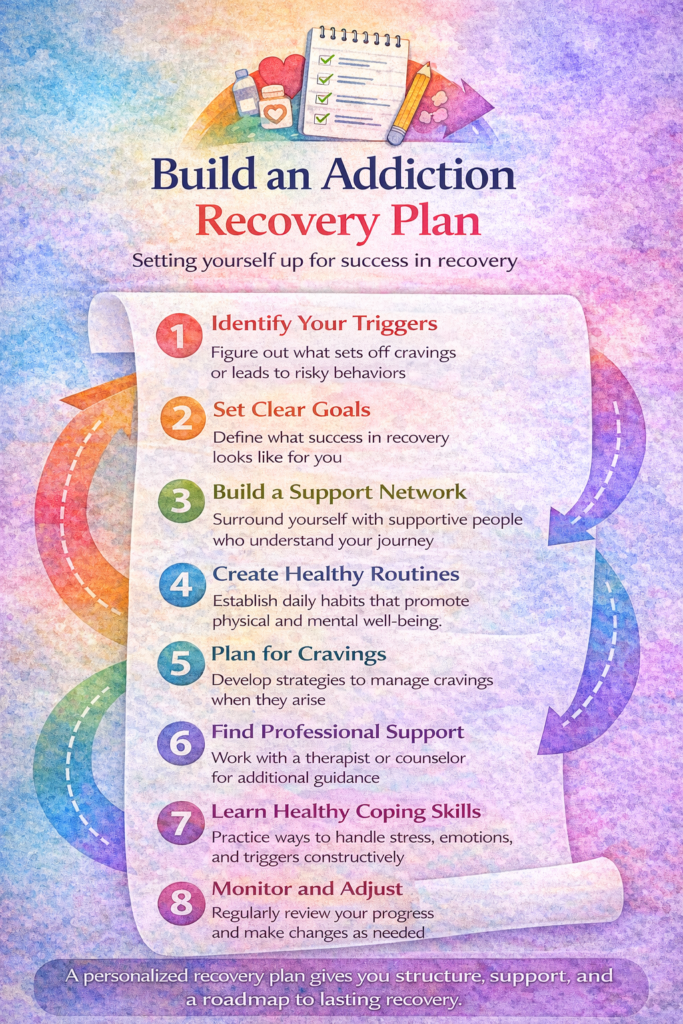
- Identify Triggers: Notice when cravings or urges pop up, such as at certain times, during stressful moments, in particular places, or in response to strong emotions.
- Assess Motivation: Ask yourself what you want to change or improve in your life. Even simple reasons like “having more energy” or “mending relationships” are a solid start.
Your recovery plan will be much more helpful if you’re honest at this stage. If you need a starting point, reaching out to a health professional or using reputable online resources can set you on the right path.
Core Elements of a Recovery Plan
Everyone’s recovery plan looks a little different, but certain elements work for most people. Here’s how I usually organize things to keep them practical and well-balanced:
- Clear Goals: These should be specific and meaningful, like staying sober for a set period, rebuilding trust, or attending regular support meetings.
- Daily Routine: Addiction tends to thrive in chaos or boredom. By writing down your routine—work hours, meals, exercise, self-care—you reduce downtime when cravings creep in.
- Support System: Friends, family, support groups, recovery coaches, or therapists can offer encouragement and help keep you accountable.
- Managing Triggers: Note the people, emotions, and places that could cause cravings. Make a short list of ways to respond, such as calling someone, getting fresh air, using breathing techniques, or leaving a risky situation.
- Healthy Coping Skills: Think about calming activities and outlets, like journaling, art, meditating, hiking, or even using a fidget tool—activities you can turn to when urges hit.
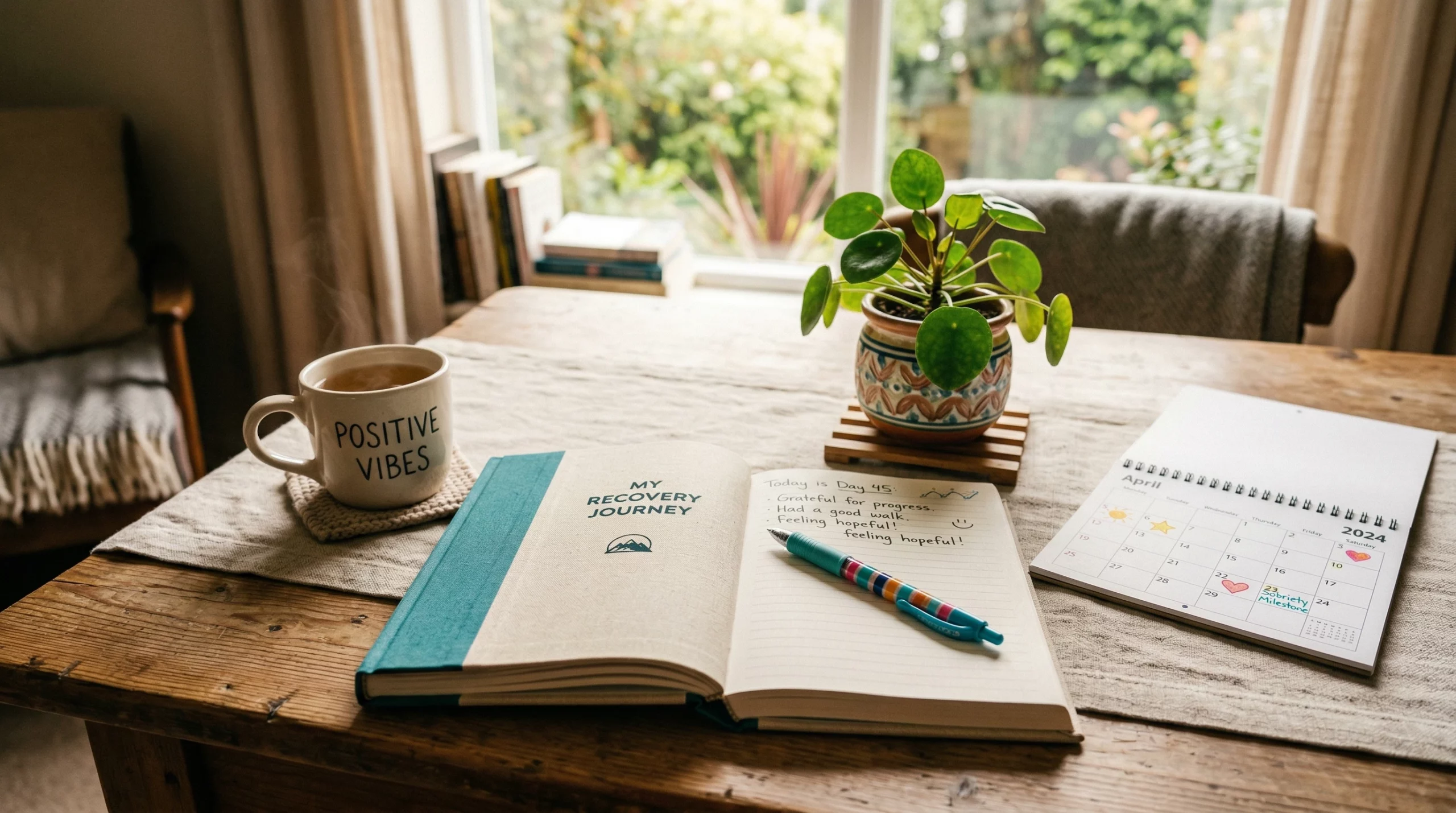
- Progress Tracking: Mark off each sober day, celebrate every small victory, and keep an eye on your ups and downs without being too harsh on yourself.
Step-by-Step: Creating Your Recovery Plan
The basics of a recovery plan are super approachable. Here’s what I suggest including when you’re mapping one out:
- Set Your Main Goal: Define what you want to change (like alcohol, drugs, or online behaviors) and make it clear.
- Break It Down: Turn the big goal into smaller pieces—aim for a week, then a month, keep it manageable, and celebrate every small step.
- List Support Contacts: Write out a handful of people—you might text or call—who will support you, and let them know they’re on your list.
- Make a Daily Schedule: Decide how you’ll spend each chunk of your day. This helps fill empty social time and lowers the risk of triggers sneaking in.
- Plan for Triggers: Map out how you’ll respond to each trigger. If you crave at certain times, have an activity or coping skill ready, like a chat, a hot drink, or music.
- Prepare for Setbacks: Write down what to do if you slip, who to talk to, and your best steps to regroup—so setbacks won’t catch you off guard.
- Track Progress: Use a journal or an app to record how things are going, your mood, and your wins (big or small).
Common Challenges and How to Tackle Them
No recovery adventure is perfect, but knowing what might trip you up can help you stay on track:
- Managing Cravings: Cravings are temporary, but tough to ignore. Try the urge surfing method—notice the urge, acknowledge it, then use deep breathing and distraction until it fades.
- Handling Social Pressure: It’s not always possible to avoid tricky friends or events. Touch base with your support system before and after these situations to stay steady.
- Dealing with Boredom: Cutting out old habits can leave free time. Fill your days with new hobbies, volunteering, or connecting with others to stay engaged.
- Bouncing Back from Relapse: A slip is just that; it doesn’t erase your progress. Go over your plan, update what didn’t work, and don’t hesitate to reach out for help. Keep your plan flexible and forgiving.
Managing Setbacks
Setbacks are all too common and definitely don’t mean failure. A strong plan gives you steps to regroup. Write out a few quick reminders for what to do after relapse: notify your support, revisit your triggers, attend a meeting, or restate your goals. Having this ready removes panic and guilt so you can recover faster.
Useful Tools and Resources for Recovery Plans
Plenty of tools and resources can help keep your plan on track and your motivation high. Here are some handy ones:
- Recovery Apps: Apps like Sober Grid, I Am Sober, and Nomo let you track progress, record milestones, and join supportive communities.
- Journaling: Keep a paper journal or use digital tools like Day One to log your feelings, struggles, and successes.
- Online Groups: Use platforms like In The Rooms or SMART Recovery for meetings and forums if in-person groups aren’t your thing.
- Hotlines: Support by phone. The SAMHSA National Helpline is always open and ready to talk you through tough moments or offer next steps.
If you want a more structured approach, teaming up with a counselor or recovery coach can help you build and customize your recovery plan to fit your life circumstances.
FAQ: Questions People Always Ask About Recovery Plans
Is writing down a recovery plan really necessary?
It isn’t mandatory, but putting your ideas in writing makes your goals feel concrete, helps you track your wins, and keeps you motivated when you need a boost.
How much detail should my plan have?
Whatever works best for you! Some prefer all-in-one logs, while others keep a short list. As long as it’s practical and you can stick with it, your plan is on the right track.
What should I do if my triggers change?
Triggers can mix it up as your routine changes. Just keep your plan flexible—add new coping ideas or edit routines if something’s not helping anymore.
Can a recovery plan replace therapy or medication?
Your plan can add to therapy and medication, but doesn’t replace them. Most people find the best results by combining planning, therapy, and peer or professional support.
Practical Examples of a Recovery Plan in Action
Let’s imagine a person getting through alcohol recovery. Their plan might involve goals such as attending group meetings twice a week, checking in with a friend daily after work, and swapping Friday-night drinks for movie nights. They could mark sober days on a calendar and take time to celebrate even small milestones. If cravings shift, routines and support lists can change, keeping the plan fresh and useful.
- Short Daily Reflection: Try jotting down something you’re grateful for, or noting how the day felt. It adds perspective.
- Weekly Review: List out small victories—whether it’s resisting a trigger or simply going another day sober.
- Switch Up Activities: Experiment with new coping methods if old ones stop working, and stay flexible as your needs evolve.
Your plan can be as unique as you are. The secret is to keep it real, tweak it whenever life changes, and rely on your support crew for extra energy. Staying flexible means you can weave recovery into your daily life, instead of trying to battle challenges on your own.
Writing out your plan is a big, positive step—one you can always return to and update as you grow stronger. Recovery is within reach. A plan gives you one more tool to make the ride smoother, no matter what comes next.
Video: