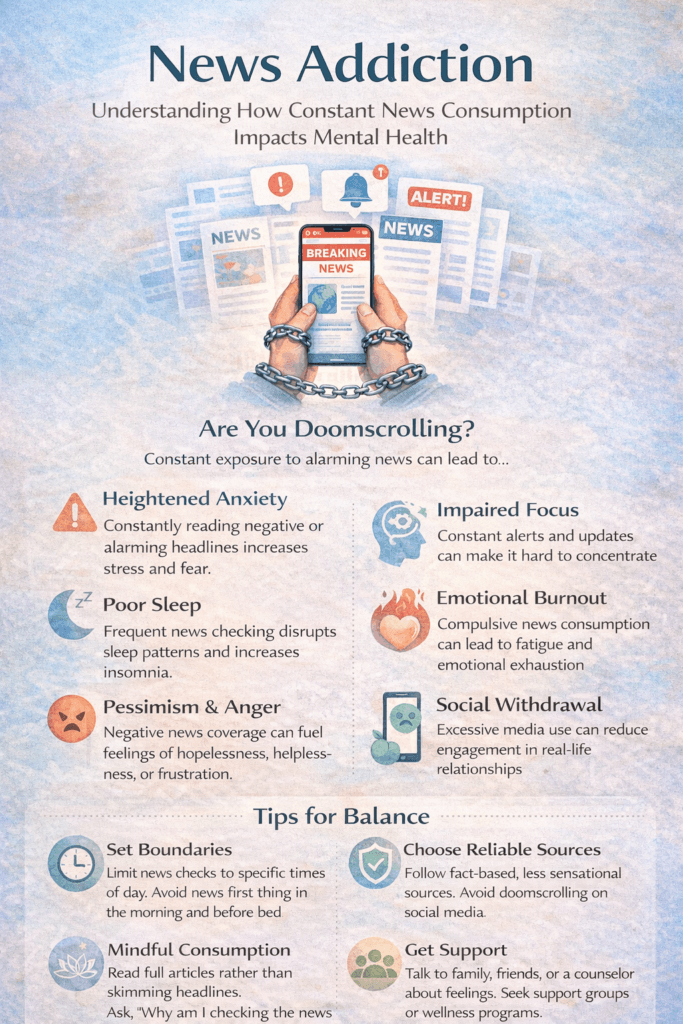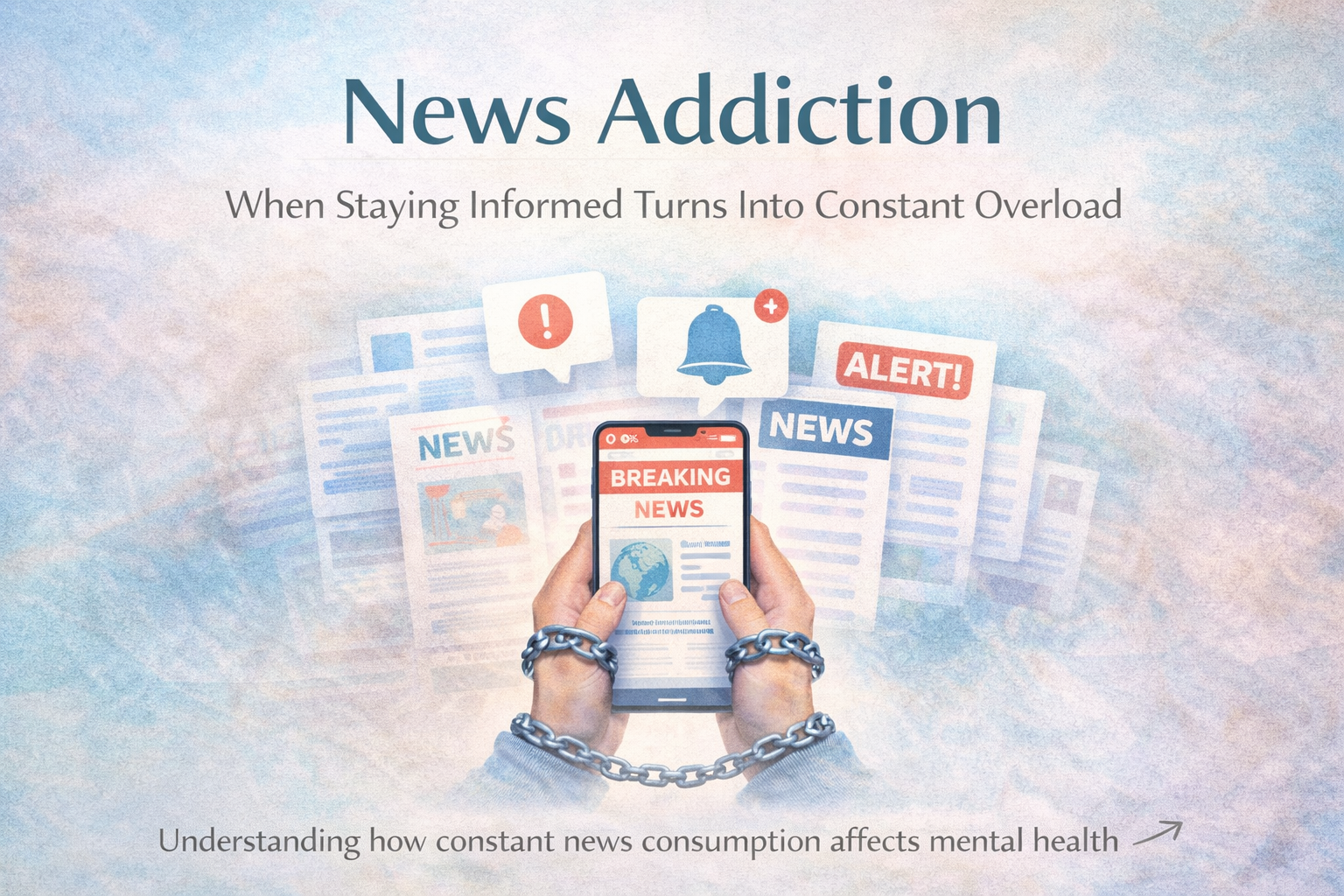
News addiction has become an increasingly common challenge in a world dominated by 24-hour media cycles, breaking alerts, push notifications, and nonstop access to information across multiple platforms. What often begins as a reasonable effort to stay informed can gradually shift into compulsive news checking, driven by anxiety, fear of missing out, or a sense of urgency to stay updated. Over time, excessive exposure to alarming or negative headlines can heighten stress and anxiety, disrupt sleep patterns, impair concentration, and place strain on personal relationships. Many individuals report feeling emotionally exhausted, irritable, or overwhelmed, yet find it difficult to disengage from the news. Addressing news addiction requires more than individual willpower alone. Sustainable change is supported by intentional self-management strategies that set healthy boundaries around media use, family involvement that offers understanding and modeling of balanced habits, and accessible community resources—such as mental health services and media literacy programs—that promote emotional regulation, perspective, and healthier engagement with information.
News Addiction: When Staying Informed Turns Into Constant Overload
In a world of 24-hour news cycles, breaking alerts, and endless scrolling, staying informed has never been easier—or more overwhelming. For some people, consuming the news can shift from a healthy habit into a compulsive behavior known as news addiction. This pattern is driven not by curiosity alone, but by anxiety, fear of missing out, and the brain’s stress–reward loop.
News addiction often shows up as compulsive checking of headlines, social media feeds, or live updates throughout the day. People may feel a strong urge to refresh news apps, especially during crises, political events, or global emergencies. While the intention is usually to feel informed or prepared, the result is often increased stress, irritability, and emotional exhaustion.
From a neurological perspective, news addiction is closely linked to dopamine and threat-response systems. Breaking news and dramatic headlines activate the brain’s alert system, creating a short-term sense of urgency or importance. Each update provides a small burst of stimulation, reinforcing the habit. Over time, the brain learns to seek constant updates, even when the information no longer adds value.
Emotionally, excessive news consumption can increase anxiety, helplessness, anger, and pessimism. Repeated exposure to negative or alarming stories may distort perception, making the world feel more dangerous than it actually is. This can affect sleep, concentration, mood regulation, and overall mental health. For individuals with anxiety, depression, or trauma histories, news addiction can significantly intensify symptoms.
News addiction also impacts daily functioning. Constant checking can interfere with work, relationships, and self-care. Conversations may become dominated by distressing topics, and mental energy is drained by ongoing worry rather than problem-solving or meaningful action.
Importantly, news addiction is not about being irresponsible or uninformed. Wanting to understand the world is healthy. The problem arises when news consumption becomes compulsive, emotionally dysregulating, or difficult to control. Awareness is the first step toward balance.
Healthy engagement with news involves intentional boundaries. Choosing specific times to check updates, limiting exposure to sensationalized sources, and prioritizing reputable journalism over endless scrolling can reduce stress. Balancing news intake with restorative activities—movement, nature, connection, creativity, and rest—helps regulate the nervous system.
Ultimately, staying informed should empower, not overwhelm. By recognizing the signs of news addiction and responding with awareness and self-compassion, individuals can reclaim control of their attention and mental well-being. Information is most useful when it supports clarity, perspective, and purposeful action—rather than constant anxiety.
Self-Management Strategies for News Addiction: Regaining Balance in a 24-Hour Media World
News addiction develops when staying informed shifts into compulsive checking, emotional distress, and difficulty disengaging. While constant access to information can feel necessary, excessive news consumption often fuels anxiety, disrupts focus, and overloads the nervous system. Self-management strategies help individuals regain control of their media habits while staying appropriately informed.
A foundational strategy is increasing awareness of patterns. Noticing when, where, and why news is consumed is key. Many people check the news during moments of boredom, stress, or uncertainty. Identifying emotional triggers—such as anxiety or fear of missing out—helps separate useful information-seeking from compulsive behavior.
Setting intentional limits supports healthier engagement. Designating specific times of day to check the news reduces constant mental scanning. Avoiding the news first thing in the morning or right before bed can significantly improve mood and sleep quality. Time boundaries allow the brain to recover from continuous exposure to threat.
Another effective approach is curating news sources. Sensationalized headlines are designed to capture attention and increase emotional arousal. Choosing reliable, fact-based sources and limiting social media news feeds reduces reactivity and stress driven by misinformation.
Mindful consumption transforms how news is processed. Before opening an app, asking, “What am I hoping to gain right now?” encourages intentional use. Reading full articles rather than skimming alarming headlines promotes deeper understanding and reduces impulsive scrolling.
Replacing compulsive news checking with grounding alternatives is essential. When the urge to check arises, engaging in movement, breathing exercises, journaling, or brief connection with others helps regulate the nervous system. These activities address the underlying need for reassurance or control.
Managing anxiety directly reduces reliance on news for emotional regulation. Practices such as mindfulness, therapy, relaxation techniques, and stress management improve tolerance of uncertainty—one of the main drivers of news addiction.
Digital tools can also support self-management. Using app timers, notification controls, or grayscale display settings reduces the need for automatic checking. Small environmental changes can significantly shift habits over time.
Importantly, self-management is most effective when approached with self-compassion rather than restriction or guilt. Slips into overconsumption are signals, not failures. Reflecting on what triggered the behavior strengthens future awareness and control.
News addiction thrives on constant urgency. Self-management restores perspective, helping individuals stay informed without becoming overwhelmed. By setting boundaries, addressing emotional needs, and practicing mindful engagement, people can reclaim attention, emotional balance, and mental well-being in a media-saturated world.
Family Support Strategies for News Addiction: Helping Loved Ones Find Balance and Emotional Well-Being
News addiction—often fueled by constant alerts, social media feeds, and 24-hour coverage—can quietly disrupt family life. Loved ones may notice increased anxiety, irritability, sleep problems, or emotional withdrawal tied to compulsive news checking. Family support plays an important role in helping someone regain balance, reduce stress, and develop healthier media habits.
One of the most effective family strategies is approaching the issue with empathy rather than criticism. News addiction is rarely about attention-seeking or stubbornness; it is often driven by anxiety, fear of uncertainty, or a desire to feel prepared. Opening conversations with concern—“I’ve noticed the news seems to be stressing you out”—creates safety and reduces defensiveness.
Compassionate communication is essential. Families should focus on listening rather than debating news content or minimizing concerns. Validating emotional reactions, even when opinions differ, helps the individual feel understood and supported rather than judged or dismissed.
Families can also support change by modeling healthy news consumption. Demonstrating balanced media habits—such as limiting scrolling, turning off alerts, or prioritizing non-news activities—reinforces that boundaries are normal and beneficial. Shared behavior change often feels less isolating than individual efforts.
Creating news-free family spaces or times is another helpful strategy. Agreeing to limit news during meals, evenings, or family activities reduces constant exposure and supports nervous system regulation. These boundaries are most effective when framed as wellness choices rather than rules or punishments.
Encouraging alternative coping and connection activities helps address the emotional drivers of news addiction. Family walks, hobbies, shared meals, games, or creative outlets provide grounding and connection that counteract anxiety-driven media use.
Families should also help loved ones recognize emotional triggers. Stressful events, political uncertainty, or global crises often increase compulsive news checking. Gently pointing out patterns—without blame—supports awareness and self-regulation.
When news addiction significantly impacts mental health, sleep, or daily functioning, families can encourage professional support. Therapy, stress management programs, or digital wellness coaching can help individuals address anxiety, uncertainty tolerance, and compulsive behaviors in a structured way.
Equally important is family self-care. Supporting someone struggling with news addiction can be emotionally draining. Setting personal boundaries, seeking education, or engaging in family counseling helps prevent burnout and resentment.
News addiction thrives in environments of fear and constant urgency. Families counter this by creating spaces rooted in calm, understanding, and connection. Through empathy, modeling, boundaries, and shared support, families can help loved ones stay informed without sacrificing emotional health or quality of life.
Community Resource Strategies for News Addiction: Supporting Healthy Media Use and Mental Well-Being
News addiction—often driven by 24-hour cycles, push notifications, and emotionally charged headlines—can affect individual and community mental health. While personal and family strategies are important, community resources play a vital role in creating supportive environments that encourage balanced media use, reduce anxiety, and strengthen collective resilience.
One effective community strategy is public education and media literacy. Workshops offered through libraries, community centers, schools, and nonprofits can teach residents how news algorithms work, how sensational headlines influence emotions, and how to evaluate sources critically. Media literacy empowers people to consume information intentionally rather than reactively.
Accessible mental health and stress-management services are also essential. Community counseling centers, low-cost therapy programs, mindfulness classes, and stress-reduction workshops help individuals address the anxiety and uncertainty that often fuel compulsive news consumption. When emotional regulation improves, reliance on constant updates decreases.
Peer-based support groups and discussion circles provide safe spaces to talk about news-related stress without judgment. Facilitated groups—whether in person or virtual—allow individuals to share experiences, normalize challenges, and learn coping strategies from others facing similar struggles. Peer connection reduces isolation and fear-driven behaviors.
Communities can promote balance by creating news-free or low-stimulation spaces. Libraries, recreation centers, and wellness hubs that emphasize quiet, creativity, movement, or relaxation offer alternatives to constant digital engagement. These spaces help regulate the nervous system and restore focus.
Digital wellness programming is another valuable resource. Classes on screen-time management, notification control, and mindful technology use help individuals set practical boundaries. Providing tools such as app timers, device settings education, and digital detox challenges supports sustainable habit change.
Community leaders and organizations also play a role in reducing fear-based messaging. Clear, factual communication during crises—without excessive alarm—helps prevent panic-driven overconsumption of news. Trustworthy local information channels can reduce the need to constantly monitor national or social media feeds.
Workplaces, faith-based organizations, and schools can contribute by integrating wellness policies that encourage breaks from news and social media during the day. Promoting mental health awareness and flexible coping strategies supports community-wide resilience.
Finally, supporting those who deliver these services matters. Training for educators, librarians, counselors, and volunteers in trauma-informed and compassion-centered approaches ensures that individuals struggling with news addiction are met with understanding rather than judgment.
News addiction thrives in environments of constant urgency and uncertainty. Communities counter this by offering education, connection, calm spaces, and supportive resources. When community strategies prioritize mental well-being and balanced information use, individuals are better equipped to stay informed without becoming overwhelmed—strengthening both personal and collective health.
Frequently Asked Questions
Here are some common questions:
What is news addiction?
News addiction is a pattern of compulsive or excessive news consumption that causes emotional distress, anxiety, difficulty disengaging, or impairment in daily functioning. It goes beyond staying informed and becomes driven by fear, urgency, or a need for reassurance.
Is news addiction a real addiction?
News addiction is considered a behavioral addiction, similar to social media or internet addiction. While it does not involve substances, it activates the brain’s reward and threat-response systems, reinforcing compulsive checking behaviors.
What causes news addiction?
News addiction is often driven by anxiety, uncertainty, fear of missing out, and the brain’s response to novelty and threat. Breaking news alerts and sensational headlines provide short bursts of stimulation that reinforce repeated checking.
What are common signs of news addiction?
Signs include constant checking of news apps or social media, difficulty stopping, increased anxiety or irritability, sleep disruption, trouble concentrating, emotional exhaustion, and feeling overwhelmed or hopeless after consuming news.
How does news addiction affect mental health?
Excessive news consumption can increase anxiety, stress, anger, pessimism, and helplessness. It may worsen symptoms of anxiety disorders, depression, or trauma-related conditions and interfere with emotional regulation.
Can news addiction affect sleep?
Yes. Checking news late at night or early in the morning keeps the nervous system activated, making it harder to fall asleep and stay asleep. Poor sleep further increases emotional vulnerability and compulsive behaviors.
Why do I feel worse the more news I consume?
Many news stories focus on conflict, danger, and crisis. Continuous exposure to negative or alarming information keeps the brain in a state of threat, increasing stress hormones and emotional fatigue.
Is it irresponsible to limit news consumption?
No. Limiting news intake is a form of self-care, not avoidance. Healthy boundaries allow individuals to stay informed without sacrificing mental health or daily functioning.
How much news consumption is considered healthy?
Healthy news consumption varies by person but typically involves intentional, time-limited engagement with reliable sources rather than constant checking throughout the day.
What are effective self-management strategies for news addiction?
Helpful strategies include setting specific times to check news, turning off alerts, choosing reliable sources, practicing mindfulness, replacing scrolling with grounding activities, and addressing underlying anxiety.
How can family members help someone with news addiction?
Families can help by approaching the issue with empathy, avoiding judgment, modeling healthy media habits, creating judgment-free times, and encouraging balance and emotional support.
What role do community resources play in addressing news addiction?
Community resources such as media literacy programs, mental health services, stress management workshops, and digital wellness education help normalize healthy information consumption and provide structured support.
When should professional help be considered?
Professional help may be useful if news addiction significantly interferes with mental health, sleep, work, relationships, or daily functioning, or if anxiety feels unmanageable without constant news monitoring.
Can news addiction be overcome?
Yes. With awareness, supportive strategies, and compassionate boundaries, individuals can develop a healthier relationship with news. Over time, emotional regulation improves, and compulsive behaviors decrease.
Conclusion
Effectively managing news addiction involves creating healthier relationships with information at multiple levels. Self-management strategies help individuals set boundaries, regulate anxiety, and consume news intentionally. Family support provides understanding, modeling, and emotional safety, which reduces defensiveness and isolation. Community resources reinforce these efforts through education, mental health services, and media literacy programs. Together, these approaches shift news consumption from a source of chronic stress to a tool for informed, purposeful engagement—supporting both individual well-being and collective resilience.
Video: How to Stop the News Anxiety Cycle #MentalHealthMatters #StressRelief #DigitalWellness