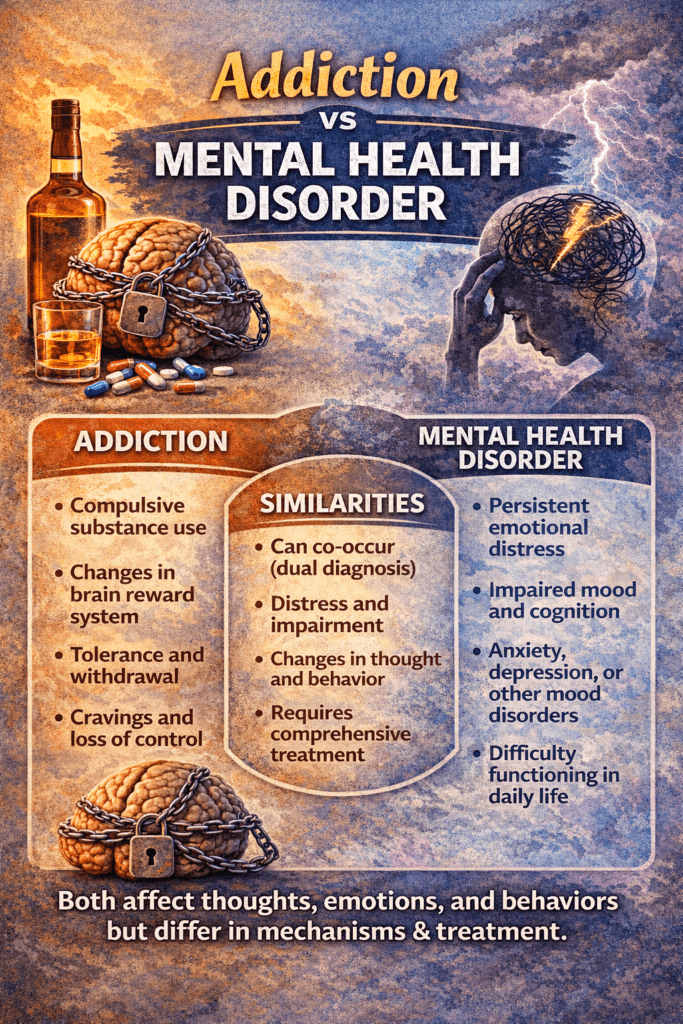
Addiction and mental health disorders are closely related yet distinct conditions that significantly impact an individual’s thoughts, emotions, and behaviors. Addiction, often referred to clinically as a Substance Use Disorder (SUD), is characterized by compulsive substance use despite harmful consequences and involves measurable changes in brain structure and function. Mental health disorders, such as depression, anxiety, or bipolar disorder, primarily affect mood, cognition, and emotional regulation. While both conditions can impair daily functioning and frequently occur together, they differ in their underlying mechanisms, diagnostic criteria, and treatment approaches. Understanding the similarities and differences between addiction and mental health disorders is essential for accurate diagnosis, effective intervention, and reduced stigma.
Addiction: A Disease or a Mental Health Disorder? Understanding the Connection
Addiction has long been debated in medical, psychological, and social fields. Is it a lack of willpower? A behavioral problem? A disease? Or a mental health disorder? Modern research strongly supports the understanding that addiction is both a chronic brain disease and a mental health condition. To fully understand addiction, it is important to explore how it affects the brain, behavior, and emotional functioning.
What Is Addiction?
Addiction, clinically referred to as Substance Use Disorder (SUD), is a chronic condition characterized by compulsive substance use despite harmful consequences. It involves changes in brain chemistry, particularly in areas responsible for reward, motivation, decision-making, and impulse control.
Addiction can involve substances such as alcohol, opioids, stimulants, or nicotine. It can also involve behaviors like gambling. Regardless of the substance or behavior, addiction follows similar neurological and psychological patterns.
Addiction as a Brain Disease
Medical science classifies addiction as a chronic brain disease because repeated substance use alters brain structure and function. These changes affect:
- The dopamine reward system
- The prefrontal cortex (decision-making and impulse control)
- Stress response systems
- Memory and learning pathways
Over time, the brain becomes conditioned to prioritize substance use over survival-based needs. This explains why individuals continue using substances even when they are aware of serious consequences.
Like other chronic diseases (e.g., diabetes or hypertension), addiction often requires long-term management rather than a one-time cure.
Addiction as a Mental Health Disorder
Addiction is also considered a mental health disorder because it involves behavioral, emotional, and cognitive dysfunction. It is recognized in the Diagnostic and Statistical Manual of Mental Disorders (DSM-5) under Substance-Related and Addictive Disorders.
Key mental health components of addiction include:
- Impaired control over substance use
- Cravings and obsessive thoughts
- Emotional dysregulation
- Continued use despite psychological harm
Additionally, addiction frequently co-occurs with other mental health conditions such as depression, anxiety disorders, PTSD, and bipolar disorder. This is known as a co-occurring disorder or dual diagnosis.
The Brain–Behavior Connection
Addiction bridges biology and psychology. While the brain undergoes physical changes, those changes directly influence thoughts, emotions, and behavior. For example:
- Increased stress sensitivity can trigger relapse.
- Reduced impulse control makes resisting cravings difficult.
- Emotional distress may drive substance use as a coping mechanism.
This dual impact explains why treatment must address both neurological and psychological components.
Why the Distinction Matters
Understanding addiction as both a disease and a mental health disorder helps reduce stigma. When addiction is viewed solely as a moral failing, individuals are less likely to seek treatment. Recognizing it as a medical and psychological condition encourages:
- Compassionate care
- Evidence-based treatment
- Insurance coverage for treatment services
- Long-term recovery planning
It shifts the focus from blame to recovery.
Treatment Implications
Because addiction affects both brain function and mental health, effective treatment often includes:
- Behavioral therapies (e.g., Cognitive Behavioral Therapy)
- Medication-Assisted Treatment (MAT) when appropriate
- Group therapy and peer support
- Life skills training
- Relapse prevention planning
- Treatment of co-occurring mental health disorders
Recovery is not simply about stopping substance use; it involves rebuilding neurological balance, emotional regulation, and healthy coping strategies.
Conclusion
Addiction is not merely a habit or a lack of willpower. It is a chronic brain disease that also qualifies as a mental health disorder. Its complexity requires a comprehensive, compassionate, and evidence-based approach to treatment.
Recognizing addiction as both biological and psychological allows society to better support individuals in recovery and promote long-term healing.
Self-Management Strategies: Understanding the Difference Between Everyday Challenges and Addiction or Mental Health Disorders
In today’s fast-paced world, stress, mood changes, and unhealthy habits are common. However, not every difficulty qualifies as addiction or a diagnosable mental health disorder. Understanding the distinction between everyday behavioral challenges and clinical conditions is essential for effective self-management and timely professional intervention.
This article explores self-management strategies and clarifies how to differentiate normal life struggles from addiction or mental health disorders.
Understanding the Spectrum of Human Behavior
Human behavior exists on a continuum. On one end are typical emotional reactions—such as stress before exams or occasional sadness after disappointment. On the other end are persistent, impairing conditions such as Substance Use Disorders (SUDs), Major Depressive Disorder, or Anxiety Disorders.
The key difference lies in:
- Severity
- Duration
- Functional impairment
- Loss of control
Occasional overeating after a stressful week differs significantly from compulsive substance use despite severe consequences.
What Is Self-Management?
Self-management refers to conscious strategies individuals use to regulate thoughts, emotions, and behaviors. It involves:
- Self-awareness
- Emotional regulation
- Healthy coping mechanisms
- Goal setting
- Behavioral monitoring
These strategies are effective when challenges are situational and manageable. However, when symptoms become chronic and disruptive, professional treatment may be necessary.
Key Differences: Self-Management vs. Clinical Disorder
1. Control Over Behavior
- Self-Management Context: The individual can adjust behavior when motivated.
- Addiction/Mental Health Disorder: There is impaired control despite repeated attempts to stop.
Example: Choosing to limit social media use versus being unable to stop substance use despite legal or health consequences.
2. Impact on Daily Functioning
- Self-Management Context: Stress or habits may be inconvenient, but do not significantly impair work, school, or relationships.
- Clinical Disorder: Symptoms interfere with responsibilities, relationships, or physical health.
Functional impairment is a major diagnostic criterion in mental health disorders.
3. Duration and Persistence
- Self-Management Context: Emotional or behavioral challenges are temporary and situational.
- Clinical Disorder: Symptoms persist for weeks, months, or years.
For example, sadness lasting a few days after a breakup differs from persistent depressive symptoms lasting two weeks or more with significant impairment.
4. Physiological Dependence and Brain Changes
Addiction involves measurable neurological changes in the brain’s reward and decision-making systems. These changes contribute to:
- Cravings
- Tolerance
- Withdrawal symptoms
- Compulsive behavior
Self-management strategies alone are often insufficient when physiological dependence is present.
Effective Self-Management Strategies
For individuals experiencing mild stress or behavioral challenges (not meeting criteria for addiction or mental illness), the following strategies may be helpful:
1. Mindfulness and Emotional Awareness
Practicing mindfulness increases awareness of triggers and emotional patterns.
2. Structured Routine
Maintaining regular sleep, nutrition, and activity schedules improves emotional regulation.
3. Healthy Coping Skills
Examples include:
- Exercise
- Journaling
- Deep breathing techniques
- Engaging in hobbies
- Social support
4. Goal Setting and Accountability
Breaking larger goals into manageable steps enhances motivation and self-control.
5. Stress Management Techniques
Chronic stress can mimic symptoms of mental health disorders. Learning relaxation techniques reduces emotional overload.
When Self-Management Is Not Enough
Professional help may be necessary when:
- There is repeated loss of control
- Symptoms worsen over time
- There are suicidal thoughts
- Substance use continues despite serious harm
- Emotional distress significantly impairs functioning
Early intervention improves outcomes and reduces long-term complications.
Why Differentiation Matters
Understanding the difference between manageable challenges and clinical disorders reduces stigma while encouraging appropriate care. Over-pathologizing normal stress can create unnecessary anxiety. Conversely, minimizing addiction or mental illness can delay critical treatment.
Balanced awareness allows individuals to:
- Use self-management tools effectively
- Recognize warning signs
- Seek help without shame
Conclusion
Self-management strategies are powerful tools for navigating everyday stress and mild behavioral concerns. However, addiction and mental health disorders involve deeper neurological, psychological, and functional disruptions that often require professional treatment.
Recognizing the distinction empowers individuals to respond appropriately—either by strengthening personal coping strategies or seeking specialized care when necessary.
Family Support Strategies: Understanding the Difference Between Supportive Challenges and Addiction or Mental Health Disorders
Families often play a central role in recognizing behavioral changes and providing emotional support. However, it can be difficult to determine whether a loved one is experiencing normal life stress, struggling with unhealthy coping patterns, or developing an addiction or mental health disorder. Understanding the difference is essential for providing appropriate support without minimizing serious conditions or overreacting to temporary challenges.
This article explores family support strategies and clarifies how to differentiate between everyday behavioral concerns and clinical addiction or mental health disorders.
Understanding the Behavioral Continuum
Human behavior exists along a spectrum. On one end are temporary reactions to stress—such as irritability during exams, grief after loss, or mood fluctuations due to life transitions. On the other end are persistent, impairing conditions such as Substance Use Disorders (SUDs), Major Depressive Disorder, Anxiety Disorders, or Bipolar Disorder.
Families must evaluate:
- Duration of symptoms
- Intensity of behavior
- Level of impairment
- Loss of control
Occasional emotional distress does not necessarily indicate a disorder, but consistent dysfunction may require professional evaluation.
What Are Family Support Strategies?
Family support strategies are intentional approaches used to promote emotional stability, accountability, and healthy coping within the household. These strategies aim to strengthen communication and resilience without assuming pathology.
They include:
- Active listening
- Emotional validation
- Encouraging healthy routines
- Setting appropriate boundaries
- Monitoring behavioral changes
- Promoting professional help when needed
Support should empower—not enable—harmful behaviors.
Key Differences: Family Stress vs. Addiction or Mental Health Disorder
1. Temporary Stress vs. Persistent Impairment
- Situational Challenge: Behavior improves when stress resolves.
- Clinical Disorder: Symptoms persist beyond the stressor and interfere with daily functioning.
For example, short-term sadness after a breakup differs from prolonged depression with sleep disruption, appetite changes, and social withdrawal.
2. Voluntary Behavior vs. Compulsive Behavior
- Supportive Context: The individual can modify behavior when motivated.
- Addiction Context: There is compulsive use despite consequences, including failed attempts to stop.
Addiction involves neurological changes affecting impulse control and reward systems, making simple “willpower” ineffective.
3. Emotional Reactivity vs. Emotional Dysregulation
- Normal Reactivity: Emotions fluctuate but remain manageable.
- Mental Health Disorder: Emotions become intense, persistent, and disproportionate to circumstances.
Families should observe patterns rather than isolated incidents.
4. Coping vs. Self-Medication
- Healthy Coping: Exercise, talking, journaling, hobbies.
- Maladaptive Coping: Substance use, self-harm, avoidance, or risky behaviors.
Self-medication may signal an emerging addiction or untreated mental illness.
Effective Family Support Strategies
1. Foster Open Communication
Create a safe environment for discussion without immediate judgment or criticism. Avoid accusatory language such as “You always” or “You never.”
2. Set Clear and Consistent Boundaries
Boundaries protect both the family and the individual. For example:
- Refusing to provide money for substances
- Not covering up consequences
- Establishing expectations for behavior
Boundaries reduce enabling while maintaining support.
3. Observe Patterns, Not Single Events
A single argument or poor decision does not indicate a disorder. Families should look for:
- Increasing frequency of problematic behavior
- Escalation in intensity
- Functional decline (work, school, relationships)
4. Encourage Professional Assessment
When behaviors persist, worsen, or impair functioning, suggest consultation with a licensed mental health or addiction professional. Early intervention improves outcomes.
5. Educate the Family System
Addiction and mental health disorders affect the entire family system. Education reduces stigma and increases empathy while reinforcing accountability.
When Family Support Alone Is Not Enough
Professional treatment may be necessary when:
- There are suicidal thoughts or behaviors
- Substance use continues despite severe consequences
- The individual denies obvious impairment
- There is physical dependence or withdrawal
- Safety becomes a concern
Family members should avoid acting as therapists. Clinical conditions require structured, evidence-based treatment.
The Importance of a Balanced Perspective
Over-pathologizing normal stress can increase anxiety and reduce resilience. However, minimizing addiction or mental illness can delay life-saving intervention. Families must strike a balance between supportive understanding and realistic assessment.
Recognizing the difference allows families to:
- Strengthen healthy coping mechanisms
- Avoid enabling destructive behaviors
- Seek professional help when appropriate
- Maintain their own well-being
Conclusion
Family support is a powerful protective factor in both prevention and recovery. However, distinguishing between everyday challenges and addiction or mental health disorders is critical. While supportive communication and boundaries may address situational stress, persistent impairment and loss of control require professional intervention.
Families are not responsible for causing or curing addiction or mental illness—but they are instrumental in promoting early recognition, accountability, and long-term recovery.
Community Resource Strategies: Distinguishing Between Support Needs and Addiction or Mental Health Disorders
Communities play a critical role in promoting well-being and addressing behavioral health concerns. Schools, faith-based organizations, healthcare providers, nonprofits, and social service agencies often serve as first points of contact when individuals or families face challenges. However, it is essential to differentiate between situations that can be addressed through community support strategies and those that require clinical intervention for addiction or mental health disorders.
Understanding this distinction ensures appropriate referrals, reduces stigma, and improves outcomes.
Understanding the Behavioral Health Spectrum
Behavioral health exists along a continuum. On one end are situational stressors—such as unemployment, grief, academic pressure, or family conflict—that may be alleviated through community-based support. On the other end are diagnosable conditions such as Substance Use Disorders (SUDs), Major Depressive Disorder, Anxiety Disorders, or other psychiatric conditions requiring structured treatment.
The key differences often involve:
- Severity of symptoms
- Duration of distress
- Functional impairment
- Loss of control or compulsivity
Community resources are highly effective for prevention and early intervention, but persistent and impairing symptoms may require clinical care.
What Are Community Resource Strategies?
Community resource strategies are organized services and supports designed to strengthen resilience, reduce risk factors, and promote healthy functioning. These strategies include:
- Educational workshops
- Support groups
- Employment assistance programs
- Housing services
- Youth mentorship programs
- Faith-based counseling
- Crisis hotlines
- Recreational and wellness initiatives
These interventions address social determinants of health, which strongly influence behavioral well-being.
Key Differences: Community Support vs. Clinical Disorder
1. Situational Stress vs. Clinical Diagnosis
- Community-Level Need: Stress related to finances, housing instability, or academic challenges may respond well to case management or peer support.
- Clinical Disorder: Persistent symptoms such as suicidal ideation, severe depression, panic attacks, or compulsive substance use require licensed mental health or addiction professionals.
Community programs can provide stabilization, but diagnosis and treatment planning require clinical evaluation.
2. Risk Factors vs. Established Addiction
Community strategies often focus on risk reduction, such as:
- After-school programs to prevent youth substance use
- Public awareness campaigns
- Family strengthening workshops
In contrast, addiction involves:
- Compulsive substance use
- Tolerance and withdrawal
- Continued use despite harmful consequences
- Neurological changes affecting decision-making
Prevention efforts cannot substitute for addiction treatment once dependency develops.
3. Social Barriers vs. Mental Health Impairment
Social hardships—such as unemployment or lack of transportation—can mimic symptoms of depression or anxiety. Community services may alleviate distress by improving access to resources.
However, if emotional symptoms persist even after environmental stressors improve, a mental health disorder may be present.
4. Peer Support vs. Clinical Therapy
Peer-led recovery groups and community mentoring provide valuable encouragement and accountability. However:
- They do not provide a formal diagnosis
- They do not prescribe medication
- They do not replace structured psychotherapy
Peer support complements but does not replace professional treatment for addiction or mental illness.
Effective Community Resource Strategies
1. Prevention and Education Programs
Education reduces stigma and increases awareness of early warning signs. Community workshops can teach:
- Healthy coping skills
- Stress management techniques
- Substance use prevention strategies
- Mental health literacy
2. Early Screening and Referral Systems
Community organizations can implement screening tools to identify individuals at risk and refer them to appropriate providers before symptoms escalate.
3. Collaboration Across Systems
Effective community response requires coordination between:
- Schools
- Healthcare systems
- Social services
- Law enforcement
- Nonprofit agencies
Integrated care models improve access and reduce fragmented treatment.
4. Crisis Intervention Services
Hotlines, mobile crisis units, and emergency response systems provide immediate support during acute behavioral health crises. These services help determine whether stabilization or hospitalization is necessary.
When Community Support Is Not Enough
Professional treatment is necessary when:
- Substance use continues despite severe consequences
- There are withdrawal symptoms or physical dependence
- Suicidal or homicidal thoughts are present
- Emotional distress significantly impairs daily functioning
- There is psychosis, mania, or severe mood instability
Community agencies should maintain clear referral pathways to licensed providers.
Why Differentiation Matters
Failing to recognize clinical addiction or mental illness can delay life-saving treatment. Conversely, labeling normal stress responses as disorders can increase stigma and reduce personal resilience.
Balanced differentiation ensures:
- Appropriate allocation of community resources
- Reduced strain on emergency services
- Early intervention
- Effective treatment planning
- Long-term recovery support
Communities are strongest when prevention, support, and clinical care operate collaboratively rather than in isolation.
Conclusion
Community resource strategies are essential for prevention, stabilization, and resilience-building. However, addiction and mental health disorders involve deeper biological and psychological components that often require professional treatment.
By distinguishing between situational challenges and clinical conditions, communities can respond appropriately—providing support when possible and facilitating specialized care when necessary.
Effective behavioral health systems rely on a continuum of care: prevention, early intervention, treatment, and recovery support working together to promote sustainable well-being.
Frequently Asked Questions
Here are some common questions:
1. What is the main difference between addiction and a mental health disorder?
Answer:
Addiction primarily involves compulsive substance use (or behavior) despite harmful consequences and includes physical and neurological dependence. Mental health disorders primarily affect mood, thinking, and emotional regulation (e.g., depression, anxiety, bipolar disorder).
While both impact behavior and functioning, addiction centers on compulsive use and cravings, whereas mental health disorders center on emotional and cognitive disturbances.
2. Is addiction considered a mental health disorder?
Answer:
Yes. Addiction is classified as a mental health disorder under Substance-Related and Addictive Disorders in the DSM-5. However, it has unique neurological components involving the brain’s reward system, which distinguish it from mood or anxiety disorders.
3. Can someone have both addiction and a mental health disorder?
Answer:
Yes. This is called a co-occurring disorder or dual diagnosis. For example, a person may have major depression and also struggle with alcohol use disorder. In many cases, one condition can worsen or trigger the other.
4. Does addiction always involve physical dependence?
Answer:
Not always, but many substances create physical dependence. Physical dependence involves tolerance (needing more of the substance) and withdrawal symptoms when stopping. Behavioral addictions (like gambling) may not involve physical withdrawal but still involve psychological dependence.
5. How do brain changes differ between addiction and other mental health disorders?
Answer:
Addiction significantly alters the brain’s reward circuitry, particularly dopamine pathways, leading to cravings and impaired impulse control.
Mental health disorders may involve imbalances in neurotransmitters such as serotonin, norepinephrine, or dopamine, affecting mood and cognition rather than compulsive substance use.
6. Can stress or trauma cause both conditions?
Answer:
Yes. Trauma and chronic stress are major risk factors for both addiction and mental health disorders. Some individuals use substances to cope with untreated anxiety, depression, or PTSD—a process known as self-medication.
7. How can you tell if it’s an addiction or just a coping problem?
Answer:
Key signs of addiction include:
- Loss of control over use
- Continued use despite consequences
- Cravings
- Withdrawal symptoms
- Neglect of responsibilities
If someone can stop the behavior when motivated and it does not significantly impair functioning, it may be a coping issue rather than addiction.
8. Do mental health disorders involve compulsive behavior?
Answer:
Some do. For example, obsessive-compulsive disorder (OCD) involves repetitive behaviors. However, these behaviors are typically driven by anxiety reduction, not pleasure or reward-seeking as seen in addiction.
9. Are treatments different for addiction and mental health disorders?
Answer:
Yes, but they often overlap.
Addiction treatment may include:
- Detoxification
- Medication-Assisted Treatment (MAT)
- Relapse prevention therapy
Mental health treatment may include:
- Psychotherapy (e.g., CBT)
- Psychiatric medications
- Emotional regulation strategies
For co-occurring disorders, integrated treatment addressing both conditions simultaneously is most effective.
10. Can addiction develop without a mental health disorder?
Answer:
Yes. Some individuals develop addiction primarily due to genetic vulnerability, environmental exposure, or repeated substance use. However, many individuals with addiction also experience underlying mental health challenges.
11. Is addiction a choice, while mental illness is not?
Answer:
No. Initial substance use may be voluntary, but addiction involves neurological changes that impair decision-making and self-control. Similarly, mental health disorders are not choices; they involve biological, psychological, and environmental factors.
12. Why is it important to differentiate between the two?
Answer:
Accurate differentiation ensures:
- Proper diagnosis
- Appropriate treatment planning
- Reduced stigma
- Better long-term outcomes
Mislabeling depression as addiction—or vice versa—can delay effective intervention.
13. Can improving mental health reduce addiction risk?
Answer:
Yes. Treating underlying anxiety, depression, trauma, or stress reduces the likelihood of self-medication through substance use and lowers relapse risk.
14. Do both conditions affect daily functioning?
Answer:
Yes. Both addiction and mental health disorders can impair work performance, relationships, physical health, and overall quality of life. However, the mechanisms behind the impairment differ.
15. Is recovery possible for both?
Answer:
Absolutely. Both addiction and mental health disorders are treatable conditions. With evidence-based treatment, social support, and ongoing care, long-term recovery and symptom management are achievable.
Conclusion
In summary, addiction and mental health disorders are complex conditions that intersect biologically, psychologically, and socially, yet they are not identical. Addiction centers on compulsive substance use and neurological reward system changes, whereas mental health disorders involve broader disturbances in mood, thinking, and emotional stability. Recognizing the distinction—and the possibility of co-occurring disorders—ensures individuals receive comprehensive, evidence-based treatment tailored to their specific needs. A clear understanding of both conditions promotes compassionate care, early intervention, and more effective long-term recovery outcomes.
Video: This Is Why Addiction Gets Mistaken For Mental Illness #psychology #explained