Addiction can strongly influence a person’s thinking, emotions, and relationships with others. A behavior often seen in people struggling with addiction is isolation, or pulling away from family, friends, and social activities. Many individuals dealing with addiction choose to be alone because they may feel ashamed, guilty, or afraid of being judged by others. Emotional difficulties such as anxiety or depression can also make social interaction feel overwhelming. In some situations, being alone allows individuals to continue their addictive behaviors without being questioned or confronted. Recognizing why people with addiction may withdraw from others can help families, communities, and professionals respond with greater understanding and support, encouraging individuals to reconnect and seek help.
Why Do Addicts Like to Be Alone? Understanding Isolation in Addiction
Addiction often leads individuals to withdraw from the people and environments that once played an important role in their lives. Many individuals struggling with addiction begin to prefer being alone, distancing themselves from family, friends, and social activities. While this behavior can be confusing and painful for loved ones, isolation is often a common pattern in addiction. Understanding why addicts may choose to be alone can help families, communities, and individuals better recognize the challenges associated with addiction and support the recovery process.
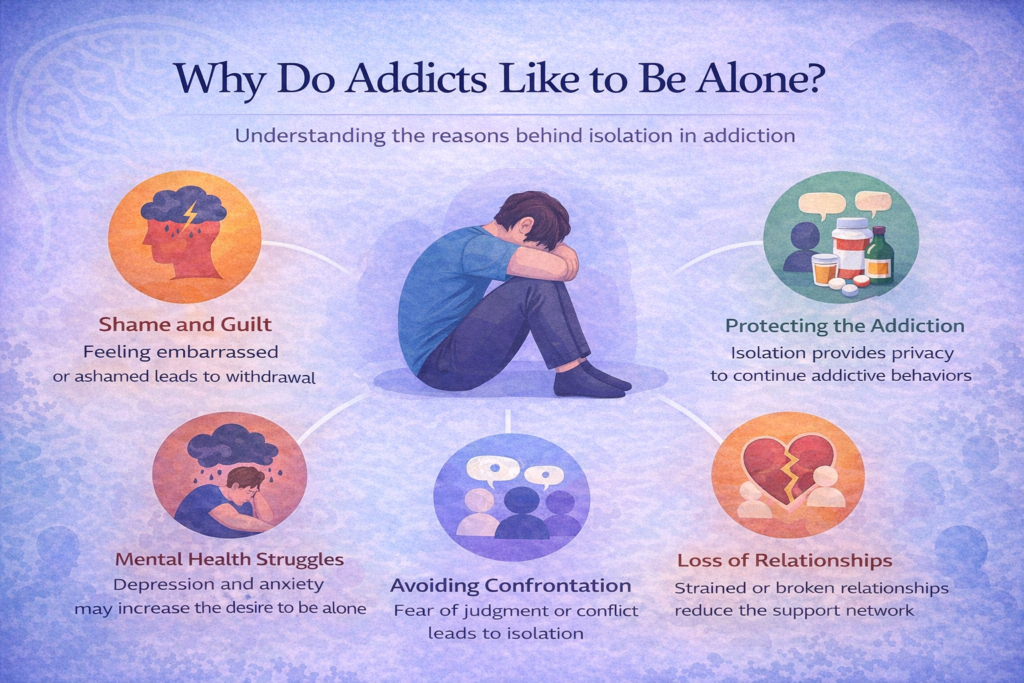
Shame and Guilt
One of the most common reasons addicts isolate themselves is shame and guilt. Many individuals struggling with addiction are aware that their behavior may hurt others or conflict with their own values. These feelings can lead to embarrassment and a desire to hide their struggles from others.
Instead of facing judgment or disappointment, individuals may choose to withdraw from social interactions. Isolation becomes a way to avoid conversations about their behavior and the consequences of addiction.
Avoiding Confrontation
Addiction often changes a person’s priorities and behaviors, which can lead to concern or confrontation from loved ones. Family members and friends may question substance use or encourage the individual to seek help.
For someone in the midst of addiction, these conversations can feel overwhelming or threatening. As a result, they may isolate themselves to avoid discussions about their substance use or addictive behaviors.
Protecting the Addiction
In many cases, addiction becomes a central focus of a person’s life. Being alone may make it easier to continue addictive behaviors without interruption or observation. When individuals isolate themselves, they may feel they have more freedom to use substances or engage in addictive activities without others noticing.
This behavior can reinforce the addiction cycle because there are fewer external influences encouraging healthier choices.
Changes in Mental Health
Addiction often affects mental health. Individuals may experience depression, anxiety, or emotional distress, which can increase the desire to withdraw from social contact. These emotional struggles may make it difficult for individuals to maintain relationships or participate in activities they once enjoyed.
Isolation can sometimes feel like a way to cope with overwhelming emotions, even though it may worsen feelings of loneliness over time.
Loss of Relationships
Over time, addiction can strain relationships with family members, friends, and coworkers. Conflicts, broken trust, and misunderstandings may lead individuals to feel disconnected from others. As relationships weaken, the person may gradually become more isolated simply because their support network has diminished.
This isolation can make recovery more difficult because supportive relationships are often an important part of healing.
Conclusion
Isolation is a common experience for many individuals struggling with addiction. Feelings of shame, fear of confrontation, the desire to protect addictive behaviors, mental health challenges, and strained relationships can all contribute to the tendency to withdraw from others.
Understanding why addicts may prefer to be alone helps families and communities respond with greater empathy and patience. Encouraging supportive relationships, open communication, and access to treatment can help individuals reconnect with others and begin the journey toward recovery.
Self-Management Strategies for Understanding Why Addicts Tend to Isolate Themselves
Addiction often leads individuals to withdraw from social connections and spend more time alone. Many people struggling with addiction isolate themselves because of shame, guilt, fear of judgment, mental health challenges, or the desire to continue addictive behaviors without interruption. While isolation may feel like a way to cope with emotional pain or avoid difficult conversations, it can also deepen the cycle of addiction and make recovery more difficult.
Understanding why isolation occurs is an important step in recovery. Through self-management strategies, individuals can learn to recognize the reasons behind their isolation and develop healthier ways to cope with stress, emotions, and social interactions.
Developing Self-Awareness
One of the most important self-management strategies is self-awareness. Individuals can begin by reflecting on why they prefer to be alone and what emotions or situations trigger that behavior.
Helpful techniques include:
- Keeping a journal to track feelings and behaviors
- Reflecting on situations that increase the desire to isolate
- Practicing mindfulness to become more aware of emotional responses
By recognizing the patterns behind isolation, individuals can better understand how addiction influences their social behavior.
Addressing Feelings of Shame and Guilt
Feelings of shame and guilt often contribute to isolation. Many individuals avoid social contact because they feel embarrassed about their addiction or fear disappointing others.
Self-management strategies for addressing these feelings include:
- Practicing self-compassion and recognizing that recovery is a process
- Focusing on personal growth rather than past mistakes
- Seeking counseling or therapy to work through difficult emotions
Learning to manage shame and guilt can help individuals feel more comfortable reconnecting with others.
Building Healthy Social Connections
Recovery often involves rebuilding supportive relationships. While reconnecting with others can feel challenging at first, developing healthy social connections can reduce feelings of loneliness and provide encouragement.
Strategies may include:
- Reaching out to trusted friends or family members
- Participating in recovery support groups
- Joining community activities or hobbies that encourage positive interaction
Gradually rebuilding relationships can help individuals feel supported rather than isolated.
Developing Healthy Coping Skills
Addiction and isolation are often linked to difficulties managing stress and emotional pain. Developing healthy coping skills helps individuals deal with difficult emotions without withdrawing from others.
Examples of helpful coping strategies include:
- Exercise and physical activity
- Meditation and relaxation techniques
- Creative outlets such as art, music, or writing
- Talking openly about feelings with supportive people
These coping tools provide healthier alternatives to both addiction and isolation.
Creating Structured Daily Routines
Isolation often increases when individuals lack structure or purpose in their daily lives. Creating routines that include social interaction, healthy habits, and productive activities can help individuals stay engaged and motivated.
A structured routine may include:
- Regular sleep schedules
- Time for exercise or hobbies
- Work or educational activities
- Scheduled social interactions or support meetings
Structure provides stability and reduces the likelihood of retreating into isolation.
Conclusion
Many individuals struggling with addiction prefer to be alone because of shame, emotional distress, fear of judgment, or the desire to protect their addictive behaviors. However, isolation can strengthen the cycle of addiction and make recovery more difficult.
By practicing self-awareness, addressing difficult emotions, building supportive relationships, developing healthy coping skills, and creating structured routines, individuals can gradually overcome isolation. These self-management strategies help individuals reconnect with others and move toward healthier, more balanced lives during recovery.
Family Support Strategies for Understanding Why Addicts Tend to Isolate Themselves
Addiction often causes individuals to withdraw from others and spend increasing amounts of time alone. This isolation can be confusing and painful for family members who want to help but may not understand why their loved one avoids contact. In many cases, people struggling with addiction isolate themselves because of shame, guilt, fear of judgment, mental health challenges, or the desire to hide their addictive behaviors. Understanding these reasons is an important step for families who want to provide meaningful support.
Family support strategies can help create a safe environment where individuals feel encouraged to reconnect, seek help, and begin the recovery process.
Encouraging Open and Nonjudgmental Communication
One of the most effective ways families can support a loved one who is isolating is by maintaining open and compassionate communication. Individuals struggling with addiction often fear criticism or rejection, which can increase their desire to withdraw.
Families can help by:
- Listening patiently without interrupting or judging
- Expressing concern in a calm and supportive way
- Avoiding blame or harsh criticism
- Letting the person know they are not alone
Creating a safe space for conversation can help reduce feelings of fear and shame.
Recognizing Emotional Struggles
Isolation often occurs because individuals are dealing with intense emotions such as depression, anxiety, guilt, or stress. Family members who recognize these emotional struggles can respond with empathy rather than frustration.
Helpful approaches include:
- Showing understanding of emotional difficulties
- Encouraging the individual to talk about their feelings
- Supporting access to counseling or therapy if needed
When families acknowledge emotional pain, individuals may feel more comfortable opening up.
Avoiding Enabling Behaviors
While support is important, families should also avoid behaviors that unintentionally enable addiction. Enabling occurs when family members protect the individual from the consequences of their behavior or ignore harmful patterns.
Instead, families can:
- Set clear and healthy boundaries
- Encourage responsibility for personal choices
- Support treatment or recovery programs
Healthy boundaries allow families to provide support without reinforcing addictive behaviors.
Encouraging Positive Social Interaction
Gradually encouraging social interaction can help reduce isolation. Families can invite their loved ones to participate in family activities, hobbies, or community events without forcing or pressuring them.
Examples include:
- Sharing meals together
- Participating in outdoor activities
- Attending support groups or recovery meetings
- Engaging in hobbies that encourage positive connections
These small steps can help rebuild trust and strengthen relationships over time.
Seeking Professional and Community Support
Families may also benefit from professional guidance. Family counseling, support groups, and addiction education programs can help families better understand addiction and develop effective ways to support their loved ones.
Professional support can help families learn:
- Healthy communication techniques
- Strategies for managing stress and conflict
- Ways to encourage treatment and recovery
These resources provide families with tools to support both their loved one and their own well-being.
Conclusion
Isolation is a common behavior among individuals struggling with addiction, often driven by feelings of shame, fear, emotional distress, and the desire to hide addictive behaviors. Families who understand these underlying reasons are better equipped to respond with empathy and support.
By practicing open communication, recognizing emotional struggles, setting healthy boundaries, encouraging social interaction, and seeking professional guidance, families can help their loved ones feel less alone. Supportive family relationships can play a powerful role in helping individuals reconnect with others and begin the path toward recovery.
Community Resource Strategies for Understanding Why Addicts Tend to Isolate Themselves
Addiction often leads individuals to withdraw from family, friends, and social environments. Many people struggling with addiction prefer to be alone because of shame, fear of judgment, emotional distress, or the desire to hide their addictive behaviors. While isolation may feel like a way to cope with difficult emotions, it can deepen addiction by reducing access to support and increasing feelings of loneliness.
Communities play an important role in addressing this issue by providing resources that help individuals reconnect with others and access support systems. Through education, mental health services, recovery programs, and outreach initiatives, communities can help individuals understand the root causes of isolation and foster healthier connections.
Community Education and Awareness Programs
One of the most important community strategies is increasing public awareness about addiction and its emotional effects, including isolation. Educational programs offered by schools, healthcare organizations, and community centers can help people understand that addiction often leads to withdrawal from social relationships.
Community education programs can include:
- Workshops on addiction and mental health
- Public awareness campaigns that reduce stigma around addiction
- Educational materials explaining how addiction affects behavior and relationships
When communities understand the reasons behind isolation, they are more likely to respond with empathy and support rather than judgment.
Access to Mental Health and Counseling Services
Isolation is often linked to underlying mental health challenges such as depression, anxiety, trauma, or emotional distress. Community mental health resources can help individuals address these issues and develop healthier coping strategies.
Key services may include:
- Community mental health clinics
- Individual and group counseling programs
- Crisis support services
- Addiction treatment programs
These services help individuals explore the emotional reasons behind their isolation and provide guidance for reconnecting with others.
Peer Support and Recovery Groups
Peer support groups provide safe environments where individuals can talk openly about their struggles without fear of judgment. These groups allow individuals to connect with others who have experienced similar challenges, which can help reduce feelings of loneliness.
Community recovery groups often provide:
- Emotional support from peers in recovery
- Opportunities to share experiences and coping strategies
- Encouragement and accountability during recovery
These networks can help individuals realize that they are not alone in their struggles.
Community Outreach and Support Programs
Outreach programs can help individuals who have become socially isolated reconnect with available resources. Community organizations may offer programs that actively reach out to individuals who may not seek help on their own.
Examples of outreach efforts include:
- Community health workers connecting individuals with services
- Mobile counseling and support programs
- Outreach through community centers, shelters, or social services
These programs help bridge the gap between isolated individuals and the support systems available to them.
Creating Safe and Supportive Community Environments
Communities that foster safe and inclusive environments can help reduce the stigma surrounding addiction. When individuals feel accepted rather than judged, they may feel more comfortable seeking help and reconnecting with others.
Communities can promote supportive environments by:
- Encouraging compassion and understanding toward those struggling with addiction
- Supporting recovery-friendly workplaces and social spaces
- Partnering with healthcare providers and local organizations to expand recovery resources
These efforts help create communities where individuals feel valued and supported during recovery.
Conclusion
Isolation is a common experience for individuals struggling with addiction, often caused by shame, emotional distress, and fear of judgment. However, community resources can play a powerful role in helping individuals understand these feelings and reconnect with others.
Through education, mental health services, peer support groups, outreach programs, and supportive community environments, communities can reduce isolation and promote recovery. By strengthening these resources, communities help individuals move from isolation toward connection, support, and healthier lives.
Frequently Asked Questions
Here are some common questions:
1. Why do addicts often prefer to be alone?
Many addicts isolate themselves because they may feel shame, guilt, or fear of judgment about their behavior. Being alone can feel safer than facing questions or criticism from others.
2. Is isolation common among people struggling with addiction?
Yes. Isolation is very common. Addiction can lead people to withdraw from family, friends, and social activities, which may make it easier to hide their struggles or continue addictive behaviors.
3. Do addicts isolate themselves to hide their addiction?
In many cases, yes. Being alone allows individuals to engage in substance use or addictive behaviors without others noticing or intervening. This can reinforce the cycle of addiction.
4. How do feelings like shame and guilt contribute to isolation?
Addicts may feel embarrassed or disappointed in themselves because of their behavior. These feelings can make them avoid social situations or conversations that might expose their struggles.
5. Can mental health issues cause addicts to withdraw from others?
Yes. Addiction is often connected to depression, anxiety, or emotional distress, which can increase the desire to be alone and avoid social interaction.
6. Do addicts avoid people because they fear confrontation?
Many individuals with addiction avoid loved ones because they worry about being confronted about their substance use or being pressured to change their behavior.
7. Does addiction affect relationships and lead to isolation?
Yes. Addiction can strain relationships with family, friends, and coworkers. Over time, conflict and broken trust may cause individuals to distance themselves from others.
8. Is isolation harmful to someone struggling with addiction?
Isolation can make addiction worse because it reduces emotional support and increases loneliness, which can strengthen the cycle of substance use or addictive behaviors.
9. How can someone help an addict who isolates themselves?
Helpful approaches include:
- Showing empathy and understanding
- Encouraging open communication
- Offering support without judgment
- Encouraging professional treatment or counseling
Supportive relationships can help reduce isolation and promote recovery.
10. Can addicts reconnect with others during recovery?
Yes. Recovery often involves rebuilding relationships, developing healthy social connections, and participating in support groups or counseling programs. Reconnecting with others can be an important part of healing.
Conclusion
Although isolation may feel like a way for individuals to cope with emotional pain or avoid difficult situations, it often strengthens the cycle of addiction by limiting access to support and connection. Recognizing the reasons behind this behavior is an important step toward helping individuals feel less alone and more willing to seek help. With compassion, open communication, and supportive resources, individuals struggling with addiction can begin to reconnect with others and move toward recovery and healthier relationships.
Video: The Cycle That Keeps Addicts Trapped #Addiction #Loneliness #RecoveryJourney