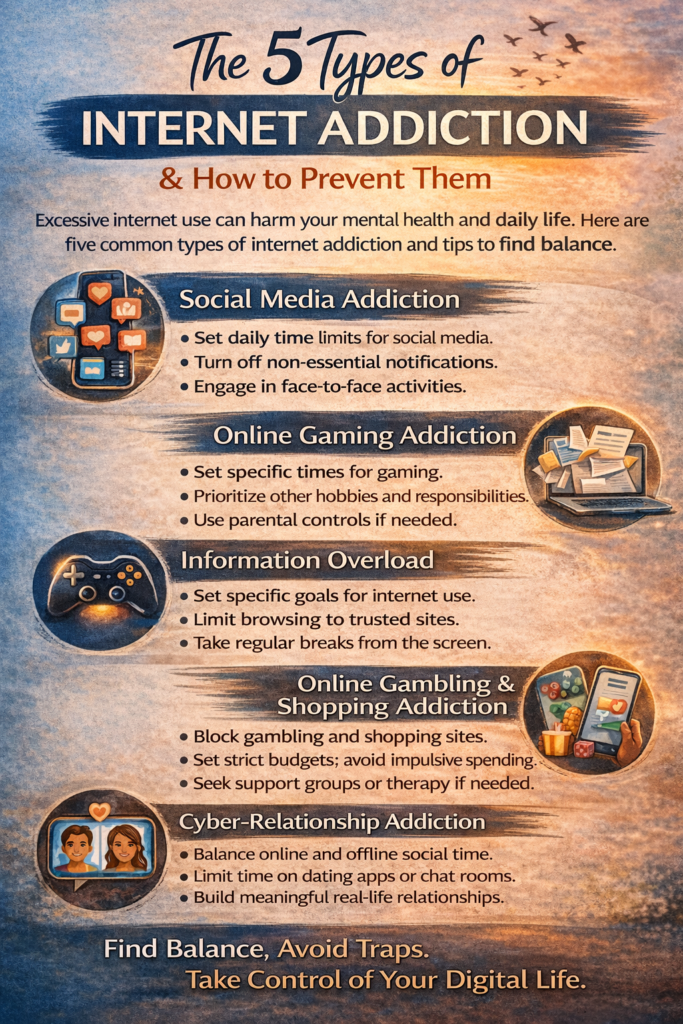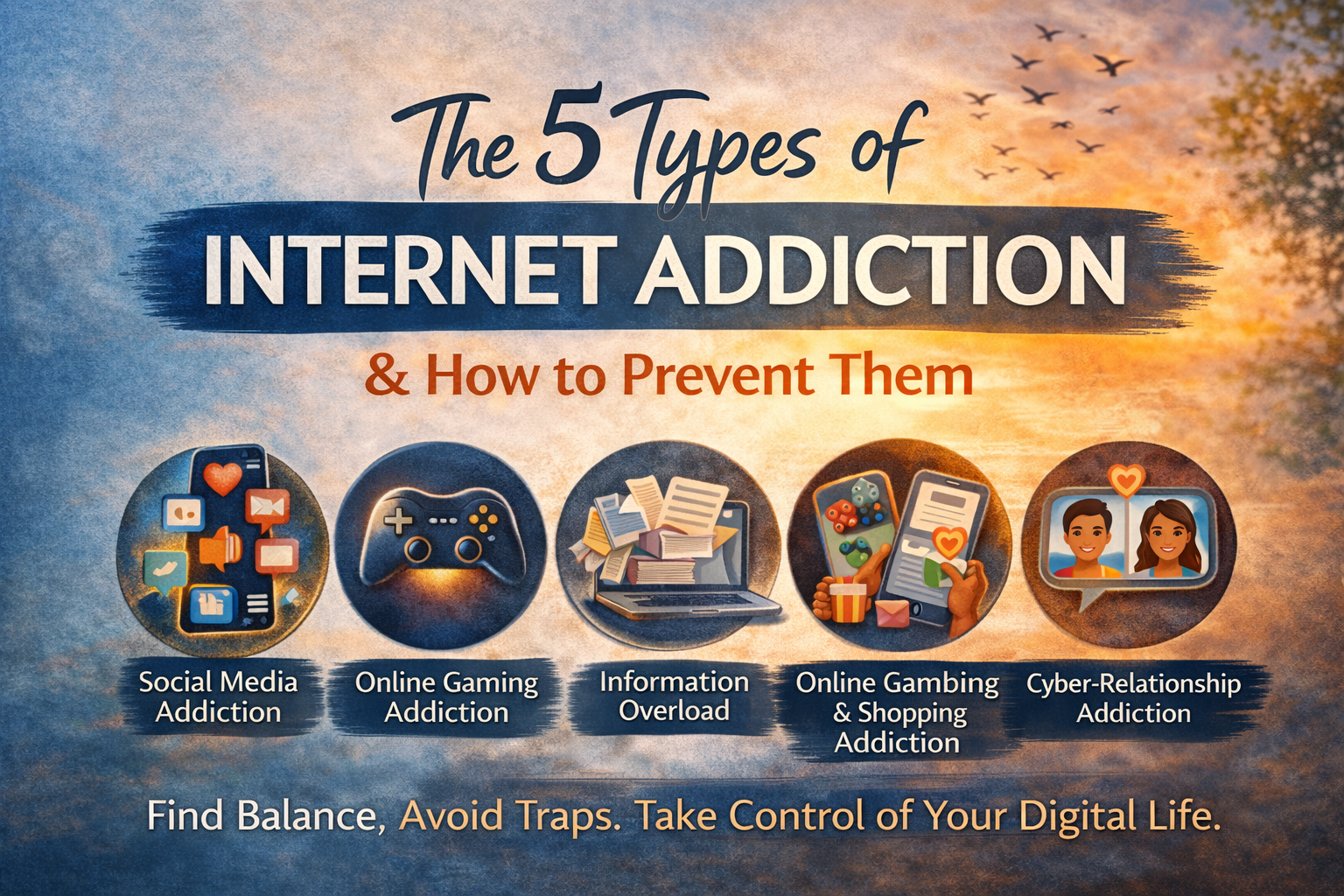
In today’s digital age, the internet has become deeply integrated into everyday life, transforming the way people communicate, work, learn, and entertain themselves. It provides countless opportunities for instant connection, access to information, online education, and global collaboration. Social networking platforms, streaming services, online games, and digital marketplaces have made the internet a powerful tool for productivity and social interaction. However, when internet use becomes excessive or difficult to control, it can develop into behavioral problems commonly referred to as internet addiction. Researchers often identify five major forms of internet addiction: social media addiction, online gaming addiction, information overload or compulsive web surfing, online gambling and shopping addiction, and cyber-relationship addiction. Each of these behaviors can interfere with daily responsibilities, reduce productivity, strain personal relationships, and negatively affect mental health by contributing to anxiety, stress, isolation, and sleep problems. For example, constant scrolling on social media may lead to unhealthy comparisons, while excessive gaming or online shopping may consume significant time and financial resources. Despite these risks, internet addiction can be effectively addressed through strategies such as self-awareness, setting time limits for digital use, practicing healthy coping mechanisms, and seeking support from family members, educators, counselors, or community programs. By understanding the different forms of internet addiction and applying practical prevention strategies, individuals can develop healthier digital habits and maintain a balanced relationship between their online activities and their real-life responsibilities.
Understanding the Digital Trap: 5 Types of Internet Addiction
The internet has become an essential part of modern life. It helps people communicate, learn, work, and entertain themselves. However, excessive or uncontrolled use can lead to internet addiction, a behavioral pattern where individuals struggle to limit their online activities despite negative consequences. Internet addiction can affect mental health, relationships, academic performance, and daily responsibilities. Researchers and mental health professionals often identify several forms of internet addiction, each linked to different online behaviors.
Understanding these types can help individuals recognize unhealthy patterns and adopt healthier ways of using technology.
1. Social Media Addiction
Social media addiction occurs when individuals feel a constant need to check platforms such as Facebook, Instagram, TikTok, or X (Twitter). People may spend hours scrolling, posting, or seeking validation through likes and comments. Over time, this behavior can create dependence on online approval and lead to anxiety, reduced self-esteem, and difficulty focusing on real-life relationships and responsibilities.
2. Online Gaming Addiction
Online gaming addiction involves excessive time spent playing video games, especially multiplayer or competitive games. Individuals may neglect sleep, school, work, or social activities because they feel compelled to keep playing. Many games are designed with reward systems and achievements that encourage continuous engagement, making it difficult for some players to stop.
3. Information Overload (Compulsive Web Surfing)
Information overload addiction occurs when individuals spend excessive time searching for information, browsing websites, or reading online articles without a clear purpose. While learning online can be beneficial, compulsive browsing can lead to wasted time, decreased productivity, and difficulty concentrating on important tasks.
4. Online Gambling and Shopping Addiction
Some people develop compulsive behaviors related to online gambling, auctions, or shopping. Easy access to betting platforms, online casinos, and e-commerce websites can encourage impulsive spending. This type of addiction may lead to financial problems, debt, and emotional stress as individuals continue to chase losses or seek the excitement of purchasing.
5. Cyber-Relationship Addiction
Cyber-relationship addiction occurs when individuals prioritize online relationships over real-life connections. This may involve excessive use of chat rooms, messaging apps, dating platforms, or virtual communities. While online connections can be meaningful, relying exclusively on digital interactions may lead to social isolation and weakened real-world relationships.
Moving Toward Healthy Internet Use
Technology itself is not the problem—balance is the key. Recognizing the signs of internet addiction is the first step toward healthier digital habits. Strategies such as setting time limits, practicing digital detox periods, engaging in offline activities, and seeking professional support can help individuals regain control.
As the digital world continues to grow, developing healthy relationships with technology becomes increasingly important. By understanding the different types of internet addiction, individuals can make more mindful choices and maintain a healthier balance between online life and the real world.
Mastering Your Digital Life: Self-Management Strategies to Prevent the 5 Types of Internet Addiction
In today’s digital age, the internet has become an integral part of daily life. While it offers endless opportunities for connection, learning, and entertainment, it also comes with the risk of developing unhealthy habits. Internet addiction can manifest in various ways, such as social media obsession, excessive online gaming, or compulsive web surfing. Fortunately, by using effective self-management strategies, you can avoid falling into the trap of internet addiction and maintain a healthy balance between the digital and physical worlds. Below are practical strategies to prevent each type of internet addiction.
1. Managing Social Media Addiction
Social media platforms can be addictive due to their interactive nature and the desire for validation through likes, shares, and comments. To combat this, try the following:
- Set Time Limits: Use built-in features, such as screen time limits on apps (like Instagram and Facebook), or third-party apps that track your social media use. Setting daily time limits can help you consciously reduce your screen time.
- Create Social Media-Free Zones: Establish boundaries, such as no social media during meals or before bed. This helps you disconnect and engage in offline activities.
- Turn Off Notifications: Disable non-essential notifications to reduce distractions. This way, you control when to engage with your social platforms rather than being pulled in by constant alerts.
2. Preventing Online Gaming Addiction
Online gaming addiction can become all-consuming, especially with immersive multiplayer games. To manage your gaming time:
- Set Clear Boundaries: Create specific times for gaming and stick to them. Whether it’s an hour after work or on weekends, designate this time and avoid gaming at other times.
- Prioritize Responsibilities: Always complete important tasks (work, study, etc.) before playing. This ensures you don’t neglect other areas of your life.
- Engage in Other Hobbies: Explore offline activities, such as sports, reading, or spending time with family, to balance your leisure time and prevent gaming from taking over.
3. Avoiding Information Overload (Compulsive Web Surfing)
The endless cycle of information online can be overwhelming. To prevent compulsive web surfing:
- Set Specific Goals: Before going online, decide exactly what you need to find. Avoid mindlessly browsing or jumping from one topic to another without purpose.
- Limit Your Sources: Instead of visiting countless websites, subscribe to trusted news sources for updates. This limits unnecessary time spent on irrelevant content.
- Take Breaks: Schedule breaks every 30-45 minutes to step away from the screen. This gives your brain a rest and helps reduce the temptation to keep scrolling.
4. Managing Online Gambling and Shopping Addiction
Both online gambling and shopping can lead to financial and emotional distress. Here are ways to limit these behaviors:
- Block Gambling and Shopping Sites: Use website blockers to restrict access to gambling or shopping websites during certain hours or entirely.
- Set a Budget: When online shopping is necessary, establish a clear budget to avoid impulsive purchases. Stick to your budget and reflect on your purchases before clicking “buy.”
- Seek Professional Help: If you struggle with online gambling or shopping addiction, talking to a therapist or joining support groups like Gamblers Anonymous can provide the necessary guidance.
5. Avoiding Cyber-Relationship Addiction
Cyber-relationship addiction can occur when individuals rely on online connections instead of building relationships in the real world. To manage this:
- Balance Online and Offline Connections: Commit to nurturing in-person relationships by setting aside time to meet friends and family face-to-face, even if it’s just a phone call or a coffee outing.
- Limit Anonymous Chats: Avoid spending excessive time in chat rooms or on dating apps unless you’re ready for meaningful conversations and potential relationships. Set boundaries on who you talk to and for how long.
- Engage in Offline Activities: Pursue hobbies that involve physical activity, such as sports or creative projects, to build fulfilling offline connections.
General Self-Management Tips for All Types of Internet Addiction
- Use Technology Mindfully: Practice mindfulness when using technology. Pay attention to how you feel before, during, and after online activities. If you notice any negative feelings or compulsive behaviors, take a break and reflect on your usage.
- Practice Digital Detox: Designate certain times (such as weekends or evenings) to unplug from all digital devices. This allows you to recharge and reconnect with the physical world.
- Track Your Usage: Periodically check how much time you spend online each week. This can give you insight into patterns and help you identify areas where you need to cut back.
- Set Goals for Offline Activities: Establish personal goals that involve offline activities, like reading a book, working out, or spending quality time with family. This will give you more fulfillment outside the digital space.
Conclusion
While the internet is an essential tool in our daily lives, it’s important to ensure it doesn’t control us. By practicing self-management strategies—such as setting time limits, prioritizing offline activities, and staying mindful of your online habits—you can prevent internet addiction and create a healthier digital lifestyle. Remember, the key to preventing addiction is balance: embracing the benefits of the internet while staying grounded in the real world.
Building a Strong Support System: Family Strategies to Prevent the 5 Types of Internet Addiction
The internet has become an integral part of everyday life, providing countless benefits such as learning, communication, and entertainment. However, overuse or dependence on digital platforms can lead to various forms of internet addiction, which can negatively affect relationships, mental health, and overall well-being. As a family, providing supportive guidance, healthy boundaries, and positive reinforcement can play a key role in helping loved ones avoid falling into the trap of internet addiction. Here’s how families can support each other in managing and preventing the five most common types of internet addiction.
1. Supporting a Loved One with Social Media Addiction
Social media addiction is one of the most common types of internet dependency, often leading to feelings of anxiety, isolation, and unhealthy comparison. Families can help by:
- Encouraging Face-to-Face Interactions: Spend quality time together without digital distractions. This can help reduce the need for constant social media validation.
- Setting Shared Boundaries: Establish household rules for social media use, such as no phones at the dinner table or during family activities. This helps maintain a healthy balance.
- Modeling Healthy Behavior: Parents and family members should model healthy technology habits by limiting their own social media use and reinforcing positive habits within the family unit.
2. Preventing Online Gaming Addiction
Online gaming can be incredibly immersive, making it easy for individuals to lose track of time and neglect responsibilities. To prevent gaming addiction, families can:
- Establish Time Limits: Set clear rules about how much time is appropriate for gaming each day or week. Using parental control features can help enforce these limits.
- Encourage Other Interests: Introduce other activities such as sports, reading, or creative hobbies that encourage offline interaction and personal development.
- Monitor Gaming Content: Be aware of the types of games being played. Some games can be addictive by design, especially those with in-game purchases or competitive rewards. Discuss the impact of these games and set boundaries around them.
3. Managing Information Overload (Compulsive Web Surfing)
Compulsive web surfing or information overload can result in wasted time and decreased productivity. Families can help manage this behavior by:
- Creating Screen-Free Zones: Designate areas in the home where internet use is limited, such as the dining room or bedrooms, to encourage healthier habits and reduce mindless browsing.
- Setting Specific Internet Use Goals: Encourage family members to use the internet for specific tasks, such as work or study, rather than aimlessly browsing. Setting time limits and using time purposefully can help avoid procrastination.
- Fostering Real-Life Conversations: Spend time together in offline settings—such as cooking dinner or playing games—where family members can engage in meaningful conversations away from screens.
4. Preventing Online Gambling and Shopping Addiction
Online gambling and shopping addiction can result in significant financial and emotional stress. Families can support each other by:
- Setting Financial Boundaries: Help each other establish clear guidelines for spending and budgeting. For example, ensure that all family purchases are planned and avoid impulsive buying online.
- Block Problematic Websites: Install parental control software or use website blockers to prevent access to gambling sites or shopping platforms that trigger compulsive behavior.
- Promote Healthy Coping Strategies: Encourage healthy alternatives to managing stress, such as exercising, journaling, or spending time outdoors, rather than turning to online shopping or gambling for emotional relief.
5. Managing Cyber-Relationship Addiction
Cyber-relationship addiction occurs when individuals develop excessive reliance on online connections, often to the detriment of real-life relationships. Families can play a pivotal role by:
- Encouraging Offline Socialization: Provide opportunities for family members to engage in real-world social interactions, such as community events, family outings, or activities with friends.
- Open Communication About Online Relationships: Foster an open dialogue about online friendships or romantic relationships. Encourage family members to build meaningful connections both online and offline.
- Setting Healthy Boundaries for Online Interactions: Establish rules around the amount of time spent online or the types of interactions that are acceptable. Encourage safe and responsible use of dating apps or social networking sites.
General Family Support Strategies for Preventing Internet Addiction
In addition to the strategies above, families can benefit from general guidelines to foster a balanced relationship with the internet:
- Set Family Time Goals: Establish daily or weekly goals for family time, where everyone is offline and focused on activities together, such as eating meals, playing games, or doing chores.
- Model Healthy Tech Use: Family members should lead by example. Setting boundaries for personal screen time and engaging in offline activities helps children and other family members understand the importance of balance.
- Create Digital Detox Periods: Designate specific times during the week or weekends for everyone in the family to take a break from screens. This could involve a no-tech day or an afternoon hike, encouraging connection without the distraction of the internet.
- Support Each Other’s Mental Health: Talk openly about the impact of excessive internet use on mental health. Encourage family members to check in with each other and seek professional support if they feel that internet use is becoming problematic.
Conclusion
While the internet is an essential tool for modern life, it can also lead to various forms of addiction that negatively impact family dynamics, mental health, and overall well-being. By implementing clear rules, offering support, and encouraging offline activities, families can help prevent internet addiction and maintain a healthy balance. Strong communication, mutual respect, and a commitment to one another’s well-being are essential to creating a positive environment in which technology enhances, rather than disrupts, family life.
Strengthening the Digital Community: Resource Strategies to Prevent the 5 Types of Internet Addiction
The internet is a powerful tool, enabling communication, learning, and entertainment. However, its overuse or dependence can lead to internet addiction, which has become a growing concern in modern society. Excessive engagement in activities like social media, online gaming, compulsive browsing, gambling, and cyber-relationships can negatively impact individuals’ well-being and disrupt their daily lives. Communities, including local organizations, mental health services, schools, and online platforms, can play a crucial role in helping individuals manage their digital habits and prevent internet addiction. Below are strategies communities can implement to address the five common types of internet addiction.
1. Combatting Social Media Addiction
Social media addiction is one of the most prevalent forms of internet dependency, affecting individuals of all ages. To prevent social media overuse, community organizations can:
- Digital Literacy Programs: Offer workshops on digital literacy that educate people on the impact of excessive social media use, the risks of cyberbullying, and how to set healthy boundaries with technology. By teaching people about the psychological effects of social media, these programs can help foster healthier online habits.
- Offline Engagement Activities: Organize community events, such as outdoor activities, arts and crafts workshops, or sports tournaments, that encourage people to engage in offline, face-to-face interactions. These activities can reduce the urge to spend excessive time on social media platforms.
- Support Groups for Digital Detox: Create support groups or online forums where individuals can join digital detox challenges or share tips for reducing their screen time. Such groups foster community support while promoting balanced tech use.
2. Reducing Online Gaming Addiction
Online gaming can be addictive, particularly when individuals spend excessive time playing multiplayer games or those with built-in reward systems. Communities can help reduce gaming addiction by:
- Youth Programs and Recreation Centers: Establish local youth programs and recreation centers that offer a variety of non-digital activities, including sports, art, music, and other creative outlets. Providing alternatives to online gaming helps build a more balanced lifestyle for young people.
- Parental Education and Workshops: Host workshops for parents to help them understand the impact of excessive gaming, monitor and set healthy boundaries, and develop strategies to encourage their children’s other interests. Communities can provide resources on gaming habits, signs of addiction, and how to help kids strike a balance.
- Gaming Awareness Campaigns: Partner with schools and local businesses to launch campaigns raising awareness of the potential dangers of online gaming addiction. These initiatives can include posters, newsletters, and social media content that educates the community on the importance of moderation.
3. Managing Information Overload (Compulsive Web Surfing)
Compulsive web surfing is characterized by excessive and aimless browsing that can lead to wasted time and decreased productivity. To address this issue, communities can:
- Promote Mindful Internet Use: Implement community programs that teach mindful internet use, such as focusing on purposeful online activities, setting time limits, and avoiding distractions. Programs can include workshops or community talks on the importance of staying focused and managing online behavior.
- Encourage Offline Activities and Hobbies: Encourage community members to engage in offline hobbies such as reading, gardening, cooking, or volunteering. Organizing local events around these activities can draw attention away from the internet and allow people to reconnect with their physical surroundings and interests.
- Mental Health and Wellness Programs: Provide counseling services and stress management workshops that help individuals manage anxiety, boredom, or emotional triggers that lead to compulsive browsing. Offering resources like support groups or one-on-one counseling sessions can help people manage stress in healthy ways.
4. Addressing Online Gambling and Shopping Addiction
Online gambling and shopping addictions can lead to financial strain, emotional distress, and negative impacts on relationships. Communities can offer resources to help prevent and manage these addictions by:
- Financial Literacy Workshops: Provide workshops on financial management and budgeting to help individuals make informed spending decisions. Offering tools for managing online spending can prevent impulsive shopping and gambling behavior.
- Collaborations with Gambling Support Groups: Partner with organizations such as Gamblers Anonymous or local support groups to create awareness and offer help for those struggling with online gambling. Hosting informational sessions or support group meetings can guide individuals toward recovery.
- Restricting Access through Technology: Advocate for the use of website blockers or apps that limit access to gambling sites and online shopping platforms. Public libraries, community centers, or local organizations can distribute resources and apps that block access to these sites.
5. Managing Cyber-Relationship Addiction
Cyber-relationship addiction, which often involves excessive time spent in online dating or virtual social interactions, can lead to emotional dependence and isolation. To address this form of addiction, communities can:
- Promote Healthy Online Relationships: Host workshops or online seminars that focus on the importance of healthy relationships, both offline and online. These programs can provide guidelines for recognizing the signs of unhealthy online relationships and offer advice on maintaining balance.
- Offline Social Events: Organize events that encourage in-person interaction, such as community dinners, meetups, or group fitness classes. These events provide alternatives to online-only relationships and encourage the development of real-world connections.
- Provide Support for Social Isolation: For individuals who may turn to online relationships due to loneliness or social isolation, community centers can offer support groups or counseling to help individuals build healthier relationships and social networks offline.
Community-Wide Digital Wellness Initiatives
To combat all forms of internet addiction, communities can implement digital wellness initiatives that promote healthy tech use across various age groups and demographics:
- Public Awareness Campaigns: Run campaigns in local newspapers, on the radio, and on social media to educate the public about the risks of internet addiction and offer strategies for moderation.
- Workplace Digital Balance Programs: Encourage local businesses to offer digital wellness programs to their employees, helping them set boundaries for work and personal screen time. Providing workshops on work-life balance can help prevent internet addiction in the workplace.
- Create Safe Online Spaces: Work with local organizations to create online spaces where individuals can engage with their community in a positive and supportive way, without the negative effects of internet addiction. These spaces can be used for learning, discussion, and social support.
Conclusion
Internet addiction is a growing issue that affects individuals, families, and communities. By implementing targeted community resource strategies, such as education, support groups, digital wellness programs, and alternative activities, communities can help reduce the risk of addiction. Providing a supportive and balanced approach to technology use encourages healthier relationships with the digital world, ensuring that it remains a tool for empowerment, rather than a source of harm. Community-led initiatives can empower individuals to maintain a healthy balance between the digital and physical worlds, fostering well-being for everyone involved.
Frequently Asked Questions
Here are some common questions:
1. What are the 5 types of internet addiction?
The five most common types of internet addiction are:
- Social Media Addiction: Excessive use of social media platforms like Facebook, Instagram, and Twitter, often for validation or constant engagement.
- Online Gaming Addiction: Compulsive playing of video games, especially online multiplayer games, which can interfere with daily responsibilities and social life.
- Information Overload (Compulsive Web Surfing): Spending excessive time browsing the internet aimlessly, which leads to distraction and a lack of focus.
- Online Gambling and Shopping Addiction: Spending excessive amounts of time and money on gambling websites or online shopping platforms.
- Cyber-Relationship Addiction: Developing excessive dependence on online relationships or interactions, often through dating apps or social networking sites.
2. How do I know if I have internet addiction?
Signs of internet addiction include:
- Spending excessive amounts of time online (often to the detriment of real-life activities).
- Feeling anxious or irritable when not online.
- Neglecting work, school, or relationships because of internet use.
- Using the internet to escape from stress or negative emotions.
- Losing track of time while online and frequently finding it difficult to stop once started.
3. How can I prevent social media addiction?
To prevent social media addiction, you can:
- Set daily time limits for social media use using the built-in settings on your phone or in your apps.
- Turn off non-essential notifications to reduce distractions.
- Engage in offline activities like exercise, reading, or socializing with friends and family to break the cycle of endless scrolling.
4. What are some strategies to prevent online gaming addiction?
To reduce the risk of online gaming addiction:
- Set specific times for gaming and stick to them.
- Prioritize offline activities like hobbies, work, or socializing with others.
- Use parental control settings to limit gaming time for younger players.
- Make sure gaming doesn’t interfere with important life responsibilities like school or work.
5. How do I manage information overload and compulsive web surfing?
To manage information overload:
- Set specific goals for your internet use (e.g., researching one topic at a time).
- Limit browsing to trusted and productive websites.
- Take regular breaks from the screen to reset and avoid becoming overwhelmed.
6. How can I avoid online gambling and shopping addiction?
To prevent online gambling and shopping addiction:
- Block access to gambling or shopping sites using website blockers or parental controls.
- Set a budget for online purchases and stick to it to avoid impulsive spending.
- Seek professional help or support groups if you feel your behavior is becoming compulsive.
7. How do I avoid cyber-relationship addiction?
To manage cyber-relationship addiction:
- Balance your online interactions with offline social activities, including spending quality time with friends and family.
- Limit the amount of time you spend on dating apps or chatting online.
- Focus on building meaningful, real-life relationships to avoid relying too heavily on digital connections.
8. What is the impact of internet addiction on mental health?
Internet addiction can lead to various mental health issues, including:
- Anxiety and depression due to social comparison on social media or dissatisfaction with online interactions.
- Stress and burnout from excessive gaming or compulsive web surfing.
- Financial problems, isolation, and relationship difficulties resulting from online gambling or shopping addictions.
9. Can internet addiction be treated?
Yes, internet addiction can be managed with professional help. Cognitive-behavioral therapy (CBT) is often used to address unhealthy internet use by helping individuals recognize and change negative patterns. Support groups, counseling, and digital detoxes can also be effective tools for overcoming addiction.
10. How can families or communities help prevent internet addiction?
Families and communities can help by:
- Setting healthy boundaries around screen time and encouraging offline activities.
- Offering support to those struggling with internet addiction through counseling or support groups.
- Raising awareness about the risks of internet addiction and teaching digital literacy to prevent overuse.
By being proactive and supportive, families and communities can play a key role in preventing and addressing internet addiction.
Conclusion
While the internet offers immense benefits, its overuse or dependency can lead to serious consequences. The five types of internet addiction—social media, online gaming, information overload, online gambling and shopping, and cyber-relationships—require proactive management and prevention. By adopting self-management techniques, seeking support from family, friends, and community resources, and fostering digital wellness, individuals can regain control over their online habits. Prevention is key to ensuring the internet remains a positive tool for personal and social growth, rather than a source of harmful addiction. Through mindful engagement with technology, we can strike a balance that promotes well-being and encourages healthy, productive use of the internet.
Video: