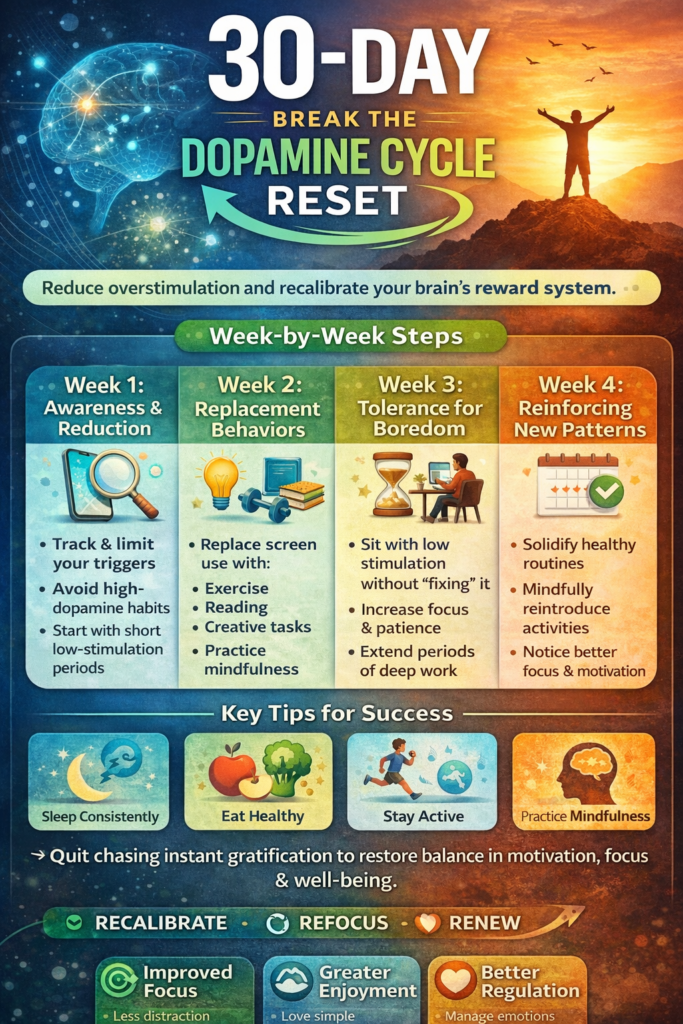
In a world filled with constant stimulation, many individuals find themselves caught in a cycle of instant gratification driven by frequent dopamine spikes. Activities such as social media use, binge-watching, and impulsive habits can overstimulate the brain’s reward system, making it harder to focus, stay motivated, and find satisfaction in everyday life. A 30-day dopamine reset offers a structured approach to breaking this cycle by reducing overstimulation and encouraging healthier, more intentional behaviors. By understanding how dopamine influences habits and motivation, individuals can begin retraining their brains and regaining control over their attention and decision-making.
30-Day Dopamine Reset: Breaking the Cycle of Instant Gratification
In today’s fast-paced, technology-driven world, many people find themselves stuck in a cycle of constant stimulation—scrolling, snacking, binge-watching, or seeking quick hits of pleasure. These behaviors repeatedly trigger dopamine, the brain’s reward and motivation neurotransmitter, creating patterns of instant gratification. Over time, this can reduce sensitivity to natural rewards, making everyday activities feel less satisfying. A 30-day dopamine reset is a structured approach designed to break this cycle, allowing the brain to recalibrate and restore balance in motivation, focus, and emotional regulation.
Understanding the Dopamine Cycle
Dopamine is not just about pleasure—it drives anticipation and reward-seeking behavior. High-frequency stimulation (like social media or sugar) floods the brain with dopamine, reinforcing habits that prioritize short-term rewards over long-term goals.
Over time, this leads to:
- Reduced enjoyment of simple activities
- Increased cravings for stimulation
- Difficulty focusing or staying motivated
- Dependence on external rewards
Breaking this cycle requires intentional reduction of overstimulation.
What Is a 30-Day Dopamine Reset?
A dopamine reset involves temporarily reducing or eliminating behaviors that overstimulate the brain’s reward system. The goal is not to eliminate dopamine—this would be impossible—but to rebalance how it is triggered and experienced.
Common areas to target include:
- Social media and excessive screen time
- Junk food and sugar
- Video games or binge entertainment
- Impulsive habits (e.g., constant checking, multitasking)
Week-by-Week Approach
Week 1: Awareness and Reduction
- Track habits that provide quick dopamine hits
- Begin limiting high-frequency behaviors
- Introduce small periods of “low stimulation” (e.g., no phone for 1–2 hours)
Week 2: Replacement Behaviors
- Replace high-stimulation habits with healthier alternatives
- Engage in physical activity, reading, or creative tasks
- Practice mindfulness or quiet reflection
Week 3: Building Tolerance for Boredom
- Allow yourself to experience boredom without immediately “fixing” it
- Extend periods of focus and deep work
- Strengthen attention and patience
Week 4: Reinforcing New Patterns
- Solidify healthier routines
- Reintroduce certain activities mindfully (if desired)
- Reflect on changes in mood, focus, and motivation
Benefits of Breaking the Dopamine Cycle
Many individuals report:
- Improved focus and productivity
- Greater enjoyment of simple activities
- Reduced cravings for instant gratification
- Better emotional regulation
These changes occur as the brain becomes more responsive to natural rewards.
Challenges to Expect
A dopamine reset is not always easy. Early stages may include:
- Irritability or restlessness
- Boredom or lack of motivation
- Urges to return to old habits
These reactions reflect the brain adjusting to lower levels of stimulation.
Supporting the Process
To make the reset more effective:
- Maintain a consistent sleep schedule
- Eat balanced, nutritious meals
- Stay physically active
- Build structure into your daily routine
These habits support overall brain function and recovery.
Important Perspective
The idea of a “dopamine detox” is often misunderstood. Dopamine is essential for normal functioning—you are not eliminating it, but changing your relationship with stimulation and reward. The goal is balance, not deprivation.
Conclusion
A 30-day dopamine reset offers a practical way to break patterns of overstimulation and regain control over attention, motivation, and behavior. By reducing reliance on instant gratification and reinforcing healthier habits, individuals can retrain their brain’s reward system and build more sustainable sources of fulfillment. Ultimately, the process is not about restriction—it is about rediscovering balance and creating a more intentional way of living.
Self-Management Strategies for a 30-Day Dopamine Reset: Breaking the Cycle with Intention
A 30-day dopamine reset is not just about cutting out habits—it is about retraining the brain’s reward system. In a world filled with constant stimulation, many people become conditioned to seek quick dopamine hits from screens, food, or other instant rewards. Over time, this can weaken motivation, reduce focus, and make everyday activities feel less satisfying. Self-management strategies provide a structured way to understand and navigate this process, helping individuals regain control over their attention, behavior, and sense of reward.
Why Self-Management Matters
Breaking the dopamine cycle requires more than willpower. The brain has adapted to frequent stimulation, so change must be intentional, gradual, and consistent. Self-management helps:
- Reduce dependence on instant gratification
- Strengthen focus and delayed reward
- Rebuild natural motivation systems
The goal is not to eliminate dopamine, but to restore balance in its triggering.
1. Building Awareness of Dopamine Triggers
The first step is identifying what drives overstimulation.
- Track habits like social media use, snacking, or constant checking
- Notice emotional triggers (boredom, stress, anxiety)
- Recognize patterns of automatic behavior
Awareness turns unconscious habits into conscious choices.
2. Setting Clear Boundaries
Reducing overstimulation requires structure.
- Set time limits for screen use
- Create “no-phone” zones or hours
- Avoid multitasking and constant switching between activities
Boundaries help break the cycle of continuous dopamine spikes.
3. Replacing, Not Just Removing
Simply removing stimulating behaviors can leave a void. Replacement is key.
- Substitute scrolling with reading or journaling
- Replace passive entertainment with active hobbies
- Choose activities that require effort but offer lasting satisfaction
This supports healthier dopamine release patterns.
4. Training Tolerance for Boredom
One of the hardest but most important steps is learning to sit with low stimulation.
- Allow moments of silence without distraction
- Resist the urge to immediately “fill the gap.”
- Practice doing one task at a time
Boredom is where the brain begins to reset and rebalance.
5. Structuring Daily Routines
Consistency strengthens new neural pathways.
- Plan your day with intentional activities
- Include periods of focused work and rest
- Maintain regular sleep and meal schedules
Structure reduces impulsive behavior and supports regulation.
6. Using Delayed Gratification
Rebuilding the reward system involves shifting from immediate to delayed rewards.
- Complete tasks before engaging in entertainment
- Set goals with meaningful rewards afterward
- Practice waiting before acting on impulses
This strengthens self-control and motivation.
7. Supporting Brain Recovery
Physical and mental health habits enhance the reset process.
- Exercise regularly to support natural dopamine release
- Eat balanced meals to stabilize energy
- Prioritize sleep for cognitive recovery
A healthy body supports a balanced brain.
Challenges to Expect
Self-management during a dopamine reset can be difficult, especially early on.
- Restlessness or irritability
- Reduced motivation
- Strong urges to return to old habits
These are signs that the brain is adjusting—not failing.
A Practical Mindset Shift
Instead of asking, “How do I avoid dopamine?”, a more effective question is:
“How do I use dopamine in a healthier, more intentional way?”
This shift emphasizes control and balance rather than restriction.
Conclusion
Self-management strategies are essential for successfully completing a 30-day dopamine reset. By building awareness, setting boundaries, replacing habits, and reinforcing consistency, individuals can gradually retrain their brain’s reward system. The process may be challenging, but it leads to improved focus, stronger motivation, and a healthier relationship with stimulation. Ultimately, breaking the dopamine cycle is not about deprivation—it is about reclaiming control and creating a more intentional, fulfilling way of living.
Family Support Strategies for a 30-Day Dopamine Reset: Breaking the Cycle Together
A 30-day dopamine reset is a structured effort to reduce overstimulation and retrain the brain’s reward system. While this process is often approached individually, family support can significantly influence its success. Habits tied to dopamine—such as screen use, food, and daily routines—are often shaped within shared environments. When families understand the purpose behind a dopamine reset, they can help create conditions that make change more sustainable, less stressful, and more effective.
Why Family Support Matters
Breaking the dopamine cycle can feel uncomfortable at first. Reduced stimulation may lead to boredom, irritability, or low motivation as the brain adjusts. Family support helps by:
- Reducing environmental triggers
- Providing encouragement during difficult moments
- Reinforcing healthier habits and routines
A supportive environment makes it easier for the brain to adapt and reset.
1. Creating a Low-Stimulation Environment
The home environment plays a major role in shaping behavior.
- Limit background distractions (TV, constant noise)
- Encourage shared quiet time or screen-free periods
- Keep high-stimulation triggers (junk food, excessive devices) less accessible
This helps reduce unnecessary dopamine spikes.
2. Participating as a Family
Change is easier when it is shared.
- Join in screen-free activities together
- Set family goals (e.g., “no phones during meals”)
- Replace passive habits with active ones, like walking, cooking, or games
Shared participation increases accountability and motivation.
3. Encouraging Healthy Alternatives
Instead of focusing on restrictions, families can help introduce better options.
- Suggest hobbies, exercise, or creative activities
- Encourage outdoor time or social interaction
- Support activities that require effort but provide lasting satisfaction
This helps rebuild natural dopamine pathways.
4. Responding with Patience and Understanding
During a dopamine reset, individuals may experience mood changes.
- Expect irritability or restlessness in the early stages
- Avoid criticism or pressure
- Offer reassurance and encouragement
Understanding that these reactions are part of the brain adjusting can prevent conflict.
5. Reinforcing Structure and Routine
Consistency helps stabilize the brain’s reward system.
- Maintain regular meal, sleep, and activity schedules
- Encourage planning and time management
- Support follow-through on daily goals
Structure reduces impulsive behavior and strengthens new habits.
6. Modeling Healthy Behavior
Family members influence each other through example.
- Demonstrate balanced technology use
- Practice delayed gratification (e.g., completing tasks before leisure)
- Show consistency in routines and habits
Modeling reinforces the behaviors the reset is trying to build.
7. Celebrating Progress
Positive reinforcement supports motivation.
- Acknowledge small milestones (e.g., reduced screen time)
- Celebrate consistency rather than perfection
- Focus on improvements in mood, focus, or energy
Recognition strengthens the brain’s natural reward system.
Important Considerations
Family support is powerful, but it should remain balanced.
- Avoid being overly controlling or restrictive
- Respect individual autonomy and personal goals
- Understand that setbacks are part of the process
Support should empower, not pressure.
A Shared Approach to Change
A dopamine reset is not just about removing habits—it is about changing how the brain experiences reward and motivation. When families understand this, they can shift from enforcing rules to creating supportive environments that encourage long-term change.
Conclusion
Family support strategies can greatly enhance the success of a 30-day dopamine reset by providing structure, encouragement, and a low-stimulation environment. Through shared participation, patience, and consistent reinforcement of healthy habits, families can help individuals break the cycle of instant gratification and rebuild a more balanced reward system. Ultimately, lasting change is more achievable when it is supported not just by individual effort, but by the people and environment surrounding it.
Community Resource Strategies for a 30-Day Dopamine Reset: Supporting Change Beyond the Individual
Breaking the dopamine cycle over 30 days is not just an individual effort—it is strongly influenced by the environment and resources available within a community. In a world designed around constant stimulation, community support systems can help individuals reduce overstimulation, build healthier habits, and sustain long-term change. By providing education, structured programs, and supportive environments, communities play a key role in helping people understand and successfully implement a dopamine reset.
Why Community Resources Matter
A dopamine reset can be challenging, especially when daily environments are filled with triggers like screens, fast food, and constant distractions. Community resources help by:
- Reducing isolation during behavior change
- Providing structure and accountability
- Offering alternatives to high-stimulation habits
These supports make it easier to stay consistent and motivated.
1. Educational Programs and Workshops
Understanding the science behind dopamine helps individuals stay committed.
- Community centers or health organizations offering workshops on habits and brain function
- Classes on digital wellness, mindfulness, or behavior change
- School or workplace programs that promote healthy technology use
Education helps individuals see the purpose behind reducing stimulation.
2. Group Challenges and Accountability Programs
Shared goals increase success rates.
- Community “digital detox” or wellness challenges
- Group-based 30-day reset programs
- Accountability partners or peer tracking systems
These programs create motivation through shared progress and support.
3. Access to Low-Stimulation Activities
Communities can provide alternatives to high-dopamine environments.
- Parks, walking trails, and outdoor recreation areas
- Libraries and quiet study spaces
- Art, fitness, or hobby-based community classes
These options encourage healthier, more sustainable sources of reward.
4. Mental Health and Coaching Services
Professional support can guide individuals through the reset process.
- Counselors or coaches focused on habit change and behavior regulation
- Workshops on stress management and focus improvement
- Support for individuals struggling with compulsive behaviors
These services help individuals navigate challenges more effectively.
5. Digital Wellness and Screen-Time Initiatives
Communities can actively address overstimulation.
- Campaigns promoting reduced screen time
- Tech-free events or designated unplugged spaces
- Resources for managing social media use
These initiatives shift cultural norms toward more balanced technology use.
6. Supportive Social Environments
Social settings can either reinforce or challenge habits.
- Peer groups that encourage mindful living
- Community events that focus on connection rather than stimulation
- Spaces that promote conversation, creativity, and presence
Positive social environments help replace unhealthy dopamine habits.
Important Considerations
While community resources are valuable, there are limitations:
- Not all communities offer equal access
- Participation requires personal commitment
- Individuals may need to explore multiple resources to find what works
Combining community support with personal self-management strategies leads to the best outcomes.
A Community-Based Perspective on Change
Understanding a dopamine reset as a shared behavioral shift rather than an isolated effort makes it more sustainable. Communities can help normalize slower, more intentional living in a culture that often prioritizes constant stimulation.
Conclusion
Community resource strategies play a vital role in supporting a 30-day dopamine reset by providing education, structure, and healthier alternatives to overstimulation. Through group support, accessible activities, and wellness-focused initiatives, communities can help individuals break the cycle of instant gratification and build more balanced reward systems. Ultimately, lasting change is not just about individual discipline—it is strengthened by environments and communities that support intentional, healthy living.
Frequently Asked Questions
Here are some common questions:
1. What is a 30-day dopamine reset?
It is a structured period where you reduce high-stimulation activities (like social media, junk food, or binge-watching) to help rebalance your brain’s reward system.
2. Does a dopamine reset eliminate dopamine?
No. Dopamine is essential for survival. The goal is to reduce overstimulation, not eliminate dopamine, so your brain can respond better to natural rewards.
3. Why 30 days?
Thirty days provides enough time for the brain to begin adjusting habits and forming new patterns, though changes can vary by individual.
4. What activities should I reduce or avoid?
Common ones include:
- Social media and excessive screen time
- Sugary or highly processed foods
- Video games or binge entertainment
- Constant multitasking or stimulation
5. What can I do instead?
Replace high-dopamine habits with:
- Exercise
- Reading
- Journaling
- Creative activities
- Mindfulness or quiet time
6. What happens to the brain during a reset?
The brain gradually becomes more sensitive to natural dopamine levels, improving motivation, focus, and enjoyment of everyday activities.
7. Is it normal to feel worse at first?
Yes. Early symptoms may include:
- Boredom
- Irritability
- Restlessness
- Low motivation
This is part of the brain adjusting to lower stimulation.
8. What is the hardest part of the reset?
Learning to tolerate boredom and low stimulation is often the most challenging yet most important step.
9. Can I still use my phone or watch TV?
Yes, but in moderation and with intention. The goal is mindful use, not complete elimination (unless you choose a stricter reset).
10. What are the benefits of completing the reset?
- Improved focus and attention
- Increased motivation
- Greater enjoyment of simple activities
- Better emotional regulation
11. What if I slip up during the 30 days?
Setbacks are normal. The key is to:
- Recognize the pattern
- Refocus without guilt
- Continue the process
Consistency matters more than perfection.
12. How do I stay motivated?
- Track your progress
- Set small, achievable goals
- Remind yourself why you started
- Use accountability (friends, family, or groups)
13. Is this the same as a “dopamine detox”?
They are often used interchangeably, but “reset” is more accurate—it emphasizes balance and retraining rather than elimination.
14. Who can benefit from a dopamine reset?
Anyone who feels:
- Easily distracted
- Dependent on constant stimulation
- Unmotivated or burned out
- Struggling with focus or habits
15. How do I maintain results after 30 days?
- Reintroduce activities slowly and intentionally
- Keep boundaries (e.g., limited screen time)
- Maintain healthy routines
- Stay mindful of triggers
Conclusion
A 30-day dopamine reset is not about eliminating pleasure, but about restoring balance in how the brain experiences reward. While the process may involve discomfort, such as boredom or irritability, these challenges reflect the brain’s adjustment to lower levels of stimulation. With consistency and intentional effort, individuals can rebuild their sensitivity to natural rewards, improve focus, and develop healthier habits. Ultimately, breaking the dopamine cycle is a step toward greater self-regulation, allowing for a more meaningful and sustainable approach to productivity, well-being, and everyday life.
Video: Why You Can’t Feel Happy Anymore #DopamineReset #BrainHealth