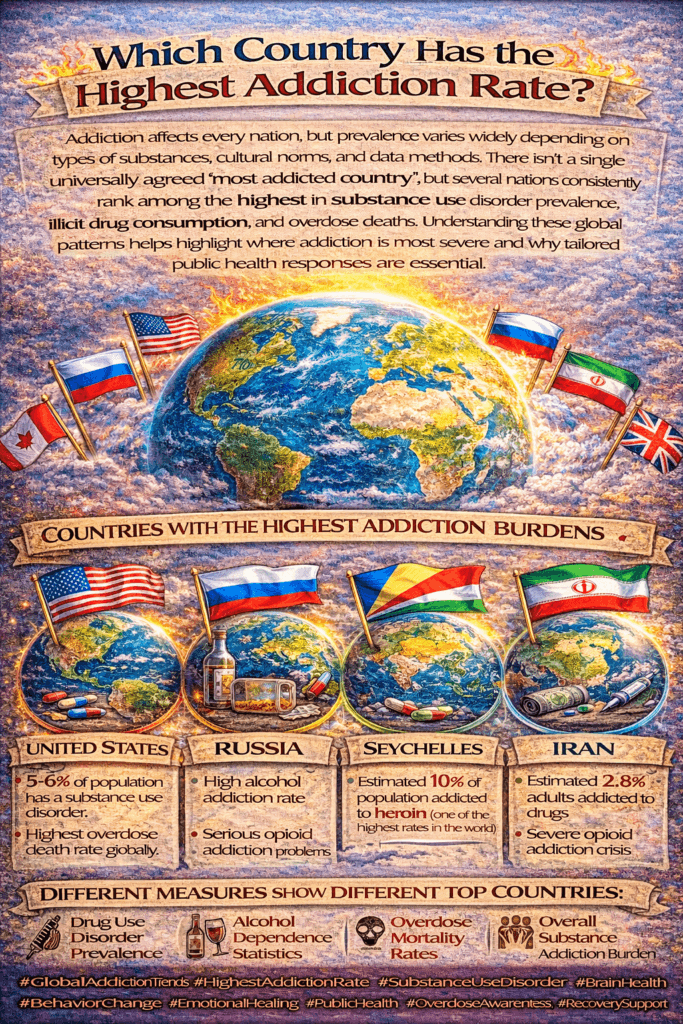
Understanding which country has the highest addiction rate is far more complex than pointing to one nation and labeling it “the worst.” Addiction statistics depend heavily on how addiction is defined, what substances or behaviors are included, and how data is collected and reported. Some countries track alcohol use disorders in detail but underreport illicit drug use, while others focus on opioids, stimulants, gambling, or emerging behavioral addictions like gaming and social media. Cultural attitudes, legal frameworks, access to healthcare, and stigma also influence whether people seek help or are counted at all. As a result, reported rates can reflect differences in measurement and transparency as much as actual prevalence. This article breaks down how addiction is measured across countries, compares global patterns of substance and behavioral addiction, and explains what the latest data really tells us about where addiction is most concentrated—and why those numbers should be interpreted with caution.
How Addiction Rates Are Measured
Addiction isn’t only about illegal drugs. It covers a wide range of habits, including alcohol, nicotine, prescription medications, gambling, and even internet use. Researchers and public health officials usually measure addiction rates by looking at the percentage of the population meeting criteria for substance use disorder or behavioral addiction in a given year.
These studies often rely on surveys, medical records, and criminal records. The World Health Organization (WHO), the United Nations Office on Drugs and Crime (UNODC), and many local government agencies gather and analyze this data. Differences in cultural norms, health systems, and reporting methods lead to variation in numbers across countries.
Key terms you might see include:
- Prevalence rate: The percent of people who have a specific addiction at a given time.
- Incidence rate: The number of new cases in a set period, like over a year.
- Substance use disorder: A medical condition recognized by mental health professionals, covering both dependency and harmful use.
Countries With the Highest Reported Addiction Rates
Identifying a single “most addicted” country depends a lot on what kind of addiction we’re talking about. Here’s an overview based on major categories:
- Alcohol use disorder: Eastern European countries such as Belarus, Russia, and Lithuania show especially high rates, according to the WHO’s Global Status Report on Alcohol and Health.
- Opioid addiction: The United States, Canada, and parts of Afghanistan have some of the highest opioid dependency rates, as tracked by the UNODC and CDC.
- Tobacco use: Southeast Asian countries, particularly Indonesia, Myanmar, and the Philippines, report extremely high rates of nicotine addiction according to the WHO Global Tobacco Report.
- Gambling addiction: Australia and Singapore have unusually high percentages of adults with gambling problems, backed by several local and international studies.
- Stimulant drug use: South Africa, some Latin American countries, and Australia are notable for high rates of methamphetamine and cocaine use.
It’s important to note that while these countries are often highlighted for high addiction rates in specific categories, local efforts and changing policies have started to make a difference in some areas. Awareness campaigns, new laws, and increased treatment options are helping some nations address the challenge head-on.
The United States: A Closer Look at Substance Addiction
The U.S. often takes center stage in addiction discussions, especially with its ongoing opioid crisis. According to the National Institute on Drug Abuse (NIDA), millions in the country meet the criteria for substance use disorder each year. Opioid-related overdose deaths remain high; synthetic opioids like fentanyl are causing major public health concerns.
Alcohol and prescription drug misuse are also widespread. Factors such as high prescription rates, healthcare access, and social attitudes all play a part. These levels don’t necessarily mean Americans are more susceptible to addiction. It could simply reflect better reporting and diagnosis as well.
Treatment and prevention programs have expanded significantly in the U.S. during recent years, with increased emphasis on community-based recovery and harm reduction strategies, such as naloxone distribution and fentanyl testing strips. These initiatives are crucial for slowing the impact of widespread substance misuse.
Alcohol: European and Global Trends
Alcohol consumption varies greatly worldwide. Europe, particularly Eastern Europe, leads with some of the highest per-capita consumption and rates of alcohol use disorder. Countries like Belarus and Lithuania consistently appear at the top of global rankings for harmful alcohol use. Social drinking culture, stress, and even legacy issues from stricter regimes have all had a lasting impact.
In places where alcohol is less accessible for religious or legal reasons, such as many Middle Eastern countries, rates of alcohol addiction remain much lower—at least in reported and medically treated cases. In some regions, unrecorded or home-brewed alcohol poses additional health threats, and the true impact is hard to gauge.
Some governments in Europe have introduced stronger regulations on alcohol sales, advertising, and drinking age, aiming to reduce harmful outcomes. These policies, combined with improved mental health support and increased awareness, have begun to alter patterns of use among younger populations.
Tobacco and Nicotine Addiction Hotspots
Certain countries report alarmingly high tobacco use, with Indonesia sometimes called the “smoking capital of the world.” WHO data shows more than 60% of Indonesian men use tobacco products. Smoking is deeply woven into the culture, and cigarettes are cheap and easy to buy.
In Eastern Europe, countries like Russia and Bulgaria also report high tobacco use rates, though anti-smoking campaigns and higher taxes have started to bring the numbers down slightly. Activists and healthcare workers stress the importance of early education and stricter enforcement of tobacco control laws to stop addiction from spreading among youth.
Mental Health and Digital Addictions
Behavioral addictions, such as excessive internet or gaming use, have become more common over the last decade. South Korea, China, and Japan lead the way in recognizing and treating technology-related addictions. South Korea, for instance, has introduced specialized clinics and government guidelines for the management of gaming disorder among adolescents and young adults.
These digital addictions may not always appear in international rankings alongside drugs and alcohol, but they come with real mental health impacts. Lost productivity, strained relationships, and, in some cases, health emergencies have prompted greater investments in research and treatment for behavioral addictions. Some experts estimate that gaming and smartphone addiction rates in a few Asian countries are comparable to more “traditional” substance use disorders.
Why Comparing Addiction Rates Gets Complicated
There are several reasons why ranking countries by addiction rate isn’t totally straightforward:
- Different definitions: What one country considers an addiction, another might see as a bad habit or not track at all. Differences in language and medical standards make straight comparisons difficult.
- Social stigma: In many societies, people avoid reporting drug or alcohol issues out of shame or fear of legal trouble. Official numbers can sometimes underestimate the actual problem.
- Healthcare and reporting: Countries with stronger healthcare systems typically detect and record more cases of addiction. This sometimes makes their rates appear higher than those in places with less robust systems, where cases go undiagnosed.
Moreover, migration, rapid urbanization, and shifts in economic opportunities can also influence reported addiction rates in complex ways. Researchers and policymakers are developing improved tools for collecting and comparing international data.
Factors Driving High Addiction Rates
No country has just one reason behind high addiction rates. Common contributors include:
- Economic stress and unemployment: Money worries and lack of work often lead people to turn to addictive substances or habits as coping mechanisms.
- Access and affordability: If drugs, alcohol, cigarettes, or gambling are cheap and available everywhere, more people tend to develop dependencies. Some countries that make these substances more difficult to buy see lower rates of addiction.
- Cultural norms: In places where drinking or smoking is seen as normal social behavior, addiction rates are generally higher. Marketing and media also play a role in shaping how different generations view risky habits.
- Policy and law: Countries with strict enforcement and accessible rehabilitation services can achieve lower rates, or at least greater access to the support they need. Some governments have achieved success by combining educational campaigns with public health enforcement and the provision of affordable treatment centers.
Risks and Complications of High Addiction Levels
The dangers go far beyond the individual struggling with addiction. Social impacts include more accidents, crime, lost productivity, and strain on healthcare and legal systems. Countries with high addiction rates also face stigma, which can make it harder for affected people to get support and start recovery.
Families and communities feel the ripple effects. Children are especially vulnerable to neglect or exposure to substance abuse environments, which can impact their education, emotional health, and chance for future success.
Long-term addiction epidemics can hold back whole communities. Rising healthcare costs, lost talent, and generational cycles of abuse add up over time. Societies working to break the cycle find that investing in both treatment and prevention offers the best hope.
How Countries Are Responding
Governments have taken many different paths to address addiction. Harm reduction programs, such as needle exchange and safe consumption sites, public health campaigns, expanded education, and better mental health support, are all common tools. Portugal’s decriminalization approach, Iceland’s youth engagement initiatives, and anti-smoking regulations in Australia are often cited as interesting case studies.
In some countries, access to rehab and counseling has improved, making it easier for people to recover and rebuild their lives. Community organizations, online therapy, and peer support networks are part of a growing movement focused on recovery. International cooperation also helps track down smuggling and drug trafficking at their sources, making a global difference.
Frequently Asked Questions
Question: Is there one clear “most addicted” country in the world?
Answer: There isn’t a single country with the “worst” addiction rate overall since different types of addiction hit different regions harder. The U.S. sees higher opioid cases, Belarus and Russia have higher alcoholism rates, and Indonesia leads in tobacco use.
Question: Why do some countries seem to have more addicts?
Answer: The numbers can reflect stronger healthcare reporting, social attitudes, or even just better data collection. So, more “addicted” might mean more identified and treated cases rather than a higher actual percentage of people struggling.
Question: What steps can help reduce addiction rates?
Answer: Community education, early mental health support, employment programs, and affordable access to treatment have all shown good results in lowering addiction risks.
Practical Takeaways for Understanding Global Addiction
Jumping into addiction data makes it clear that worldwide rates are shaped by social, economic, and healthcare factors just as much as by individual choices. There’s no one “most addicted” country, just a mix of places each facing unique challenges with substances or behaviors. Programs that focus on prevention, community support, and accessible help have real potential to improve outcomes, not just for individuals but for families and neighborhoods everywhere. Keeping an eye out for emerging trends and learning from successful case studies can bolster global efforts to combat addiction and its effects.
Video: Which Country Actually Has the Worst Addiction Problem #addiction #statistics #shorts