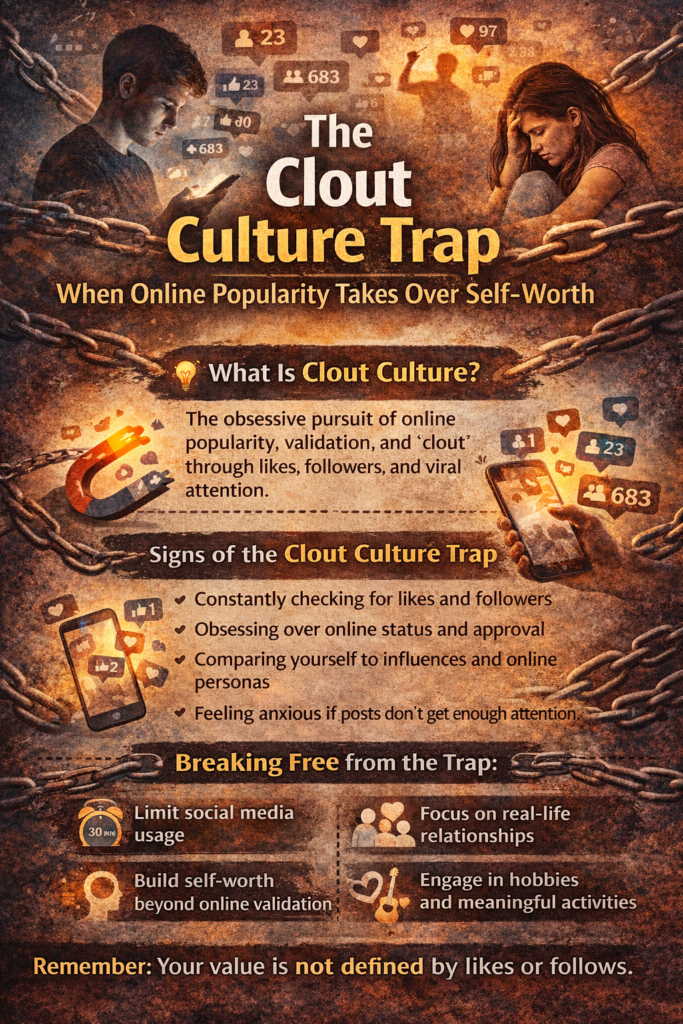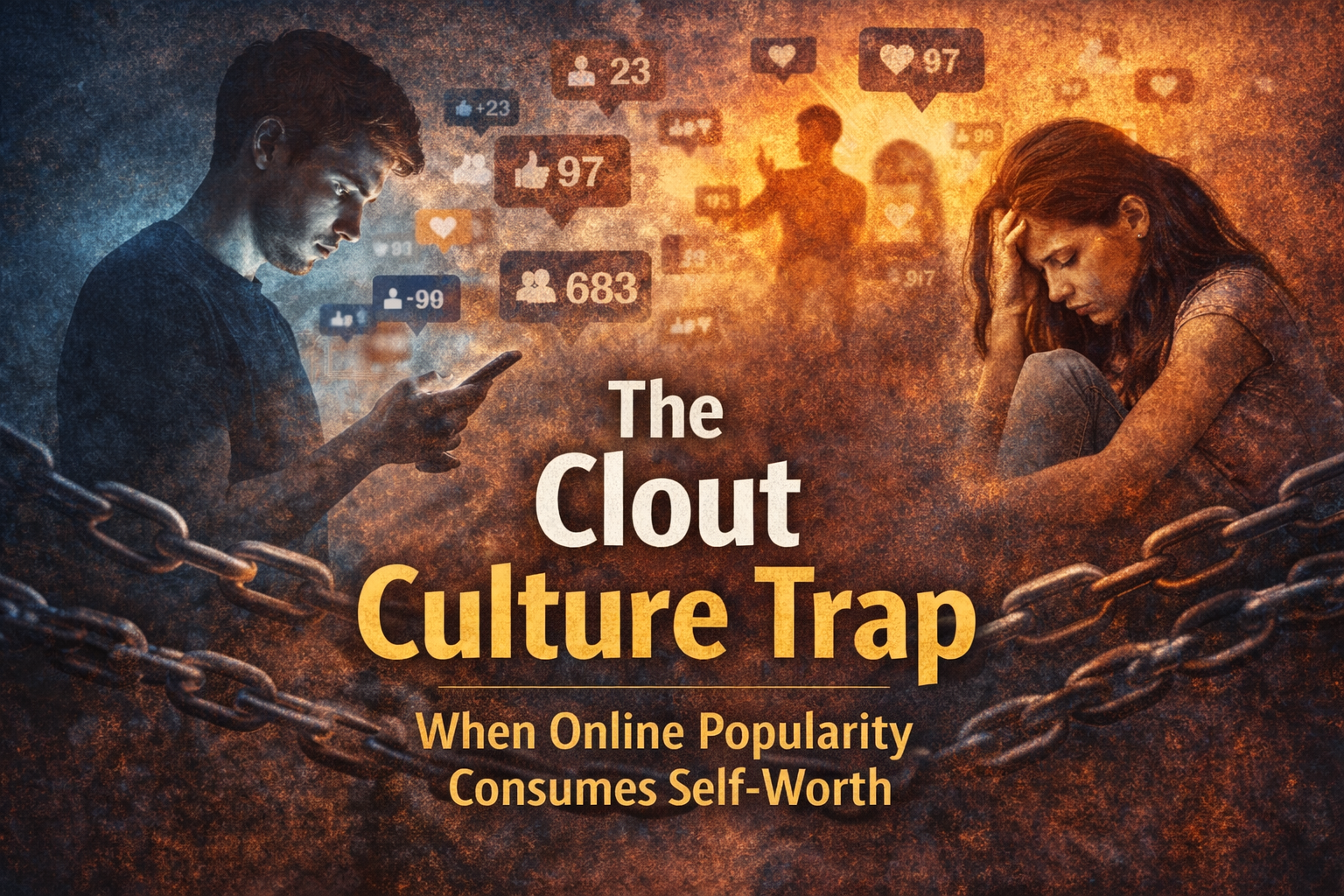
In the age of social media, popularity and online attention have become powerful forms of social currency. Many people feel pressure to gain likes, followers, and recognition in order to feel valued or accepted online. This pursuit of online popularity is often referred to as the clout culture trap, in which individuals measure their self-worth by digital approval rather than by personal growth or meaningful relationships. While social media can provide opportunities for connection and creativity, the constant desire for validation can lead to unhealthy comparisons, emotional stress, and a distorted sense of identity. Understanding the clout culture trap is an important step in recognizing how social media influences behavior and self-perception.
The Clout Culture Trap: When Online Validation Becomes Addictive
In today’s digital world, social media has become a powerful platform for connection, creativity, and self-expression. However, it has also created a culture where many people feel pressure to gain attention, recognition, and approval through likes, followers, and online popularity. This phenomenon is often referred to as clout culture—the pursuit of online status, influence, and validation. While social media can offer opportunities for positive engagement, the constant desire for recognition can also create a trap that encourages unhealthy behaviors and addictive patterns.
Understanding the clout culture trap helps reveal how the search for online approval can impact mental health, self-worth, and personal identity.
What Is Clout Culture?
Clout culture refers to the social pressure to gain popularity, influence, or validation on social media platforms. People may seek attention through viral posts, trending challenges, or exaggerated online personas in hopes of gaining more followers or engagement.
In many cases, online popularity becomes a measure of personal value. Metrics such as likes, comments, and shares can begin to shape how individuals see themselves and how they believe others perceive them.
Why the Pursuit of Clout Is So Powerful
Social media platforms are designed to reward engagement. Each notification, like, or comment can trigger a sense of excitement and validation. Psychologically, these small rewards activate the brain’s reward system, which can encourage people to keep seeking more attention online.
Over time, individuals may begin to rely on social media feedback to feel confident or accepted. This cycle can lead to behaviors such as:
- Constantly checking social media for likes or comments
- Posting content primarily for validation rather than self-expression
- Comparing personal success to others’ online popularity
- Feeling anxious or disappointed when posts receive little attention
The desire for clout can gradually shift from a harmless activity to a source of emotional dependence.
The Mental Health Impact
The clout culture trap can have significant effects on mental health and self-esteem. When individuals tie their sense of worth to online engagement, their confidence can fluctuate depending on how their posts perform.
Common effects may include:
- Increased anxiety about online perception
- Feelings of inadequacy when comparing oneself to others
- Pressure to maintain a curated or unrealistic online image
- Emotional stress from constantly seeking validation
Over time, the pursuit of clout can distract individuals from building genuine connections and meaningful achievements offline.
Escaping the Clout Culture Trap
Breaking free from the clout culture trap involves shifting the focus from external validation to authentic self-worth. Social media can still be used in positive ways, but it should not define a person’s identity or values.
Helpful strategies include:
- Setting healthy boundaries with social media use
- Focusing on genuine self-expression rather than online approval
- Limiting comparison with others’ online lives
- Prioritizing real-life relationships and experiences
- Practicing self-reflection and building confidence beyond social media
These changes can help individuals develop a healthier relationship with technology and online platforms.
Moving Toward Authentic Connection
Clout culture thrives on the idea that popularity equals success. However, true fulfillment comes from authentic relationships, personal growth, and meaningful experiences—not from numbers on a screen.
Recognizing the clout culture trap allows individuals to step back from the constant pursuit of online validation. By focusing on authenticity, self-awareness, and real-world connections, people can use social media as a tool for communication and creativity rather than a measure of their self-worth.
Avoiding the Clout Culture Trap: Self-Management Strategies for Healthy Social Media Use
Social media has become a major part of modern life, offering opportunities for communication, creativity, and connection. However, it has also contributed to the rise of clout culture, where individuals feel pressure to gain validation through likes, followers, and online popularity. While social media itself is not harmful, constantly seeking approval from online audiences can lead to stress, comparison, and unhealthy habits. Developing self-management strategies can help individuals maintain a balanced relationship with social media and avoid falling into the clout culture trap.
Self-management focuses on building awareness, setting boundaries, and strengthening self-confidence so that personal worth is not tied to online validation.
Developing Awareness of Social Media Habits
The first step in preventing the clout culture trap is becoming aware of how social media influences thoughts and behaviors. Many people check their platforms frequently without realizing how much time and emotional energy they invest in online feedback.
Self-awareness can be developed by asking questions such as:
- How often do I check social media for likes or comments?
- Do I feel disappointed when a post receives little attention?
- Am I posting content to express myself or to gain approval?
Recognizing these patterns helps individuals understand whether social media is being used in a healthy or unhealthy way.
Setting Healthy Boundaries with Social Media
Another important strategy is setting clear boundaries around social media use. Without limits, individuals may spend excessive time online comparing themselves to others or chasing online recognition.
Healthy boundaries might include:
- Limiting daily social media usage
- Turning off nonessential notifications
- Taking regular breaks from social media platforms
- Avoiding social media before bedtime or immediately after waking up
These boundaries help reduce the pressure to constantly monitor online engagement.
Building Self-Worth Beyond Online Validation
Clout culture often creates the illusion that personal value is measured by popularity. Self-management strategies encourage individuals to develop self-worth that is independent of social media feedback.
Ways to strengthen self-worth include:
- Focusing on personal achievements and goals
- Developing skills, hobbies, and interests outside of social media
- Practicing self-reflection and positive self-talk
- Surrounding oneself with supportive relationships
When confidence comes from personal growth rather than online approval, social media loses much of its emotional influence.
Practicing Mindful Social Media Use
Mindfulness can also help individuals avoid the clout culture trap. Mindful social media use means intentionally deciding how and why to use social media, rather than scrolling automatically or seeking validation.
This may involve:
- Posting content that reflects authentic interests and values
- Following accounts that promote positivity and inspiration
- Avoiding excessive comparison with influencers or online personalities
Mindfulness allows individuals to use social media as a tool for connection rather than a source of pressure.
Creating Balance Between Online and Real-Life Experiences
Healthy self-management also involves balancing digital interactions with real-life experiences. Spending time offline helps individuals build stronger relationships, develop hobbies, and focus on personal well-being.
Examples of healthy balance include:
- Engaging in physical activities or creative pursuits
- Spending time with friends and family in person
- Participating in community activities or volunteer work
These experiences remind individuals that meaningful connections and achievements exist beyond social media platforms.
Moving Toward Healthier Digital Habits
Preventing the clout culture trap requires intentional effort and self-awareness. By recognizing unhealthy patterns, setting boundaries, and building confidence beyond online validation, individuals can develop healthier digital habits.
Social media can still be a valuable tool for communication and creativity, but it should not define personal identity or self-worth. Through thoughtful self-management, individuals can enjoy the benefits of social media while maintaining a balanced and authentic sense of self.
Protecting the Next Generation: Family Support Strategies to Prevent the Clout Culture Trap
Social media has become deeply embedded in everyday life, especially for younger generations. While it offers opportunities for creativity and connection, it also fuels clout culture—the pursuit of online popularity, validation, and influence through likes, followers, and viral attention. When individuals begin to tie their self-worth to online approval, it can create pressure, anxiety, and unhealthy digital habits. Families play an important role in helping prevent this trap by teaching healthy perspectives on social media, promoting self-confidence, and encouraging balanced lifestyles.
Family support strategies can help young people develop a healthy relationship with social media and avoid becoming dependent on online validation.
Encouraging Healthy Conversations About Social Media
One of the most effective strategies families can use is open communication. Talking openly about social media helps children and teens understand both its benefits and its risks.
Families can discuss topics such as:
- The difference between real life and curated online images
- How social media platforms encourage engagement and validation
- The emotional effects of comparing oneself to others online
These conversations help young people develop critical thinking about what they see online and reduce the pressure to chase popularity.
Promoting Self-Worth Beyond Online Validation
Clout culture often encourages the idea that popularity equals success. Families can counter this message by helping children and teens build self-esteem grounded in personal values, talents, and achievements rather than in online approval.
Families can support this by:
- Encouraging hobbies, sports, or creative activities
- Recognizing efforts and accomplishments outside of social media
- Teaching that personal worth is not measured by followers or likes
When self-confidence is built through real-life experiences, individuals are less likely to rely on social media validation.
Modeling Healthy Digital Habits
Children and teens often learn behaviors by observing the adults around them. Families can help prevent unhealthy social media habits by modeling balanced technology use.
Examples include:
- Limiting screen time during family interactions
- Avoiding constant phone checking during conversations
- Setting family guidelines for digital device use
When adults demonstrate balanced digital behavior, younger family members are more likely to adopt similar habits.
Creating Boundaries for Social Media Use
Healthy boundaries help prevent excessive reliance on social media. Families can work together to establish guidelines that promote balance and well-being.
Possible boundaries include:
- Limiting daily social media usage
- Designating technology-free times, such as during meals or before bedtime
- Encouraging regular breaks from digital platforms
These boundaries help ensure that social media remains a tool rather than a source of emotional pressure.
Encouraging Real-Life Connections
Strong offline relationships can reduce the desire to seek constant validation online. Families can encourage activities that strengthen real-life connections and experiences.
Examples include:
- Spending quality time together as a family
- Participating in community activities or volunteer work
- Encouraging friendships and social interactions outside of digital platforms
These experiences remind individuals that meaningful relationships and support exist beyond the online world.
Supporting Healthy Digital Development
Preventing the clout culture trap requires awareness, guidance, and consistent support. Families who communicate openly about social media, promote self-confidence, and model healthy digital habits help create an environment where young people can develop balanced perspectives.
By focusing on authentic relationships, personal growth, and real-life achievements, families can help the next generation use social media responsibly without becoming trapped by the pressure of online validation.
Community Resource Strategies to Prevent the Clout Culture Trap
In a world where social media platforms influence how people communicate, express themselves, and measure success, the pressure to gain online popularity has grown significantly. This pressure has contributed to what is often called the clout culture trap, where individuals seek validation through likes, followers, and online recognition. When people begin to measure their self-worth by digital attention, it can lead to anxiety, unhealthy comparisons, and emotional dependence on social media. Communities play an important role in helping individuals develop healthier perspectives by providing resources, education, and supportive environments that encourage balanced digital habits.
Promoting Digital Literacy Programs
One of the most effective community strategies is offering digital literacy and media awareness programs. Schools, libraries, and community organizations can teach individuals how social media platforms are designed to encourage engagement and validation.
These programs can help people:
- Understand how algorithms influence what they see online
- Recognize unrealistic portrayals of life on social media
- Develop critical thinking about online content
By educating individuals about how social media works, communities can help reduce the pressure to chase online popularity.
Providing Youth Development Programs
Youth programs play a key role in helping young people build confidence outside of social media. Community centers, mentorship programs, and extracurricular activities allow young people to develop skills, interests, and relationships in supportive environments.
Examples of helpful programs include:
- Sports and recreational activities
- Arts, music, and creative workshops
- Leadership and mentorship programs
- Volunteer opportunities
These experiences help young people develop self-esteem based on real-world accomplishments rather than online attention.
Creating Mental Health and Counseling Support
Access to mental health services is another important community resource. Counselors, social workers, and community health programs can help individuals who struggle with social comparison, anxiety, or pressure related to social media.
Through counseling and support programs, individuals can learn to:
- Manage stress related to online interactions
- Develop healthier digital habits
- Strengthen self-confidence and emotional resilience
Mental health support helps individuals maintain a balanced relationship with technology and online platforms.
Encouraging Community Engagement and Real-Life Connections
Communities can also help prevent the clout culture trap by encouraging real-life engagement and social interaction. When individuals build meaningful connections offline, they are less likely to depend on social media validation.
Community initiatives may include:
- Local events and cultural activities
- Volunteer and service projects
- Community clubs and group activities
- Neighborhood wellness programs
These activities promote authentic relationships and remind individuals that fulfillment comes from real-life experiences rather than online popularity.
Promoting Healthy Technology Use
Community organizations can also promote healthy technology habits through awareness campaigns and educational initiatives. These programs can encourage people to create balanced digital routines and recognize when social media use becomes unhealthy.
Helpful strategies may include:
- Encouraging regular digital breaks
- Promoting mindful social media use
- Raising awareness about the effects of online comparison
These initiatives help individuals use technology responsibly without becoming overwhelmed by the pressure of clout culture.
Building a Supportive Community Culture
Preventing the clout culture trap requires a collective effort from schools, community leaders, families, and organizations. By providing educational resources, youth programs, mental health support, and opportunities for meaningful engagement, communities can help individuals develop confidence and identity beyond social media.
When communities promote authenticity, connection, and personal growth, they create environments where individuals can use technology as a tool for communication and creativity—rather than a measure of their self-worth.
Frequently Asked Questions
Here are some common questions:
1. What is the clout culture trap?
The clout culture trap refers to the pressure to gain popularity, attention, or validation on social media through likes, followers, and viral content. When people begin to measure their self-worth based on online engagement, they may become emotionally dependent on digital approval.
2. Why is clout culture so influential today?
Clout culture is powerful because social media platforms reward attention and engagement. Notifications, likes, and comments activate the brain’s reward system, making people feel validated and encouraging them to keep seeking more attention online.
3. Who is most affected by the clout culture trap?
While anyone can be affected, teens and young adults are particularly vulnerable because social media plays a major role in their social lives. Influencers, trends, and online comparisons can create pressure to maintain popularity and online status.
4. What are the signs that someone is caught in the clout culture trap?
Some common signs include:
- Constantly checking social media for likes and comments
- Feeling anxious when posts do not receive enough attention
- Comparing personal success to influencers or popular accounts
- Posting content mainly to gain approval rather than self-expression
- Feeling dependent on online validation for confidence
5. How can clout culture affect mental health?
Clout culture can contribute to anxiety, low self-esteem, and emotional stress. When people compare themselves to unrealistic online portrayals or rely on social media validation, they may feel inadequate or pressured to maintain a certain image.
6. Can social media use become addictive because of clout culture?
Yes. When people repeatedly seek validation through social media engagement, the behavior can become habit-forming. This can lead to excessive screen time, constant checking of notifications, and difficulty disconnecting from digital platforms.
7. How can someone avoid falling into the clout culture trap?
Healthy strategies include:
- Limiting time spent on social media
- Avoiding constant comparison with others online
- Focusing on authentic self-expression instead of popularity
- Building confidence through real-life activities and relationships
These strategies help maintain a healthier relationship with social media.
8. How can families help prevent the clout culture trap?
Families can help by encouraging open conversations about social media, setting healthy technology boundaries, and supporting young people in building self-confidence through hobbies, education, and personal achievements outside digital platforms.
9. What role do communities play in addressing clout culture?
Communities can provide digital literacy programs, youth activities, mental health support, and awareness campaigns that teach healthy social media habits and help individuals develop self-worth beyond online popularity.
10. Is it possible to use social media without falling into the clout culture trap?
Yes. Social media can be used in healthy ways when individuals set boundaries, focus on meaningful interactions, and remember that online engagement does not define their personal value.
Conclusion
Escaping the clout culture trap involves shifting focus away from online approval and toward authentic self-worth and real-life experiences. By developing healthy digital habits, building confidence beyond social media, and prioritizing meaningful relationships, individuals can reduce the pressure to seek constant validation online. Social media can still be used as a tool for communication and creativity, but it should not determine a person’s value or identity. When individuals learn to balance their digital and real-world lives, they can enjoy the benefits of technology while maintaining a healthier sense of self and emotional well-being.
Video: Strangers are literally hijacking your confidence #psychology #awareness