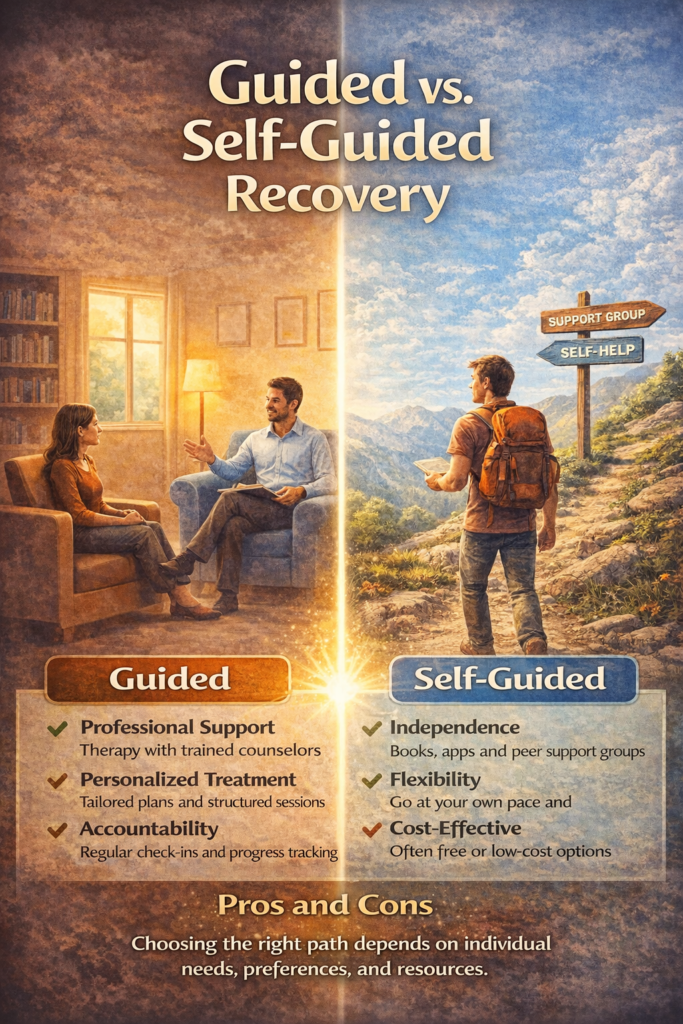
If you or someone you care about is navigating addiction recovery, it’s common to wonder whether therapy or self-help is the better path. With so much information available—from professional treatment programs to books, online communities, and peer support groups—it can feel overwhelming to decide which approach will be most effective. Therapy offers structured guidance from trained professionals who can address the psychological, emotional, and behavioral aspects of addiction. On the other hand, self-help approaches often emphasize personal motivation, peer support, and practical strategies that individuals can use in their everyday lives. Both paths have unique strengths and challenges, and what works best can depend on personal circumstances, support systems, and the severity of the addiction. This guide explores the benefits and limitations of therapy and self-help to help you better understand your options and find a recovery path that aligns with your needs and goals.
Understanding Addiction Recovery: Therapy and Self-help
Recovery isn’t a one-size-fits-all adventure. People bounce back from addiction in all different ways, but two of the most common approaches are professional therapy and self-help methods. Both have their place, and choosing between them or combining them can really shape the recovery experience in life-changing ways.
Therapy usually involves working with a licensed mental health professional, such as a counselor or addiction specialist. It often includes cognitive-behavioral therapy (CBT), motivational interviewing, or group sessions led by an expert. Self-help, on the other hand, can involve reading, participating in support groups (such as Alcoholics Anonymous or SMART Recovery), or using apps and online resources at times that fit your schedule.
Addiction is complex. It often comes along with emotional pain, mental health issues, or physical dependence. Approaches to recovery have evolved over the years, with more research and personal stories coming forward. Today, many programs recommend a mix of professional support and individual effort, since working on yourself and getting expert help can go hand in hand for strong results.
How Therapy Helps with Addiction Recovery
Working with a therapist gives you a safe, nonjudgmental space where you can talk honestly about what you’re going through. Unlike talking with friends or family, therapists have specific training in addiction and mental health. They can spot patterns, help you figure out your triggers, and teach you ways to deal with stress and setbacks.
- Personalized Support: Therapy plans are tailored to your needs. Whether you’re facing depression, anxiety, or just the daily challenges of quitting, a professional can address those specific issues.
- Skills for Managing Triggers: You’ll learn simple coping tools, like how to avoid relapse, handle cravings, or face life stress, all in a structured setting.
- Accountability: Regular sessions help you stay on track and allow for check-ins about your progress, which can be motivating and supportive.
Many people find that therapy helps them feel less alone in their recovery, especially if they don’t have a wide support network at home. Therapy is also quite flexible: there’s one-on-one counseling, group therapy, family or couples counseling, and even teletherapy (sessions by video or phone), which makes it easier to work into your lifestyle.
Therapists may use various approaches depending on your specific needs, such as trauma therapy, mindfulness training, or creative therapies. In addition, many therapists encourage practical life skills, healthy lifestyle changes, and goal-setting to give you tools not just for sobriety, but for overall well-being.
How Self-help Supports Addiction Recovery
Self-help comes in all sorts of forms. Some folks dig into recovery books or expert blogs, others listen to podcasts, use meditation apps, or complete online courses at their own speed. Peer support groups like AA or SMART Recovery, run by people in recovery rather than professionals, are another really popular choice. These meetings are free and are available almost everywhere, making them a lifeline for many.
- Flexibility: You can set your own pace and weave recovery work into your day—handy for busy people or anyone who prefers privacy.
- Cost effective: Cost-effective: Self-help is usually free or low-cost, many
- Community: Groups like AA provide a real sense of belonging. Sharing victories and setbacks with others who understand makes a huge difference for many people.
Self-help often works best for people who are naturally self-motivated and who prefer more control over their recovery path. It’s also a good fit for those who are not ready for formal therapy or who are seeking supplemental support between therapy appointments. For many, helping someone else in a support group adds deeper meaning and boosts motivation.
Therapy vs. Self-help: Comparing the Approaches
So, how do therapy and self-help stack up against each other? Here’s what to think about as you decide what fits:
- Structured Support vs. Independence: Therapy brings you a scheduled, professional guide. Self-help offers more independence and lets you shape your own path to recovery.
- Personalization: Therapy can home in on your individual needs. Self-help resources are broader, but can still be tailored if you pick wisely.
- Cost and Access: Therapy may not be affordable or available for everyone. Self-help is much easier on the budget and widely available online or in person, often without any wait.
- Accountability: Therapy checks in with you about your recovery progress. Self-help, without scheduled follow-ups, can sometimes make it easier to get off track without noticing.
Some research, including info from the National Institute on Drug Abuse (NIDA), suggests that combining therapy and peer support brings the best outcomes for many people. It’s definitely worth considering a blended approach as you put together your plan.
Important Things to Consider Before Choosing
Each person’s situation is unique, so what’s helpful for one may not be right for another. Here are some points to weigh as you make your choice between therapy, self-help, or some mix of both:
- Severity of Addiction: If your addiction is severe or connected to mental health concerns (like bipolar disorder, PTSD, or major depression), professional therapy is likely the safer, more effective choice.
- Support System: If your friends or family are ready to support and learn with you, self-help can work really well, but therapy is often needed if your support network is weak.
- Availability and Cost: Take a close look at what you have access to. If therapy isn’t available or affordable, self-help tools and nearby support groups can be a solid alternative.
- Comfort Level: Not everyone wants to talk immediately with strangers about tough topics. Self-help can help you gradually open up and get comfortable with the process at your own pace.
When Therapy Makes Sense
Therapy is especially helpful if you’ve tried self-help and found it lacking, or if relapse is a recurring struggle. It’s vital for those facing serious mental health symptoms, complex medical needs, or anyone who doesn’t have a stable or safe environment outside of formal support.
When Self-help Shines
Self-help can be a great fit for people in the early stages of considering change or those hesitant about taking formal steps. It also works well for maintaining sobriety after therapy, or for lifelong self-improvement if you learn best by doing things on your own.
Blending Both: Building a Plan That Works
Lots of people combine therapy and self-help. For instance, some meet weekly with a therapist while also connecting with self-help groups or reading recovery books between sessions. Many addiction experts actually recommend this dual approach, as it gives the structure of therapy and the flexibility and support of self-help at the same time.
My own experience suggests that honest self-reflection and willingness to try new things are at the heart of any successful recovery strategy. Mixing support from a therapist with a peer community or self-guided tools gives you a strong shot at lasting change.
- If you’re in therapy, ask your counselor for recommendations for books, groups, or apps that can provide extra support.
- If you’re big into self-help but feeling stuck, testing the waters with therapy—even a few online sessions—might open new doors.
Many health insurance plans now pay for group therapy or online options, so do a quick check to see what’s possible before deciding what works best for you.
Real-Life Recovery Stories
- Self-help Success: I know someone who used podcasts, daily journaling, and an online recovery group to boost his early sobriety. He turned to a therapist only when anxiety started making things tough, but thanks to good self-help habits, he had a strong foundation.
- Starting with Therapy: Someone else I met couldn’t quit drinking until therapy with a counselor who specialized in trauma. She worked through emotional triggers in sessions and used extra self-help supports between meetings to keep building healthy habits.
- Mixing It Up: Some people make small changes with self-help first, then add therapy for deeper digging. Others finish therapy but keep up peer support groups for motivation and social connection long-term.
These stories make it clear that each recovery path is unique, and it’s fine to adjust your approach or switch things up as you learn what helps most.
Frequently Asked Questions
Here are some common things I get asked about therapy versus self-help in addiction recovery:
Question: Can therapy and self-help work together?
Answer: Absolutely. Plenty of people use both at once or go back and forth as their needs change over time.
Question: What if therapy isn’t available or is too expensive?
Answer: Support groups, online forums, affordable apps, and books can offer solid help and are a great place to start if professional help is out of reach for now.
Question: How long does it take to see progress?
Answer: It varies widely. Some see changes in a few weeks, while for others progress shows up over months. What matters most is sticking with it, showing up regularly, and giving yourself credit for small steps along the way.
Bottom Line
Therapy and self-help both have important roles to play in addiction recovery. There’s no single “right” way—what matters is moving forward, using the tools and resources that work for your life and comfort level. Many people find the best results by blending professional support with self-guided work, taking a flexible approach that adapts as their needs change.
If you’re trying to decide what to do, keep in mind that simply taking action and searching for options is already a step in the right direction. Continue learning, be honest with yourself, and don’t hesitate to reach out for help when you need it. Recovery is always possible, and the path you choose can change as you grow.
Video: Professional Help vs Solo Recovery: Which Actually Works #treatment #support