Addiction recovery addresses both mental and physical factors. A complex, individualized therapy process is required. Individuals explore their thoughts, emotions, and behaviors, allowing them to understand the underlying causes of addiction and develop healthier coping strategies. At the same time, medication supports the body by regulating brain chemistry and reducing cravings, which can make recovery more manageable. When used together, therapy and medication provide a more comprehensive approach, increasing the likelihood of long-term healing and stability.
Two Paths to Healing: Therapy vs. Medication in Addiction Recovery
Addiction recovery is often approached through two primary methods: therapy and medication. While both aim to support individuals in overcoming substance use, they operate in fundamentally different ways. Therapy focuses on addressing the psychological and behavioral aspects of addiction, while medication targets the biological and neurological components. The debate over which approach is more effective often overlooks a key reality—recovery is complex and rarely fits into a single model. Understanding the strengths and limitations of both therapy and medication is essential for developing a more balanced and effective approach to recovery.
- Recovery involves:
- Psychological healing
- Biological stabilization
- Behavioral change
- Therapy and medication represent different but complementary approaches
Understanding Therapy in Addiction Recovery
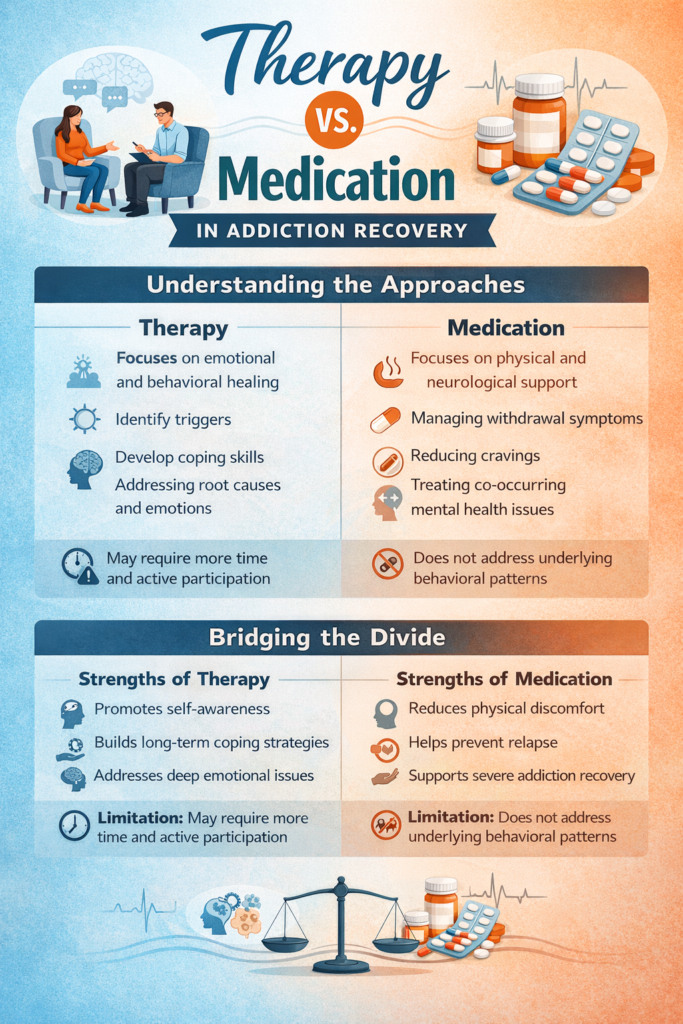
Therapy addresses the underlying emotional, cognitive, and behavioral patterns that contribute to addiction.
- Common forms include:
- Cognitive Behavioral Therapy (CBT)
- Group therapy
- Trauma-informed therapy
- Therapy helps individuals:
- Identify triggers
- Develop coping strategies
- Process trauma and emotions
- Focus:
- Long-term behavioral and emotional change
Understanding Medication in Addiction Recovery
Medication targets the physical and neurological aspects of addiction, helping to stabilize the body and reduce cravings.
- Examples of medication use:
- Reducing withdrawal symptoms
- Managing cravings
- Treating co-occurring mental health conditions
- Benefits include:
- Immediate symptom relief
- Increased ability to engage in recovery
- Focus:
- Short-term stabilization and support
Strengths of Therapy
Therapy plays a crucial role in addressing the deeper causes of addiction.
- Advantages:
- Promotes self-awareness
- Builds long-term coping skills
- Addresses emotional and psychological roots
- Limitation:
- May take longer to show results
- Requires active participation and engagement
Strengths of Medication
Medication can provide essential support, especially in early recovery.
- Advantages:
- Reduces physical discomfort
- Helps prevent relapse
- Supports individuals with severe addiction
- Limitation:
- Does not address underlying behavioral patterns
- May create reliance if not properly managed
Therapy vs. Medication: A False Divide
Framing recovery as a choice between therapy and medication can be misleading. In many cases, the most effective approach combines both.
- Combined approach benefits:
- Medication stabilizes the body
- Therapy addresses behavior and mindset
- Together, they provide:
- Comprehensive support
- Higher chances of long-term success
Factors That Influence Treatment Choice
The best recovery approach depends on individual circumstances.
- Influencing factors include:
- Severity of addiction
- Mental health conditions
- Access to resources
- Personal preferences
- Recovery should be:
- Personalized
- Flexible
- Adaptive over time
Challenges in Access and Perception
Barriers and misconceptions can affect how therapy and medication are used.
- Common challenges:
- Stigma around medication (“not real recovery”)
- Limited access to therapy
- Cost and healthcare inequality
- These issues can:
- Limit treatment options
- Reinforce ineffective approaches
Conclusion
Therapy and medication are not opposing forces in addiction recovery—they are complementary tools that address different aspects of the same problem. Therapy supports emotional and behavioral growth by helping individuals understand and change their patterns, while medication provides physical and neurological stability by managing cravings and withdrawal. Rather than choosing one approach over the other, effective recovery requires a commitment to comprehensive care that integrates both methods. True recovery depends on personalization and integration, ensuring that individuals receive balanced support that promotes sustainable healing in all dimensions.
Balancing the Mind and Body: Self-Management Strategies for Understanding Therapy vs. Medication in Addiction Recovery
Addiction recovery often involves both therapy and medication, yet understanding how to navigate these approaches can be challenging. Self-management plays a critical role in helping individuals make informed decisions about their recovery, adapt to treatment, and maintain long-term progress. Rather than viewing therapy and medication as opposing options, self-management strategies allow individuals to understand how each approach supports different aspects of recovery. By developing awareness, discipline, and adaptability, individuals can create a more balanced and effective path toward healing.
- Recovery requires:
- Personal awareness
- Active participation
- Ongoing decision-making
- Self-management helps individuals integrate therapy and medication effectively
Understanding Self-Management in Treatment
Self-management involves taking an active role in one’s recovery by monitoring thoughts, behaviors, and treatment responses.
- Key components:
- Self-awareness
- Emotional regulation
- Decision-making skills
- In treatment, it helps individuals:
- Understand what works best
- Adjust strategies over time
- Stay engaged in recovery
Strategy 1: Educating Yourself About Treatment Options
Understanding the purpose and function of both therapy and medication is essential for effective self-management.
- Learn:
- How therapy addresses behavior and emotions
- How medication affects brain chemistry and cravings
- Benefits:
- Reduces confusion and fear
- Increases confidence in treatment decisions
- Goal:
- Make informed and empowered choices
Strategy 2: Monitoring Personal Responses to Treatment
Individuals respond differently to therapy and medication, making self-observation critical.
- Track:
- Emotional changes
- Cravings and triggers
- Side effects of medication
- Helps:
- Identify what is effective
- Communicate clearly with healthcare providers
- Encourages personalized recovery planning
Strategy 3: Developing Consistency and Routine
Both therapy and medication require consistency to be effective.
- Important habits:
- Attending therapy sessions regularly
- Taking medication as prescribed
- Benefits:
- Builds stability
- Reinforces progress
- Routine supports long-term success
Strategy 4: Integrating Coping Skills from Therapy
Therapy provides tools that individuals must actively practice in daily life.
- Skills include:
- Managing triggers
- Stress reduction techniques
- Problem-solving strategies
- Self-management involves:
- Applying these skills outside of sessions
- Ensures therapy becomes practical, not just theoretical
Strategy 5: Managing Expectations About Medication
Medication can be helpful, but it is not a complete solution on its own.
- Important to understand:
- Medication supports recovery but does not “cure” addiction
- It works best alongside behavioral changes
- Self-management includes:
- Avoiding over-reliance
- Staying engaged in therapy and personal growth
Strategy 6: Communicating with Healthcare Providers
Effective self-management involves active communication with professionals.
- Share:
- Progress and challenges
- Side effects or concerns
- Benefits:
- Adjustments to treatment plans
- Better alignment with individual needs
- Promotes collaborative care
Strategy 7: Adapting Over Time
Recovery is not static, and treatment needs may change.
- Be open to:
- Adjusting therapy approaches
- Modifying medication when necessary
- Self-management requires:
- Flexibility
- Ongoing evaluation
- Supports sustainable recovery
Limits of Self-Management
While self-management is essential, it cannot replace professional guidance or systemic support.
- Limitations include:
- Access to care
- Financial barriers
- Complexity of addiction
- Recovery requires:
- Professional treatment
- Social support systems
- Personal effort
Conclusion
Self-management strategies are key to understanding and navigating the roles of therapy and medication in addiction recovery. By actively engaging in treatment, monitoring progress, and adapting strategies over time, individuals can develop a more balanced and effective recovery plan. Self-management promotes awareness, consistency, and adaptability, allowing individuals to respond to their changing needs through ongoing engagement. Rather than choosing between therapy and medication, effective recovery requires integrating both approaches through personalized strategies. Ultimately, recovery is most successful when individuals take an active role in shaping their path while remaining supported by professional care.
Supporting the Whole Person: Family Strategies for Understanding Therapy vs. Medication in Addiction Recovery
Addiction recovery often involves both therapy and medication, yet families may struggle to understand how these approaches work and how to best support their loved one. Therapy focuses on emotional and behavioral change, while medication addresses the physical and neurological aspects of addiction. Rather than choosing one over the other, families play a critical role in helping individuals navigate and balance both. By adopting informed and supportive strategies, families can create an environment that strengthens recovery and promotes long-term success.
- Families influence:
- Treatment engagement
- Emotional support
- Recovery outcomes
- Understanding both approaches helps families provide balanced and effective support
Understanding Therapy and Medication as Complementary
Families often view therapy and medication as separate or competing options, but they are most effective when used together.
- Therapy helps:
- Address emotional triggers
- Develop coping skills
- Medication helps:
- Reduce cravings and withdrawal symptoms
- Stabilize mental health
- Together, they support:
- Both mind and body recovery
Strategy 1: Educating the Family About Treatment
A well-informed family is better equipped to support recovery.
- Learn:
- The purpose of therapy
- How medication works and its benefits
- Benefits:
- Reduces misconceptions
- Builds confidence in the recovery process
- Goal:
- Provide informed and supportive involvement
Strategy 2: Encouraging Consistency in Treatment
Both therapy and medication require regular participation to be effective.
- Families can:
- Encourage attendance at therapy sessions
- Support medication adherence
- Avoid:
- Pressuring or controlling behavior
- Outcome:
- Promotes stability and routine in recovery
Strategy 3: Supporting Without Judgment
Family attitudes can influence how individuals perceive treatment.
- Avoid:
- Stigmatizing medication (“it’s not real recovery”)
- Dismissing therapy as unnecessary
- Instead:
- Show understanding and encouragement
- Result:
- Increased willingness to engage in treatment
Strategy 4: Observing and Communicating Changes
Families can help monitor progress and challenges in recovery.
- Pay attention to:
- Behavioral changes
- Emotional well-being
- Possible side effects of medication
- Encourage:
- Open communication with healthcare providers
- Helps ensure:
- Treatment remains effective and appropriate
Strategy 5: Reinforcing Skills Learned in Therapy
Therapy provides tools that need to be practiced outside of sessions.
- Families can:
- Encourage use of coping strategies
- Support healthy routines
- Examples:
- Stress management
- Problem-solving techniques
- Outcome:
- Strengthens long-term behavioral change
Strategy 6: Respecting Autonomy and Boundaries
While support is important, individuals must take ownership of their recovery.
- Families should:
- Respect treatment decisions
- Avoid controlling or micromanaging
- Balance:
- Support with independence
- Encourages:
- Personal responsibility and confidence
Strategy 7: Supporting a Holistic Recovery Environment
Recovery involves more than just treatment—it requires a supportive environment.
- Families can:
- Reduce stress at home
- Promote healthy habits
- Encourage positive social connections
- Helps integrate:
- Therapy and medication in daily life
Challenges Families May Face
Families may encounter difficulties when trying to support both approaches.
- Common challenges:
- Misunderstanding medication
- Frustration with slow progress
- Emotional stress and burnout
- These challenges can:
- Affect consistency in support
- Addressing them requires:
- Education and patience
Conclusion
Family support is essential in helping individuals understand and navigate the roles of therapy and medication in addiction recovery. By recognizing these approaches as complementary rather than competing, families can provide more effective and balanced support rooted in informed and compassionate care. Effective family support includes understanding the purpose of each treatment, offering encouragement, and maintaining a balance between therapy and medication. Through open communication and empathy, families help create an environment where recovery is sustainable and meaningful. Ultimately, recovery is strongest when individuals and families work together, building a supportive system that enhances the effectiveness of treatment and promotes long-term healing.
Bridging Care Systems: Community Resource Strategies for Understanding Therapy vs. Medication in Addiction Recovery
Addiction recovery is shaped not only by individual choices or family support, but also by the availability and effectiveness of community resources. Therapy and medication are two central approaches in recovery, yet many individuals struggle to understand how to access or balance them. Community resources—such as treatment centers, outreach programs, and support networks—play a critical role in guiding individuals through these options. By creating accessible, informed, and supportive systems, communities can help individuals better understand and integrate both therapy and medication into their recovery journey.
- Community resources influence:
- Access to treatment
- Understanding of recovery options
- Long-term recovery success
- Effective strategies help individuals navigate therapy and medication together
Understanding Community Roles in Recovery
Communities act as a bridge between individuals and treatment options. They provide education, access, and support that shape how therapy and medication are perceived and used.
- Community resources include:
- Treatment centers and clinics
- Support groups and peer networks
- Outreach and educational programs
- They help:
- Reduce confusion about treatment
- Promote informed decision-making
Strategy 1: Providing Education on Treatment Options
One of the most important roles of community resources is educating individuals about therapy and medication.
- Key focus areas:
- Differences between therapy and medication
- Benefits of combining both approaches
- Methods:
- Workshops
- Public health campaigns
- Community seminars
- Outcome:
- Increased awareness and informed choices
Strategy 2: Expanding Access to Integrated Treatment Services
Communities should provide access to programs that combine therapy and medication rather than separating them.
- Examples:
- Clinics offering counseling and medication management
- Integrated treatment programs
- Benefits:
- Holistic care addressing both mind and body
- Reduced barriers to receiving comprehensive treatment
Strategy 3: Supporting Peer and Community Networks
Peer support helps individuals understand and navigate treatment through shared experiences.
- Community-based supports include:
- Recovery groups
- Mentorship programs
- Benefits:
- Real-life insights into therapy and medication
- Emotional support and accountability
- Strengthens:
- Confidence in treatment decisions
Strategy 4: Reducing Stigma Around Treatment Methods
Stigma can prevent individuals from using either therapy or medication effectively.
- Common misconceptions:
- Medication is “not real recovery.”
- Therapy is unnecessary or ineffective
- Community efforts should:
- Promote acceptance of all evidence-based treatments
- Normalize seeking help
- Result:
- Greater engagement in recovery services
Strategy 5: Offering Accessible and Flexible Services
Barriers such as cost, location, and availability can limit access to both therapy and medication.
- Solutions include:
- Low-cost or free programs
- Telehealth services
- Mobile clinics
- Goal:
- Ensure equal access to treatment options
Strategy 6: Coordinating Care Across Services
Recovery is most effective when different services work together rather than in isolation.
- Coordination includes:
- Communication between therapists and medical providers
- Case management services
- Benefits:
- Consistent and aligned treatment plans
- Better outcomes for individuals
Challenges in Community-Based Approaches
Despite their importance, community resources face limitations that can affect their effectiveness.
- Common challenges:
- Limited funding
- Unequal distribution of services
- Lack of awareness
- These barriers can:
- Restrict access to comprehensive care
- Reinforce gaps in recovery support
Conclusion
Community resources play a vital role in helping individuals understand and navigate the relationship between therapy and medication in addiction recovery. By providing education, reducing stigma, and expanding access to integrated services, communities can promote a more holistic understanding of treatment options. Effective strategies focus on education, accessible and coordinated care, and efforts to reduce stigma, ensuring that individuals are not forced to choose between approaches but can benefit from both. Ultimately, true recovery is strengthened through community support and coordinated care, where individuals are guided by informed, compassionate systems that foster sustainable healing.
Frequently Asked Questions
Here are some common questions:
1. What is the difference between therapy and medication in addiction recovery?
- Therapy focuses on psychological and behavioral change
- Medication targets the physical and neurological aspects of addiction
Together, they address both the mind and body.
2. Is therapy or medication more effective?
Neither is universally “better.” Effectiveness depends on:
- The individual
- Severity of addiction
- Mental health conditions
In many cases, a combination of both is most effective.
3. What types of therapy are used in addiction recovery?
Common types include:
- Cognitive Behavioral Therapy (CBT)
- Group therapy
- Trauma-informed therapy
These help individuals understand triggers and develop coping skills.
4. What is the role of medication in recovery?
Medication can:
- Reduce cravings
- Ease withdrawal symptoms
- Stabilize mental health
It supports individuals, especially in the early stages of recovery.
5. Can someone recover using only therapy?
Yes, some individuals recover with therapy alone, especially if:
- Addiction is less severe
- Strong support systems are in place
However, others may benefit from medication as well.
6. Can someone recover using only medication?
Medication can help stabilize the body, but:
- It does not address behavioral patterns
- It does not resolve emotional or psychological causes
Therapy is often needed for long-term recovery.
7. Why is combining therapy and medication often recommended?
Because they work together:
- Medication reduces physical symptoms
- Therapy builds coping and behavioral change
This creates a more comprehensive recovery approach.
8. Is taking medication considered “real recovery”?
Yes. This is a common misconception.
- Medication is a valid, evidence-based treatment
- Recovery is about healing, not how it is achieved
9. Are there risks with medication in recovery?
Possible risks include:
- Side effects
- Misuse if not monitored properly
This is why medical supervision is important.
10. How long do people need therapy or medication?
It varies by individual:
- Some may need short-term support
- Others may require long-term or ongoing treatment
Recovery is not one-size-fits-all.
11. What factors determine the best treatment approach?
Key factors include:
- Type and severity of addiction
- Mental health conditions
- Access to care
- Personal preferences
Treatment should be personalized and flexible.
12. Can stigma affect treatment choices?
Yes. Stigma can:
- Discourage use of medication
- Make people hesitant to seek therapy
Reducing stigma helps improve treatment outcomes.
13. What role do families play in treatment decisions?
Families can:
- Provide support and encouragement
- Help individuals stay consistent with treatment
- Reduce stigma around therapy and medication
14. Can treatment plans change over time?
Yes. Recovery is dynamic:
- Medication may be adjusted
- Therapy approaches may evolve
Flexibility is key to long-term success.
15. What is the key takeaway about therapy vs. medication?
Therapy and medication are not opposing choices—they are complementary tools.
- Therapy supports:
- Emotional and behavioral growth
- Medication supports:
- Physical stability
The most effective recovery approach is:
- Personalized
- Balanced
- Comprehensive
Conclusion
Ultimately, therapy and medication should not be viewed as competing approaches, but as complementary tools in addiction recovery. While therapy supports long-term emotional and behavioral change, medication provides critical assistance in managing the physical challenges of addiction. The most effective recovery strategies often involve a combination of both, tailored to the individual’s needs and circumstances. By moving beyond the idea of choosing one over the other, individuals and support systems can embrace a more comprehensive and personalized approach to healing—one that addresses the full complexity of addiction.
Video: