Addiction recovery is a process that unfolds over time and often occurs in several stages. Individuals struggling with substance use rarely move from addiction to recovery all at once. Instead, recovery typically begins with recognizing a problem, considering change, preparing for action, actively working toward sobriety, and maintaining long-term healthy habits. Understanding the stages of addiction recovery helps individuals, families, and communities better support the recovery journey. These stages provide a framework for recognizing progress and understanding that change often develops gradually rather than instantly.
Understanding the Stages of Addiction Recovery
Addiction recovery is a journey that involves more than simply stopping substance use. It is a gradual process of personal growth, emotional healing, and rebuilding a healthy lifestyle. Many individuals who struggle with addiction go through several stages of recovery, each representing different levels of awareness, motivation, and commitment to change. Understanding these stages can help individuals, families, and support systems recognize where someone is in the recovery process and provide appropriate support. While recovery may look different for everyone, these stages offer a helpful framework for understanding how lasting change often develops over time.
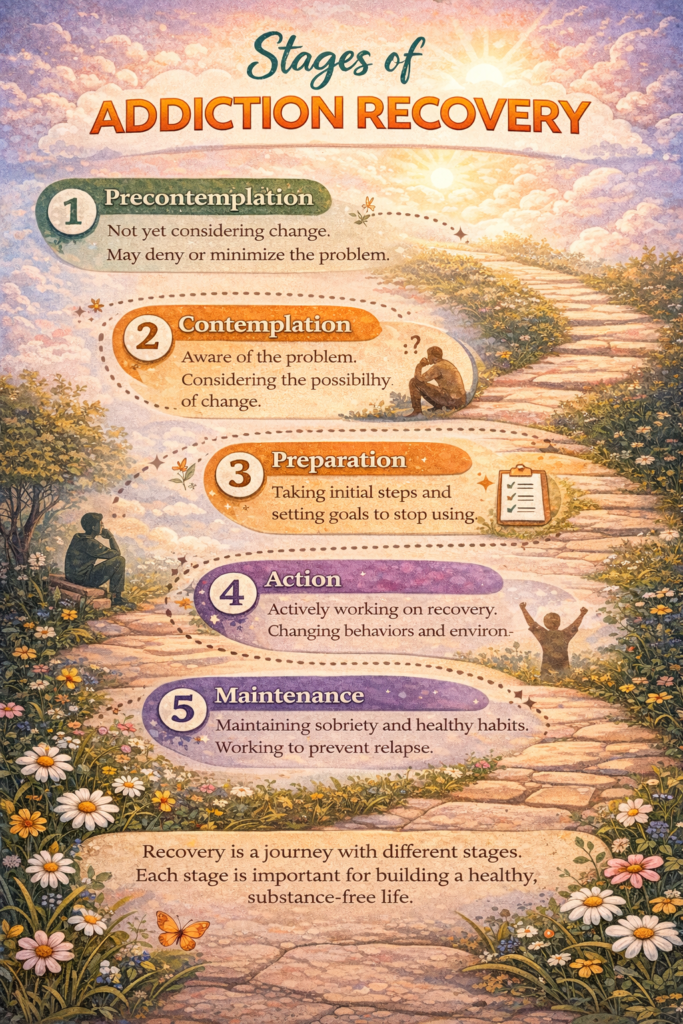
Stage 1: Precontemplation
The first stage of addiction recovery is precontemplation, where the individual may not yet recognize that their substance use is a problem. People in this stage often deny or minimize the impact of their behavior on themselves or others. They may feel defensive when confronted about their substance use or believe they are able to control it.
During this stage, individuals are not yet considering change. However, conversations, personal experiences, or consequences related to addiction may gradually increase awareness and lead them toward the next stage.
Stage 2: Contemplation
In the contemplation stage, individuals begin to recognize that their substance use may be causing harm. They start thinking about the possibility of change but may feel uncertain or conflicted about taking action. Many people in this stage experience mixed emotions, including fear, hope, and doubt.
Individuals may ask themselves questions such as:
- “Is my substance use becoming a problem?”
- “What would my life look like if I stopped?”
- “Am I ready to make a change?”
This stage involves increased awareness and reflection, even though a commitment to recovery may not yet be fully formed.
Stage 3: Preparation
The preparation stage occurs when individuals begin planning for change. At this point, they have decided that recovery is necessary and are considering specific steps to begin the process.
Examples of preparation may include:
- researching treatment programs or counseling services
- talking with trusted friends or family members about recovery
- setting goals for reducing or stopping substance use
- making plans to remove triggers or unhealthy environments
Preparation represents an important transition from thinking about change to actively planning for it.
Stage 4: Action
The action stage is when individuals actively begin working toward recovery. This stage often involves making significant lifestyle changes and seeking professional or community support.
Common actions may include:
- entering treatment programs or therapy
- attending recovery support groups
- developing new coping strategies for stress
- avoiding situations that trigger substance use
This stage requires commitment and effort as individuals begin to build new habits and healthier patterns of behavior.
Stage 5: Maintenance
The maintenance stage focuses on sustaining long-term recovery and preventing relapse. Individuals in this stage work to strengthen the habits and coping strategies developed during the action stage.
Maintenance may involve:
- continuing therapy or support group participation
- maintaining healthy routines and relationships
- managing stress through positive coping techniques
- recognizing and avoiding relapse triggers
Recovery during this stage becomes part of everyday life as individuals continue building stability and personal growth.
Understanding Relapse in Recovery
Recovery is rarely a perfectly linear process. Some individuals may experience relapse, which means returning to substance use after a period of recovery. While relapse can be discouraging, it does not mean that recovery has failed. Instead, it often serves as an opportunity to learn more about triggers and strengthen future coping strategies.
Many recovery journeys involve setbacks, but continued effort and support can help individuals return to the path of recovery.
Conclusion
The stages of addiction recovery illustrate that change is a gradual process that develops over time. From initial denial to long-term maintenance, each stage plays an important role in helping individuals move toward healthier behaviors and lasting recovery. Understanding these stages can help individuals recognize their own progress and encourage supportive responses from family, friends, and communities. Although the recovery journey may involve challenges, patience, support, and commitment can lead to meaningful transformation and a healthier, more fulfilling life.
Self-Management Strategies for Implementing the Stages of Addiction Recovery
Addiction recovery is a complex and ongoing process that requires commitment, self-awareness, and consistent effort. While recovery often involves professional treatment and support systems, individuals also play an essential role in managing their own progress. Understanding the stages of addiction recovery—from recognizing a problem to maintaining long-term sobriety—can help individuals take active steps toward healing. By developing self-management strategies, people in recovery can strengthen their motivation, manage challenges, and build healthier habits that support lasting change.
Understanding the Stages of Addiction Recovery
Recovery often follows several stages that reflect an individual’s readiness for change. These stages typically include:
- Precontemplation: Not yet recognizing the problem
- Contemplation: Beginning to consider change
- Preparation: Planning for recovery
- Action: Actively making lifestyle changes
- Maintenance: Sustaining long-term recovery
Each stage requires different strategies and levels of commitment. Self-management helps individuals move through these stages with greater awareness and confidence.
Strategy 1: Building Self-Awareness in the Early Stages
In the early stages of recovery, self-awareness is essential. Individuals must begin recognizing how substance use affects their health, relationships, and daily life.
Self-awareness strategies may include:
- reflecting on personal behaviors and the consequences of addiction
- journaling about emotions, triggers, and experiences
- identifying situations or environments that encourage substance use
- acknowledging the need for change
Developing self-awareness helps individuals move from denial toward recognizing the importance of recovery.
Strategy 2: Setting Clear Recovery Goals
Goal setting is an important self-management strategy during the preparation stage. Establishing clear, realistic goals helps individuals stay focused and motivated.
Examples of recovery goals include:
- committing to sobriety for a specific time period
- attending counseling or recovery meetings regularly
- rebuilding relationships with supportive family members
- creating healthy routines for sleep, work, and self-care
Breaking larger goals into smaller steps can make recovery feel more manageable and achievable.
Strategy 3: Developing Healthy Coping Skills
During the action stage, individuals must replace harmful behaviors with healthier coping strategies. Learning how to manage stress and emotional challenges without substances is essential for long-term recovery.
Healthy coping techniques may include:
- practicing mindfulness or meditation
- engaging in regular exercise
- pursuing hobbies or creative activities
- seeking support from trusted friends or mentors
- learning stress-management techniques
These strategies help individuals build resilience and prevent relapse.
Strategy 4: Monitoring Progress and Identifying Triggers
Self-monitoring is a valuable strategy throughout the recovery process. Tracking progress allows individuals to recognize improvements and identify potential challenges before they become overwhelming.
Monitoring strategies may involve:
- keeping a recovery journal
- tracking emotional triggers or stressful situations
- reflecting on achievements and milestones
- identifying patterns that may increase relapse risk
This ongoing awareness helps individuals remain focused on their recovery goals.
Strategy 5: Maintaining Long-Term Recovery
The maintenance stage focuses on sustaining healthy habits and preventing relapse. Self-management during this stage involves maintaining balance and continuing personal growth.
Important practices for long-term recovery include:
- continuing participation in support groups or therapy
- maintaining healthy relationships and boundaries
- practicing regular self-care and stress management
- setting new personal goals for growth and development
Long-term recovery often becomes part of a person’s identity and lifestyle.
Conclusion
Implementing the stages of addiction recovery requires dedication, patience, and consistent effort. While professional treatment and social support are valuable, self-management strategies empower individuals to take an active role in their recovery journey. By developing self-awareness, setting realistic goals, building healthy coping skills, monitoring progress, and maintaining supportive habits, individuals can navigate each stage of recovery more effectively. These strategies not only support sobriety but also help individuals rebuild confidence, strengthen resilience, and create a healthier and more meaningful life.
Family Support Strategies for Implementing the Stages of Addiction Recovery
Addiction recovery is a gradual process that often unfolds in stages, beginning with awareness of the problem and continuing through long-term maintenance of sobriety. While recovery requires personal commitment from the individual, family support plays a powerful role in helping someone successfully move through each stage. Families can provide encouragement, understanding, and stability during what is often a challenging and emotional journey. By learning about the stages of addiction recovery and adopting supportive strategies, families can create a positive environment that promotes healing, accountability, and long-term recovery.
Understanding the Stages of Addiction Recovery
Addiction recovery typically progresses through several stages of change. These stages help explain how individuals move from denial to sustained recovery.
The stages include:
- Precontemplation: The person may not yet recognize their substance use as a problem.
- Contemplation: They begin to consider the possibility of change.
- Preparation: Plans for treatment or recovery begin to form.
- Action: The individual actively works toward sobriety and lifestyle changes.
- Maintenance: The focus shifts to sustaining recovery and preventing relapse.
Each stage presents different challenges, and family support can help individuals navigate these transitions more effectively.
Strategy 1: Encouraging Awareness in the Early Stages
During the precontemplation and contemplation stages, individuals may deny or minimize their addiction. Families can help raise awareness by expressing concern in a calm, supportive manner.
Helpful approaches include:
- sharing observations about concerning behaviors
- expressing care rather than criticism
- encouraging open discussions about substance use
- avoiding blame or confrontation
The goal is to create a safe environment where the individual feels supported rather than judged.
Strategy 2: Supporting Planning and Preparation
In the preparation stage, individuals begin considering steps toward recovery. Family members can provide practical and emotional support as plans develop.
Supportive actions may include:
- helping research treatment programs or counseling services
- discussing recovery goals and expectations
- encouraging participation in support groups
- assisting with transportation or scheduling appointments
Providing encouragement during this stage can strengthen motivation and confidence.
Strategy 3: Offering Encouragement During the Action Stage
The action stage involves significant lifestyle changes as individuals actively work to overcome addiction. Families can help by reinforcing positive behaviors and celebrating progress.
Support strategies may include:
- acknowledging recovery milestones
- encouraging healthy habits and routines
- participating in family counseling if recommended
- offering emotional support during difficult moments
Positive reinforcement can motivate individuals to remain committed to recovery efforts.
Strategy 4: Promoting Stability in the Maintenance Stage
The maintenance stage focuses on sustaining long-term recovery and preventing relapse. Families can help by creating a stable and supportive home environment.
Helpful strategies include:
- encouraging ongoing therapy or recovery meetings
- supporting healthy relationships and activities
- recognizing triggers that may increase relapse risk
- maintaining open communication about challenges
Long-term support helps reinforce the lifestyle changes necessary for lasting recovery.
Strategy 5: Practicing Healthy Family Boundaries
While family support is essential, healthy boundaries are equally important. Families must avoid enabling behaviors that may unintentionally support substance use.
Healthy boundaries may involve:
- encouraging personal responsibility
- avoiding financial or emotional enabling
- maintaining respect and accountability
- seeking family counseling or support groups
Balanced boundaries protect both the individual in recovery and the family’s well-being.
Conclusion
Implementing the stages of addiction recovery is a complex journey that requires patience, commitment, and strong support systems. Families play a crucial role in helping individuals recognize the need for change, take action toward recovery, and maintain long-term sobriety. By encouraging open communication, supporting preparation and treatment, reinforcing positive progress, promoting stability, and maintaining healthy boundaries, families can provide meaningful support throughout the recovery process. With understanding and cooperation, families and individuals can work together to build a healthier and more hopeful future.
Community Resource Strategies for Implementing the Stages of Addiction Recovery
Addiction recovery is a lifelong journey that often progresses through several stages, including recognizing the problem, preparing for change, taking action, and maintaining long-term sobriety. While personal determination is essential, community resources play a vital role in supporting individuals throughout the recovery process. Community organizations, treatment centers, support groups, and educational programs provide guidance, encouragement, and practical assistance that help individuals navigate the challenges of recovery. By utilizing community resources, people struggling with addiction can access the tools and support networks needed to successfully move through each stage of the recovery process.
Understanding the Stages of Addiction Recovery
Addiction recovery is often described through stages that reflect a person’s readiness for change. These stages typically include:
- Precontemplation: The individual may not yet recognize the addiction as a problem.
- Contemplation: The person begins to consider the need for change.
- Preparation: Plans for recovery and treatment begin to form.
- Action: The individual actively works toward sobriety.
- Maintenance: Long-term strategies are developed to sustain recovery and prevent relapse.
Community resources provide support, education, and services that help individuals successfully navigate each stage.
Strategy 1: Community Education and Awareness Programs
Education programs within communities help increase awareness about addiction and recovery. Workshops, seminars, and public health campaigns can help individuals and families understand the signs of addiction and the stages of recovery.
These programs may provide information about:
- recognizing substance use problems
- understanding the recovery process
- available treatment options
- strategies for supporting individuals in recovery
Education helps reduce stigma and encourages individuals to seek help when needed.
Strategy 2: Access to Treatment and Counseling Services
Community treatment centers and counseling services are essential resources during the preparation and action stages of recovery. Professional support can help individuals develop personalized recovery plans and address underlying emotional or psychological challenges.
Community-based services may include:
- outpatient or inpatient treatment programs
- individual or group therapy sessions
- mental health counseling
- medical support for withdrawal and detoxification
These services provide structured guidance and professional care that support recovery efforts.
Strategy 3: Participation in Peer Support Groups
Peer support groups are valuable community resources that allow individuals to connect with others who have experienced similar struggles. Sharing experiences and encouragement can help strengthen motivation during recovery.
Support groups often provide:
- a safe and supportive environment for discussion
- accountability and encouragement
- opportunities to learn coping strategies
- ongoing support throughout the recovery journey
These groups help individuals feel less isolated and more connected to a recovery community.
Strategy 4: Community Programs for Skill Development and Reintegration
Many communities offer programs that help individuals rebuild their lives after addiction. These programs support personal growth and social reintegration during the maintenance stage of recovery.
Examples include:
- job training and career development programs
- educational courses and workshops
- financial literacy programs
- housing assistance and social services
These opportunities help individuals regain confidence, independence, and a sense of purpose.
Strategy 5: Building Strong Community Support Networks
Supportive community relationships can significantly strengthen long-term recovery. Faith-based organizations, volunteer groups, recreational programs, and local outreach initiatives can help individuals build healthy social connections.
Community networks provide:
- positive social interaction
- encouragement and mentorship
- opportunities for meaningful engagement
- a sense of belonging and acceptance
These supportive environments help individuals maintain motivation and emotional stability during recovery.
Conclusion
Implementing the stages of addiction recovery requires support, guidance, and access to valuable resources. Community programs and services play a critical role in helping individuals recognize addiction, seek treatment, and maintain long-term recovery. Through education programs, counseling services, peer support groups, skill-building opportunities, and supportive community networks, individuals can receive the assistance needed to move successfully through each stage of recovery. By working together, communities can create supportive environments that promote healing, resilience, and lasting recovery for those affected by addiction.
Frequently Asked Questions
Here are some common questions:
1. What are the stages of addiction recovery?
The stages of addiction recovery describe the process individuals often go through when changing substance use behaviors. These stages typically include precontemplation, contemplation, preparation, action, and maintenance. Each stage reflects a different level of awareness and readiness to change.
2. Why are the stages of addiction recovery important?
Understanding these stages helps individuals, families, and professionals recognize where someone is in the recovery process. This awareness can guide the type of support or intervention that may be most helpful at each stage.
3. What happens during the precontemplation stage?
In the precontemplation stage, individuals may not yet recognize their substance use as a problem. They may deny the impact of their behavior or feel resistant to change. At this stage, increasing awareness and understanding the consequences of addiction can help move someone toward considering recovery.
4. What occurs in the contemplation stage?
During the contemplation stage, individuals begin to acknowledge that their substance use may be harmful. They may start thinking about making changes, but may still feel uncertain or conflicted about taking action.
5. What is the preparation stage in recovery?
In the preparation stage, individuals decide that change is necessary and begin planning for recovery. This may include researching treatment programs, speaking with counselors, or setting personal goals to reduce or stop substance use.
6. What happens in the action stage?
The action stage involves actively working toward recovery. Individuals may participate in treatment programs, attend support groups, develop healthier coping strategies, and make lifestyle changes that support sobriety.
7. What does the maintenance stage involve?
The maintenance stage focuses on sustaining long-term recovery and preventing relapse. Individuals work to maintain healthy habits, manage triggers, and continue building supportive relationships that reinforce sobriety.
8. Is relapse part of the recovery process?
Relapse can sometimes occur during recovery, and many experts view it as part of the learning process rather than a failure. When relapse happens, individuals can use the experience to identify triggers and strengthen their recovery strategies.
9. How long does each stage of recovery last?
The length of each stage varies from person to person. Some individuals may move through stages quickly, while others may take longer to reflect, prepare, and take action. Recovery is a personal journey that progresses at different speeds.
10. Can people move backward between stages?
Yes. Recovery is not always a straight path. Individuals may move back and forth between stages as they face challenges, learn from experiences, and continue working toward lasting change.
Conclusion
The stages of addiction recovery highlight that overcoming addiction is not a single event but a continuous journey of growth and healing. Each stage—whether recognizing the need for change, taking action, or maintaining sobriety—plays an important role in building a healthier life. While the path may include challenges and setbacks, progress through these stages reflects increasing awareness, commitment, and resilience. With patience, support, and dedication, individuals can move through the stages of recovery and build a more stable, meaningful, and fulfilling future.
Video: How Long Does Real Recovery Actually Take #addictionrecovery #sobriety #timeline