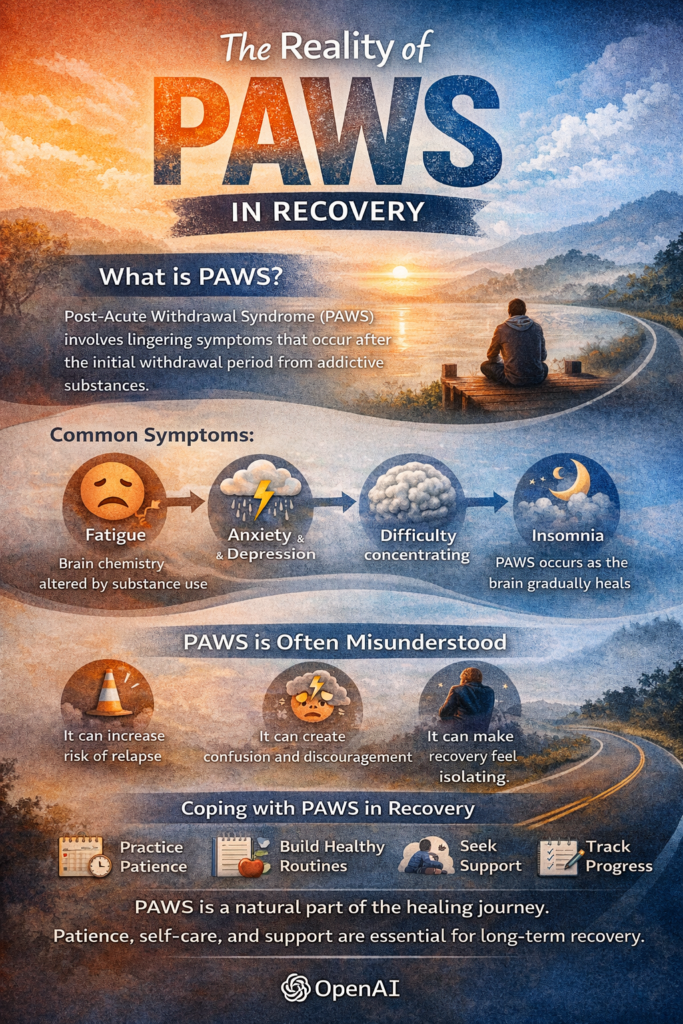
Recovery from addiction is often viewed as a process that begins once substances are no longer being used, but for many individuals, the journey continues through a challenging phase known as Post-Acute Withdrawal Syndrome (PAWS). This stage involves ongoing emotional and cognitive symptoms such as anxiety, mood swings, fatigue, and difficulty concentrating. These lingering effects can be confusing and discouraging, especially when individuals expect to feel better after detox. Understanding the reality of PAWS is essential for recognizing that recovery is not immediate, but a gradual process of healing that requires patience, awareness, and support.
The Hidden Struggle: Understanding the Reality of PAWS in Recovery
Recovery from addiction is often portrayed as a turning point that begins after detox, but for many individuals, the journey is far more complex. One of the most overlooked aspects of recovery is Post-Acute Withdrawal Syndrome (PAWS), a condition that can persist for weeks, months, or even longer after initial withdrawal. PAWS includes ongoing symptoms such as mood swings, anxiety, fatigue, and difficulty concentrating—challenges that can make recovery feel overwhelming even after substances are no longer being used. Understanding the reality of PAWS is essential for setting realistic expectations and supporting long-term recovery.
What Is PAWS?
Post-Acute Withdrawal Syndrome refers to a set of lingering psychological and emotional symptoms that occur after the acute phase of withdrawal has passed. Unlike initial withdrawal, which is often physical and short-term, PAWS is more subtle and long-lasting.
Common symptoms include:
- Mood swings and irritability
- Anxiety or depression
- Difficulty concentrating (“brain fog”)
- Sleep disturbances
- Low energy or fatigue
These symptoms can come and go, often unpredictably, which can be frustrating and discouraging.
Why PAWS Happens
PAWS occurs because the brain is still healing. Substance use alters brain chemistry, particularly in areas related to mood, reward, and stress regulation. After stopping substance use, the brain needs time to rebalance itself.
This healing process is not immediate, which is why individuals may continue to experience emotional and cognitive challenges long after detox.
The Impact on Recovery
PAWS can significantly affect recovery by:
- Increasing the risk of relapse due to discomfort
- Creating feelings of discouragement or hopelessness
- Making daily functioning more difficult
- Causing individuals to question their progress
Because PAWS symptoms can mimic mental health conditions, they are sometimes misunderstood or overlooked.
The Importance of Awareness
Understanding PAWS helps individuals and their support systems:
- Recognize that symptoms are part of recovery—not failure
- Set realistic expectations for the healing process
- Reduce frustration and self-blame
- Stay committed to long-term recovery goals
Awareness transforms confusion into clarity.
Coping Strategies for PAWS
1. Practice Patience
Recovery is a gradual process. Accepting that healing takes time can reduce frustration.
2. Build Healthy Routines
Consistent sleep, nutrition, and exercise can help stabilize mood and energy levels.
3. Use Emotional Coping Skills
Mindfulness, journaling, and relaxation techniques can help manage symptoms.
4. Seek Support
Therapy, support groups, and peer networks provide guidance and encouragement.
5. Track Progress
Keeping a journal of symptoms and improvements can help individuals see progress over time.
The Role of Support Systems
Family, friends, and professionals play a critical role in helping individuals navigate PAWS. Support systems can:
- Provide reassurance during difficult periods
- Encourage continued treatment and coping strategies
- Help normalize the recovery experience
Support reduces isolation and strengthens resilience.
Conclusion
The reality of PAWS in recovery is that healing does not end with detox—it is an ongoing process that requires time, patience, and support. While PAWS can be challenging, it is also a sign that the brain is working to restore balance.
By understanding and preparing for these long-term symptoms, individuals can approach recovery with greater confidence and resilience. PAWS is not a setback—it is a stage of healing, and with the right strategies and support, it can be successfully managed on the path to lasting recovery.
Taking Control of Healing: Self-Management Strategies for Understanding the Reality of PAWS in Recovery
Post-Acute Withdrawal Syndrome (PAWS) can be one of the most challenging and misunderstood phases of addiction recovery. Even after detox, individuals may experience lingering symptoms such as anxiety, mood swings, fatigue, and difficulty concentrating. These symptoms can feel discouraging, especially when recovery is expected to bring immediate improvement. Self-management strategies are essential in helping individuals understand, cope with, and navigate the reality of PAWS. By developing awareness and practical coping skills, individuals can take an active role in their healing process.
Why Self-Management Matters in PAWS
PAWS symptoms are often unpredictable and long-lasting, making recovery feel unstable at times. Self-management helps individuals:
- Recognize that symptoms are part of healing, not failure
- Reduce the risk of relapse by managing discomfort
- Build confidence in handling emotional and physical challenges
- Maintain consistency in recovery efforts
Instead of feeling overwhelmed, individuals can learn to respond to PAWS with intention and control.
Key Self-Management Strategies
1. Develop Awareness of Symptoms
Understanding PAWS is the first step. Recognizing symptoms such as irritability, brain fog, or fatigue helps individuals avoid misinterpreting them as personal weakness or failure. Awareness creates clarity and reduces fear.
2. Establish Structured Daily Routines
Consistency is critical during PAWS. Creating a daily routine that includes:
- Regular sleep schedules
- Balanced meals
- Physical activity
can help stabilize mood and energy levels. Structure provides a sense of control when symptoms feel unpredictable.
3. Practice Emotional Regulation
PAWS often brings emotional ups and downs. Self-management involves learning to manage these fluctuations through:
- Mindfulness and meditation
- Deep breathing techniques
- Journaling thoughts and feelings
These tools help reduce emotional intensity and improve coping.
4. Track Progress and Patterns
Keeping a journal of symptoms, triggers, and improvements can help individuals:
- Identify patterns in their experiences
- Recognize gradual progress
- Stay motivated during difficult periods
Seeing progress over time can counter feelings of discouragement.
5. Set Realistic Expectations
Recovery is not linear. Understanding that setbacks and fluctuations are normal can prevent frustration. Self-management involves accepting that healing takes time and focusing on long-term progress rather than immediate results.
6. Prioritize Self-Care
Self-care is essential during PAWS. This includes:
- Getting adequate rest
- Engaging in relaxing activities
- Maintaining social connections
Taking care of oneself supports both physical and emotional healing.
7. Seek Support When Needed
Self-management does not mean doing everything alone. Reaching out to:
- Therapists or counselors
- Support groups
- Trusted friends or family
provides encouragement and guidance during challenging moments.
Overcoming Challenges in Self-Management
Managing PAWS can be difficult due to:
- Fluctuating symptoms that feel unpredictable
- Emotional frustration or discouragement
- Pressure to feel “better” quickly
Recognizing these challenges helps individuals approach them with patience and self-compassion rather than self-criticism.
The Impact of Self-Management
When individuals actively manage their recovery during PAWS, they often experience:
- Greater emotional stability
- Increased confidence in handling symptoms
- Reduced risk of relapse
- Stronger long-term recovery outcomes
Self-management transforms recovery from a passive experience into an empowered process.
Conclusion
Understanding the reality of PAWS is an important step in sustaining recovery, but managing it effectively requires intentional effort. Self-management strategies provide the tools needed to navigate ongoing symptoms, regulate emotions, and maintain stability.
By building awareness, creating structure, and practicing self-care, individuals can move through PAWS with resilience and confidence. While the process may be challenging, it is also a sign of healing—and with the right strategies, it becomes a manageable and meaningful part of the recovery journey.
Supporting the Long Road: Family Strategies for Understanding the Reality of PAWS in Recovery
Recovery from addiction does not end after detox—it continues through a longer, often misunderstood phase known as Post-Acute Withdrawal Syndrome (PAWS). During this stage, individuals may experience lingering emotional and cognitive symptoms such as mood swings, anxiety, fatigue, and difficulty concentrating. For families, these ongoing challenges can be confusing and sometimes discouraging, especially when progress seems inconsistent. Understanding PAWS is essential for families who want to provide meaningful support. With the right strategies, families can play a powerful role in helping their loved one navigate this phase of recovery.
Why Family Support Is Essential in PAWS
PAWS symptoms can feel unpredictable and overwhelming, increasing the risk of frustration or relapse. Family support helps by:
- Providing emotional stability during difficult moments
- Reducing feelings of isolation
- Reinforcing commitment to recovery
- Helping normalize the ups and downs of healing
When families understand that PAWS is a natural part of recovery—not a setback—they can respond with patience rather than panic.
Key Family Support Strategies
1. Educate the Family About PAWS
Knowledge is the foundation of effective support. Families should understand:
- PAWS symptoms are temporary but may last weeks or months
- Emotional and cognitive challenges are part of brain healing
- Progress may be uneven and non-linear
This understanding reduces confusion and unrealistic expectations.
2. Practice Patience and Realistic Expectations
Recovery during PAWS is not a straight path. Families should:
- Expect fluctuations in mood and energy
- Avoid pressuring their loved one to “get better quickly.”
- Focus on gradual progress rather than immediate results
Patience helps create a supportive, low-pressure environment.
3. Encourage Open Communication
Creating a safe space for honest conversations allows individuals to express what they are experiencing. Families can:
- Ask supportive, nonjudgmental questions
- Listen without interrupting or minimizing feelings
- Validate emotions, even when they are difficult to understand
Communication strengthens trust and connection.
4. Support Healthy Routines
Families can help reinforce structure by encouraging:
- Consistent sleep schedules
- Balanced meals
- Physical activity
- Regular daily routines
Stability in daily life can help reduce the intensity of PAWS symptoms.
5. Avoid Taking Symptoms Personally
Mood swings or irritability during PAWS are often symptoms—not intentional behavior. Families should:
- Separate the person from the symptoms
- Avoid reacting defensively
- Respond with understanding rather than conflict
This approach reduces tension and maintains supportive relationships.
6. Encourage Professional Support
Families should support continued treatment, including:
- Therapy or counseling
- Support groups
- Medical follow-up when needed
Professional guidance helps manage symptoms and reinforces recovery strategies.
7. Practice Family Self-Care
Supporting someone through PAWS can be emotionally demanding. Families must also:
- Take time for their own well-being
- Seek support from others (e.g., support groups)
- Set healthy boundaries to prevent burnout
Healthy families are better able to provide healthy support.
Challenges Families May Face
Families may struggle with:
- Frustration when progress seems slow
- Confusion about unpredictable symptoms
- Emotional fatigue or burnout
- Misinterpreting PAWS as relapse or lack of effort
Recognizing these challenges helps families respond with empathy and resilience.
The Impact of Strong Family Support
When families use effective strategies, they can:
- Help their loved one stay committed to recovery
- Reduce stress and conflict within the household
- Strengthen trust and emotional connection
- Improve long-term recovery outcomes
Family support becomes a stabilizing force during an otherwise uncertain phase.
Conclusion
The reality of PAWS in recovery is that healing takes time, and the journey is often more complex than expected. For families, understanding this phase is essential to providing the right kind of support.
By educating themselves, practicing patience, encouraging communication, and maintaining healthy boundaries, families can help their loved ones navigate PAWS with greater confidence and stability. Recovery is not just an individual process—it is a shared journey, and with informed, compassionate support, lasting healing becomes more achievable.
Community Strength: Resource Strategies for Understanding the Reality of PAWS in Recovery
Post-Acute Withdrawal Syndrome (PAWS) is one of the most challenging and least understood phases of addiction recovery. While detox marks the end of physical withdrawal, PAWS introduces a longer period of emotional and cognitive instability that can persist for months. Individuals may experience mood swings, anxiety, fatigue, and difficulty concentrating, often without fully understanding why. Community resources play a vital role in helping individuals and families make sense of these experiences. Through education, support networks, and professional guidance, communities provide the tools needed to navigate PAWS with greater clarity and confidence.
Why Community Resources Matter in PAWS
PAWS can feel isolating, especially when symptoms are unpredictable or misunderstood. Community resources help by:
- Providing accurate, evidence-based information about PAWS
- Normalizing the recovery experience
- Offering support from others who have faced similar challenges
- Connecting individuals to professional care
These resources reduce confusion and reinforce the understanding that PAWS is a normal part of healing.
Key Community Resource Strategies
1. Support Groups and Peer Networks
Community support groups offer a safe space where individuals can:
- Share their experiences with PAWS
- Learn coping strategies from others in recovery
- Gain reassurance that they are not alone
Hearing others’ stories can help individuals better understand and manage their own symptoms.
2. Community Education Programs
Workshops, seminars, and public health initiatives can provide valuable information about:
- What PAWS is and why it occurs
- Common symptoms and timelines
- Practical coping strategies
Education empowers individuals to approach recovery with realistic expectations.
3. Access to Counseling and Mental Health Services
Community-based professionals, such as therapists and counselors, can help individuals:
- Manage emotional and psychological symptoms
- Develop personalized coping strategies
- Address underlying mental health concerns
Professional guidance is especially important when PAWS symptoms feel overwhelming.
4. Recovery Centers and Outpatient Programs
Local recovery programs often provide ongoing support after detox, including:
- Structured routines and accountability
- Continued therapy and group sessions
- Monitoring of progress and challenges
These programs help individuals maintain stability during PAWS.
5. Public Awareness and Outreach Campaigns
Community awareness efforts can:
- Educate the public about the realities of PAWS
- Reduce stigma סביב prolonged recovery symptoms
- Encourage individuals to seek help without shame
Greater awareness leads to stronger, more supportive communities.
6. Crisis Support and Helplines
For individuals experiencing intense PAWS symptoms, community crisis resources offer:
- Immediate emotional support
- Guidance during difficult moments
- Connections to longer-term services
These resources are critical in preventing relapse and ensuring safety.
Overcoming Barriers to Community Support
Despite their importance, community resources are not always fully utilized due to:
- Lack of awareness about available services
- Stigma surrounding addiction and recovery
- Limited access in certain areas
- Fear of judgment
Addressing these barriers requires outreach, education, and the creation of inclusive environments.
The Impact of Community-Based Support
When individuals engage with community resources during PAWS, they are more likely to:
- Understand that their symptoms are part of healing
- Develop effective coping strategies
- Stay connected and supported
- Maintain long-term recovery
Community involvement transforms recovery from an isolated struggle into a shared journey.
Conclusion
The reality of PAWS in recovery is that healing extends far beyond detox, requiring ongoing support, understanding, and resilience. Community resources provide a crucial foundation for navigating this phase by offering education, connection, and professional guidance.
By engaging with support groups, educational programs, and recovery services, individuals can better understand their experiences and build the tools needed for long-term success. In recovery, community is more than support—it is a source of strength, knowledge, and hope that helps individuals move forward with confidence.
Frequently Asked Questions
Here are some common questions:
1. What is PAWS in recovery?
PAWS (Post-Acute Withdrawal Syndrome) refers to a set of ongoing emotional and cognitive symptoms that occur after the initial withdrawal phase. These symptoms can last weeks or months and are part of the brain’s healing process.
2. How is PAWS different from acute withdrawal?
- Acute withdrawal: Short-term, mostly physical symptoms (e.g., nausea, sweating)
- PAWS: Long-term, mostly psychological and emotional symptoms (e.g., anxiety, mood swings, brain fog)
PAWS occurs after detox, while acute withdrawal happens during it.
3. What are common symptoms of PAWS?
Common symptoms include:
- Mood swings
- Anxiety or depression
- Fatigue
- Difficulty concentrating (“brain fog”)
- Sleep disturbances
- Irritability
These symptoms may come and go unpredictably.
4. How long does PAWS last?
The duration varies by individual, but PAWS can last from a few weeks to several months, and in some cases longer. The timeline depends on factors such as substance type, duration of use, and overall health.
5. Why does PAWS happen?
PAWS occurs because the brain is readjusting after substance use. Drugs and alcohol alter brain chemistry, and it takes time for the brain to restore balance in mood, stress, and reward systems.
6. Is PAWS a sign of relapse or failure?
No. PAWS is a normal part of recovery, not a failure. Experiencing symptoms does not mean recovery isn’t working—it means the body and brain are healing.
7. Can PAWS increase the risk of relapse?
Yes. Because PAWS symptoms can be uncomfortable and discouraging, they may increase the risk of relapse if not properly managed. This is why awareness and coping strategies are important.
8. How can someone manage PAWS symptoms?
Effective strategies include:
- Maintaining a consistent daily routine
- Practicing stress management (mindfulness, breathing)
- Getting enough sleep and nutrition
- Attending therapy or support groups
- Tracking symptoms and progress
These strategies help stabilize both mood and behavior.
9. Should someone seek professional help for PAWS?
Yes, especially if symptoms are severe or persistent. Therapists, counselors, and medical professionals can provide support, coping tools, and treatment options when needed.
10. How can family and friends help someone experiencing PAWS?
Support systems can help by:
- Being patient and understanding
- Encouraging healthy routines
- Avoiding judgment or pressure
- Supporting continued treatment
Understanding PAWS reduces conflict and improves support.
11. Are PAWS symptoms the same for everyone?
No. Symptoms and severity vary depending on:
- The substance used
- Length and intensity of use
- Individual mental and physical health
- Support systems in place
Each recovery journey is unique.
12. What is the key takeaway about PAWS?
The key takeaway is that PAWS is a normal, temporary phase of recovery. While it can be difficult, it is also a sign that the brain is healing. With time, support, and effective coping strategies, symptoms improve, and recovery becomes more stable.
Conclusion
The reality of PAWS in recovery highlights that healing extends far beyond the initial stages of withdrawal. While the symptoms can be difficult and unpredictable, they are a natural part of the brain’s adjustment and recovery process. By understanding PAWS, individuals and their support systems can approach recovery with realistic expectations and greater compassion. Rather than viewing these challenges as setbacks, they can be seen as signs of progress and healing. With time, support, and effective coping strategies, individuals can move through PAWS and continue building a stable and lasting recovery.
Video: