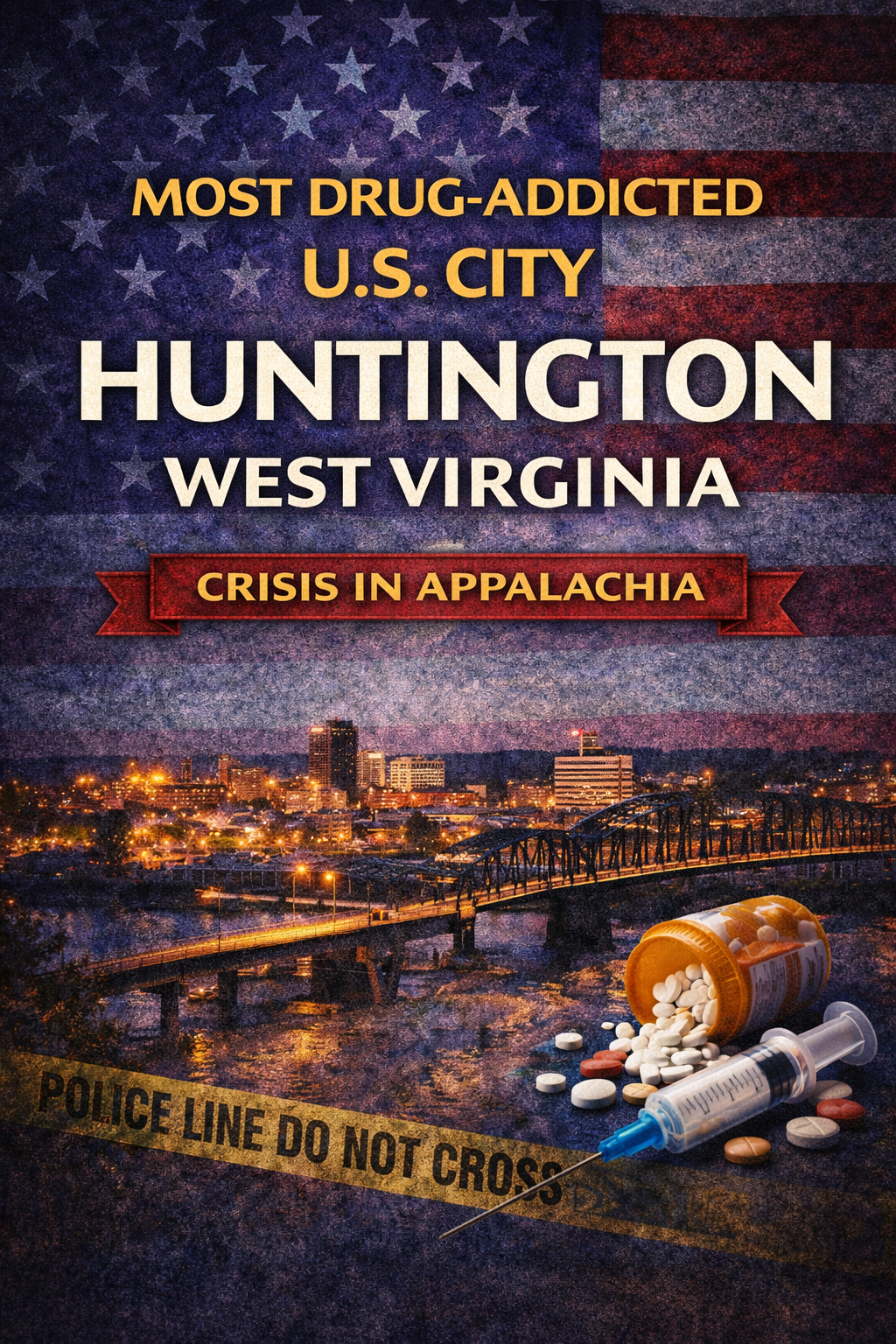
If you’ve ever wondered which city in the United States struggles most with drug addiction, you’re not alone. It’s an uncomfortable but important question, because the answer reflects deeper issues that affect entire communities, families, and local systems of care. Drug addiction doesn’t exist in a vacuum—it’s shaped by economic pressures, access to healthcare, housing stability, and policy decisions. After years of reviewing public health data, government reports, and the real stories behind the statistics, a clear picture begins to emerge. In this article, I’ll break down which U.S. city consistently ranks highest for drug addiction and overdose impact, and explore the complex factors that have made the crisis there especially difficult to manage.
Which City is the Most Drug Addicted in the United States?
If you check recent studies and government data, Huntington, West Virginia, is widely reported as the city struggling the most with drug addiction issues in the country. Some cities in Ohio, Pennsylvania, and New Hampshire also land near the top. But Huntington has become the focus of documentaries and nationwide news because of how deep the crisis runs there. For context, Huntington is a small city, about 45,000 people, yet it’s reported to have some of the highest overdose rates per capita in the U.S.
This isn’t just about one type of drug. Huntington’s opioid epidemic is particularly fierce, but methamphetamines and other substances play a role, too. The CDC, the NIH, and local reporting all line up with this assessment. While other cities like Baltimore, Philadelphia, and San Francisco come up in discussions about drug issues, Huntington’s numbers are almost unbelievable compared to its size.
How Did Huntington, WV Become the Epicenter?
No single reason put Huntington in this spot, but a bunch of factors all came together. First, the area’s economy changed a lot over the decades. Huntington was once a thriving manufacturing and transportation hub, but steady job losses and economic stress created a difficult environment for many people. That kind of atmosphere can make communities more vulnerable to addiction, especially when opioids and other powerful drugs are easy to get.
The opioid crisis nationally hit Huntington really hard, especially after prescription painkillers became common in the 1990s and early 2000s. When pill mills got shut down, heroin and, later, fentanyl moved in, making things much riskier. Reports from CDC, NIH, and local health authorities show how deaths from opioid overdoses in Cabell County, where Huntington sits, have stayed stubbornly high for years now. The city grabbed headlines when, in a single day, 26 people overdosed in less than five hours—that’s the scale of the problem.
Main Drugs Contributing to the Crisis
Most of the national attention on Huntington comes down to opioids, especially fentanyl, heroin, and prescription painkillers. Here’s a look at what’s causing the most harm there:
- Opioids: These include prescription drugs as well as heroin and fentanyl. Fentanyl, in particular, is super potent, making overdoses way more likely.
- Methamphetamine: There’s been a jump in meth use over recent years, especially as attempts to reduce opioid prescriptions have pushed some users to other substances.
- Synthetic Drugs: This pops up in local reports and has unpredictable effects. Products such as “bath salts” have emerged alongside more traditional substances.
Polydrug use, or combining multiple drugs at once, makes treatment and prevention harder. Fentanyl is sometimes mixed into the drug supply, increasing the risk for people who don’t realize what they’re taking.
Day-to-Day Impact on the Community
People sometimes picture drug addiction as something that just affects individuals, but Huntington shows that addiction can seriously reshape daily life for an entire city. Public health agencies, emergency responders, and hospitals are under constant pressure. Cabell Huntington Hospital has had to increase its ER staffing to keep up with overdose cases, and local police are often the first on the scene for drug-related emergencies, which puts a lot of strain on everyone involved.
- Overdose calls for EMS are frequent.
- Needle litter and public safety issues are common in some neighborhoods.
- Mainstream schools have seen a rise in children impacted by parental drug use.
Businesses and tourism can also be adversely affected, as the city’s challenges may deter visitors or prospective investors. Still, there’s a strong community pushing solutions. Local coalitions, churches, healthcare workers, and volunteers collaborate to provide people with the help they need.
How Huntington is Responding to the Addiction Crisis
The scale of the problem in Huntington might seem overwhelming, but folks there haven’t just given up. The city and Cabell County have become known nationally for trying out new methods of dealing with addiction. Here’s what’s happening on the ground:
- Quick Response Teams (QRT): These teams follow up with individuals after an overdose, connecting them immediately with resources and treatment options. Other cities are now implementing these models because the results have been promising, with more people entering treatment faster.
- Harm Reduction Programs: Huntington operates needle-exchange and naloxone-distribution programs to reduce disease transmission and prevent deaths. Naloxone (Narcan) reverses opioid overdoses and has saved countless lives in the city.
- Peer Recovery Support: Many programs hire people with lived experience of addiction recovery, letting them offer support that feels real and nonjudgmental.
- Community Education and Support: Local groups, from churches to support organizations, offer education sessions, support groups for families, and training in overdose prevention.
The city is showing that it’s possible to push for recovery, even when things seem stacked against you.
Challenges That Still Remain
Even with all of those efforts, progress can feel slow. Many challenges stick around:
- Stigma: People dealing with addiction often face judgment, which makes it harder to seek help. Switching the conversation around drug use is still a work in progress.
- Resource Limitations: Huntington isn’t a big city, so funding and facilities only go so far. Longterm treatment beds are in short supply, and counseling options can’t keep up with demand.
- Fentanyl and Changing Drug Supplies: Fentanyl keeps sparking new waves of overdoses. Even experts trying to stay ahead often find themselves one step behind.
- Poverty and Economic Struggles: As long as economic hardships stick around, the city stays at risk for future waves of addiction.
One additional challenge is the mental health toll that addiction and overdose deaths take on the broader community. Families experience trauma, children are affected, and caregivers often get overwhelmed. Local organizations continue to request increased funding for both immediate needs, such as emergency beds and outreach, and long-term solutions, including job training and mental health support. These overlapping needs mean that Huntington must continue to seek resources and fresh ideas from the state and federal levels.
What Other Cities Can Learn from Huntington
While Huntington’s story is unique in many ways, the solutions being developed there are attracting attention from cities across the U.S. The focus on rapid response after overdoses, using community members as support staff, and harm reduction are all models worth checking out. Ensuring that help is available immediately after a crisis has yielded better outcomes than waiting for individuals to seek treatment independently.
Other communities have begun to replicate Huntington’s approach, establishing their own rapid-response teams and launching programs that distribute naloxone to individuals at risk. Not only does this save lives, but it also provides a new sense of hope to people who might otherwise feel overlooked. Mental health awareness campaigns, partnerships between schools and counselors, and local businesses creating job programs for those in recovery are among the additional measures being implemented in cities inspired by Huntington’s roadmap.
Frequently Asked Questions
Here are a few common questions about the most drug addicted city in the USA and the broader drug crisis issue:
Question: What makes Huntington more at risk for drug addiction compared to bigger cities?
Answer: Huntington’s size, job losses, and proximity to major drug trafficking routes all make it vulnerable. The community’s limited resources also mean it’s less equipped to bounce back quickly.
Question: Are there signs that things are getting better in Huntington?
Answer: Some progress has been made, especially in terms of overdose survival rates because of naloxone distribution and rapid outreach. However, the fight is ongoing, and there’s still a long road ahead.
Question: What can someone do if they want to support cities like Huntington?
Answer: Donating to local harm reduction groups or volunteering with organizations that provide addiction recovery services is a direct way to help. Speaking up for policies that fund treatment, prevention, and mental health resources also makes a real difference.
Summing Up: Why It Matters
Learning about the reality in Huntington, West Virginia, can help anyone better understand what’s driving the addiction crisis in American cities. There’s no one-size-fits-all solution, and the stakes are huge, not just for those using drugs but for entire communities that care about recovery and hope. Watching and learning from a city facing one of the toughest challenges in America is a good way to shape a more informed, compassionate response elsewhere. Staying updated on how cities like Huntington adapt and support their residents can illuminate what works, opening new paths for other struggling places. Whether you’re a policymaker or just someone who wants to see positive change, the lessons from Huntington hold something for everyone.
Video: How Bad Is Huntington’s Drug Problem Actually #addiction #crisis #usa
