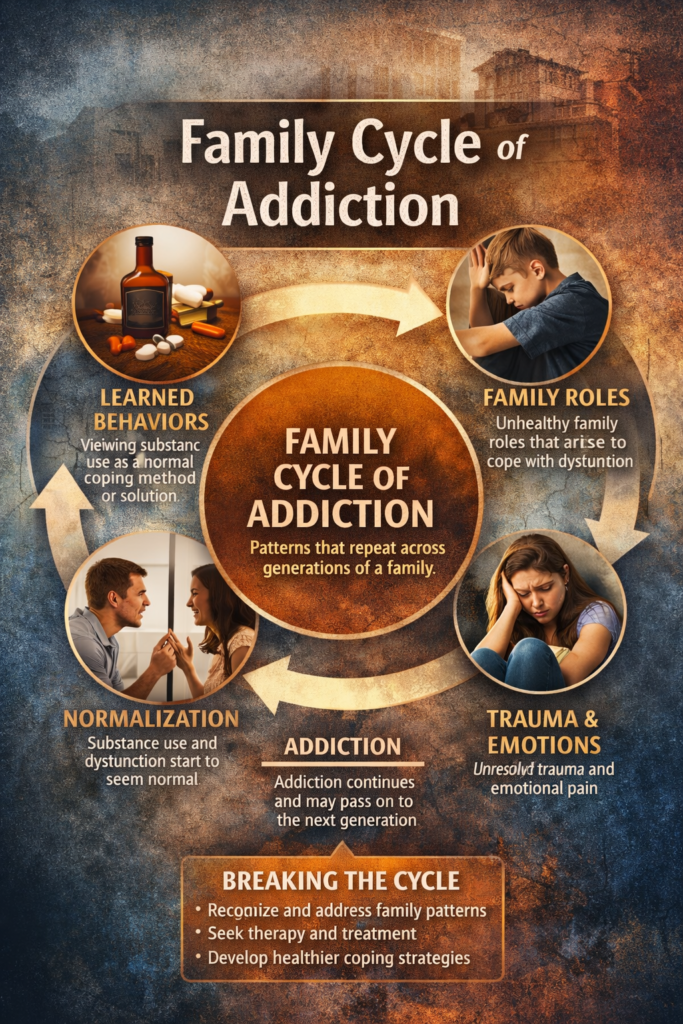
Addiction often affects more than just the individual who is struggling with substance use. It can influence the emotional, behavioral, and relational patterns within an entire family. Over time, these patterns may repeat across generations, creating what is commonly known as the family cycle of addiction. This cycle can develop through a combination of genetic vulnerability, learned behaviors, environmental influences, and unhealthy coping strategies. Children who grow up in families affected by addiction may be exposed to stress, instability, or normalized substance use, which can shape how they manage emotions and challenges later in life. Understanding the family cycle of addiction is an important step toward recognizing these patterns and identifying ways to interrupt them.
Breaking the Family Cycle of Addiction
Addiction rarely affects just one person. In many families, it becomes a pattern that repeats across generations, shaping behaviors, beliefs, and coping strategies. This pattern is often called the family cycle of addiction—a cycle where addiction, trauma, and unhealthy coping methods are passed down unless something interrupts it.
How Addiction Becomes a Family Pattern
Addiction can move through families in several ways. Genetics can increase vulnerability, but the environment plays an equally powerful role. When children grow up around substance misuse, they often learn certain behaviors and emotional responses that shape how they deal with stress later in life.
For example, a child who grows up in a household where alcohol or drugs are used to escape problems may unconsciously learn that substances are a normal way to cope with pain. Even if they promise themselves they will never repeat those behaviors, the patterns they observed can still influence their decisions as adults.
Family environments affected by addiction often include:
- Unpredictability and instability
- Poor emotional communication
- Unhealthy coping strategies
- Normalization of substance use
- Unresolved trauma
These conditions can make addiction feel like a familiar or even expected part of life.
The Roles Family Members Often Play
In families affected by addiction, members sometimes adopt roles to cope with the dysfunction. These roles can become deeply ingrained and may persist long into adulthood.
Common roles include:
- The Caretaker (or Hero): tries to keep the family functioning and often hides the family’s problems.
- The Scapegoat: acts out or becomes the “problem child,” drawing attention away from the addiction.
- The Lost Child: withdraws emotionally to avoid conflict.
- The Mascot: uses humor or distraction to reduce tension in the family.
While these roles help the family survive stressful situations, they can also carry emotional consequences later in life, including difficulty with boundaries, relationships, and self-worth.
Why the Cycle Continues
The cycle of addiction often continues because the underlying pain and trauma are never fully addressed. Without healthier coping skills or support systems, individuals may turn to the same behaviors they witnessed growing up.
Factors that contribute to the cycle continuing include:
- Unresolved childhood trauma
- Lack of emotional support
- Social and community influences
- Mental health struggles
- Limited access to treatment or recovery resources
Over time, addiction can become normalized within the family culture, making it harder to recognize the need for change.
Breaking the Cycle
The most powerful moment in the family cycle of addiction occurs when someone decides to break the pattern. Recovery is not just about stopping substance use—it often involves healing emotional wounds, learning healthier coping strategies, and creating new family dynamics.
Breaking the cycle may involve:
- Seeking addiction treatment or counseling
- Addressing underlying trauma and mental health issues
- Learning healthy coping and communication skills
- Building supportive relationships outside unhealthy environments
- Setting boundaries with harmful influences
When one person begins the recovery process, it can shift the direction of the entire family system, creating new possibilities for future generations.
A New Legacy
The family cycle of addiction can feel overwhelming, but it is not permanent. Each step toward healing—no matter how small—helps create a different path for the future. Recovery allows individuals to replace inherited patterns of pain with patterns of resilience, growth, and hope.
Breaking the cycle doesn’t just change one life.
It can change an entire family’s story.
Understanding the Family Cycle of Addiction Through Self-Management
Addiction often affects more than one person in a family. Over time, patterns of behavior, coping, and emotional responses can repeat across generations. This pattern is known as the family cycle of addiction. While genetics and environment both play a role, individuals can learn self-management strategies to recognize these patterns and break the cycle.
Self-management focuses on developing awareness, emotional control, and healthy coping skills. These tools empower individuals to understand how family experiences may influence their behaviors and choices.
Recognizing Family Patterns
One of the first steps in breaking the family cycle of addiction is awareness. Many people grow up around certain behaviors that feel normal, even when they are harmful. Self-reflection helps individuals identify patterns such as substance use, unhealthy coping, or emotional avoidance that may exist within their family system.
Questions that support awareness include:
- How did my family handle stress or conflict?
- Were substances used to cope with emotional pain?
- What behaviors or attitudes toward addiction were common in my household?
By recognizing these patterns, individuals can begin to understand how family influences may affect their own behaviors.
Practicing Emotional Awareness
Emotional awareness is another key self-management strategy. Many people affected by family addiction struggle with identifying or expressing emotions because they learned to suppress them in order to maintain stability in the household.
Developing emotional awareness involves:
- Identifying feelings rather than avoiding them
- Recognizing emotional triggers connected to past experiences
- Practicing healthy ways to process emotions, such as journaling, therapy, or conversation
Learning to understand emotions reduces the likelihood of turning to substances as a coping mechanism.
Building Healthy Coping Skills
Families affected by addiction often rely on unhealthy coping strategies, such as denial, avoidance, or substance use. Self-management involves replacing these patterns with healthy coping mechanisms that support emotional stability and resilience.
Examples include:
- Stress-management techniques such as exercise or mindfulness
- Seeking support from trusted friends, mentors, or counselors
- Developing problem-solving skills when facing challenges
- Practicing relaxation and self-care routines
Healthy coping strategies provide constructive ways to deal with stress without repeating harmful family patterns.
Setting Boundaries and Creating Support Systems
Another important strategy is learning how to set healthy boundaries. In families affected by addiction, boundaries are often blurred, and individuals may feel responsible for managing other people’s problems.
Self-management encourages individuals to:
- Recognize what responsibilities belong to them and what do not
- Limit exposure to harmful behaviors or environments
- Seek support from recovery communities, therapy, or support groups
Strong boundaries help individuals protect their well-being and maintain focus on their recovery journey.
Moving Toward Breaking the Cycle
Understanding the family cycle of addiction is an important step toward healing. Self-management strategies empower individuals to recognize patterns, manage emotions, and develop healthier ways of responding to life’s challenges.
Although family history can influence behavior, it does not determine the future. With awareness, support, and intentional change, individuals can break the cycle and create healthier paths for themselves and future generations.
Family Support Strategies for Understanding the Cycle of Addiction
Addiction rarely affects only one person. It often impacts the entire family, shaping relationships, communication patterns, and emotional health. When addiction becomes part of a family’s history, it can create a cycle where similar behaviors, coping strategies, and struggles appear across generations. Understanding this family cycle of addiction is an important step toward healing, and family support plays a key role in breaking the pattern.
Family support strategies help loved ones recognize the effects of addiction while creating healthier ways to respond, communicate, and support recovery.
Learning About Addiction as a Family Issue
One of the most important steps families can take is educating themselves about addiction. Addiction is not simply a lack of willpower—it is a complex condition influenced by biology, environment, trauma, and mental health.
When families understand addiction as a disease that affects both individuals and relationships, it can reduce blame and stigma. Education allows family members to better understand behaviors related to addiction and encourages compassion while still promoting accountability.
Family members can increase their understanding by:
- Attending educational programs or workshops
- Reading about addiction and recovery
- Participating in support groups designed for families
Knowledge helps families move from confusion and frustration toward understanding and constructive support.
Improving Communication Within the Family
Addiction can strain communication within families. Some families avoid discussing problems, while others may rely on blame, anger, or silence. Healthy communication strategies help families address issues openly and respectfully.
Supportive communication involves:
- Listening without immediate judgment or criticism
- Expressing concerns calmly and honestly
- Encouraging open discussions about emotions and experiences
When family members learn to communicate more effectively, it creates an environment where recovery conversations can happen without fear or hostility.
Avoiding Enabling Behaviors
Families often want to help their loved ones, but sometimes their actions unintentionally enable addictive behaviors. Enabling may include covering up consequences, providing financial support for substance use, or repeatedly rescuing someone from the results of their actions.
Family support strategies focus on finding a balance between support and accountability. This means caring about the individual while allowing them to take responsibility for their recovery.
Examples of healthy support include:
- Encouraging treatment or counseling
- Setting clear and consistent boundaries
- Offering emotional support without supporting harmful behaviors
Learning to avoid enabling can be difficult, but it helps break patterns that sustain addiction within the family.
Participating in Family-Based Recovery Support
Recovery can be more effective when families are involved in the healing process. Many treatment programs encourage family participation, recognizing that addiction affects the entire family system.
Family support options may include:
- Family therapy or counseling
- Peer support groups for families
- Educational recovery programs
- Community-based support networks
These resources provide families with tools to manage stress, understand addiction, and support recovery without sacrificing their own well-being.
Creating a Healthier Family Environment
Breaking the family cycle of addiction often requires changes in the overall family environment. Families can support long-term recovery by promoting healthy routines, emotional safety, and positive coping strategies.
A supportive environment may include:
- Encouraging healthy activities and relationships
- Promoting open conversations about mental health and stress
- Celebrating progress and recovery milestones
- Modeling healthy coping skills for younger family members
These changes help shift family patterns away from dysfunction and toward stability and growth.
Breaking the Cycle Together
The family cycle of addiction can feel overwhelming, but it is not permanent. When families learn supportive strategies, improve communication, and create healthier boundaries, they can play a powerful role in recovery.
Healing often begins when families move from blame and confusion toward understanding, support, and shared responsibility for change. Through education, communication, and consistent support, families can help break the cycle of addiction and create a stronger foundation for future generations.
Community Resource Strategies for Understanding the Family Cycle of Addiction
Addiction often affects more than just the individual—it impacts families, relationships, and entire communities. When addiction becomes part of a family’s history, it can create patterns that repeat across generations. This pattern, known as the family cycle of addiction, is influenced by environmental factors, learned behaviors, and access to support. Community resources play a vital role in helping individuals and families understand these patterns and find pathways to recovery.
By connecting families with education, support services, and recovery programs, communities can help interrupt the cycle and promote healthier outcomes.
Access to Education and Prevention Programs
Education is one of the most powerful tools for understanding addiction and its impact on families. Community-based prevention programs often provide workshops, seminars, and informational resources that explain how addiction develops and how it can affect family systems.
These programs help families:
- Recognize early warning signs of addiction
- Understand the emotional and psychological impact on family members
- Learn strategies to prevent substance misuse among younger generations
Schools, healthcare organizations, and local nonprofits often host educational programs that increase awareness and encourage early intervention.
Support Groups for Families
Support groups offer families a safe space to share experiences, learn coping strategies, and connect with others who understand the challenges of addiction. These groups help families realize that they are not alone and that recovery is possible.
Family support groups may focus on:
- Emotional support and shared experiences
- Learning healthy boundaries and communication skills
- Understanding addiction and recovery processes
Community organizations and recovery networks frequently offer support groups specifically designed for family members affected by addiction.
Access to Counseling and Mental Health Services
Professional counseling services are another important community resource. Therapy can help individuals and families address underlying issues such as trauma, stress, or unresolved conflict that may contribute to addiction patterns.
Family therapy and individual counseling can help people:
- Understand how family dynamics influence behavior
- Improve communication and problem-solving skills
- Develop healthier coping strategies
Mental health services provide guidance to help families move toward healing rather than repeat harmful cycles.
Recovery and Treatment Programs
Community-based treatment programs offer structured support for individuals struggling with substance use. Many programs also involve family participation, recognizing that addiction recovery often requires changes within the family environment.
Treatment resources may include:
- Outpatient or residential treatment programs
- Recovery coaching or peer support services
- Educational programs for families and caregivers
These programs provide tools that help both individuals and families understand addiction while developing strategies for long-term recovery.
Strengthening Community Support Networks
Communities can also help break the family cycle of addiction by building strong support networks. Faith-based groups, nonprofit organizations, healthcare providers, and local leaders often collaborate to provide resources that promote recovery and prevention.
These networks can:
- Connect families to treatment and recovery resources
- Provide mentorship and guidance
- Promote community awareness about addiction and mental health
When communities work together to support families affected by addiction, they create an environment that encourages healing and long-term change.
Building Healthier Futures
Understanding the family cycle of addiction requires both personal awareness and access to supportive resources. Community programs, counseling services, support groups, and educational initiatives all help families recognize patterns and develop healthier strategies.
By using these resources, families can gain the knowledge and support needed to interrupt the cycle of addiction. With strong community connections, individuals and families can move toward recovery, resilience, and a healthier future for the next generation.
Frequently Asked Questions
Here are some common questions:
1. What is the family cycle of addiction?
The family cycle of addiction refers to patterns of substance use, unhealthy coping strategies, and emotional behaviors that repeat across generations within a family. These patterns can develop through a combination of genetics, environmental influences, trauma, and learned behaviors.
2. Why does addiction often run in families?
Addiction can run in families for several reasons. Genetics may increase a person’s vulnerability to substance use disorders, but environmental factors also play a large role. Children may grow up observing substance use as a way to cope with stress, which can influence how they handle challenges later in life.
3. Can the family cycle of addiction be broken?
Yes, the cycle can be broken. Awareness, education, therapy, healthy coping strategies, and supportive relationships can help individuals and families change harmful patterns. Recovery programs and counseling can also provide tools to help people build healthier habits and environments.
4. How does addiction affect children in a family?
Children in families affected by addiction may experience emotional stress, instability, or confusion. They may take on roles within the family, such as trying to fix problems or withdrawing from conflict. These experiences can influence their emotional development and coping skills as they grow older.
5. What are common roles in families affected by addiction?
Families affected by addiction sometimes develop coping roles, such as:
- The Hero: tries to keep the family functioning and appear successful.
- The Scapegoat: acts out and becomes the focus of blame.
- The Lost Child: withdraws emotionally to avoid conflict.
- The Mascot: uses humor or distraction to reduce tension.
These roles help families cope with stress, but can create long-term emotional challenges.
6. What factors contribute to the continuation of the cycle?
Several factors can contribute to the cycle continuing, including:
- Unresolved trauma
- Lack of healthy coping strategies
- Mental health struggles
- Limited access to treatment or support
- Social or environmental influences
Addressing these factors is important in preventing the cycle from continuing.
7. How can families support someone in recovery?
Families can support recovery by encouraging treatment, learning about addiction, improving communication, and setting healthy boundaries. Support groups, family therapy, and community resources can also help families develop healthier ways of supporting their loved ones.
8. Why is understanding the family cycle of addiction important?
Understanding the cycle helps individuals and families recognize patterns that may contribute to addiction. Awareness allows people to make healthier choices, seek support, and create new family dynamics that promote healing and long-term well-being.
Conclusion
Although the family cycle of addiction can be deeply rooted, it is not impossible to break. Awareness, education, and supportive resources can help individuals and families recognize harmful patterns and develop healthier coping strategies. Through self-reflection, family support, and community resources, people can begin to change behaviors passed down for generations. Recovery is not only about overcoming substance use but also about healing relationships and building stronger, healthier family systems. By addressing the factors that contribute to the cycle, families can move toward resilience and create a new path that promotes long-term well-being for future generations.
Video: The Family Cycle of Addiction That Nobody Wants to Admit #MentalHealthMatters #BreakTheCycle