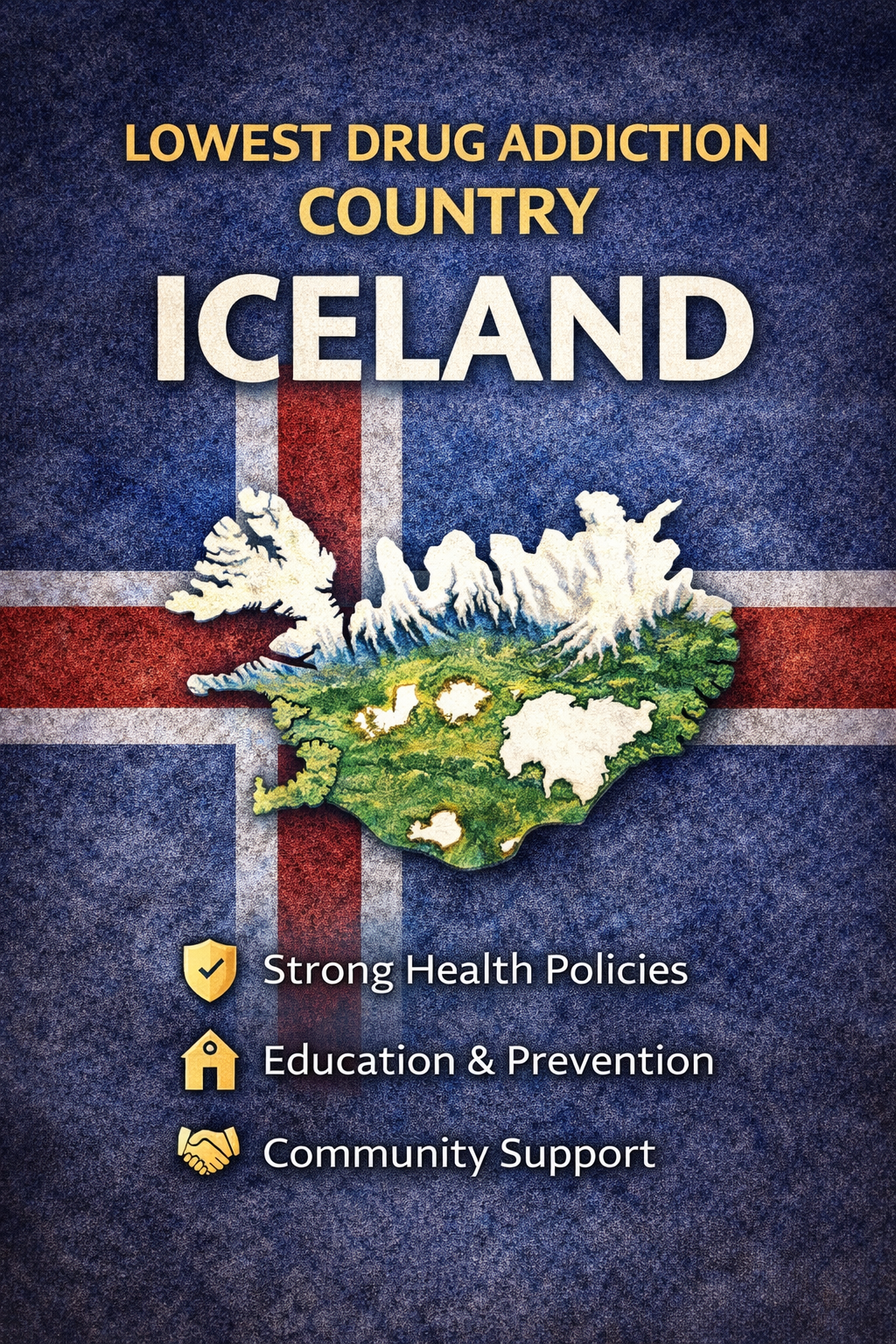
Exploring which country has the lowest levels of drug addiction offers valuable insight into how culture, policy, and social structure shape public health outcomes. Low addiction rates often spark curiosity about what those societies are doing differently—from prevention strategies and healthcare access to education, community connection, and social norms around substance use. Rather than reflecting a single factor, low rates of addiction usually result from a combination of strong social supports, effective public health policies, and early intervention efforts woven into everyday life. In this article, I’ll examine why some countries consistently report lower addiction rates, highlight the nation that stands out most in this area, and unpack the practical lessons these approaches offer for reducing drug addiction at a population level.
Which Country Has the Least Drug Addiction?
Looking at worldwide reports and comparisons, Iceland regularly shows up with the lowest rates of drug addiction, especially when it comes to illegal substances. Fewer people in Iceland use hard drugs compared to most other countries, and reported opioid addiction cases are also extremely rare.
Iceland’s small population—about 370,000 people—makes nationwide programs easier to launch and track. Beyond that, I’m always impressed by the open conversations people there have about health and prevention, which play a big part in the country’s overall success in curbing addiction.
Other countries with low drug addiction rates tend to be in similar regions or have strong cultural approaches to wellness and education. Examples include Norway, Finland, and Japan. However, Iceland’s numbers are consistently the lowest based on stats from groups like the European Monitoring Centre for Drugs and Drug Addiction and the United Nations Office on Drugs and Crime.
Why Are Drug Addiction Rates So Low in Iceland?
Iceland’s approach to public health is both practical and community-focused. Here’s what really stands out about Iceland’s success story:
- Strong Community Ties: Icelanders value strong social connections, and parents are often very engaged in their kids’ lives. Teenagers regularly spend evenings at home, which makes risky behavior less tempting.
- All-in-one Youth Programs: Since the late 1990s, Iceland has invested substantial resources and attention in after-school programs, sports, music, art, and other organized activities. The idea is to help kids find healthy hobbies and positive social groups.
- Strict Laws and Enforcement: Alcohol and tobacco laws are enforced tightly, and there’s no casual attitude about drugs. Buying alcohol is restricted to state-run stores, and it’s pretty pricey; this is another deterrent.
- Open Communication: Schools run regular, honest campaigns about drugs, alcohol, and tobacco. Young people in Iceland say they feel comfortable asking adults for help if they’re ever struggling.
A study published in The Lancet Psychiatry examined how these policies promote adolescent health. For example, back in 1998, over 40% of Icelandic teens said they’d gotten drunk in the previous 30 days. It has now dropped to approximately 5%.
What Makes Iceland’s Approach Work?
It’s not just about rules or restrictions. Iceland’s model succeeds because it emphasizes positive involvement rather than punishment alone. Based on what I’ve read, there are a few aspects that really make a big difference:
- Accessible Activities: Parents and children receive vouchers that cover the cost of sports or creative hobbies, so no one is excluded for financial reasons.
- Regular Parent-Teacher Collaboration: Schools and families stay closely linked, sharing updates about student wellbeing, events, and any signs of trouble.
- Curfews: There’s a nightly curfew for young people, which is widely accepted and rarely questioned.
- Consistent Surveys and Data Use: Every school year, Iceland collects anonymous data from teens about their habits. This helps guide future programs and spot any issues quickly.
Generally, Iceland’s approach is focused on prevention and encouragement, rather than punishment or fear tactics. When teens feel heard, valued, and supported, they make healthier choices.
Things to Think About with Global Drug Addiction Rates
While Iceland’s approach works well there, it’s shaped by local culture, population size, and available resources. Trying to simply bring these strategies into a huge, diverse country wouldn’t be as straightforward, but I think there are takeaways that could work anywhere.
If you’re comparing drug addiction rates across countries, here are a few things to keep in mind:
- Cultural Attitudes: Some places are more accepting of recreational drinking or drug use, which can affect what people report or try to hide.
- Reporting and Testing: Not all countries track addiction the same way or test for the same substances.
- Access to Healthcare: Countries with better mental health care and addiction treatment services typically see better long-term outcomes.
- Policy Design: Laws can deter or accidentally increase risky behavior depending on how they’re enforced.
Challenges Many Countries Face
Low addiction rates are not the norm in much of the world; stress, poor access to mental health care, and drug supply chains make things complicated for governments. Even in places like Iceland, it’s important to avoid getting overly comfortable. New challenges can arise, and ongoing education remains important.
How Can Other Countries Reduce Drug Addiction?
Based on what works in Iceland and other low-addiction countries, here are a few practical tips that seem to help lower drug use in any community:
- Invest in After-School Programs: Keeping children busy with hobbies, sports, and creative activities provides them with social connections and a sense of purpose.
- Encourage Family Involvement: When parents remain involved and communicate openly with their children, those children are less likely to take risky paths.
- Support Mental Health Services: Good, accessible mental health care for both teens and adults helps prevent self-medication and risky behavior.
- Limit Access: Restricting the easy purchase of alcohol, tobacco, and other substances can reduce casual use, especially among young people.
- Focus on Prevention: Education is more effective when it’s not about scaring kids but about listening and supporting them. Ongoing campaigns that adapt to the times work best.
These steps may take time, and no policy is perfect, but real progress tends to come from long-term, community-based changes and efforts that keep everyone in mind.
How Does Drug Use Compare Globally?
According to the United Nations World Drug Report, drug use is highest in parts of North America, Australia, and Western Europe. Opioid addiction and overdose rates are heavily concentrated in certain areas, especially due to the availability of prescription drugs and synthetic opioids. Cannabis is the most commonly used illicit drug worldwide, affecting millions. Addiction rates vary a lot depending on age, social circumstances, and local laws.
Parts of Asia, Africa, and the Middle East have lower reported drug use rates, but this can also be influenced by social stigma or strong legal penalties. In Japan, for instance, both the legal consequences for drug use and the strong cultural stigma keep usage rates low, although experts believe that addiction often goes unreported because of fear of shame. That sets it apart from Iceland’s open-minded and preventive attitude.
Frequently Asked Questions
Here are a few quick answers to questions that pop up a lot about drug addiction rates around the world:
Question: Why is drug addiction so low in Iceland?
Answer: Iceland invests a lot in youth programs, has strong family and school connections, and enforces laws without being too harsh. Prevention and support are central to their approach.
Question: Are Iceland’s methods only effective because it’s a small country?
Answer: Size facilitates coordination, but building strong community programs and maintaining open dialogue can help in any context. Even in larger countries, some principles just need tweaking to fit different local situations.
Question: How do addiction rates in the U.S. or Canada compare to those in Iceland?
Answer: They’re a lot higher, mostly because of different laws, cultural norms, and larger populations. Substance abuse treatment is also handled in a variety of ways across North America.
How Can Communities Support People Who Are Struggling?
Judgment and shame make it much harder for people to ask for help. In Iceland, there’s a strong emphasis on understanding addiction as a health problem, not a character flaw. Having nonjudgmental counselors, practical support, and confidential options can encourage more people to get the care they need. This approach can be a game-changer anywhere, and it helps create a safer, more welcoming space for recovery.
If you’re thinking about how to help someone in your own community, some ideas include sharing resources about counseling, encouraging strong social bonds, and helping people feel seen and heard during their recovery. By keeping lines of communication open and building trust, communities can step up and offer life-changing support for those who need it most.
Video: Iceland Proved Drug Prevention Actually Works #Addiction #Youth #Iceland
