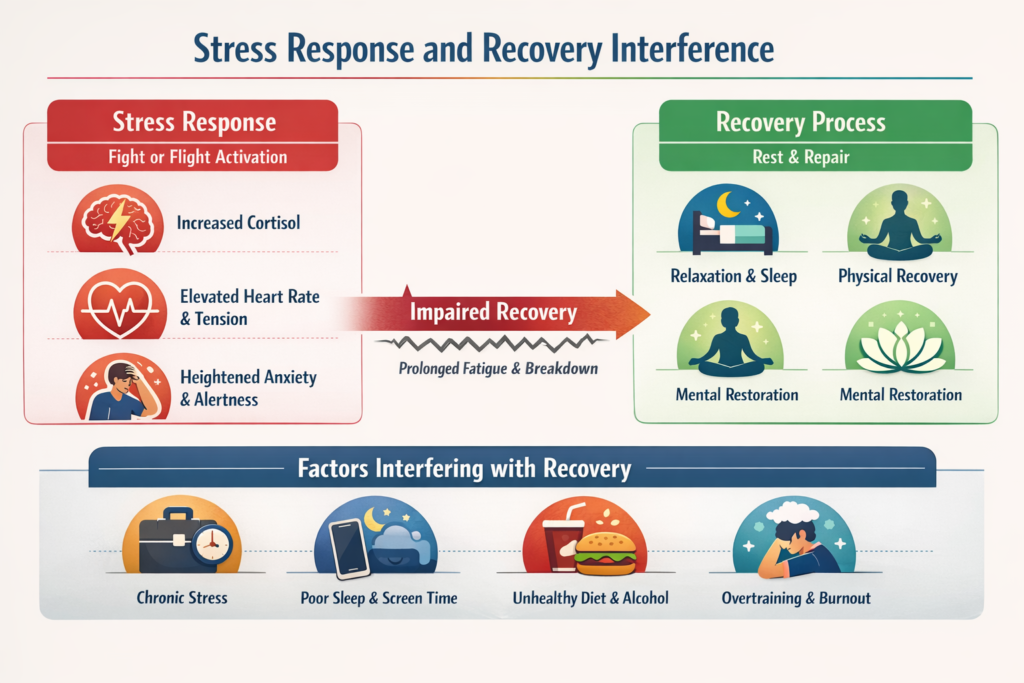
The stress response is a natural and essential survival mechanism, designed to help individuals react quickly to perceived threats. However, in the context of recovery, this same system can become a significant obstacle. When activated frequently or intensely, the stress response can disrupt emotional regulation, impair decision-making, and increase cravings for immediate relief. This interference increases the risk of returning to old coping behaviors. Understanding how stress affects the brain and behavior is critical for recognizing why recovery can feel more difficult under pressure and how these challenges can be effectively managed.
Under Pressure: How the Stress Response Interferes with Recovery
Recovery is not only about changing behaviors—it is about retraining the brain and body to respond differently to stress. One of the most significant barriers in this process is the body’s natural stress response system. While this system is designed to protect us, it can unintentionally interfere with healing by increasing cravings, weakening self-control, and reinforcing old patterns. Understanding how stress affects recovery is essential for building long-term stability.
The Stress Response: A Survival Mechanism
When the brain perceives a threat—whether physical or emotional—it activates the stress response, often referred to as the “fight-or-flight” system. This triggers the release of stress hormones like cortisol and adrenaline, preparing the body to react quickly.
In the short term, this response is helpful. However, in recovery, frequent or chronic stress can:
- Heighten emotional intensity
- Increase impulsive decision-making
- Reduce the ability to think clearly
These effects create a challenging environment for maintaining healthy behaviors.
How Stress Disrupts the Recovery Brain
Stress directly impacts key areas of the brain involved in recovery:
- The prefrontal cortex, responsible for decision-making and impulse control, becomes less active
- The reward system becomes more sensitive, increasing cravings for quick relief
- The emotional centers (like the amygdala) become more reactive
This imbalance makes it harder to resist urges and easier to fall back into familiar coping mechanisms.
Stress and Craving Amplification
One of the most powerful effects of stress is its ability to amplify cravings. When under pressure, the brain seeks fast ways to reduce discomfort. For individuals in recovery, this often means:
- Increased thoughts about past behaviors
- Stronger urges to escape emotional discomfort
- A return to previously learned coping strategies
Stress doesn’t just trigger cravings—it can make them feel urgent and overwhelming.
Emotional Overload and Coping Breakdown
Recovery requires the ability to manage emotions without turning to harmful behaviors. However, stress can overload this system. Individuals may experience:
- Anxiety or restlessness
- Irritability or mood swings
- Difficulty concentrating or problem-solving
When emotional regulation weakens, the risk of relapse increases.
The Cycle of Stress and Relapse
Stress and relapse often form a cycle:
- Stress increases emotional discomfort
- Cravings for relief intensify
- Coping strategies weaken
- Risk of relapse rises
If relapse occurs, it can lead to guilt or shame—creating more stress and continuing the cycle.
Strategies to Manage Stress in Recovery
Breaking this cycle requires learning how to respond to stress in healthier ways. Effective strategies include:
- Mindfulness and breathing techniques to calm the nervous system
- Regular physical activity to reduce stress hormones
- Structured routines to create stability
- Social support to reduce isolation and emotional burden
- Professional guidance to address deeper stress patterns
These tools help retrain the brain to handle stress without reverting to harmful behaviors.
Building Resilience Over Time
Recovery is not about eliminating stress—it is about building resilience. Over time, with consistent practice, the brain can learn new ways to respond to pressure. This strengthens emotional regulation, improves decision-making, and reduces the intensity of cravings.
A Path Forward
Stress is an unavoidable part of life, but it does not have to control the outcome of recovery. By understanding how the stress response interferes with healing, individuals can begin to anticipate challenges and prepare for them.
In summary, true recovery is not just about avoiding relapse—it is about developing the ability to face stress with clarity, strength, and healthier coping strategies. When stress is managed effectively, it no longer disrupts the healing process—it becomes an opportunity for growth.
Taking Control Within: Self-Management of Stress Response and Recovery Interference
Stress is an unavoidable part of life, but in recovery, it can become a powerful trigger that disrupts progress and increases the risk of relapse. The body’s stress response—designed for survival—can override rational thinking, intensify cravings, and weaken emotional control. While external support is important, developing self-management strategies is essential for maintaining stability. Learning to recognize, regulate, and respond to stress effectively can transform it from a barrier into a manageable challenge.
Recognizing Your Stress Signals
Self-management begins with awareness. Stress often shows up before we consciously recognize it, through both physical and emotional signs such as:
- Increased heart rate or tension
- Irritability or restlessness
- Racing thoughts or difficulty focusing
- Urges to escape or seek quick relief
By identifying these early signals, individuals can intervene before stress escalates into overwhelming cravings or impulsive decisions.
Understanding Personal Triggers
Not all stress is the same. Each person has unique triggers that activate their stress response. These may include:
- Work or academic pressure
- Relationship conflicts
- Financial concerns
- Fatigue or lack of sleep
Tracking these triggers helps create a clearer picture of when and why stress interferes with recovery, making it easier to prepare and respond proactively.
Regulating the Body’s Stress Response
Because stress begins in the body, effective self-management includes techniques that calm the nervous system. Simple practices can make a significant difference:
- Deep breathing exercises to slow heart rate and reduce tension
- Mindfulness or meditation to bring attention back to the present moment
- Physical movement, such as walking or stretching, to release built-up stress
These strategies help shift the body out of “fight-or-flight” mode and restore a sense of balance.
Interrupting Stress-Driven Thoughts
Stress can distort thinking, making problems feel bigger and solutions seem out of reach. Learning to challenge these thoughts is key.
Try asking:
- “Is this thought helpful or harmful?”
- “What would I say to someone else in this situation?”
- “Will this matter tomorrow or next week?”
Creating distance from automatic thoughts helps prevent emotional reactions from turning into harmful behaviors.
Building Healthy Coping Alternatives
Since stress often drives the urge for quick relief, it’s important to replace old coping mechanisms with healthier ones. Effective alternatives include:
- Journaling to process emotions
- Talking to a trusted person
- Engaging in hobbies or creative outlets
- Practicing relaxation techniques
The goal is not to eliminate stress, but to respond to it in ways that support recovery.
Creating Structure and Stability
A structured routine can act as a buffer against stress. Consistency in daily habits—such as sleep, meals, and activities—reduces unpredictability and strengthens emotional resilience.
When life feels stable, the stress response is less likely to become overwhelming.
Practicing Self-Compassion
Managing stress is not about perfection. There will be moments when stress feels overwhelming or when coping strategies don’t work as planned. In those moments, self-compassion is critical.
Instead of self-criticism:
- Acknowledge the difficulty
- Reflect on what can be learned
- Recommit to healthier responses
This approach prevents setbacks from turning into long-term disruptions.
Strengthening Resilience Over Time
Self-management is a skill that develops with practice. Each time an individual recognizes stress, uses a coping strategy, and avoids harmful behavior, they reinforce new neural pathways.
Over time, the brain becomes better equipped to handle stress without interfering with recovery.
A More Empowered Approach to Recovery
Stress may always be present, but it does not have to control the outcome. Through self-awareness, regulation techniques, and consistent practice, individuals can take an active role in managing their stress response.
In summary, recovery is not about avoiding challenges—it is about learning how to navigate them. By mastering self-management of stress, individuals can protect their progress, strengthen their resilience, and continue moving forward with confidence and control.
Healing Together: Family Support Strategies for Managing Stress Response and Protecting Recovery
Stress is a powerful force in recovery, capable of disrupting emotional balance, intensifying cravings, and weakening decision-making. While individuals work to manage their own stress responses, family support can play a critical role in reducing the impact of those responses. A supportive family environment can help regulate emotions, provide stability, and reinforce healthier coping strategies. Understanding how stress interferes with recovery—and how families can respond effectively—creates a stronger foundation for long-term healing.
Understanding Stress as a Family
The first step in providing support is recognizing that stress is not simply a reaction—it is a biological and psychological response. When someone in recovery is stressed, their brain may:
- Become more reactive and emotionally sensitive
- Struggle with impulse control
- Seek quick relief through old habits
By understanding this, families can shift from frustration to empathy, seeing stress-related behaviors as signals of distress rather than intentional choices.
Creating a Calm and Supportive Environment
The home environment has a direct impact on stress levels. Families can reduce unnecessary pressure by:
- Maintaining a calm and predictable atmosphere
- Minimizing conflict or addressing it constructively
- Encouraging open, respectful communication
A stable environment helps the nervous system feel safe, reducing the intensity of the stress response.
Encouraging Open Communication
Stress often builds when individuals feel unable to express what they are experiencing. Families can support recovery by creating space for honest conversations.
This includes:
- Asking open-ended, non-judgmental questions
- Listening without interrupting or trying to “fix” everything immediately
- Validating feelings, even if they don’t fully understand them
When individuals feel heard, stress becomes more manageable.
Recognizing Stress Signals Early
Family members are often in a position to notice changes that signal rising stress, such as:
- Increased irritability or withdrawal
- Changes in sleep or appetite
- Difficulty concentrating or increased restlessness
Gently pointing out these patterns can help the individual become more aware and take action before stress escalates.
Supporting Healthy Coping Strategies
Families can actively encourage and participate in healthier ways of managing stress, such as:
- Going for walks or engaging in physical activity together
- Practicing relaxation techniques or mindfulness
- Encouraging breaks, rest, and self-care
Shared activities not only reduce stress but also strengthen connections.
Avoiding Pressure and Judgment
Criticism, high expectations, or constant monitoring can increase stress and make recovery more difficult. Instead, families should focus on:
- Encouragement rather than control
- Progress rather than perfection
- Support rather than pressure
Reducing emotional pressure helps prevent the stress response from intensifying.
Setting Healthy Boundaries
Support does not mean removing all challenges. Families can help by setting clear, respectful boundaries that promote accountability while still being supportive.
Healthy boundaries:
- Provide structure and consistency
- Prevent enabling behaviors
- Encourage responsibility without adding unnecessary stress
Celebrating Progress and Resilience
Acknowledging small wins—such as managing a stressful situation without reverting to old habits—can build confidence and motivation.
Positive reinforcement reminds individuals that change is possible and that their efforts are recognized.
A Shared Approach to Managing Stress
Recovery is not just an individual journey—it is influenced by relationships and environment. When families understand the role of stress and actively work to reduce its impact, they become an essential part of the recovery process.
In summary, stress may be unavoidable, but it does not have to control recovery. With empathy, communication, and consistent support, families can help transform stressful moments into opportunities for growth, resilience, and deeper connection. Together, healing becomes not only possible—but sustainable.
Connected for Recovery: Community Resource Strategies for Managing Stress Response and Preventing Interference
Stress is one of the most common—and powerful—barriers in recovery. When the body’s stress response is activated, it can interfere with emotional regulation, decision-making, and the ability to resist cravings. While self-management and family support are essential, community resources offer a broader network that can help individuals better understand and manage stress in recovery. These resources offer education, connection, and professional guidance that make coping more effective and sustainable.
Why Community Support Matters for Stress Management
Stress can feel overwhelming when faced alone. Community resources help reduce this burden by providing:
- Shared understanding through connection with others
- Access to tools and education about stress and recovery
- Consistent support systems beyond immediate family
This wider support network helps individuals feel less isolated and more empowered to manage stress effectively.
Educational Programs and Workshops
Many community organizations offer workshops focused on stress management, mental health, and recovery skills. These programs can help individuals:
- Understand how the stress response affects the brain and behavior
- Learn practical techniques for managing emotional triggers
- Develop healthier coping strategies
Education transforms stress from something confusing and overwhelming into something understandable and manageable.
Peer Support Groups
Support groups provide a space where individuals can share their experiences with stress and recovery. These groups offer:
- Validation from others who face similar challenges
- Practical advice and coping strategies
- A sense of accountability and encouragement
Hearing how others navigate stress can provide new perspectives and reduce feelings of isolation.
Access to Professional Resources
Community-based services often include access to professionals such as therapists, counselors, and behavioral health specialists. These experts can:
- Help identify personal stress triggers
- Teach evidence-based stress management techniques
- Address underlying mental health concerns
Professional support adds depth and personalization to recovery efforts, making strategies more effective.
Digital and Online Support Platforms
Technology has expanded access to community support. Online resources such as apps, forums, and virtual groups provide:
- 24/7 access to guidance and connection
- Tools for tracking stress, mood, and triggers
- Immediate support during high-stress moments
These platforms are especially helpful for individuals who may not have easy access to in-person services.
Structured Community Activities
Communities often offer structured programs that promote stress reduction, such as:
- Fitness or wellness classes
- Mindfulness and meditation sessions
- Group activities that encourage social connection
These activities provide healthy outlets for stress while reinforcing positive routines.
Reducing Stigma and Encouraging Engagement
When communities openly address stress and recovery, they help normalize the challenges individuals face. This reduces stigma and encourages people to seek help without fear of judgment.
A supportive community culture makes it easier to access resources and stay committed to recovery.
Taking the First Step
Engaging with community resources doesn’t have to be overwhelming. Simple steps include:
- Attending a local or virtual support group
- Participating in a stress management workshop
- Exploring online tools or apps for guidance
Each step strengthens the support system and builds confidence in managing stress.
A Broader Path to Resilience
Stress is a natural part of life, but it does not have to derail recovery. Community resource strategies provide the tools, knowledge, and connections needed to manage stress more effectively.
In summary, recovery is not meant to be navigated alone. By connecting with community resources, individuals can better understand their stress response, reduce its impact, and build lasting resilience—turning potential obstacles into opportunities for growth and support.
Frequently Asked Questions
Here are some common questions:
1. What is the stress response?
Answer:
The stress response is the body’s natural reaction to perceived threats, often called the “fight-or-flight” response. It involves the release of hormones like cortisol and adrenaline, preparing the body to react quickly. While helpful in short-term situations, it can become harmful when activated frequently.
2. How does stress interfere with recovery?
Answer:
Stress interferes with recovery by weakening impulse control, increasing emotional reactivity, and intensifying cravings. It can make it harder to think clearly and resist urges, increasing the likelihood of relapse.
3. Why do cravings increase during stress?
Answer:
When stressed, the brain seeks quick relief from discomfort. This often leads to stronger cravings for previously rewarding behaviors or substances, as the brain remembers them as a fast way to reduce stress.
4. What happens in the brain during stress?
Answer:
Stress reduces activity in the prefrontal cortex (decision-making and self-control) and increases activity in the amygdala (emotional response). This imbalance leads to impulsive behavior and heightened emotional reactions.
5. Is stress always harmful in recovery?
Answer:
Not always. Short-term stress can be manageable and even motivating. However, chronic or intense stress is what typically interferes with recovery by overwhelming coping systems.
6. What are common signs that stress is affecting recovery?
Answer:
Signs include:
- Increased cravings or urges
- Irritability or mood swings
- Difficulty concentrating
- Poor decision-making
- Feeling overwhelmed or emotionally drained
7. How does emotional regulation relate to stress?
Answer:
Stress makes it harder to regulate emotions, so individuals may experience them more intensely and have difficulty managing them. This can lead to impulsive decisions or unhealthy coping behaviors.
8. Can managing stress reduce relapse risk?
Answer:
Yes. Learning to manage stress effectively can significantly lower relapse risk by improving emotional control, decision-making, and
Conclusion
Stress is an unavoidable part of life, but its impact on recovery need not be destructive. By recognizing how the stress response interferes with cognitive control, emotional stability, and craving regulation, individuals can take proactive steps to manage its effects. Through awareness, coping strategies, and supportive environments, it is possible to reduce the influence of stress and strengthen resilience. Ultimately, successful recovery is not about eliminating stress, but about learning to respond to it in healthier, more adaptive ways that support long-term healing and stability.
Video: