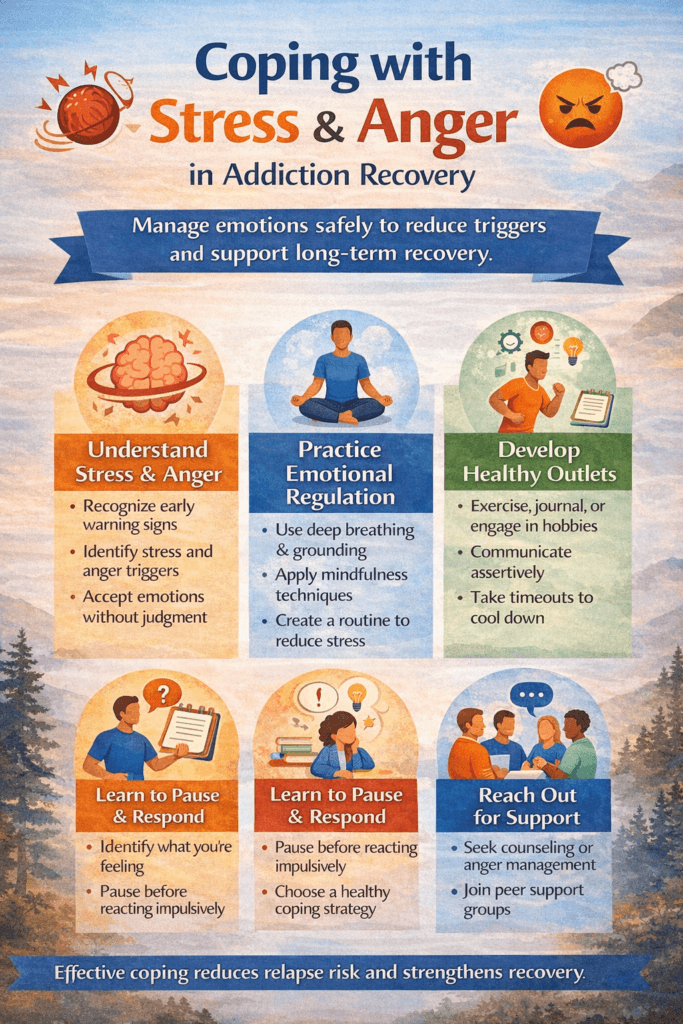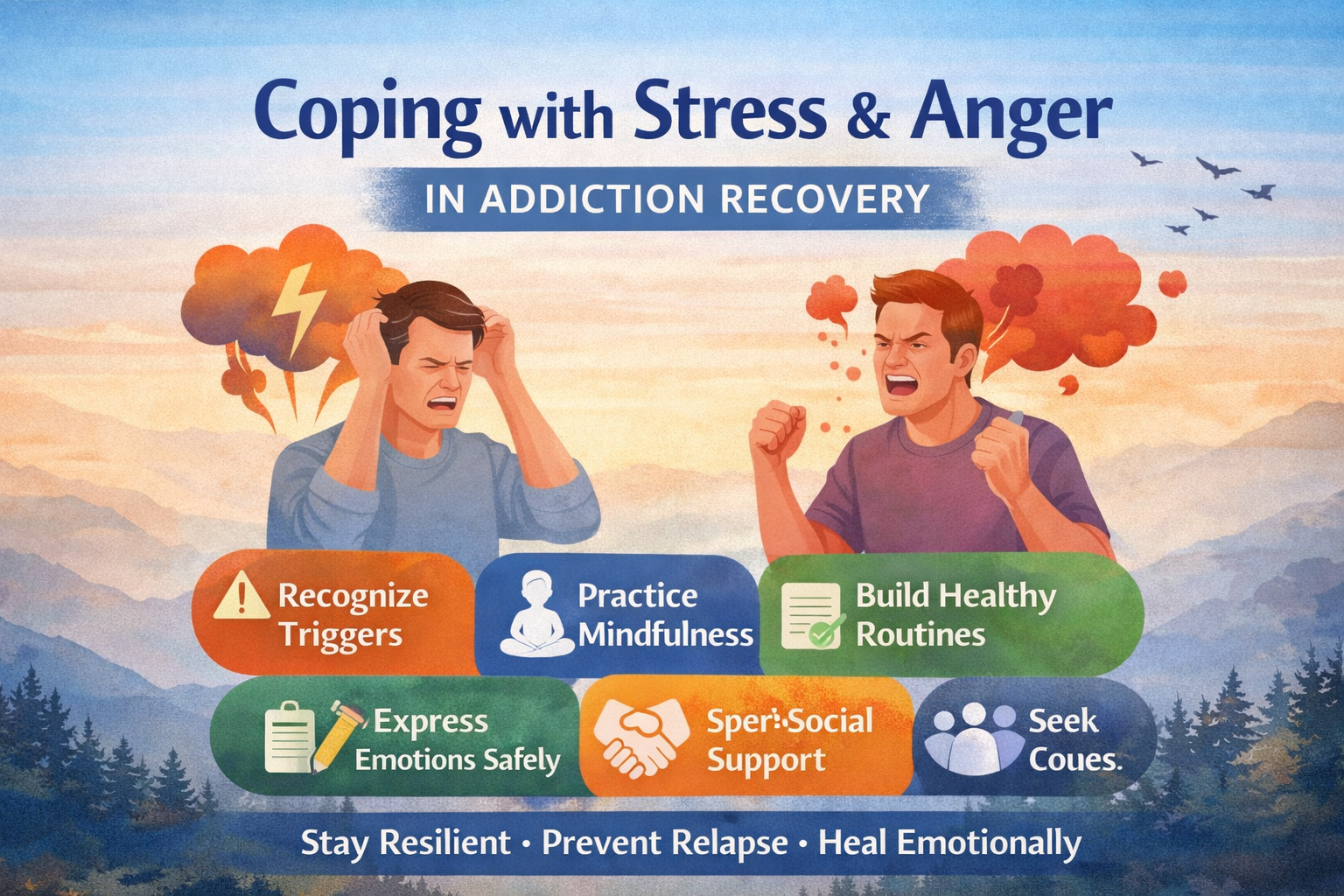
Coping with stress and anger is a critical part of addiction recovery, as these emotions are common triggers for cravings and relapse. Many individuals previously relied on substances to manage overwhelming feelings, making emotional regulation one of the most important skills to develop in recovery. Stress and anger are not signs of weakness or failure—they are natural emotional responses that require healthy coping strategies. Learning how to manage these emotions safely supports stability, decision-making, and long-term recovery.
Coping with Stress & Anger in Addiction Recovery
Stress and anger are unavoidable parts of life—but in addiction recovery, they can become powerful relapse triggers if not managed effectively. Many individuals used substances in the past to numb stress, suppress anger, or escape overwhelming emotions. Recovery requires learning new ways to cope with these feelings rather than avoiding them. Developing healthy stress and anger management skills is essential for emotional regulation, relapse prevention, and long-term stability.
Stress activates the body’s fight-or-flight response, increasing cortisol levels and impairing judgment. When stress is chronic or unaddressed, cravings intensify, and coping capacity weakens. In recovery, stress management begins with awareness—recognizing early signs such as irritability, restlessness, tension, or fatigue. Practical strategies include structured daily routines, regular physical activity, mindfulness practices, adequate sleep, and realistic scheduling. Reducing overload protects emotional balance and decision-making.
Anger is a natural emotion, but it is often misunderstood in recovery. Many individuals fear anger because it feels intense or out of control, while others suppress it due to shame or past consequences. Unexpressed anger can build into resentment, emotional exhaustion, and relapse risk. Recovery focuses on learning to acknowledge anger without acting on it. Healthy outlets include deep breathing, journaling, assertive communication, therapy, movement, and taking time-outs before reacting.
A key recovery skill is emotional regulation—the ability to pause between feeling and action. Instead of reacting impulsively, individuals learn to ask, “What am I feeling, and what do I need right now?” This pause provides space for healthier choices, such as seeking support, using grounding techniques, or stepping away from triggering situations.
Support systems play a critical role. Therapy, peer recovery groups, and anger management programs provide tools for processing emotions safely. These environments normalize stress and anger as part of recovery rather than signs of failure.
Coping with stress and anger does not mean eliminating these emotions—it means learning to respond to them constructively. As coping skills strengthen, emotional intensity decreases, confidence grows, and recovery becomes more resilient. In addiction recovery, managing stress and anger transforms emotional challenges into opportunities for growth, self-control, and lasting healing.
Self-Management Strategies for Coping with Stress & Anger in Addiction Recovery
In addiction recovery, stress and anger are not signs of failure—they are signals that self-management skills are needed. Many people previously relied on substances to cope with overwhelming emotions. Recovery requires learning how to manage stress and anger intentionally, consistently, and safely. Self-management strategies give individuals the tools to regulate emotions, reduce cravings, and protect long-term recovery.
Self-awareness is the foundation of self-management. Stress and anger often escalate before they are fully recognized. Physical signs such as muscle tension, headaches, rapid thoughts, irritability, or fatigue are early warning signals. Learning to recognize these cues enables individuals to intervene before emotions escalate into cravings or impulsive behavior.
Structured routines reduce emotional overload. Predictable schedules for sleep, meals, work, and self-care create stability for the nervous system. When life feels chaotic, stress increases, and emotional regulation decreases. Simple routines help the brain feel safe and supported, making anger and frustration easier to manage.
Emotional regulation techniques are essential self-management tools. Practices such as deep breathing, grounding exercises, progressive muscle relaxation, and mindfulness slow the body’s stress response. These techniques help create a pause between emotion and action, thereby enabling healthier choices rather than reactive behavior.
Healthy expression of anger is critical in recovery. Suppressing anger can be just as harmful as acting out. Self-management includes identifying the source of anger, naming the emotion, and choosing constructive outlets such as journaling, physical movement, assertive communication, or therapy. Anger becomes manageable when it is acknowledged and released safely.
Problem-solving skills reduce stress by restoring a sense of control. Breaking challenges into smaller, manageable steps prevents overwhelm. Setting realistic goals, asking for help, and focusing on what can be changed help reduce frustration and emotional exhaustion.
Support-seeking is part of self-management, not a weakness. Reaching out to a sponsor, peer, therapist, or trusted person during high-stress moments prevents isolation and emotional buildup. Recovery is strengthened through connection.
Effective self-management does not eliminate stress or anger—it builds the capacity to respond wisely. Over time, these strategies strengthen confidence, resilience, and emotional balance. In addiction recovery, learning to manage stress and anger transforms emotional challenges into opportunities for growth, stability, and lasting recovery.
Family Support Strategies for Coping with Stress & Anger in Addiction Recovery
Family support plays a critical role in addiction recovery, especially when individuals are learning new ways to cope with stress and anger. These emotions are common during recovery as the brain and nervous system adjust and old coping patterns are replaced. When families understand how to respond supportively, they can reduce the risk of relapse, strengthen relationships, and promote emotional healing.
Understanding stress and anger in recovery is the first step. Irritability, frustration, or emotional withdrawal are often signs of stress overload rather than resistance or defiance. Families who view these reactions through a recovery lens are better able to respond with empathy instead of criticism. This understanding reduces conflict and helps maintain emotional safety.
Creating a calm and predictable environment supports emotional regulation. Consistent routines, clear expectations, and reduced chaos help lower stress levels. Simple actions such as shared meals, regular check-ins, and minimizing conflict during high-stress times provide stability that supports recovery.
Healthy communication is essential when anger arises. Families can model respectful, non-confrontational communication by listening without interrupting, avoiding blame, and using calm language. Encouraging open expression of feelings helps prevent emotional buildup and reduces the likelihood of explosive reactions.
Setting and respecting boundaries protects everyone involved. Families can support recovery by maintaining clear behavioral boundaries while remaining emotionally supportive. Boundaries reduce resentment, prevent enabling, and create a structure that helps manage stress and anger constructively.
Encouraging healthy coping skills reinforces recovery efforts. Families can support stress management by promoting rest, physical activity, therapy, and recovery meetings. Participating in positive activities together—such as walking, cooking, or mindfulness practices—also strengthens connection while reducing emotional tension.
Seeking family support and education benefits everyone. Family therapy, support groups, and recovery education help loved ones understand emotional regulation and their role in the recovery process. These resources reduce burnout and improve long-term outcomes.
In addiction recovery, families do not need to fix emotions—they need to support healthy responses to them. When families respond to stress and anger with patience, structure, and understanding, they become powerful allies in building emotional resilience and sustained recovery.
Community Resource Strategies for Coping with Stress & Anger in Addiction Recovery
Coping with stress and anger is a central challenge in addiction recovery, and community resources play a vital role in providing support beyond the individual and family level. Stressors such as financial strain, housing instability, legal issues, trauma, and social isolation can overwhelm coping capacity and increase relapse risk. Community-based services help reduce these pressures while teaching healthy emotional regulation skills.
Counseling and behavioral health services are foundational community supports. Outpatient therapy, trauma-informed care, and anger management programs offer structured environments for learning emotional regulation, stress reduction, and conflict resolution. These services help individuals understand emotional triggers and practice coping skills in safe, guided settings.
Peer recovery support services provide connection and shared understanding. Peer specialists and recovery groups offer real-life strategies for managing stress and anger without substances. These relationships reduce isolation, normalize emotional struggles, and reinforce accountability through lived experience.
Recovery community centers and mutual-help groups create safe spaces for expression and support. These environments encourage open discussion of emotional challenges, provide educational workshops, and offer social activities that reduce stress and support the development of healthy routines.
Practical support services significantly lower stress levels. Housing assistance, employment programs, transportation services, childcare support, and legal aid help address external pressures that often fuel anger and emotional overload. When basic needs are stabilized, emotional regulation becomes more achievable.
Wellness and skill-building programs further strengthen coping capacity. Community-based exercise programs, mindfulness classes, vocational training, and creative outlets provide healthy ways to release tension and build confidence. These resources help individuals replace substance-based coping with sustainable habits.
Effective community strategies also rely on coordination. When healthcare providers, peer services, and social support systems collaborate, individuals receive consistent, compassionate care. This integrated approach reduces gaps that can lead to increased stress and emotional dysregulation.
In addiction recovery, community resources do more than offer services—they create environments that support emotional balance and resilience. By addressing both emotional and practical stressors, communities play a crucial role in helping individuals cope with stress and anger while sustaining long-term recovery.
Frequently Asked Questions
Here are some common questions:
Why are stress and anger common in addiction recovery?
Stress and anger increase during recovery because the brain is adjusting without substances that once numbed emotions. Life challenges that were avoided or suppressed may resurface, making emotional regulation a key recovery skill.
Are stress and anger signs of relapse risk?
They can be. When unmanaged, stress and anger increase cravings and impulsivity. When recognized early and addressed with coping skills, they become manageable and less likely to lead to relapse.
Is feeling angry in recovery normal?
Yes. Anger is a natural emotion and does not mean recovery is failing. Learning how to express and manage anger safely is part of the healing process.
What happens if anger is suppressed in recovery?
Suppressed anger can build into resentment, emotional exhaustion, and increased relapse risk. Healthy expression helps release tension and restore emotional balance.
What are healthy ways to cope with stress in recovery?
Healthy coping strategies include structured routines, physical activity, deep breathing, mindfulness, adequate sleep, journaling, and asking for support.
How can someone pause before reacting when angry?
Practicing grounding techniques, slow breathing, counting, stepping away from the situation, or using a short time-out can create space between emotion and action.
Can coping skills replace therapy or treatment?
No. Coping skills are most effective when combined with professional treatment, counseling, medication-assisted care, and peer support.
How does emotional regulation reduce relapse risk?
Emotional regulation improves judgment, impulse control, and stress tolerance, making it easier to choose healthy responses instead of substance use.
How can families help someone cope with stress and anger?
Families can support recovery by responding calmly, avoiding blame, respecting boundaries, encouraging healthy routines, and supporting therapy or peer groups.
What role do community resources play in managing stress and anger?
Community resources provide counseling, anger management programs, peer support, housing assistance, and practical services that reduce stressors contributing to emotional overload.
Do stress and anger decrease over time in recovery?
Yes. As coping skills strengthen and routines stabilize, emotional intensity often decreases. Emotions become easier to manage with practice and support.
What should someone do if stress feels overwhelming?
Reaching out immediately to a trusted person, sponsor, therapist, or support group can prevent emotional escalation and reduce relapse risk.
Is avoiding stress the goal of recovery?
No. Recovery focuses on learning to cope with stress effectively, not avoiding it entirely. Stress is part of life; coping skills make it manageable.
Can coping with stress and anger improve relationships?
Yes. Healthy emotional regulation improves communication, reduces conflict, and strengthens trust with family, friends, and support systems.
What is the main goal of coping with stress and anger in recovery?
The goal is to respond to emotions safely and constructively, protect recovery, and build long-term emotional resilience.
Conclusion
Recovery does not require eliminating stress or anger, but learning how to respond to them constructively. With effective coping skills, supportive relationships, and access to community resources, individuals can regulate emotions without returning to substance use. Managing stress and anger strengthens resilience, improves relationships, and reduces the risk of relapse. In addiction recovery, the ability to cope with difficult emotions transforms challenges into opportunities for growth, emotional balance, and lasting healing.
Video: How Unmanaged Anger Destroys Sobriety #AddictionRecovery #StressAndAnger #RecoverySupport