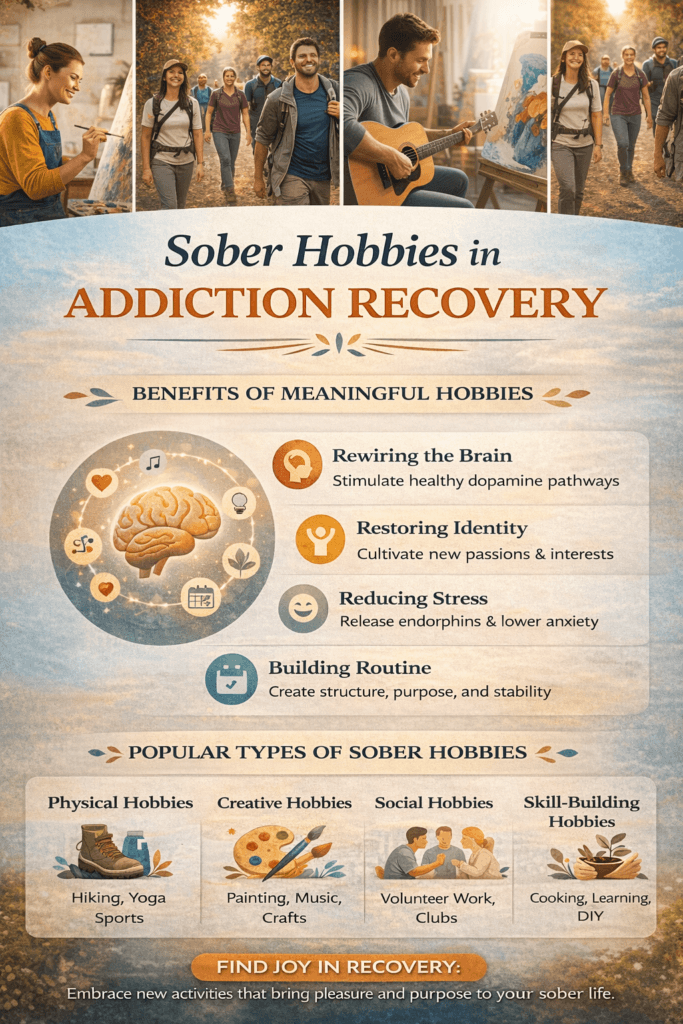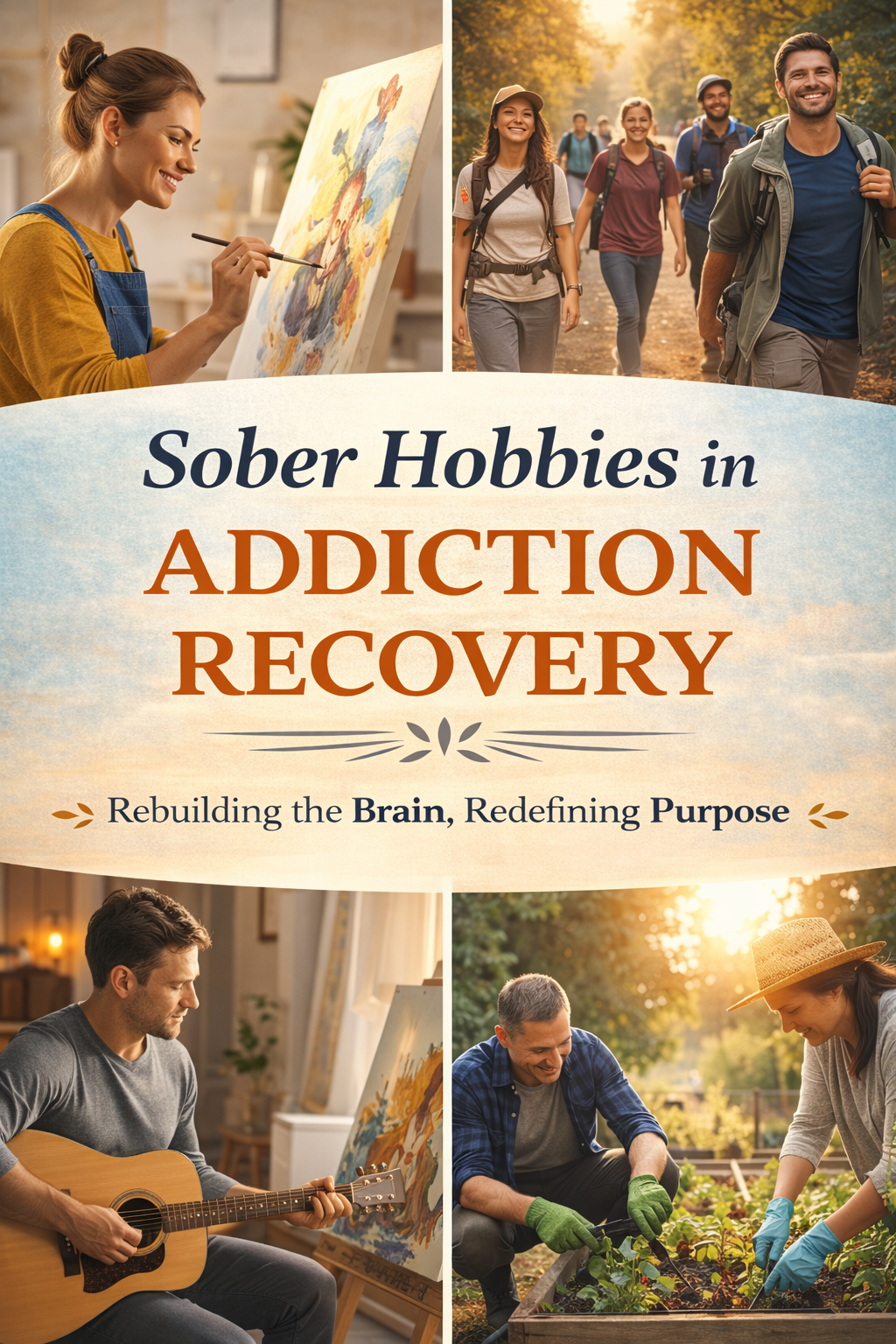
Sober hobbies are vital in addiction recovery because they help rebuild identity, restore natural reward pathways, and add structure to daily life. Addiction often replaces meaningful activities and relationships with substance-focused routines, leaving many people feeling bored or emotionally flat when sobriety begins. This is part of the brain’s healing process as dopamine systems recalibrate. Engaging in activities such as exercise, creativity, volunteering, learning, or spiritual practice supports healthy brain chemistry and reinforces a life that is no longer centered on substances. More than distractions, sober hobbies help retrain the brain and restore purpose.
Sober Hobbies in Addiction Recovery: Rewiring the Brain Through Meaningful Activity
One of the most underestimated tools in addiction recovery is the intentional development of sober hobbies. Addiction narrows life around a single source of stimulation, gradually replacing diverse interests with substance-centered routines. When sobriety begins, individuals are often left asking a critical question: What do I do now? Sober hobbies provide the answer by helping rebuild identity, restore dopamine balance, and create sustainable sources of enjoyment.
Substance use overstimulates the brain’s reward system, particularly dopamine pathways. Over time, natural pleasures—music, exercise, creativity, relationships—lose their intensity. In early recovery, boredom and emotional flatness are common as the brain recalibrates. Engaging in structured hobbies stimulates healthy neurochemical release, gradually strengthening the brain’s response to natural rewards.
Physical hobbies such as hiking, weight training, yoga, or cycling can enhance mood by increasing endorphin and serotonin production. These activities reduce stress hormones and improve sleep regulation—both of which are critical protective factors against relapse. Creative hobbies like painting, writing, music, woodworking, or photography provide emotional expression and cognitive engagement. Creative flow states activate reward circuits while strengthening focus and self-efficacy.
Social hobbies add another layer of protection. Joining sports leagues, book clubs, faith communities, volunteer groups, or recovery-based recreational programs fosters connection without alcohol or drugs. Social bonding releases oxytocin, reinforcing belonging and reducing isolation—a known relapse trigger.
Skill-based hobbies also rebuild confidence. Learning a new language, taking cooking classes, or pursuing vocational training supports long-term identity transformation. Addiction often erodes self-esteem; mastering new skills restores a sense of competence and forward momentum.
Importantly, sober hobbies are not distractions—they are replacements. They fill time once occupied by substance use and provide structured engagement during vulnerable hours. Consistency matters more than intensity. Over time, repetition strengthens neural pathways associated with pleasure, purpose, and stability.
Sober hobbies ultimately shift recovery from mere abstinence to lifestyle transformation. They help individuals rediscover curiosity, creativity, movement, and connection. In doing so, they rewire not only the brain, but the narrative of what life in recovery can become: active, meaningful, and genuinely fulfilling.
Self-Management Strategies for Using Sober Hobbies in Addiction Recovery
Sober hobbies are powerful tools in addiction recovery, but their effectiveness depends on intentional self-management. Without structure, even healthy activities can become inconsistent or lose momentum. Strategic planning transforms casual hobbies into protective recovery habits that stabilize mood, reduce relapse risk, and rebuild identity.
The first strategy is scheduling. Recovery thrives on structure. Designating specific days and times for hobbies reduces idle time—often a trigger for cravings. Whether it is exercising every morning, attending a weekly art class, or practicing music each evening, consistency strengthens neural pathways associated with natural reward.
Second, start small and build gradually. Early recovery can involve low energy and reduced motivation as the brain recalibrates dopamine function. Setting manageable goals—20 minutes of walking, a short journaling session, or a beginner-level class—prevents overwhelm. Progression should be sustainable, not perfection-driven.
Third, track engagement and mood shifts. Keeping a simple log of hobby participation and emotional response helps individuals identify which activities genuinely enhance well-being. This encourages data-driven recovery decisions rather than relying solely on fluctuating motivation.
Fourth, align hobbies with values. Recovery is about identity transformation. Selecting hobbies aligned with personal values—creativity, service, physical health, spirituality, learning—can foster intrinsic motivation. When hobbies align with long-term goals, they become part of a meaningful life narrative rather than mere distractions.
Fifth, diversify activities. Engaging in physical, creative, and social hobbies activates different neural circuits and reduces monotony. Variety prevents boredom and maintains novelty, both of which are important for healthy dopamine stimulation.
Finally, practice self-compassion. Motivation will fluctuate. Missing a session does not equal failure. Recovery requires flexibility. The goal is consistency over time, not rigid adherence.
Self-managed sober hobbies help shift recovery from avoidance to engagement. By scheduling intentionally, setting achievable goals, tracking progress, aligning with values, diversifying experiences, and maintaining self-compassion, individuals transform hobbies into long-term recovery assets. Over time, these structured activities rebuild confidence, stimulate healthy reward systems, and make sobriety not only sustainable but also enjoyable.
Family Support Strategies for Encouraging Sober Hobbies in Addiction Recovery
Sober hobbies can be transformative in addiction recovery, but family involvement often determines whether those hobbies become consistent and meaningful. Addiction frequently restructures family dynamics around crisis management, mistrust, and emotional strain. Recovery offers an opportunity not only for individual healing but for rebuilding shared experiences that foster connection and joy. Families who actively support sober hobbies help reinforce identity change, strengthen motivation, and reduce relapse risk.
One key strategy is participation. When family members join in hobbies—such as hiking, cooking, fitness classes, gardening, or creative projects—they normalize the sober enjoyment of these activities. Shared experiences stimulate bonding hormones like oxytocin and reinforce the message that pleasure and connection are possible without substances.
Encouragement without control is equally important. Families should avoid turning hobbies into performance metrics or surveillance tools. Instead of asking, “Did you go to the gym today?” a more supportive approach might be, “How did your workout feel?” This shifts the focus from compliance to personal growth and emotional experience.
Providing logistical support can also strengthen consistency. Offering transportation, adjusting family schedules, helping with childcare, or contributing modest resources for classes or equipment reduces practical barriers. These actions communicate investment in recovery without overstepping autonomy.
Celebrating effort—not just outcomes—is another powerful strategy. Early recovery may involve low motivation and emotional fluctuation. Acknowledging commitment to attending a class or practicing a skill reinforces progress. Small affirmations strengthen intrinsic motivation and rebuild self-confidence.
Families should also model healthy leisure behaviors. When loved ones demonstrate balanced routines—exercise, hobbies, social engagement—they create an environment where sober activities are valued. Recovery thrives in households where meaningful activity is visible and normalized.
Finally, maintaining healthy boundaries remains essential. Family support does not mean overinvolvement. Encouraging independence in hobby selection and goal-setting fosters ownership. Recovery is strongest when individuals feel empowered rather than managed.
Family-supported sober hobbies shift recovery from isolation to shared growth. Through participation, encouragement, logistical help, celebration of effort, modeling healthy behavior, and respectful boundaries, families help transform hobbies into powerful tools for lasting sobriety and renewed connection.
Community Resource Strategies for Supporting Sober Hobbies in Addiction Recovery
Sober hobbies are most sustainable when reinforced beyond the home. Community resources provide structure, accountability, a sense of belonging, and access to opportunities that many individuals may not be able to create on their own. Addiction often shrinks social networks and limits exposure to meaningful activities. Community engagement expands recovery from private effort to shared participation.
One effective strategy is connecting individuals with recovery-oriented community centers. Many areas offer sober recreation nights, art workshops, fitness groups, and skill-building classes specifically designed for individuals in recovery. These environments reduce exposure to substance-related triggers while fostering healthy peer interaction.
Partnerships between treatment programs and local organizations also strengthen hobby integration. Collaboration with gyms, libraries, adult education programs, and parks departments can provide discounted memberships or structured classes. Access reduces financial barriers that often prevent consistent participation.
Peer-led hobby groups are particularly powerful. Hiking clubs, music circles, creative writing groups, or sports leagues composed of individuals in recovery combine accountability with shared identity. Group-based hobbies enhance a sense of belonging, which is one of the strongest protective factors against relapse.
Volunteer and service-based programs are another essential resource. Community gardens, food banks, mentoring programs, and faith-based initiatives provide purposeful activity. Service fosters meaning and social contribution—key drivers of sustained joy in sobriety.
Educational and vocational resources also play a role. Community colleges, workforce development programs, and skill certification workshops help individuals turn hobbies into long-term skills. Learning strengthens cognitive engagement and rebuilds self-efficacy damaged by addiction.
Transportation assistance, scholarship programs, and flexible scheduling further reduce access barriers. Recovery support systems function best when they remove practical obstacles that undermine engagement.
Community resource strategies transform sober hobbies from optional activities into integrated recovery supports. By creating structured, inclusive, and affordable pathways to meaningful engagement, communities help individuals rebuild identity, stimulate healthy reward pathways, and experience sustainable joy. Recovery becomes not just abstinence—but reintegration into a life rich with purpose and connection.
Frequently Asked Questions
Here are some common questions:
1. Why are sober hobbies important in recovery?
Sober hobbies help retrain the brain’s reward system after substance use has overstimulated dopamine pathways. They provide healthy stimulation, structure, and meaning, reducing boredom and the risk of relapse.
2. Can hobbies really “rewire” the brain?
Yes. Repeated engagement in positive activities strengthens neural pathways associated with natural pleasure, motivation, and emotional regulation. Over time, the brain becomes more responsive to everyday rewards.
3. What types of hobbies are most helpful?
Physical hobbies, such as exercise, improve mood and reduce stress. Creative hobbies such as music or art encourage emotional expression. Social hobbies foster connection, and skill-building hobbies restore confidence. A balanced mix is often most effective.
4. What if I don’t feel motivated to start anything?
Low motivation is common in early recovery. Start small—10–20 minutes of activity. Consistency matters more than intensity. Motivation often follows action rather than preceding it.
5. How do hobbies reduce relapse risk?
They fill unstructured time, reduce isolation, improve mood regulation, and provide alternative coping mechanisms for stress and cravings.
6. Should hobbies replace treatment or therapy?
No. Hobbies complement professional treatment, therapy, medication-assisted treatment, and support groups. They are part of a comprehensive recovery plan, not a substitute for it.
7. Can hobbies become addictive themselves?
Any activity can become excessive if it is used to avoid responsibilities or emotional growth. Healthy hobbies are balanced, purposeful, and aligned with recovery values.
8. What if I lose interest after a few weeks?
It is normal to experiment. Try different activities until you discover what feels meaningful. Recovery involves rediscovering identity, and exploration is part of that process.
9. Are social hobbies better than solitary ones?
Both have value. Social hobbies enhance connection and accountability, while solitary hobbies promote reflection and self-regulation. Combining both creates balance.
10. How do I choose the right hobby?
Start with curiosity rather than perfection. Ask: What did I enjoy before addiction? What have I always wanted to try? What aligns with my values? The goal is engagement, not mastery.
Conclusion
Sober hobbies transform recovery from mere abstinence into active life reconstruction. Through consistent participation in meaningful activities, individuals gradually strengthen motivation, self-confidence, and emotional stability. Physical, creative, social, and service-oriented hobbies stimulate natural pleasure systems while reducing isolation and the risk of relapse. Over time, these activities shift identity from “person avoiding substances” to “person building a fulfilling life.” Recovery becomes sustainable not because substances are resisted, but because life becomes engaging and purposeful. Sober hobbies ultimately represent a powerful bridge—from survival in early sobriety to thriving in long-term recovery.
Video: The dopamine hack that broke my addiction cycle #recovery #motivation #sobriety