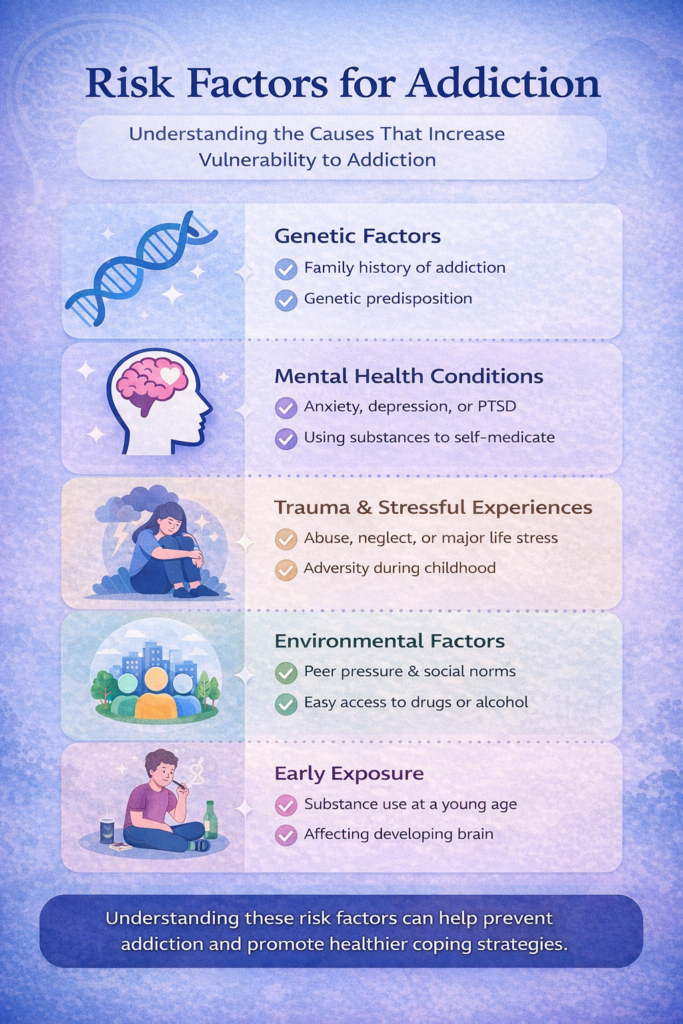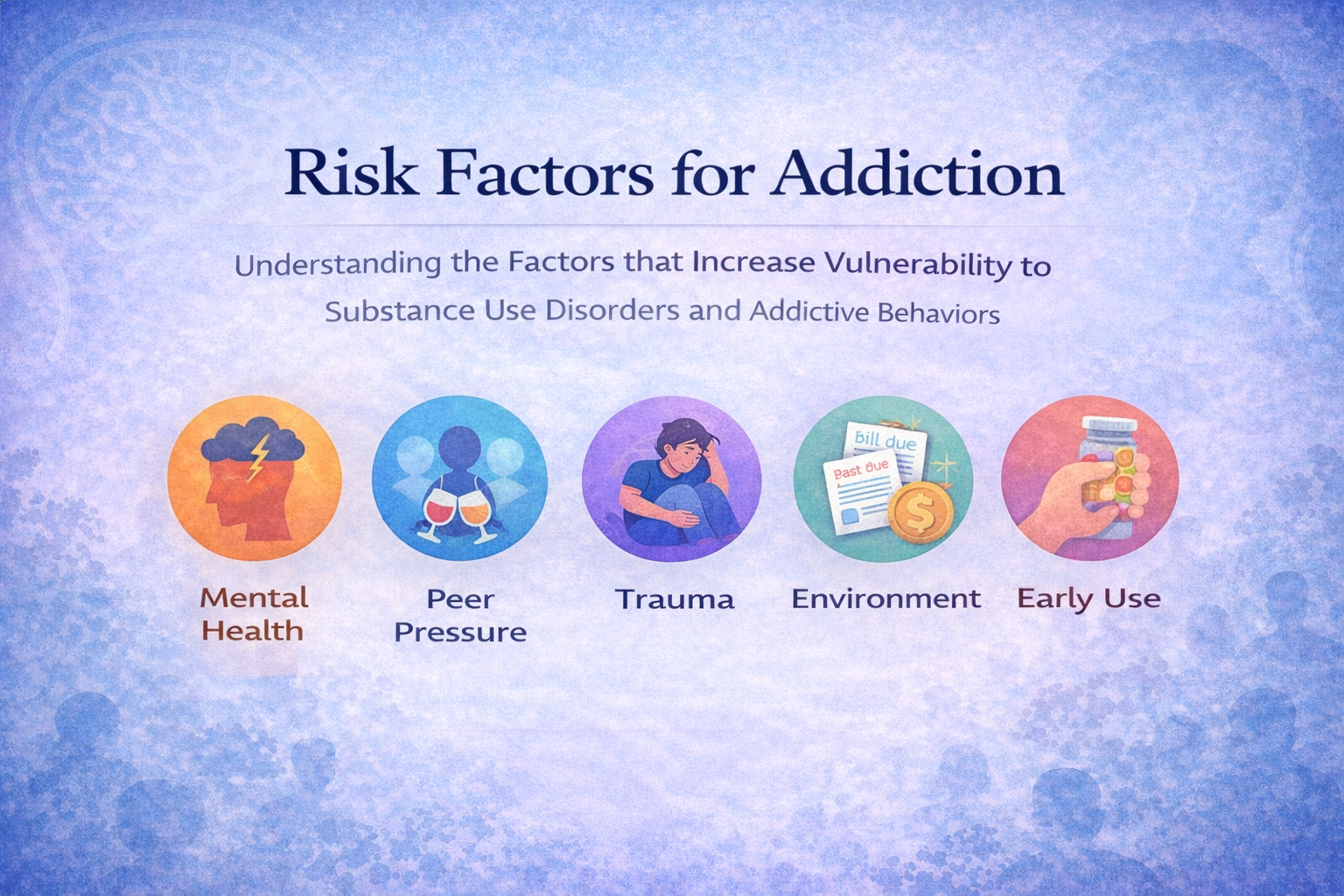
Addiction is a complex condition influenced by many different factors that interact with one another over time. Rather than developing from a single cause, addiction often results from a combination of biological, psychological, and environmental risk factors that increase a person’s vulnerability. Biological influences, such as genetics and brain chemistry, can make some individuals more sensitive to the rewarding effects of substances or certain behaviors. Psychological factors, including mental health conditions like depression, anxiety, or trauma-related stress, may lead individuals to use substances or addictive behaviors as a way to cope with emotional pain. Environmental influences, such as peer pressure, family dynamics, community norms, and exposure to substance use at an early age, can also play a significant role in shaping behaviors and choices. Although these factors can increase the likelihood of addiction, they do not guarantee that a person will develop it. Many individuals with risk factors never become addicted, especially when protective factors such as strong family support, education, healthy coping skills, and access to mental health resources are present. Understanding these risk factors is important because it helps individuals, families, and communities recognize potential warning signs early and take preventive steps. By promoting awareness, encouraging healthy coping strategies, and creating supportive environments, society can help reduce the risk of addiction and support overall well-being.
Who Is Most Likely to Become an Addict? Understanding Risk Factors for Addiction
Addiction does not affect only one type of person. People of all ages, backgrounds, and lifestyles can develop addictive behaviors. However, research shows that certain biological, psychological, and environmental factors can increase a person’s risk of becoming addicted. Understanding these risk factors helps individuals, families, and communities recognize warning signs early and take steps to prevent addiction.
Addiction often develops when people use substances, behaviors, or emotional patterns to cope with stress, trauma, or difficult life experiences. While no single factor guarantees addiction, some individuals are more vulnerable than others.
Genetic and Biological Factors
One of the strongest predictors of addiction risk is genetics. Studies suggest that genetics may account for a significant portion of a person’s vulnerability to addiction. If a person has close family members who struggle with substance use or addictive behaviors, they may have a higher chance of developing similar patterns.
Biological factors can also influence addiction. Differences in brain chemistry, especially in the brain’s dopamine reward system, may make some individuals more sensitive to the pleasurable effects of substances or certain behaviors. As a result, they may be more likely to repeat those behaviors and eventually develop dependence.
Mental Health Conditions
People who struggle with mental health conditions are often at higher risk for addiction. Disorders such as anxiety, depression, post-traumatic stress disorder (PTSD), and attention-deficit/hyperactivity disorder (ADHD) can increase vulnerability.
In many cases, individuals use substances or compulsive behaviors as a form of self-medication to temporarily relieve emotional pain or psychological distress. Unfortunately, this coping strategy can quickly lead to dependence and addiction.
Trauma and Stressful Life Experiences
Exposure to trauma, abuse, neglect, or significant life stress can greatly increase the risk of addiction. Adverse childhood experiences, such as unstable family environments or emotional neglect, may influence how individuals cope with stress later in life.
When healthy coping skills are not developed early, individuals may turn to substances, behaviors, or emotional patterns that provide temporary relief from emotional pain.
Environmental and Social Influences
A person’s environment can also play a major role in addiction risk. Factors such as peer pressure, easy access to substances, and social norms surrounding substance use can influence behavior.
For example, individuals who grow up in communities where substance use is common may be more likely to experiment with drugs or alcohol. Social environments that encourage risky behaviors can increase the likelihood of addiction developing over time.
Age and Early Exposure
Young people are particularly vulnerable to addiction because the brain is still developing during adolescence and early adulthood. Early exposure to substances such as alcohol, nicotine, or drugs can alter brain development and increase the likelihood of long-term addiction.
The earlier a person begins using addictive substances or engaging in compulsive behaviors, the greater the risk of developing dependence later in life.
Lack of Healthy Coping Skills
Individuals who struggle with emotional regulation or stress management may be more likely to develop addictive behaviors. Without healthy coping strategies, people may turn to substances, behaviors, or emotional patterns to escape negative feelings.
Developing skills such as problem-solving, emotional awareness, stress management, and social support can significantly reduce addiction risk.
Conclusion
Addiction does not have a single cause, and anyone can become vulnerable under certain circumstances. However, individuals with a combination of genetic predisposition, mental health challenges, trauma, environmental influences, and limited coping skills may face a higher risk.
Understanding who is most likely to develop addiction helps communities focus on prevention, education, and early intervention. By recognizing these risk factors and promoting healthier coping strategies, society can better support individuals in avoiding addiction and building healthier lives.
Self-Management Strategies for Addressing Risk Factors for Addiction
Addiction rarely develops from a single cause. Instead, it often results from a combination of genetic, psychological, environmental, and social risk factors. While some of these factors cannot be changed, individuals can take active steps to manage their risks and strengthen their resilience. Self-management strategies are practical approaches that help people recognize triggers, build healthy habits, and develop coping skills that reduce the likelihood of addiction.
By learning how to manage stress, emotions, and environmental influences, individuals can protect their well-being and make healthier choices even in challenging situations.
Understanding Personal Risk Factors
The first step in self-management is self-awareness. Individuals benefit from identifying personal factors that may increase their vulnerability to addiction. These may include family history of substance use, mental health challenges, high stress levels, or exposure to environments where addictive behaviors are common.
Recognizing these influences allows individuals to be more mindful of situations that could increase the temptation to rely on harmful coping mechanisms.
Self-reflection tools such as journaling, counseling, or self-assessment questionnaires can help people better understand their behavioral patterns and emotional responses.
Developing Healthy Coping Skills
Many addictions develop when individuals use substances or behaviors to escape difficult emotions such as stress, anxiety, loneliness, or sadness. Learning healthier coping skills can significantly reduce this risk.
Examples of effective coping strategies include:
- Practicing mindfulness or meditation
- Engaging in regular physical activity
- Talking with trusted friends or mentors
- Practicing relaxation techniques such as deep breathing
- Developing creative hobbies like art, music, or writing
These activities help regulate emotions and provide healthier outlets for stress and frustration.
Managing Stress and Emotional Triggers
Stress is one of the most common contributors to addictive behaviors. Effective self-management involves identifying emotional triggers and learning to respond to them constructively.
Individuals can reduce stress by:
- Creating balanced daily routines
- Prioritizing sleep and healthy nutrition
- Breaking large tasks into manageable steps
- Practicing time management skills
Developing emotional regulation skills also helps individuals respond thoughtfully rather than react impulsively to difficult situations.
Building Strong Support Systems
A supportive network of friends, family members, mentors, or community groups can play an important role in addiction prevention. Social support provides encouragement, accountability, and emotional connection during stressful periods.
Healthy relationships also help individuals feel less isolated and more confident in managing life challenges without turning to harmful behaviors.
Seeking professional support, such as counseling or therapy, can also help individuals develop stronger coping strategies and address underlying emotional concerns.
Creating Healthy Lifestyle Habits
Maintaining a healthy lifestyle strengthens both physical and mental well-being, making individuals more resilient to addiction risk factors. Key habits include:
- Regular physical exercise
- Balanced nutrition
- Consistent sleep routines
- Limiting exposure to high-risk environments
- Setting personal goals and maintaining a sense of purpose
Healthy routines provide stability and structure, which can reduce impulsive behaviors and improve overall self-control.
Conclusion
Although risk factors for addiction can increase vulnerability, they do not determine a person’s future. Through self-awareness, healthy coping strategies, supportive relationships, and positive lifestyle choices, individuals can actively manage these risks and protect their well-being.
Self-management empowers individuals to take control of their decisions and develop healthier ways of responding to stress and life challenges. By strengthening resilience and promoting healthy habits, people can significantly reduce the likelihood of addiction and build a more balanced and fulfilling life.
Family Support Strategies for Reducing Risk Factors for Addiction
Addiction often develops through a combination of genetic, emotional, environmental, and social risk factors. While individuals play an important role in managing their own behaviors, family members can have a powerful influence in preventing addiction and supporting healthy development. Families that provide emotional stability, open communication, and strong guidance can help reduce many of the risk factors that make addiction more likely.
By understanding how addiction risk develops and actively creating supportive home environments, families can help protect their loved ones and promote long-term well-being.
Promoting Open Communication
One of the most effective strategies families can use is maintaining honest and open communication. When family members feel comfortable discussing their thoughts, emotions, and challenges, they are more likely to seek support rather than turning to unhealthy coping mechanisms.
Parents and caregivers can encourage open communication by:
- Listening without judgment
- Asking thoughtful questions about feelings and experiences
- Discussing difficult topics such as stress, peer pressure, and substance use
- Creating a safe space where concerns can be shared openly
Strong communication builds trust and helps family members feel supported during difficult moments.
Creating a Stable and Supportive Environment
A stable home environment can significantly reduce many addiction risk factors. Families that provide consistent routines, emotional support, and positive reinforcement help individuals feel secure and valued.
Key elements of a supportive home environment include:
- Predictable daily routines
- Encouragement of healthy habits
- Positive role modeling
- Clear expectations for behavior
When individuals grow up in environments that emphasize structure and support, they are more likely to develop healthy coping skills and self-confidence.
Teaching Healthy Coping Skills
Many people develop addictive behaviors when they lack effective ways to handle stress, anxiety, or emotional pain. Families can play an important role by teaching and modeling healthy coping strategies.
Examples of positive coping skills include:
- Problem-solving and decision-making skills
- Stress management techniques such as exercise or relaxation
- Emotional expression through conversation or creative activities
- Encouraging hobbies and personal interests
Learning these skills early helps individuals manage difficult emotions in healthier ways.
Recognizing Early Warning Signs
Families who are aware of the warning signs of addiction risk can intervene early and provide support before problems become more serious. Some warning signs may include:
- Sudden changes in behavior or mood
- Withdrawal from family activities
- Declining academic or work performance
- Increased secrecy or risk-taking behavior
Recognizing these signs early allows families to address concerns through conversation, guidance, or professional support if necessary.
Encouraging Positive Social Connections
Healthy friendships and social environments can help reduce the risk of addiction. Families can support this by encouraging participation in activities such as sports, community programs, volunteer work, or other structured social opportunities.
Positive peer relationships help individuals develop confidence, social skills, and a sense of belonging without relying on harmful behaviors.
Seeking Professional Support When Needed
In some cases, families may benefit from professional guidance. Counseling, family therapy, and community support programs can help families learn effective strategies for managing stress, communication challenges, and potential addiction risks.
Professional support can strengthen family relationships and provide tools for navigating difficult situations.
Conclusion
Family support plays a vital role in reducing the risk factors associated with addiction. Through open communication, stable environments, healthy coping skills, and early intervention, families can help protect their loved ones from developing addictive behaviors.
By working together and fostering supportive relationships, families can create strong foundations that promote resilience, emotional well-being, and healthier life choices for everyone involved.
Community Resource Strategies for Reducing Risk Factors for Addiction
Addiction often develops through a combination of biological, psychological, and environmental risk factors. While individuals and families play an important role in prevention, communities also have a powerful influence in reducing addiction risks. Access to supportive programs, education, healthcare services, and safe environments can help individuals build resilience and develop healthier coping strategies.
Community resource strategies focus on creating systems of support that address risk factors early and provide opportunities for prevention, education, and recovery. When communities invest in these resources, they help individuals make healthier choices and reduce the likelihood of addiction developing.
Community Education and Prevention Programs
Education is one of the most effective ways to reduce addiction risk factors. Community organizations, schools, and public health programs can provide education about the causes of addiction, the dangers of substance misuse, and the importance of healthy coping strategies.
Prevention programs often include:
- Educational workshops on substance use and mental health
- School-based prevention programs for youth
- Public awareness campaigns about addiction risks
- Training programs for recognizing early warning signs
These programs help individuals make informed decisions and understand the consequences of harmful behaviors.
Access to Mental Health Services
Mental health challenges such as anxiety, depression, trauma, and stress are major risk factors for addiction. Communities that provide accessible mental health services can help individuals address these challenges before they lead to addictive behaviors.
Important community resources include:
- Counseling centers and therapy services
- Community mental health clinics
- Crisis intervention services
- Support groups for emotional well-being
Providing affordable and accessible mental health care helps individuals develop healthier ways to manage stress and emotional difficulties.
Youth Development and Mentoring Programs
Young people are particularly vulnerable to addiction risk factors because their brains are still developing, and they may be influenced by peer pressure or stressful environments. Community youth programs can provide positive outlets and supportive guidance.
Examples of helpful programs include:
- After-school programs and recreational activities
- Mentoring programs that connect youth with positive role models
- Leadership development and volunteer opportunities
- Educational and career support programs
These activities promote confidence, responsibility, and a sense of belonging.
Support Networks and Recovery Resources
Communities can also reduce addiction risks by creating strong networks of support for individuals who may already be struggling with early signs of addiction. Support groups and recovery programs help individuals feel less isolated and more accountable for their health.
Common resources include:
- Peer recovery support groups
- Community wellness programs
- Substance use counseling services
- Recovery centers and outreach programs
These networks help individuals connect with others who understand their challenges and can provide encouragement and guidance.
Safe and Healthy Community Environments
Communities that promote safe and healthy environments help reduce exposure to risk factors such as substance availability, crime, and social pressure. Efforts to create safe neighborhoods and supportive social spaces can protect vulnerable individuals.
Community initiatives may include:
- Safe recreational spaces and parks
- Community centers that provide healthy activities
- Programs that reduce substance availability among youth
- Partnerships between healthcare providers, schools, and local organizations
Healthy environments encourage positive behaviors and reduce opportunities for harmful activities.
Conclusion
Addiction prevention is not only an individual responsibility but also a community effort. By providing education, mental health services, youth programs, recovery resources, and safe environments, communities can significantly reduce the risk factors associated with addiction.
When communities work together to support prevention and early intervention, they create stronger systems that help individuals develop resilience, make healthier choices, and lead more balanced lives. These efforts not only protect individuals but also contribute to healthier and more supportive communities for everyone.
Frequently Asked Questions
Here are some common questions:
1. What are risk factors for addiction?
Risk factors for addiction are conditions or influences that increase the likelihood that a person may develop addictive behaviors or substance dependence. These factors may include genetics, mental health conditions, trauma, environmental influences, and early exposure to substances.
2. Do risk factors guarantee that someone will develop an addiction?
No. Risk factors increase the possibility of addiction, but they do not guarantee it will happen. Many people with risk factors never develop addiction, especially if they have strong coping skills, support systems, and healthy environments.
3. What role do genetics play in addiction risk?
Genetics can significantly influence addiction vulnerability. Individuals with a family history of addiction may have a higher risk because certain genetic traits can affect brain chemistry and how the brain responds to substances or rewarding behaviors.
4. How do mental health conditions increase addiction risk?
Mental health conditions such as depression, anxiety, PTSD, or ADHD can increase addiction risk because individuals may use substances or addictive behaviors to cope with emotional distress. This is often referred to as self-medication.
5. How does trauma contribute to addiction risk?
Experiences such as abuse, neglect, or major life stress can increase the likelihood of addiction. Trauma can affect emotional regulation and stress management, leading some individuals to seek relief through substances or addictive behaviors.
6. What environmental factors influence addiction risk?
Environmental influences include peer pressure, social norms, family environment, and access to substances. Living in an environment where substance use is common or easily accessible can increase the chances of experimentation and addiction.
7. Why is early exposure to substances considered a risk factor?
Using substances at a young age can interfere with brain development, particularly in areas responsible for decision-making and impulse control. Early exposure increases the chances of long-term substance use problems later in life.
8. Can strong support systems reduce addiction risk?
Yes. Supportive relationships with family, friends, mentors, and community members can help individuals manage stress, build healthy coping skills, and avoid risky behaviors.
9. What are protective factors against addiction?
Protective factors help reduce addiction risk. These may include:
- Strong family support
- Healthy coping skills
- Positive social relationships
- Access to mental health resources
- Participation in healthy activities such as sports or hobbies
10. Why is understanding risk factors important?
Understanding addiction risk factors helps individuals, families, and communities identify early warning signs, promote prevention strategies, and encourage healthier choices. Early awareness can significantly reduce the likelihood of addiction developing.
Conclusion
Although risk factors can increase the chances of addiction, they do not determine a person’s future. With awareness, education, and supportive resources, individuals can learn to manage these risks and develop healthier ways of coping with life’s challenges. Families, communities, and healthcare professionals all play important roles in identifying risk factors early and providing guidance and support. By addressing these factors through prevention, education, and intervention, it is possible to reduce the likelihood of addiction and promote healthier, more resilient individuals and communities.
Video: Family Addiction Runs Deep—Here’s Why It’s Actually Genetic #psychology #health