Addiction can profoundly impact the brain, body, and behavior, often leaving individuals feeling as though the damage is irreversible. Changes in brain chemistry, disrupted emotional regulation, and weakened decision-making can make recovery seem difficult and uncertain. However, research in neuroscience and behavioral health shows that the effects of addiction are not permanent. With time, consistency, and the right strategies, the brain and body have a remarkable ability to heal. Reversing addiction’s damage is not about instant transformation, but about gradual restoration—rebuilding neural pathways, strengthening coping skills, and creating healthier patterns that support long-term recovery.
Reversing Addiction’s Damage: Healing the Brain and Body
Addiction often leaves people feeling as though the damage is permanent—physically, mentally, and emotionally. Changes in the brain’s reward system, stress response, and decision-making processes can make recovery feel overwhelming. But neuroscience and clinical research tell a different story: much of the damage caused by addiction can be improved, and in many cases, significantly reversed over time.
Recovery is not just about stopping substance use—it is about healing.
Understanding the Damage
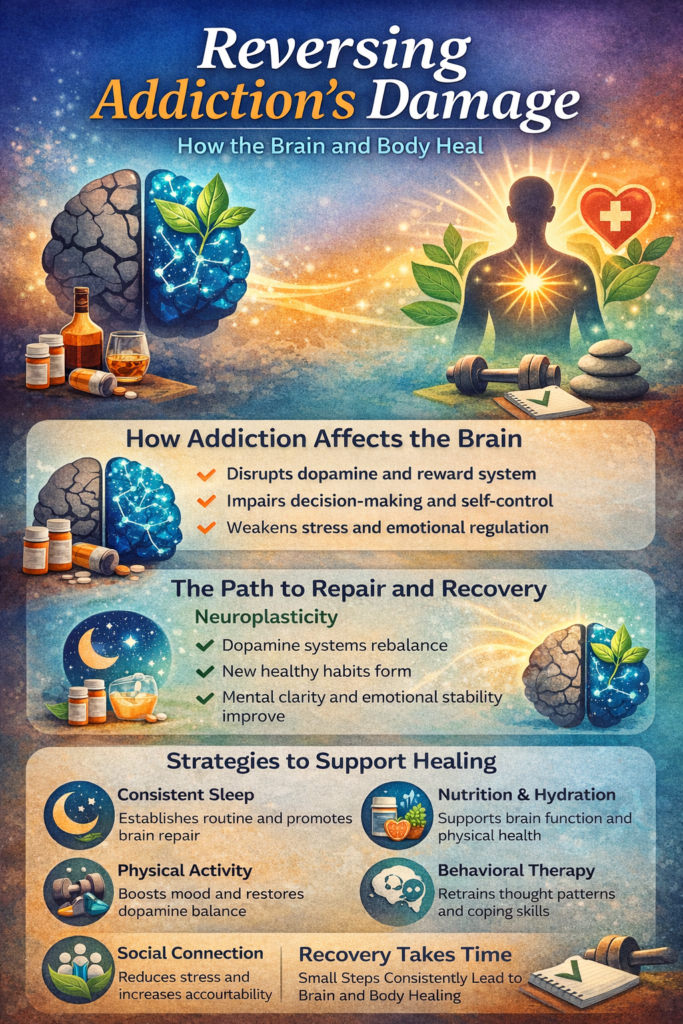
Substance use affects key areas of the brain, particularly those involved in reward, motivation, memory, and self-control. Repeated exposure to drugs or alcohol can:
- Disrupt dopamine signaling, reducing motivation and pleasure
- Strengthen habit pathways, making behaviors automatic
- Impair the prefrontal cortex, affecting decision-making and impulse control
Physically, addiction can also impact sleep, liver function, cardiovascular health, and overall energy levels.
The Brain’s Capacity to Heal
One of the most important concepts in recovery is neuroplasticity—the brain’s ability to reorganize and form new connections. When substance use stops:
- Dopamine systems begin to rebalance
- Cognitive function can improve
- Emotional regulation becomes more stable
While this process takes time, the brain is not fixed. It is adaptive and capable of recovery.
What Healing Looks Like Over Time
Recovery happens in stages, and progress is often gradual:
- Early Recovery (Days to Weeks):
Withdrawal symptoms, cravings, and emotional instability are common. Sleep and appetite may be disrupted. - Stabilization (Weeks to Months):
Mood begins to improve, thinking becomes clearer, and energy levels increase. Cravings may still occur, but are less intense. - Long-Term Recovery (Months to Years):
Brain function continues to improve. Habits weaken, and new, healthier patterns become more automatic.
Strategies That Support Healing
1. Consistent Sleep
Sleep is critical for brain repair. Establishing a regular sleep routine helps restore cognitive and emotional functioning.
2. Nutrition and Hydration
A balanced diet supports neurotransmitter production and physical recovery.
3. Physical Activity
Exercise naturally increases dopamine and improves mood, helping to rebuild the brain’s reward system.
4. Behavioral Therapy
Approaches like cognitive-behavioral therapy (CBT) help retrain thought patterns and reduce relapse risk.
5. Social Connection
Supportive relationships reduce stress and improve emotional resilience.
6. Stress Management
Mindfulness, breathing exercises, and relaxation techniques help regulate the nervous system.
Emotional Healing Matters Too
Addiction is not only biological—it is also emotional. Many people use substances to cope with stress, trauma, or discomfort. Recovery involves learning new ways to process emotions without relying on substances.
This can include:
- Building emotional awareness
- Developing healthy coping strategies
- Addressing underlying mental health concerns
Changing the Narrative
A common misconception is that addiction permanently “breaks” the brain. While addiction does cause real changes, recovery shows that healing is not only possible—it is expected with time and support.
Progress may not be linear. There may be setbacks. But each step toward recovery contributes to repair.
Final Thoughts
Reversing addiction’s damage is not about returning to who you were before—it’s about building a healthier, more resilient version of yourself. The brain and body are designed to heal, and with consistent effort, support, and time, meaningful recovery is achievable.
Healing doesn’t happen overnight—but it does happen.
Reversing Addiction’s Damage: Self-Management Strategies for Lasting Recovery
Recovering from addiction is not a single decision—it is a series of daily choices that gradually repair the brain, body, and behavior. While professional treatment and support systems are important, self-management is what sustains recovery over time. It is the ability to understand your triggers, regulate your responses, and build new patterns that support healing.
Reversing addiction’s damage begins with what you do consistently, not occasionally.
1. Build Structure into Your Day
Addiction often disrupts routine. Reintroducing structure helps stabilize both behavior and brain function.
- Wake and sleep at consistent times
- Plan meals, activities, and downtime
- Reduce long periods of unstructured time
Structure reduces impulsivity and creates predictability, which the brain needs during recovery.
2. Identify and Manage Triggers
Triggers—such as stress, certain environments, or emotional states—activate cravings.
Effective strategies include:
- Recognizing high-risk situations in advance
- Avoiding triggers when possible, especially early in recovery
- Developing alternative responses (walking, calling someone, journaling)
Awareness turns automatic reactions into intentional choices.
3. Practice “Pause and Choose.”
Cravings are often short but intense. Instead of reacting immediately:
- Pause when the urge arises
- Observe the feeling without judgment
- Choose a response aligned with your recovery goals
This strengthens the prefrontal cortex, improving self-control over time.
4. Prioritize Sleep and Recovery
Sleep is essential for brain healing. Substance use often disrupts natural sleep cycles, and restoring them is critical.
- Maintain a consistent sleep routine
- Limit screen time before bed
- Create a calming nighttime environment
Improved sleep enhances mood, focus, and emotional regulation.
5. Use Movement to Restore Brain Chemistry
Physical activity plays a key role in reversing addiction’s effects.
- Exercise increases dopamine naturally
- Reduces stress and anxiety
- Improves overall mood and energy
Even small, consistent movement—like daily walks—can make a significant difference.
6. Strengthen Emotional Regulation Skills
Many people use substances to cope with difficult emotions. Recovery requires learning new ways to manage them.
Strategies include:
- Mindfulness and breathing techniques
- Journaling to process thoughts and feelings
- Naming emotions rather than avoiding them
Emotional awareness reduces the need to escape discomfort.
7. Track Progress and Patterns
Monitoring your behavior increases accountability and insight.
- Keep a daily log of mood, cravings, and triggers
- Note successes, even small ones
- Reflect on what works and what doesn’t
Progress tracking reinforces motivation and highlights growth.
8. Replace Old Habits with New Rewards
Addiction rewires the brain to seek substances as the primary reward. Recovery involves rebuilding that system.
Healthy replacements may include:
- Social connection
- Hobbies or creative activities
- Exercise or goal achievement
Over time, these experiences restore natural reward pathways.
9. Set Realistic, Achievable Goals
Recovery is a long-term process. Setting small, manageable goals helps maintain momentum.
- Focus on daily or weekly goals
- Celebrate progress, not perfection
- Adjust goals as needed
Success builds confidence, which reinforces continued effort.
10. Practice Self-Compassion, Not Perfection
Setbacks can happen. Harsh self-criticism often leads to discouragement and relapse.
Instead:
- View setbacks as learning opportunities
- Focus on what you can do next
- Treat yourself with the same understanding you would offer others
Recovery is strengthened by persistence, not perfection.
Final Thoughts
Reversing addiction’s damage is not about quick fixes—it is about consistent self-management that supports long-term healing. Each healthy choice strengthens the brain’s capacity to regulate, adapt, and recover.
Over time, these strategies do more than prevent relapse—they rebuild a life that no longer depends on substances. And that is where true recovery begins.
Reversing Addiction’s Damage: The Power of Family Support in Healing
Addiction affects more than the individual—it impacts the entire family system. Relationships may become strained, trust may be damaged, and communication often breaks down. Yet, just as addiction can disrupt families, recovery has the potential to rebuild and strengthen them. Family support plays a critical role in reversing addiction’s damage, not only emotionally but also in supporting the brain and behavioral healing process.
Recovery is not just individual—it is relational.
1. Rebuilding Trust Gradually
Trust is often one of the first things damaged by addiction and one of the last things to fully return.
Families can support this process by:
- Allowing trust to rebuild over time rather than expecting immediate change
- Recognizing consistent effort instead of demanding perfection
- Following through on commitments to re-establish reliability
Trust grows through repeated, consistent actions—not promises alone.
2. Establishing Healthy Boundaries
Support does not mean enabling. Clear, healthy boundaries are essential for both the individual in recovery and their family.
Examples include:
- Not providing financial support that could be misused
- Setting expectations around behavior in the home
- Protecting emotional well-being
Boundaries create structure and accountability, which are necessary for long-term change.
3. Improving Communication
Addiction often leads to avoidance, conflict, or misunderstanding. Recovery requires a shift toward open, respectful communication.
Effective strategies:
- Use “I” statements instead of blame (e.g., “I feel concerned…” rather than “You always…”)
- Practice active listening
- Create space for honest conversations without judgment
Healthy communication reduces stress and strengthens connections.
4. Supporting Emotional Healing
Addiction is often linked to unresolved emotional pain, stress, or trauma. Families can support healing by creating a safe emotional environment.
This includes:
- Encouraging expression of feelings
- Validating experiences without dismissing them
- Avoiding criticism during vulnerable moments
Emotional safety allows individuals to process rather than suppress their experiences.
5. Encouraging Healthy Routines
Families can help reinforce positive habits that support brain and body recovery.
Examples:
- Shared meals at regular times
- Encouraging sleep routines
- Participating in physical activities together
These routines provide stability and reinforce healthier patterns.
6. Participating in the Recovery Process
Family involvement can significantly improve outcomes.
Ways to engage:
- Attending family therapy or education sessions
- Learning about addiction and recovery
- Supporting treatment plans
Understanding the process reduces stigma and increases empathy.
7. Practicing Patience with the Recovery Timeline
Healing from addiction takes time. Brain and behavioral changes do not happen overnight.
Families can help by:
- Avoiding unrealistic expectations
- Recognizing small improvements
- Understanding that setbacks can occur
Patience reduces pressure and supports long-term progress.
8. Avoiding Enabling Behaviors
It can be difficult to distinguish support from enabling.
Enabling may include:
- Covering up consequences
- Making excuses for behavior
- Taking on responsibilities, the individual should manage
True support encourages responsibility and growth.
9. Building Positive Family Experiences
Recovery is not only about addressing problems—it’s also about creating new, healthy experiences together.
This might include:
- Family outings or activities
- Celebrating milestones
- Creating new traditions
Positive experiences help rebuild connection and trust.
10. Taking Care of Family Well-Being
Family members also need support. Addiction can be emotionally exhausting.
Self-care for families includes:
- Seeking counseling or support groups
- Setting personal boundaries
- Taking time for rest and personal interests
A healthy family system supports a healthy recovery process.
Final Thoughts
Reversing addiction’s damage is not solely about repairing the individual—it is about restoring relationships, rebuilding trust, and creating a supportive environment where healing can continue.
Families do not need to be perfect to be effective. Consistent support, clear boundaries, and open communication can transform recovery from an isolated struggle into a shared journey. And in that shared effort, lasting healing becomes possible.
Reversing Addiction’s Damage: Community Resource Strategies for Lasting Healing
Addiction often isolates individuals—disconnecting them from relationships, opportunities, and support systems. While personal commitment and family involvement are essential, long-term recovery is significantly strengthened by community resources. These external supports provide structure, connection, and access to tools that help repair the biological, psychological, and social damage caused by addiction.
Recovery is not just personal—it is supported by systems.
1. Engaging in Peer Support Groups
Peer support groups offer shared understanding and lived experience, which can be powerful in recovery.
Benefits include:
- Reduced feelings of isolation
- Shared coping strategies
- Ongoing accountability
Hearing others’ experiences helps normalize challenges and reinforces that recovery is possible.
2. Accessing Professional Treatment Services
Community-based treatment programs provide structured, evidence-based support.
These may include:
- Outpatient or intensive outpatient programs
- Individual or group counseling
- Medication-assisted treatment (when appropriate)
Professional services address both the neurological and behavioral aspects of addiction.
3. Utilizing Community Health Resources
Local health systems often offer resources that support physical and mental recovery.
Examples:
- Community health clinics
- Mental health services
- Substance use education programs
These services help address the broader health impacts of addiction, including co-occurring conditions.
4. Building Recovery-Oriented Social Networks
A supportive social environment is critical for sustaining change.
Strategies include:
- Connecting with sober communities
- Attending recovery-focused events
- Reducing time in high-risk environments
Social networks influence behavior. Positive connections reinforce recovery-focused choices.
5. Participating in Skill-Building Programs
Addiction can disrupt life skills, employment, and personal development.
Community programs can help rebuild:
- Job readiness and employment skills
- Financial management
- Communication and problem-solving skills
These resources support independence and long-term stability.
6. Accessing Housing and Stability Resources
Stable living conditions are essential for recovery.
Community support may include:
- Sober living environments
- Transitional housing programs
- Housing assistance services
A stable environment reduces stress and exposure to triggers.
7. Using Crisis and Support Services
Recovery includes difficult moments. Immediate support can prevent setbacks.
Community crisis resources offer:
- 24/7 support lines
- Text-based counseling services
- Emergency mental health assistance
These services provide immediate help during high-risk situations.
8. Engaging in Meaningful Community Activities
Rebuilding a sense of purpose is key to reversing addiction’s damage.
Opportunities include:
- Volunteering
- Educational programs
- Recreational or wellness activities
These activities restore a sense of identity and belonging.
9. Integrating Faith or Cultural Communities (When Relevant)
For some individuals, faith-based or cultural communities offer strong support systems.
They can provide:
- A sense of meaning and purpose
- Structured gatherings
- Emotional and social connection
These communities can reinforce values and provide consistent support.
10. Maintaining Long-Term Community Engagement
Recovery does not end after initial treatment or early success. Ongoing connection is essential.
Long-term strategies:
- Continue attending support groups
- Stay connected to mentors or sponsors
- Engage in community activities regularly
Sustained involvement strengthens resilience and reduces the risk of relapse.
Final Thoughts
Reversing addiction’s damage requires more than individual effort—it requires access to supportive systems that promote healing on every level. Community resources provide the structure, connection, and opportunities needed to rebuild a healthy and meaningful life.
When individuals move from isolation to connection, recovery becomes more than possible—it becomes sustainable. And through community, healing extends beyond the individual to create lasting change.
Frequently Asked Questions
Here are some common questions:
1. Can addiction-related brain damage really be reversed?
In many cases, yes—at least partially and sometimes significantly. The brain has the ability to heal through neuroplasticity, meaning it can form new connections and restore function over time. Recovery depends on factors like duration of use, substance type, and consistency in recovery efforts.
2. How long does it take for the brain to heal after addiction?
Healing begins within days to weeks after stopping substance use, but full recovery can take months to years. Early improvements include better sleep and mood, while higher-level functions like decision-making and impulse control take longer to fully recover.
3. What parts of the brain are most affected by addiction?
Addiction primarily impacts:
- The reward system (dopamine pathways)
- The prefrontal cortex (decision-making and self-control)
- The stress system (emotional regulation)
These areas can improve with sustained recovery.
4. Why do cravings continue even after stopping substance use?
Cravings are linked to learned behaviors and memory pathways in the brain. Even after stopping, environmental cues and stress can trigger these pathways. Over time, as new habits form, cravings typically decrease in intensity and frequency.
5. What helps speed up the healing process?
Several strategies support recovery:
- Consistent sleep
- Healthy nutrition
- Regular physical activity
- Therapy or counseling
- Social support
These behaviors help restore brain chemistry and strengthen new neural pathways.
6. Can emotional damage from addiction be reversed?
Yes, but it requires intentional work. Emotional healing involves:
- Developing coping skills
- Processing past experiences or trauma
- Building emotional awareness
Therapy and supportive relationships play a key role in this process.
7. Is relapse a sign that recovery isn’t working?
No. Relapse can be part of the recovery process for some individuals. It often indicates that something in the recovery plan needs adjustment. Learning from relapse can strengthen long-term success.
8. Does everyone recover at the same rate?
No. Recovery varies widely depending on:
- Length and severity of substance use
- Physical and mental health
- Support systems
- Engagement in recovery strategies
Progress is individual and not always linear.
9. Can the body heal as well as the brain?
Yes. Many physical effects of addiction can improve over time, including:
- Liver function
- Cardiovascular health
- Sleep and energy levels
The extent of recovery depends on overall health and duration of substance use.
10. What role does therapy play in reversing addiction’s damage?
Therapy helps retrain thought patterns, improve coping skills, and address underlying issues. Approaches like cognitive-behavioral therapy (CBT) are especially effective in supporting both brain and behavioral recovery.
11. How important is social support in recovery?
Social support is critical. Positive relationships reduce stress, increase accountability, and improve emotional well-being—all of which support brain healing and reduce relapse risk.
12. Is full recovery possible?
Yes, many people achieve long-term recovery and lead healthy, fulfilling lives. While some changes may take time to improve, the brain and body are highly capable of healing with consistent effort and support.
Conclusion
Reversing addiction’s damage is a process that unfolds over time, shaped by persistence, support, and intentional change. While the effects of addiction can be significant, they do not define a person’s future. Through sustained effort, the brain can regain balance, the body can recover, and new behaviors can replace old patterns. Progress may be gradual and sometimes uneven, but each step forward contributes to healing. Ultimately, recovery is not just about repairing what was harmed—it is about building a stronger, more resilient foundation for a healthier and more meaningful life.
Video: The Brain’s Remarkable Ability to Reverse Addiction Damage #neuroscience #recovery #sobriety