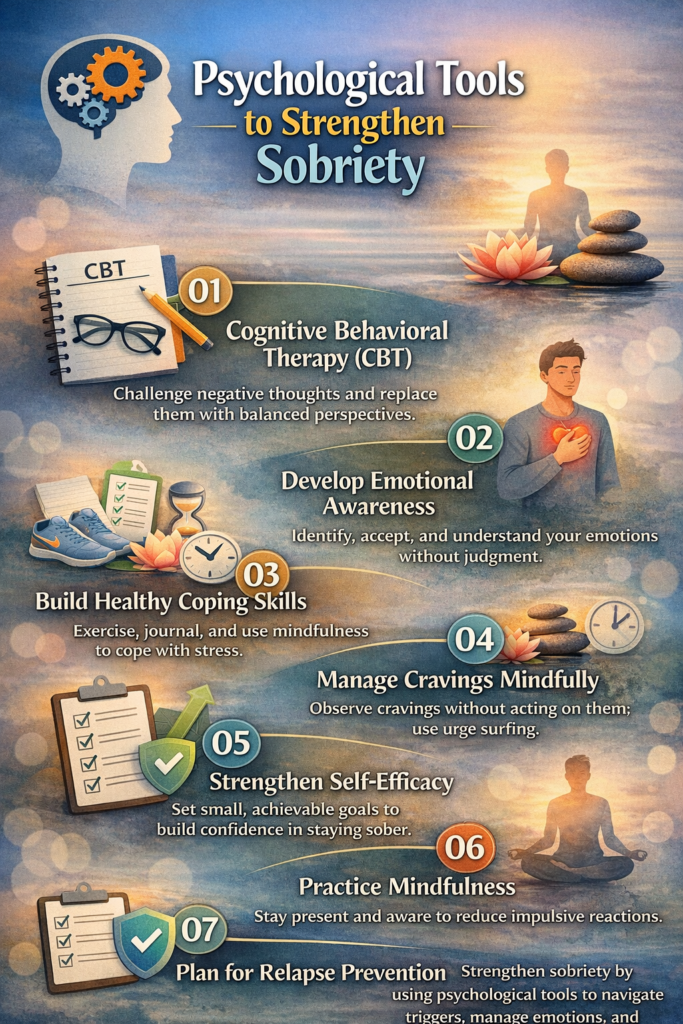
Psychological tools play a central role in strengthening sobriety by addressing the thoughts, emotions, and behaviors that contribute to substance use. While physical abstinence is an important first step, long-term recovery depends on the ability to manage stress, regulate emotions, and respond to triggers in healthier ways. Techniques such as cognitive restructuring, mindfulness, and emotional awareness help individuals better understand their internal experiences and make intentional choices rather than reacting impulsively. By developing these skills, individuals can build a stronger mental foundation that supports lasting recovery.
Strengthening Sobriety: Psychological Strategies for Lasting Recovery
Introduction: The Mind as a Foundation for Recovery
Sobriety is often thought of as a physical process—removing substances from the body—but its long-term success depends heavily on psychological strength. Thoughts, emotions, and behavioral patterns all play a critical role in maintaining recovery. Without addressing the mental and emotional aspects of addiction, individuals may remain vulnerable to cravings and relapse. Psychological strategies provide the tools needed to understand triggers, regulate emotions, and build resilience, making sobriety not just possible, but sustainable.
Why Psychological Strategies Matter in Sobriety
Addiction is closely tied to how the brain processes reward, stress, and emotion. Over time, substances become a learned response to discomfort. Psychological strategies help “rewire” these patterns by:
- Changing how individuals respond to stress and triggers
- Improving emotional regulation
- Strengthening decision-making and impulse control
- Building confidence in maintaining sobriety
These strategies shift recovery from reactive to intentional.
Key Psychological Strategies for Strengthening Sobriety
1. Cognitive Behavioral Therapy (CBT) Techniques
CBT focuses on identifying and changing unhelpful thought patterns:
- Recognize negative thoughts (“I can’t handle this”)
- Challenge their accuracy
- Replace them with balanced thinking
This reduces the likelihood of turning to substances as a coping mechanism.
2. Developing Emotional Awareness
Many individuals in recovery have used substances to avoid or numb emotions. Learning to:
- Identify emotions clearly
- Understand their triggers
- Accept them without judgment
helps reduce the need for escape through substance use.
3. Building Healthy Coping Skills
Replacing old habits with healthier alternatives is essential:
- Exercise or physical activity
- Journaling or creative expression
- Mindfulness and relaxation techniques
These strategies provide relief without harmful consequences.
4. Managing Cravings Through Mindset
Cravings are temporary, but they can feel overwhelming. Psychological approaches include:
- Viewing cravings as passing experiences, not commands
- Using distraction or delay techniques
- Practicing urge surfing (observing cravings without acting on them)
This reduces their intensity and control.
5. Strengthening Self-Efficacy
Belief in one’s ability to stay sober is a powerful predictor of success. This can be built by:
- Setting and achieving small, realistic goals
- Reflecting on progress
- Reinforcing positive behaviors
Confidence grows through consistent action.
6. Addressing Underlying Mental Health Issues
Anxiety, depression, and trauma often coexist with addiction. Treating these through therapy or counseling:
- Reduces emotional triggers
- Improves overall well-being
- Strengthens recovery stability
Ignoring these issues can increase relapse risk.
7. Practicing Mindfulness and Present Awareness
Mindfulness helps individuals stay grounded in the present moment rather than reacting automatically. Benefits include:
- Reduced stress and anxiety
- Improved emotional regulation
- Greater awareness of triggers
This creates space between impulse and action.
8. Creating a Relapse Prevention Plan
Psychological preparation is key:
- Identify high-risk situations
- Develop specific coping responses
- Plan what to do if cravings arise
Preparation reduces impulsive decision-making.
The Role of Consistency and Practice
Psychological strategies are not quick fixes—they require consistent practice. Over time, these skills become habits, replacing old patterns of substance use with healthier responses. Recovery becomes less about resisting urges and more about naturally choosing different behaviors.
Conclusion: Strengthening the Mind, Sustaining Sobriety
Lasting sobriety is built on more than abstinence—it requires a strong psychological foundation. By developing awareness, reshaping thought patterns, and building effective coping strategies, individuals can navigate challenges without returning to substance use. Recovery is not about eliminating difficulty, but about learning how to respond to it in healthier ways. With the right psychological tools, sobriety becomes not just a goal, but a sustainable way of life.
Taking Control of Recovery: Self-Management Strategies to Apply Psychological Tools for Strengthening Sobriety
Introduction: Turning Knowledge Into Action
Understanding psychological strategies is an important part of recovery—but applying them consistently is what truly strengthens sobriety. Self-management bridges this gap by helping individuals take active control of their thoughts, emotions, and behaviors. Instead of reacting automatically to stress or cravings, self-management allows for intentional, skill-based responses. By integrating psychological tools into daily life, individuals can build resilience, reduce the risk of relapse, and create a more stable foundation for long-term recovery.
Why Self-Management Matters in Sobriety
Psychological strategies like cognitive restructuring, emotional regulation, and mindfulness are powerful—but they only work when practiced. Self-management helps individuals:
- Recognize triggers before they escalate
- Apply coping strategies in real time
- Build consistency and accountability
- Strengthen confidence in handling challenges
It shifts recovery from passive understanding to active engagement.
Self-Management Strategies to Apply Psychological Tools
1. Monitor Thoughts and Emotions Daily
Self-awareness is the foundation of change:
- Keep a journal of thoughts, feelings, and triggers
- Notice patterns in stress or cravings
- Identify moments when negative thinking increases
Tracking helps you catch early warning signs and respond proactively.
2. Practice Cognitive Restructuring in Real Time
When negative thoughts arise:
- Pause and identify the thought
- Ask: Is this accurate or exaggerated?
- Replace it with a balanced perspective
For example, change “I can’t handle this” to “This is difficult, but I can manage it step by step.”
3. Use “Pause and Plan” Before Reacting
Cravings and emotional reactions are often impulsive. Create a habit of:
- Pausing for a few moments
- Taking slow, deep breaths
- Choosing a planned response instead of reacting automatically
This interrupts the relapse cycle at its earliest stage.
4. Build a Personalized Coping Toolkit
Prepare strategies you can use when needed:
- Breathing or grounding techniques
- Physical activity or movement
- Calling a support person
- Engaging in a distraction or a hobby
Having options ready reduces the chance of turning to substances.
5. Set Small, Achievable Goals
Sobriety is strengthened through consistent progress:
- Focus on daily or weekly goals
- Celebrate small wins
- Track progress over time
Achieving manageable goals builds self-efficacy and motivation.
6. Create Structured Daily Routines
Structure reduces uncertainty and stress:
- Maintain consistent sleep and meal times
- Schedule productive and relaxing activities
- Include recovery-focused practices (meetings, journaling, reflection)
Routine supports emotional stability and reduces impulsivity.
7. Practice Mindfulness Throughout the Day
Mindfulness helps you stay present and aware:
- Check in with your thoughts and feelings regularly
- Observe cravings without acting on them
- Use brief grounding exercises during stressful moments
This builds control over automatic reactions.
8. Reflect and Adjust Regularly
Self-management is an ongoing process:
- Review what strategies are working
- Identify areas that need improvement
- Adjust your approach based on experience
Flexibility allows you to refine your recovery plan over time.
From Reaction to Intentional Living
Self-management transforms recovery from a reactive process into an intentional one. Instead of feeling controlled by cravings or emotions, individuals learn to respond with awareness and purpose. This shift is key to breaking old patterns and building new, healthier ones.
Conclusion: Strength Through Daily Practice
Psychological strategies provide the tools for sobriety, but self-management is what brings them to life. Through consistent awareness, structured routines, and intentional action, individuals can strengthen their ability to navigate challenges without returning to substance use. Recovery is not about perfection—it’s about practice. With time and effort, these strategies become habits, and sobriety becomes not just something you maintain, but something you actively strengthen every day.
Stronger Together: Family Support Strategies for Using Psychological Tools to Strengthen Sobriety
Introduction: The Power of Family in Recovery
Recovery is not just an individual journey—it is deeply influenced by the environment and relationships surrounding a person. Families play a crucial role in supporting sobriety, especially when they understand and reinforce psychological tools that help manage thoughts, emotions, and behaviors. When family members actively engage in healthy communication, emotional support, and structured guidance, they can help transform recovery from a fragile process into a more stable and sustainable one.
Why Psychological Tools Matter for Families
Psychological strategies—such as cognitive restructuring, emotional regulation, and mindfulness—are often taught in therapy, but their effectiveness increases when they are supported at home. Families can:
- Reinforce healthy thinking patterns
- Help regulate emotional responses during stressful moments
- Encourage consistent use of coping strategies
- Provide accountability and encouragement
This collaborative approach strengthens the individual’s ability to maintain sobriety.
Family Support Strategies Using Psychological Tools
1. Encourage Healthy Thinking Patterns (Cognitive Support)
Families can help challenge negative thinking by:
- Gently questioning harmful thoughts (“Is that the only way to see this?”)
- Encouraging balanced perspectives
- Avoiding reinforcing self-defeating beliefs
This supports cognitive restructuring and reduces relapse-triggering thoughts.
2. Model Emotional Regulation
Family members set the tone for emotional responses:
- Stay calm during conflict or stress
- Avoid reactive or escalated communication
- Demonstrate healthy ways to cope with frustration
Modeling these behaviors helps individuals learn by example.
3. Practice Active Listening and Validation
Instead of trying to “fix” problems:
- Listen without interrupting
- Reflect back what you hear
- Validate emotions (“That sounds really overwhelming”)
Validation reduces anxiety and helps individuals feel understood.
4. Support the Use of Coping Strategies
Encourage practical psychological tools:
- Suggest grounding or breathing exercises during stress
- Participate in healthy activities together (walks, routines)
- Remind them of strategies they’ve learned in therapy
Support should feel collaborative, not controlling.
5. Help Create Structure and Routine
Consistency reduces stress and impulsivity:
- Encourage regular sleep and meal schedules
- Support attendance at therapy or recovery meetings
- Maintain predictable household routines
Structure reinforces stability and emotional balance.
6. Reinforce Positive Behavior and Progress
Acknowledging effort builds confidence:
- Celebrate small milestones
- Offer encouragement for healthy choices
- Focus on progress rather than perfection
Positive reinforcement strengthens motivation and self-efficacy.
7. Set Healthy Boundaries
Support must be balanced with accountability:
- Be clear about expectations and limits
- Avoid enabling behaviors
- Maintain consistency in consequences
Boundaries protect both the individual and the family system.
8. Encourage Professional Support When Needed
Families should normalize seeking help:
- Support therapy or counseling
- Encourage continued use of psychological tools
- Be open to family therapy if needed
Professional guidance strengthens both individual and family dynamics.
Common Challenges Families May Face
- Wanting quick results: Psychological change takes time
- Over-involvement: Trying to control rather than support
- Emotional burnout: Neglecting their own well-being
Recognizing these challenges helps families adjust their approach.
Conclusion: A Collaborative Approach to Sobriety
Psychological tools are essential for strengthening sobriety, but their impact grows when they are supported within the family environment. By encouraging healthy thinking, modeling emotional regulation, and maintaining structure and boundaries, families become an active part of the recovery process. Sobriety is not sustained through willpower alone—it is strengthened through connection, consistency, and shared understanding. When families and individuals work together, recovery becomes more resilient, balanced, and lasting.
Building Stronger Recovery: Community Resource Strategies for Using Psychological Tools to Strengthen Sobriety
Introduction: Recovery Thrives in Community
While psychological tools like cognitive restructuring, emotional regulation, and mindfulness are essential for maintaining sobriety, their effectiveness is greatly enhanced when supported by a strong community. Recovery is not meant to be navigated alone—community resources provide structure, education, and connection that help individuals consistently apply these tools in real-life situations. By engaging with supportive environments, individuals can transform psychological strategies from isolated techniques into daily habits that strengthen long-term sobriety.
Why Community Resources Enhance Psychological Strategies
Psychological tools require practice, reinforcement, and support. Community resources help by:
- Providing guidance and education on how to use these tools effectively
- Offering real-life opportunities to practice coping strategies
- Creating accountability and consistency
- Reducing isolation, which can weaken motivation
Together, these factors make psychological strategies more sustainable.
Community Resource Strategies That Support Psychological Tools
1. Peer Support Groups (Applying Cognitive and Emotional Skills)
Recovery groups allow individuals to:
- Share thoughts and challenge negative thinking patterns
- Practice emotional expression in a safe environment
- Learn how others use psychological tools in daily life
This reinforces cognitive and emotional strategies through shared experience.
2. Community-Based Therapy and Counseling Services
Local mental health centers and outpatient programs provide:
- Structured learning of psychological techniques (e.g., CBT)
- Guided practice of coping and emotional regulation skills
- Personalized strategies tailored to individual needs
Professional support ensures tools are used correctly and consistently.
3. Recovery Community Centers
These centers offer:
- Workshops on stress management and relapse prevention
- Group activities that encourage healthy coping
- Opportunities to practice mindfulness and communication skills
They create a supportive environment for applying psychological tools in real time.
4. Mindfulness and Wellness Programs
Community programs such as yoga, meditation, and stress reduction classes help individuals:
- Strengthen present-moment awareness
- Regulate emotional responses
- Reduce anxiety and impulsivity
These practices complement psychological strategies and enhance self-control.
5. Educational Workshops and Skill-Building Sessions
Community education programs can teach:
- How thoughts influence behavior (cognitive awareness)
- Techniques for managing cravings and triggers
- Practical applications of psychological tools
Knowledge increases confidence in using these strategies independently.
6. Online Recovery Communities and Apps
Digital platforms provide:
- Access to psychological tools and guided exercises
- Virtual support groups and peer discussions
- Immediate support during high-risk moments
These resources make it easier to apply strategies anytime, anywhere.
7. Crisis Support Services
Hotlines and crisis centers offer immediate help when psychological tools feel difficult to apply:
- Real-time guidance during intense cravings or distress
- Emotional support to stabilize situations
- Connection to additional resources
They serve as a safety net when individuals feel overwhelmed.
Overcoming Barriers to Using Community Resources
Some individuals may hesitate to engage due to:
- Stigma or fear of judgment
- Lack of awareness about available resources
- Social anxiety or discomfort
Starting with small steps—such as attending one meeting or accessing online support—can make engagement more manageable.
From Individual Effort to Collective Strength
Psychological tools are powerful, but their impact grows when reinforced by a community. Practicing these strategies in supportive environments helps turn them into habits rather than occasional responses. Community involvement transforms recovery from a solitary effort into a shared process of growth and accountability.
Conclusion: Strengthening Sobriety Through Connection and Practice
Sobriety is strengthened not only by understanding psychological tools but by consistently applying them—and community resources make that possible. Through peer support, professional guidance, and accessible programs, individuals can build the skills needed to manage thoughts, emotions, and behaviors effectively. Recovery is not just about avoiding substances; it is about developing a new way of thinking and living. Within a supportive community, these psychological strategies become part of everyday life, creating a stronger, more resilient path to long-term sobriety.
Frequently Asked Questions
Here are some common questions:
1. What are psychological tools in addiction recovery?
Psychological tools are strategies that help individuals manage thoughts, emotions, and behaviors that contribute to substance use. These include techniques such as cognitive restructuring, mindfulness, emotion regulation, and relapse-prevention planning.
2. Why are psychological tools important for sobriety?
Sobriety is not just physical—it requires mental and emotional stability. Psychological tools help individuals:
- Manage stress and triggers
- Reduce cravings
- Improve decision-making
- Build resilience
Without these tools, individuals may remain vulnerable to relapse.
3. What is Cognitive Behavioral Therapy (CBT) and how does it help?
CBT is a structured approach that focuses on identifying and changing negative thought patterns. It helps individuals:
- Recognize harmful thinking
- Challenge distorted beliefs
- Replace them with healthier perspectives
This reduces emotional distress and the urge to use substances.
4. How does mindfulness support sobriety?
Mindfulness involves staying present and aware without judgment. It helps by:
- Reducing impulsive reactions
- Increasing awareness of cravings
- Improving emotional regulation
This creates a pause between feeling a craving and acting on it.
5. What does “emotional regulation” mean in recovery?
Emotional regulation is the ability to manage and respond to emotions in a healthy way. Instead of avoiding or numbing emotions, individuals learn to:
- Identify what they are feeling
- Understand why they feel that way
- Respond appropriately without using substances
6. How can psychological tools help with cravings?
Psychological strategies teach individuals to:
- View cravings as temporary
- Use techniques like “urge surfing” (observing cravings without acting)
- Distract or delay responses
These approaches reduce the intensity and duration of cravings.
7. Do psychological tools work immediately?
No. These tools require consistent practice. Over time, they become habits that replace old patterns of substance use. The more they are used, the more effective they become.
8. Can psychological tools prevent relapse completely?
They cannot guarantee prevention, but they significantly reduce risk. By helping individuals recognize triggers early and respond effectively, these tools make relapse less likely and, if it occurs, more manageable.
9. What role does self-awareness play in using these tools?
Self-awareness is essential. It allows individuals to:
- Recognize thoughts and emotional patterns
- Identify triggers
- Apply coping strategies before situations escalate
Without awareness, it’s difficult to use psychological tools effectively.
10. Can these tools be used without therapy?
Yes, many psychological tools can be practiced independently. However, therapy provides guidance, structure, and personalization, which can make these tools more effective—especially in early recovery.
11. How can someone stay consistent with using psychological tools?
Consistency can be improved by:
- Creating daily routines
- Practicing skills regularly (not just during crises)
- Tracking progress
- Staying connected to support systems
Routine turns tools into habits.
12. What is the most important psychological skill for sobriety?
There isn’t just one, but awareness and response control are foundational. Being able to notice thoughts and emotions—and choose how to respond rather than react—is key to maintaining sobriety.
Conclusion
Strengthening sobriety is not just about avoiding substances—it is about transforming how one thinks, feels, and responds to life’s challenges. Psychological tools provide practical strategies for navigating cravings, managing stress, and maintaining emotional balance. With consistent use and practice, these tools become integrated into daily life, increasing resilience and reducing the risk of relapse. Ultimately, recovery is sustained through awareness, adaptability, and ongoing growth, allowing individuals to move forward with greater confidence and stability.
Video: