When most people think about addiction, substances like alcohol or drugs often come to mind first. But behavioral addictions, like getting hooked on porn, are a lot more common than many realize. Porn addiction is something that often gets glossed over or even laughed off, but it can have a pretty profound impact on someone’s mental health, relationships, and outlook. I’m going to break down what’s often left unsaid about porn addiction, pulling back the curtain on a topic that’s way more complicated than those one-size-fits-all headlines suggest.
Understanding Porn Addiction in the Real World
Porn has become easier than ever to access. With smartphones and free streaming platforms, it’s always just a click away. While not everyone who watches it will spiral into addiction, for some people, frequent use can start to interfere with daily life. The science is still catching up here, but the medical community recognizes that compulsive sexual behaviors, including excessive porn use, are legitimate issues that can interfere with how someone wants to live.
I’ve noticed that many people don’t understand the difference between just liking porn and being addicted to it. Losing track of how much time you spend, feeling anxious or restless when trying to cut back, or finding that it’s messing with work, school, or relationships are all signs that things might be heading down the wrong path. According to the American Psychological Association, these patterns can mirror other addictive behaviors, even if there’s no actual substance involved.
What’s Really Happening in the Brain
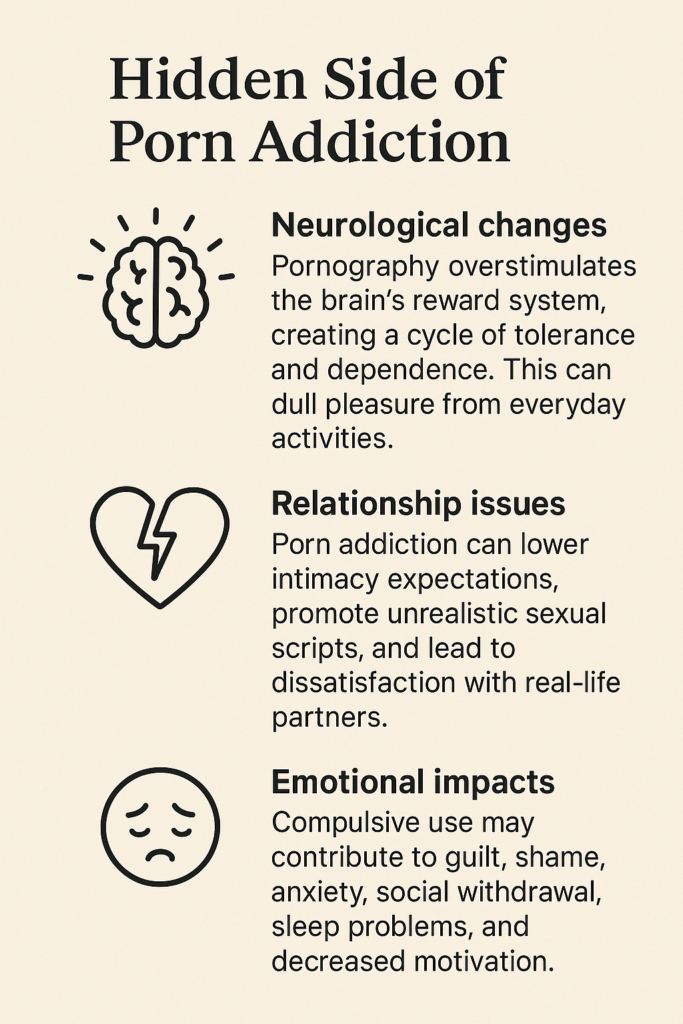
The human brain is built to seek pleasure; it’s part of what keeps us going. But with porn, things can go a bit off track. Watching porn releases dopamine, a chemical that makes you feel good. Over time, your brain can start craving that rush, making you want more and more, sometimes even when you know it’s causing problems.
Some people are more sensitive to these effects than others. Social isolation, stress, depression, or even just boredom can make porn seem like an easy escape. The biggest thing that gets skipped in mainstream talk is how unique each person’s situation is. What feels like harmless fun to one person might turn into a disruptive force for another.
- Dopamine Cycle: Repeated dopamine hits can lead your brain to want more of the same, making it challenging to quit.
- Habituation: The more you watch, the more you might need to get the same feeling, leading to more extreme content or longer sessions.
- Negative Triggers: Stress or loneliness can become huge triggers for compulsive use.
Getting Real About the Impact on Daily Life
One of the most complex parts of porn addiction is that it’s invisible. There’s no noticeable smell, no slurred speech, no way for most people to see what’s happening. But the impacts are real. Here’s what people struggling with porn addiction often experience:
- Relationship Strain: Partners can feel betrayed, jealous, or worried when porn starts taking up too much time or attention. This can tank trust and intimacy.
- Social Withdrawal: Sometimes, people start avoiding friends, family, or social activities, mostly out of shame or to make time for their habit.
- Mental Health Struggles: Feelings of guilt, shame, or hopelessness are common, and sometimes depression or anxiety shows up too.
- Impacts on Sexual Function: Some notice trouble getting aroused or experiencing pleasure with real-life partners, a problem sometimes called porn induced erectile dysfunction.
All of this can create a cycle, where people feel bad about their habit and then use porn again to get some relief from those feelings.
Dispelling Myths: What People Get Wrong
Misinformation makes porn addiction way harder to talk about. Here are a few common myths I keep seeing come up:
- “Everyone does it, so it’s not a problem.” Just because porn is common doesn’t mean it can’t be harmful for some people. Normalizing compulsive behavior by saying “everyone watches” is like telling someone with a drinking problem that “everyone has a beer sometimes.”
- “If you’re in a relationship, it shouldn’t matter.” The truth is, what matters is how it affects trust and connection in that relationship, not what people outside of it think.
- “It’s easy to quit if you really want to.” Like other behavioral addictions, willpower by itself isn’t always enough. Getting professional help or support from others can make a real difference.
Steps Toward Beating Porn Addiction
Beating porn addiction isn’t a quick fix. For most people, it’s not about going cold turkey overnight, but about building new habits, resetting patterns, and getting a handle on the triggers that kick off the urge to use. Here are the steps that tend to help:
- Honest Self-Assessment: Being totally honest about the impact porn is having on your life is super critical. Keeping a journal or tracking patterns can be a wake-up call.
- Set Boundaries: Creating “no porn” zones or times can help. This could mean no phones in the bedroom or no device use late at night.
- Replace the Habit: Filling downtime with other activities, like exercise, art, or even just catching up with friends, can make a big difference in the urge to turn to porn.
- Find Support: Whether it’s a professional therapist, a support group, or just a trusted friend, having someone to talk to helps cut through the shame and isolation.
- Block or Limit Access: Using content blockers or deleting access points makes it less tempting in moments of weakness.
What to Watch Out for When Going Through Recovery
Recovery isn’t all smooth sailing. There are a few common obstacles that trip people up:
- Relapses: Slipping up is common and doesn’t erase progress. It’s more about getting back up and fine-tuning your strategy.
- Mood Swings: As your brain detoxes from the dopamine rush, feelings of anxiety or irritation can show up. Knowing this is totally normal can help you push through.
- Withdrawal Symptoms: Cravings, trouble sleeping, and trouble concentrating can all be part of recovery. Setting realistic goals and tracking small wins can really help.
- Triggers: Learning your own triggers, like boredom, stress, or even certain websites, makes it easier to avoid falling into old habits.
Relapse Happens
Messing up once doesn’t mean you’re back to square one. Most people slip up at least once or twice on their way out of addiction. What matters is tweaking your plan and not giving up entirely.
Mental Health Checks
It’s normal to feel pretty moody or even down during early recovery. Staying active, eating well, and managing stress can make the emotional roller coaster less overwhelming. If things get really rough, reaching out for mental health support is always a wise move.
Advanced Strategies and Helpful Resources
Once you’ve built some momentum, taking your recovery up a notch can keep you on the right track. Here are ways I’ve seen people succeed:
Therapy for Lasting Change: Working with a therapist, especially someone trained in compulsive behaviors, can help you dig into the “why” behind the habit. Cognitive Behavioral Therapy (CBT) is pretty popular for this.
Online Forums and Groups: Anonymous support communities, such as NoFap and Reboot Nation, offer encouragement, accountability, and practical advice for those seeking to make a change. These spaces provide a sense of belonging and show you aren’t alone in your struggle.
Habit-Tracking Apps: There are apps out there designed to break bad habits and build new routines. Habit Bull, Fortify, and similar options let you track your progress, remind you of your reasons for change, and celebrate your small victories. Staying consistent is easier when you see your growth daily.
Combining professional help with peer support and personal tracking gives people the best shot at breaking free. Taking small, steady actions builds confidence over time.
Key Points for People New to the Topic
If you’re learning about porn addiction, a few things are essential to understand:
- Not everyone who watches porn is addicted. Frequency and negative impact on life are bigger red flags than just using it sometimes.
- Shame doesn’t help. Beating yourself up does more harm than good. Getting curious about your own triggers and reactions is more useful than guilt.
- Change is possible. Plenty of people take control of their habits and start living in a way that feels right for them. Tiny steps add up.
- Mental Health Benefits: Cutting way back or quitting can lift your mood, boost your motivation, and improve how you relate to others.
- Stronger Connections: Recovery often means better focus, more honest communication, and deeper bonds in real-life relationships.
- Self-respect: Doing the hard work to break any addiction can seriously boost confidence and a sense of control.
Frequently Asked Questions
People ask me these questions all the time, so here are some quick answers:
Question: Can porn addiction affect anyone?
Answer: Yep. It doesn’t matter your age, gender, or background. Anyone can get stuck in a cycle with porn, mainly if it’s used to cope with stress, anxiety, or loneliness.
Question: Is porn addiction real, or just a moral panic?
Answer: While it’s still debated in medical circles, the harms that come from compulsive use are very real for the people who experience them, regardless of anyone’s moral viewpoint.
Question: Do I need to quit cold turkey?
Answer: Not necessarily. Some people quit altogether, while others want to cut back and regain control. The important thing is making changes that work for you.
Final Thoughts
Getting honest about porn addiction is a big step, whether you’re struggling yourself or want to support someone else. Recovery takes real patience, self-compassion, and often, help from others. For more resources or support, take a look at organizations like Fight the New Drug or check out local mental health professionals with experience in behavioral addictions.
If you’re dealing with porn addiction or supporting someone who is, remember: your situation is unique, but you’re not alone. Progress might feel slow, but every effort counts. There is hope, and genuine change is possible, one day at a time. Stay patient, celebrate small wins, and don’t hesitate to reach out for help when you need it.
Video: Why Porn Addiction Feels Impossible to Break #truth #addiction #psychology