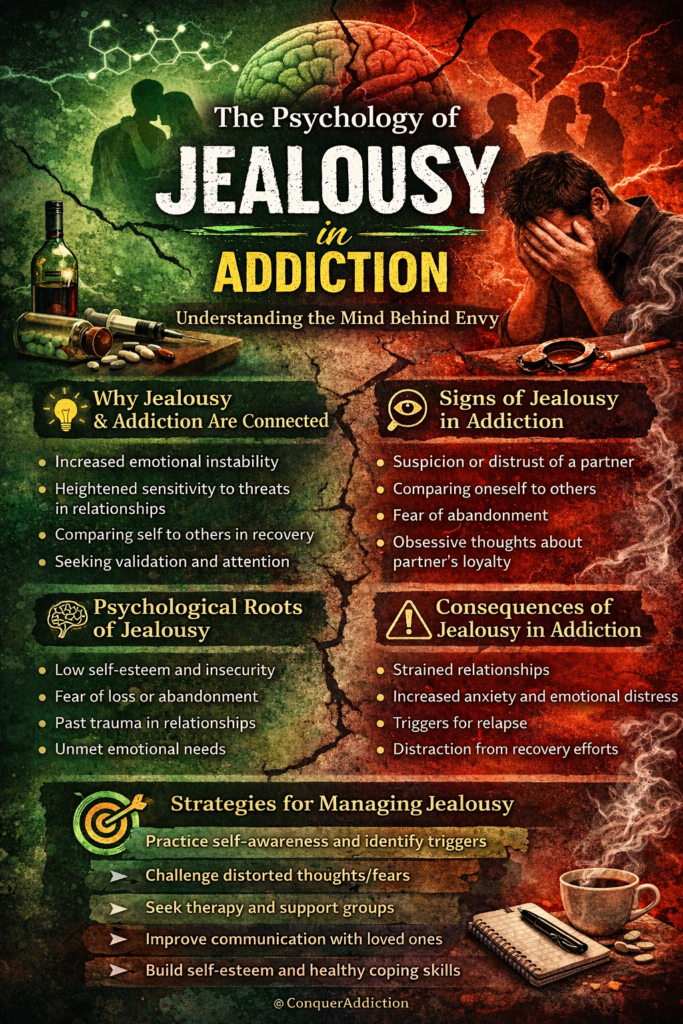
Jealousy is a complex and often intensified emotion in the context of addiction, shaped by insecurity, fear of loss, and disrupted emotional regulation. Addiction can heighten sensitivity to perceived threats in relationships and increase tendencies toward comparison and self-doubt. As a result, individuals may experience jealousy more frequently and more intensely, often reacting in ways that strain relationships and hinder recovery. Understanding the psychology of jealousy in addiction requires looking beyond the surface emotion to the deeper issues of self-worth, trust, and unmet emotional needs that drive it.
The Psychology of Jealousy in Addiction
Jealousy and addiction are closely connected in ways that are often misunderstood. While jealousy is commonly linked to relationships and comparison, in addiction, it takes on a deeper psychological role. It is often fueled by insecurity, fear of loss, and emotional instability—factors that are intensified by addictive behaviors. Addiction disrupts the brain’s ability to regulate emotions, making individuals more sensitive to perceived threats and more prone to reactive feelings. Understanding this connection provides valuable insight into both the emotional challenges of addiction and the path toward recovery.
Jealousy in addiction can appear in many forms, including comparison with others, insecurity in relationships, and even internal conflict during recovery. It is often rooted in low self-esteem and unmet emotional needs, leading individuals to interpret situations negatively or feel threatened without clear cause. Importantly, jealousy is usually not the core issue but a secondary emotion that masks deeper feelings such as shame, guilt, loneliness, or fear. By developing self-awareness, improving communication, and building self-worth, individuals can begin to manage jealousy more effectively and use it as a signal for growth rather than distress.
Key Points
- Emotional Impact of Addiction
- Disrupts emotional regulation and increases reactivity
- Intensifies feelings like insecurity and fear
- Jealousy and Comparison
- Comparing oneself to others (e.g., in recovery or success)
- Leads to feelings of inadequacy and resentment
- Relationship Dynamics
- Fear of abandonment or loss of control
- Can cause suspicion, possessiveness, or emotional instability
- Strained trust due to addiction-related behaviors
- Low Self-Esteem
- Negative self-perception fuels jealousy
- Misinterpretation of situations as rejection or competition
- Internal Jealousy
- Envy toward others who can engage in behaviors without consequences
- Creates frustration and emotional conflict
- Jealousy as a Secondary Emotion
- Masks deeper feelings (shame, guilt, loneliness, fear)
- Signals underlying emotional needs
- Managing Jealousy
- Identify triggers (comparison, stress, insecurity)
- Challenge negative thoughts and assumptions
- Practice emotional regulation strategies
- Communication and Support
- Express feelings openly without blame
- Seek reassurance and rebuild trust
- Utilize therapy or support groups
- Building Self-Worth
- Develop identity beyond addiction
- Focus on personal growth and purpose
- Reduce reliance on comparison
Key Takeaway:
Jealousy in addiction is not a flaw—it is a signal of deeper emotional needs. By approaching it with awareness and understanding, individuals can transform jealousy into an opportunity for healing, stronger relationships, and lasting recovery.
Managing the Mind: Self-Strategies for Jealousy in Addiction
Jealousy can be a powerful and confusing emotion, especially in the context of addiction, where emotional regulation is already challenged. It often arises from comparison, insecurity, and fear of loss, making it feel overwhelming and difficult to control. However, jealousy is not just a problem—it is also a signal of deeper emotional needs. By learning to recognize and manage it, individuals can turn jealousy into an opportunity for self-awareness and growth. With the right strategies, it becomes possible to respond thoughtfully rather than react impulsively.
Managing jealousy begins with understanding its roots. Often, it reflects underlying feelings such as fear, loneliness, or low self-worth rather than the situation itself. By identifying triggers, challenging distorted thinking, and practicing emotional regulation, individuals can reduce the intensity of jealous reactions. Building self-esteem, improving communication, and focusing on personal growth further support this process. Over time, jealousy becomes less about comparison and more about insight—helping guide individuals toward healthier emotional balance in recovery.
Key Points
- Self-Awareness
- Recognize when jealousy arises
- Identify triggers (comparison, insecurity, fear)
- Shift from reacting to reflecting
- Emotional Identification
- Acknowledge jealousy without shame
- Explore underlying emotions (fear, loneliness, low self-worth)
- Understand jealousy as a secondary emotion
- Cognitive Restructuring
- Challenge negative or distorted thoughts
- Ask: “Is this a fact or an assumption?”
- Replace unrealistic comparisons with balanced thinking
- Mindfulness Practices
- Pause before reacting to emotional triggers
- Observe feelings without judgment
- Build emotional control over time
- Reducing Comparison
- Focus on personal progress rather than others
- Avoid environments that trigger unhealthy comparison
- Strengthen internal validation
- Building Self-Esteem
- Engage in activities that promote confidence
- Develop identity beyond addiction
- Reinforce a sense of purpose and self-worth
- Healthy Communication
- Express feelings openly without blame
- Seek reassurance in constructive ways
- Strengthen trust in relationships
- Setting Emotional Boundaries
- Limit exposure to triggering situations or influences
- Protect emotional well-being during recovery
- Self-Compassion
- Recognize jealousy as a normal human response
- Avoid self-criticism or shame
- Practice patience and understanding
- Seeking Support
- Talk to trusted individuals or professionals
- Use therapy or support groups for guidance
- Gain perspective and reduce isolation
Key Takeaway:
Jealousy in addiction is not something to eliminate, but something to understand. With awareness and intentional strategies, it can shift from a reactive emotion into a tool for insight, healing, and personal growth.
Understanding Together: Family Strategies for Jealousy in Addiction
Jealousy can be a difficult and often misunderstood emotion within addiction, showing up as insecurity, comparison, suspicion, or emotional reactivity. These reactions can strain relationships, especially when support is most needed. For families, understanding that jealousy is often rooted in deeper emotional struggles—such as fear, shame, or low self-worth—can shift the response from frustration to empathy. With the right approach, families can help turn jealousy from a source of conflict into an opportunity for connection and healing.
Supporting a loved one through jealousy involves balancing compassion with structure. By encouraging open communication, reinforcing self-worth, and setting healthy boundaries, families can create a stable and supportive environment. Over time, this helps reduce emotional reactivity and rebuild trust. When families respond with patience and understanding, they not only strengthen relationships but also support long-term recovery and emotional growth.
Key Points
- Recognizing Jealousy as a Symptom
- Often rooted in insecurity, fear, or shame
- Reflects deeper emotional needs rather than intentional behavior
- Empathetic Communication
- Validate feelings without reinforcing harmful behavior
- Use supportive language (e.g., “I hear that you’re feeling worried”)
- Avoid criticism or dismissal
- Encouraging Emotional Awareness
- Help identify the underlying emotions behind jealousy
- Shift focus from external triggers to internal understanding
- Maintaining Healthy Boundaries
- Do not tolerate controlling or harmful behaviors
- Set clear expectations for respect and communication
- Balance support with accountability
- Promoting Open Communication
- Create safe spaces for honest dialogue
- Rebuild trust through consistency and transparency
- Reducing Comparison
- Avoid comparing to others (siblings, peers, etc.)
- Focus on individual progress and strengths
- Encouraging Self-Worth
- Reinforce personal growth and positive changes
- Support independence and confidence
- Modeling Healthy Behavior
- Demonstrate calm communication and emotional regulation
- Show respect and constructive conflict resolution
- Seeking Additional Support
- Consider family counseling or support groups
- Learn tools to navigate complex emotions together
- Practicing Patience and Self-Care
- Recognize the emotional impact on the family
- Maintain personal well-being while offering support
Key Takeaway:
Jealousy in addiction is not just about relationships—it reflects deeper emotional vulnerabilities. With empathy, clear boundaries, and open communication, families can help transform jealousy into a pathway for healing, stronger relationships, and lasting recovery.
Community Matters: Strategies for Addressing Jealousy in Addiction
Jealousy is a complex emotion that can become more intense in the context of addiction, often fueled by insecurity, comparison, and fear of loss. These feelings can affect relationships, self-esteem, and overall recovery progress. While individuals and families play important roles in managing jealousy, community support is essential in helping people better understand and navigate these emotional challenges. Through education, accessible services, and supportive environments, communities can transform jealousy from a source of distress into an opportunity for growth.
By increasing awareness and providing structured support, communities help normalize conversations around jealousy and reduce stigma. Access to mental health services, peer support groups, and skill-building programs allows individuals to explore the root causes of their emotions and develop healthier coping strategies. When communities foster connection, inclusivity, and collaboration, they create an environment where individuals feel supported rather than isolated, making it easier to manage jealousy and move forward in recovery.
Key Points
- Education and Awareness
- Normalize discussions about jealousy and addiction
- Highlight underlying causes like insecurity and unmet needs
- Reduce stigma through community programs
- Accessible Mental Health Services
- Provide counseling, therapy, and recovery support
- Offer safe spaces to explore emotional triggers
- Increase accessibility to reduce barriers to help
- Support Groups
- Encourage sharing of experiences and perspectives
- Reduce isolation and shame
- Promote emotional growth and accountability
- Skill-Building Programs
- Teach emotional intelligence and communication skills
- Address comparison and self-esteem challenges
- Develop healthier relationship patterns
- Training for Community Professionals
- Equip educators, healthcare providers, and social workers
- Recognize emotional distress and jealousy patterns
- Respond with supportive, informed strategies
- Digital and Online Resources
- Provide flexible access to counseling and education
- Offer private support options for those hesitant to seek help
- Expand reach through online communities and tools
- Promoting Connection and Belonging
- Foster inclusive and supportive environments
- Encourage community engagement and peer networks
- Reduce reliance on comparison for self-worth
- Collaboration Across Systems
- Connect healthcare, education, and social services
- Ensure consistent support and messaging
- Improve early intervention and access to care
Key Takeaway:
Jealousy in addiction is not just an individual struggle—it is a shared human experience that benefits from community support. By promoting awareness, connection, and accessible resources, communities can help individuals move beyond insecurity toward confidence, stability, and lasting recovery.
Frequently Asked Questions
Here are some common questions:
1. What is jealousy in the context of addiction?
Jealousy in addiction refers to heightened feelings of insecurity, comparison, and fear of loss, often intensified by emotional instability and disrupted brain function caused by addictive behaviors.
2. Why is jealousy more intense in people with addiction?
Addiction affects the brain’s emotional regulation and reward systems, making individuals more reactive to perceived threats, rejection, or comparison.
3. What are common signs of jealousy in addiction?
- Suspicion or distrust in relationships
- Comparing oneself to others (especially in recovery)
- Fear of abandonment
- Emotional reactivity or mood swings
- Obsessive thoughts about others’ behavior
4. What causes jealousy in addiction?
Jealousy is often driven by:
- Low self-esteem
- Fear of losing relationships
- Past trauma or betrayal
- Shame related to addiction
- Unmet emotional needs
5. How does jealousy affect recovery?
Jealousy can:
- Strain relationships
- Increase stress and anxiety
- Trigger negative thinking patterns
- Potentially leads to relapse if unmanaged
6. Is jealousy a primary emotion in addiction?
No. Jealousy is usually a secondary emotion, meaning it masks deeper feelings such as fear, insecurity, loneliness, or shame.
7. How does comparison play a role in jealousy?
Individuals in addiction often compare themselves to others—especially those who appear more successful or stable—which can increase feelings of inadequacy and jealousy.
8. Can jealousy damage relationships during recovery?
Yes. It can lead to mistrust, conflict, and emotional distance, making it harder to rebuild healthy and supportive relationships.
9. How can someone manage jealousy in addiction?
- Increase self-awareness of triggers
- Challenge negative or distorted thoughts
- Practice emotional regulation (e.g., mindfulness)
- Communicate openly and honestly
- Build self-esteem and self-worth
10. What role does communication play?
Healthy communication helps reduce misunderstandings, rebuild trust, and allows individuals to express concerns without blame or control.
11. Can therapy help with jealousy in addiction?
Yes. Therapy can help individuals explore underlying causes, develop coping strategies, and improve emotional regulation and relationship skills.
12. Is jealousy always harmful?
Not necessarily. Mild jealousy can signal care or emotional investment, but when it becomes intense, persistent, or controlling, it becomes harmful.
13. What is the key takeaway about jealousy in addiction?
Jealousy is not just a negative emotion—it is a signal of deeper emotional needs and vulnerabilities. Understanding it can lead to personal growth and a healthier recovery.
Conclusion
The psychology of jealousy in addiction reveals that this emotion is not simply a flaw, but a signal pointing to deeper emotional vulnerabilities. When approached with awareness and understanding, jealousy can become an opportunity for growth rather than conflict. By addressing underlying insecurities, improving emotional regulation, and fostering healthy communication and support systems, individuals can reduce the intensity of jealousy and strengthen their recovery journey. Ultimately, learning to understand and manage jealousy allows for more stable relationships, greater self-confidence, and a more balanced path toward long-term healing.
Video: