Irritability is often dismissed as a personality trait or a reaction to everyday stress, but it can also be a significant and overlooked sign of hidden depression. Unlike the more recognizable symptoms of sadness or withdrawal, depression can manifest as frustration, anger, or a short temper, making it harder to identify and address. These emotional responses are often rooted in underlying changes in brain chemistry, stress regulation, and emotional processing. Understanding the connection between irritability and hidden depression provides a more accurate and compassionate perspective, helping individuals and those around them recognize that these behaviors may reflect deeper emotional struggles rather than intentional negativity.
Irritability and Hidden Depression: When Anger Is More Than a Mood
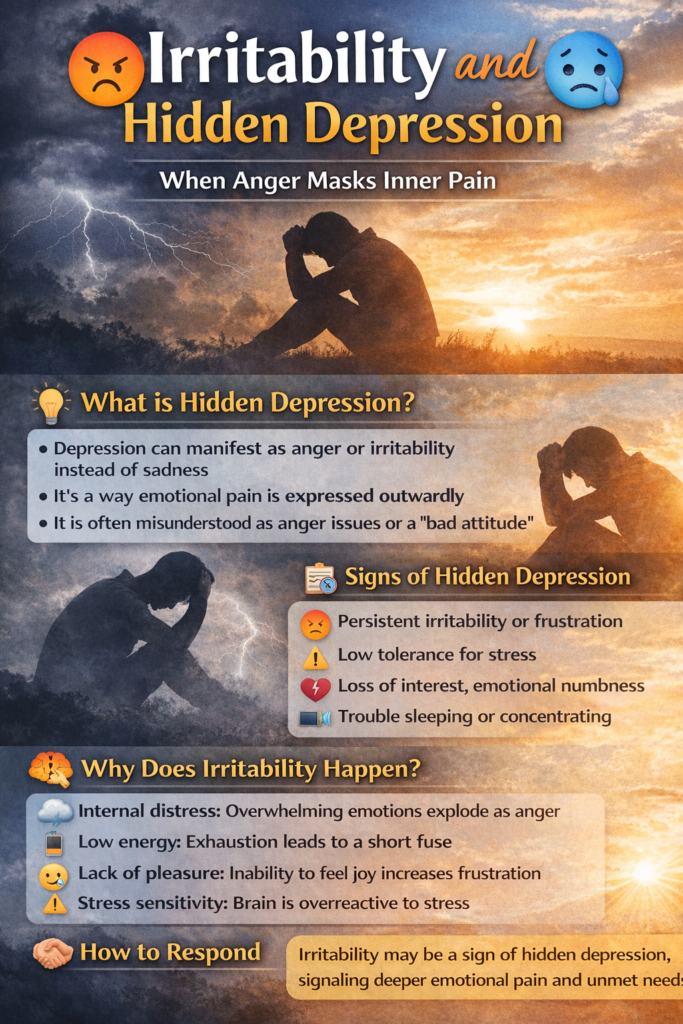
Depression is often associated with sadness, low energy, and withdrawal—but it does not always look that way. For many individuals, especially those who struggle to recognize or express emotional pain, depression can appear as irritability, frustration, or a short temper. This form of “hidden” or less obvious depression can go unnoticed because it does not match the typical image of someone feeling down or hopeless. Understanding the connection between irritability and underlying depression is essential for recognizing symptoms early and supporting effective intervention.
When Depression Doesn’t Look Like Sadness
Not everyone experiences depression as visible sadness. Instead, emotional distress may be expressed outwardly as:
- Frequent frustration or anger
- Low tolerance for stress or inconvenience
- Snapping at others over small issues
- Persistent agitation or restlessness
These reactions can mask deeper feelings such as hopelessness, exhaustion, or emotional overwhelm.
The Brain Behind Irritability
Depression involves changes in brain chemistry, particularly in systems that regulate mood, stress, and reward. When these systems are disrupted:
- Stress responses become heightened
- Emotional regulation becomes more difficult
- Small challenges feel disproportionately overwhelming
This can cause individuals to react more quickly and intensely, even when they do not fully understand why.
Why Irritability Happens
Irritability in depression often stems from internal strain rather than external problems.
- Emotional overload: Suppressed feelings build up and come out as anger
- Low energy: Mental exhaustion reduces patience and tolerance
- Frustration: Difficulty experiencing pleasure or motivation leads to irritability
- Stress sensitivity: The brain becomes more reactive to everyday challenges
In this way, irritability is often a signal—not the root issue.
Signs of Hidden Depression
Because it is less obvious, hidden depression can be overlooked. Key signs include:
- Persistent irritability or moodiness
- Loss of interest in activities once enjoyed
- Changes in sleep or appetite
- Difficulty concentrating
- Feelings of emptiness, even if not openly expressed
Recognizing these patterns is an important step toward understanding what is really happening beneath the surface.
The Impact on Relationships
Irritability can strain relationships, often leading to misunderstandings.
- Others may interpret behavior as hostility or attitude
- The individual may feel guilt or confusion about their reactions
- Communication can break down, increasing isolation
Without awareness, this cycle can reinforce the underlying depression.
Moving Toward Awareness and Support
Understanding that irritability can be a symptom of depression allows for more effective responses.
- Reflect on patterns of mood and triggers
- Practice emotional awareness and labeling feelings
- Seek professional support when needed
- Encourage open, nonjudgmental communication
Support systems play a key role in helping individuals recognize and address underlying issues.
A Different Perspective on Anger
Instead of asking, “Why am I so irritable?”, a more helpful question may be:
“What is my irritability trying to tell me?”
This shift moves the focus from blame to understanding.
Conclusion
Irritability and a short temper can be more than personality traits or stress responses—they may be signs of hidden depression. By recognizing these patterns and understanding the underlying neurobiological and emotional processes, individuals and those around them can respond with greater awareness and compassion. Ultimately, identifying irritability as a potential symptom of depression opens the door to earlier intervention, healthier coping strategies, and meaningful recovery.
Self-Management Strategies for Irritability and Hidden Depression: Understanding What’s Beneath the Surface
Irritability is often dismissed as a personality trait or reaction to stress, but it can also be a key indicator of hidden depression. When emotional distress is not fully recognized or expressed, it may surface as frustration, anger, or a short temper. Understanding this connection allows individuals to move beyond self-blame and begin addressing the underlying causes. Self-management strategies focus on increasing awareness, improving emotional regulation, and supporting the brain’s recovery from ongoing stress and mood imbalance.
Why Self-Management Matters
Hidden depression can go unnoticed for long periods, especially when symptoms don’t match typical expectations. Self-management helps:
- Identify patterns behind irritability
- Reduce emotional reactivity
- Improve mood and self-awareness
- Support long-term mental health
The goal is not just to control anger but to understand what drives it.
1. Increasing Emotional Awareness
The first step is recognizing that irritability may be masking deeper emotions.
- Pause and ask: What am I actually feeling right now?
- Identify underlying emotions such as sadness, stress, or exhaustion
- Use journaling to track mood patterns and triggers
Awareness turns automatic reactions into conscious understanding.
2. Identifying Triggers and Patterns
Irritability often follows predictable patterns.
- Notice when irritability occurs (time of day, situations, people)
- Identify common triggers like fatigue, stress, or overstimulation
- Look for repeated cycles in behavior
Understanding triggers helps prevent escalation.
3. Regulating Stress Responses
Hidden depression often involves heightened stress sensitivity.
- Practice deep breathing or grounding techniques
- Take short breaks during overwhelming moments
- Use physical movement (walking, stretching) to release tension
These strategies help calm the nervous system.
4. Supporting Mood Through Daily Habits
Brain chemistry is influenced by lifestyle factors.
- Maintain consistent sleep routines
- Eat balanced meals to stabilize energy
- Engage in regular physical activity
Small, consistent habits support emotional stability.
5. Reframing Negative Thought Patterns
Depression often involves distorted thinking patterns that increase irritability.
- Challenge all-or-nothing thinking
- Replace self-critical thoughts with balanced perspectives
- Practice self-compassion instead of self-judgment
This reduces internal pressure and frustration.
6. Practicing Healthy Expression of Emotions
Suppressing emotions can lead to buildup and sudden outbursts.
- Communicate feelings calmly and directly
- Use “I” statements (e.g., “I feel overwhelmed” instead of blaming others)
- Allow space to process emotions rather than ignoring them
Healthy expression prevents emotional overload.
7. Building Tolerance for Emotional Discomfort
Not all discomfort needs immediate reaction.
- Practice pausing before responding
- Sit with emotions without acting on them right away
- Develop patience with emotional fluctuations
This strengthens emotional regulation over time.
Important Considerations
Self-management is helpful, but additional support may be needed.
- Persistent irritability may require professional evaluation
- Therapy can provide tools for deeper emotional processing
- Support from trusted individuals can enhance progress
Recognizing when to seek help is part of effective self-management.
A Shift in Perspective
Instead of asking, “Why am I so irritable?”, consider:
“What is my irritability trying to communicate?”
This shift encourages curiosity rather than self-criticism.
Conclusion
Self-management strategies for irritability and hidden depression focus on understanding, not just controlling, emotional responses. By increasing awareness, identifying triggers, regulating stress, and supporting overall brain health, individuals can begin to address the deeper causes of irritability. Over time, these strategies can lead to improved emotional balance, healthier relationships, and a clearer path toward mental well-being.
Family Support Strategies for Irritability and Hidden Depression: Looking Beyond the Surface
Irritability is often misunderstood as a personality issue or a sign of anger, but it can also be a hidden expression of depression. When emotional distress is not openly recognized or expressed, it may appear as frustration, moodiness, or a short temper. For families, this can be confusing and even hurtful. However, understanding that irritability may reflect deeper emotional struggles allows families to respond with empathy rather than conflict. With the right strategies, family support can play a powerful role in helping individuals recognize and manage hidden depression.
Why Family Support Matters
Hidden depression can go unnoticed, especially when symptoms don’t fit the typical image of sadness. Family members are often the first to observe changes in behavior, making their role critical.
Supportive families can:
- Help identify patterns that the individual may not see
- Reduce stress that worsens irritability
- Encourage healthier coping and communication
A supportive environment can make it easier for individuals to open up and seek help.
1. Reframing Irritability as a Signal
Instead of viewing irritability as “bad behavior,” families can learn to see it as a sign of distress.
- Avoid labeling the person as “difficult” or “short-tempered.”
- Consider what underlying emotions may be present (stress, sadness, exhaustion)
- Respond with curiosity rather than judgment
This shift reduces conflict and increases understanding.
2. Practicing Calm and Nonjudgmental Communication
How families respond to irritability can either escalate or de-escalate situations.
- Use a calm tone, even during tense moments
- Avoid criticism or sarcasm
- Ask open-ended questions like, “Is something bothering you?”
A nonjudgmental approach creates space for honest communication.
3. Avoiding Personalization of Behavior
Irritability can feel directed at others, but it is often not personal.
- Recognize that reactions may be driven by internal struggles
- Avoid responding defensively or escalating arguments
- Give space when needed instead of forcing interaction
This helps prevent cycles of conflict and guilt.
4. Encouraging Emotional Expression
Individuals with hidden depression may struggle to express deeper emotions.
- Create a safe space for sharing without pressure
- Validate feelings, even if they are not fully explained
- Avoid trying to “fix” everything immediately—sometimes listening is enough
Encouraging expression helps reduce emotional buildup.
5. Supporting Healthy Daily Habits
Lifestyle factors play a major role in mood and irritability.
Families can help by:
- Encouraging consistent sleep routines
- Promoting balanced meals and physical activity
- Reducing overstimulation or stress in the home
These habits support emotional regulation and brain health.
6. Reinforcing Positive Interactions
Focusing only on negative behavior can increase tension.
- Acknowledge moments of calm, effort, or progress
- Spend time together in low-stress, enjoyable activities
- Reinforce connection rather than conflict
Positive reinforcement supports healthier emotional patterns.
7. Knowing When to Encourage Professional Help
Family support is important, but it may not be enough on its own.
- Suggest counseling or therapy in a supportive, non-pushy way
- Normalize seeking help as a strength, not a weakness
- Offer to assist in finding resources if appropriate
Professional support can provide tools for deeper healing.
Important Considerations
Families must also take care of their own well-being.
- Set healthy boundaries to avoid burnout
- Recognize that you cannot “fix” someone else’s depression
- Seek support if the situation becomes overwhelming
Balanced support is more sustainable and effective.
A Shift in Perspective
Instead of asking, “Why are they acting this way?”, families can begin to ask:
“What might they be feeling that they’re not able to express?”
This shift fosters empathy and more constructive responses.
Conclusion
Family support strategies for irritability and hidden depression focus on understanding, patience, and connection. By recognizing irritability as a possible sign of deeper emotional distress, families can respond in ways that reduce conflict and encourage healing. Through calm communication, supportive environments, and consistent encouragement, families can help individuals feel seen, understood, and supported—creating a foundation for recovery and improved emotional well-being.
Community Resource Strategies for Understanding Irritability and Hidden Depression
Irritability is often overlooked as a sign of deeper emotional distress, yet it can be a key indicator of hidden depression. Because it does not always present as sadness, individuals may go without recognition or support for extended periods. Community resources play an essential role in bridging this gap by increasing awareness, reducing stigma, and providing accessible support systems. By offering education, connection, and professional services, communities can help individuals and families better understand the link between irritability and underlying depression—and respond in more effective, compassionate ways.
Why Community Resources Matter
Hidden depression can be difficult to identify without an outside perspective. Community-based support helps:
- Normalize conversations about mental health
- Provide education on less obvious symptoms like irritability
- Offer accessible pathways to care and support
These resources make it easier for individuals to recognize when something deeper may be going on.
1. Mental Health Education and Awareness Programs
Education is the first step toward understanding.
- Community workshops on depression and emotional regulation
- Public health campaigns highlighting non-traditional symptoms (like irritability)
- School and workplace training on recognizing mental health warning signs
These programs help people identify hidden depression earlier.
2. Support Groups and Peer Networks
Shared experiences can help individuals feel less alone.
- Community support groups for depression or stress management
- Peer-led groups focused on emotional awareness and coping
- Safe spaces to discuss experiences without judgment
Hearing others’ stories can help individuals connect irritability to deeper emotional patterns.
3. Access to Counseling and Mental Health Services
Professional support is critical for addressing underlying depression.
- Community clinics offering therapy and counseling
- Sliding-scale or low-cost mental health services
- Access to trauma-informed or mood-focused treatment approaches
These services help individuals move beyond surface symptoms to deeper healing.
4. Crisis and Early Intervention Resources
Some individuals may reach a point where immediate support is needed.
- Crisis hotlines and text services
- Walk-in mental health centers
- Community outreach programs
Early intervention can prevent worsening symptoms and provide immediate guidance.
5. School and Workplace Initiatives
Many signs of irritability appear in everyday environments, such as school or work.
- Employee assistance programs (EAPs)
- School counseling and mental health education
- Policies that support mental well-being and stress management
These settings are key opportunities for early recognition and support.
6. Reducing Stigma Through Community Culture
Stigma often prevents individuals from seeking help.
- Open conversations about mental health in community spaces
- Campaigns that emphasize depression is not always visible
- Encouraging empathy rather than judgment
Reducing stigma increases the likelihood that individuals will reach out.
Important Considerations
While community resources are valuable, challenges remain:
- Limited access in some areas
- Lack of awareness about available services
- Variability in quality of care
Combining community resources with personal and family support often leads to the best outcomes.
A Community-Based Perspective
Understanding irritability as a possible sign of hidden depression shifts how communities respond to behavior. Instead of labeling individuals as “difficult” or “moody,” communities can promote awareness that these behaviors may reflect deeper emotional struggles.
Conclusion
Community resource strategies are essential for recognizing and addressing irritability as a potential symptom of hidden depression. Through education, peer support, accessible mental health services, and stigma reduction, communities can create environments that support awareness and healing. Ultimately, when communities are informed and proactive, they become a powerful force in helping individuals move from misunderstanding to support—and from distress toward recovery.
Frequently Asked Questions
Here are some common questions:
1. What is hidden depression?
Hidden depression refers to depression that does not present with obvious sadness. Instead, it may show up as irritability, anger, fatigue, or emotional numbness.
2. Can irritability really be a sign of depression?
Yes. Irritability is a common but often overlooked symptom of depression, especially in individuals who may not express sadness openly.
3. Why does depression cause irritability?
Depression affects brain systems involved in mood and stress, leading to:
- Lower emotional tolerance
- Increased stress sensitivity
- Difficulty regulating reactions
This can cause frustration and anger to surface more easily.
4. How is irritability different from normal anger?
Normal anger is usually tied to a specific situation and passes. Irritability linked to depression is often:
- Persistent
- Disproportionate to the situation
- Accompanied by other symptoms (fatigue, low motivation, etc.)
5. What are common signs of hidden depression?
- Frequent irritability or mood swings
- Loss of interest in activities
- Low energy or fatigue
- Difficulty concentrating
- Changes in sleep or appetite
6. Why is hidden depression often missed?
Because it doesn’t match the typical image of depression (sadness), it may be mistaken for:
- Personality traits
- Stress
- “Bad attitude” or anger issues
7. Who is more likely to experience depression as irritability?
It can occur in anyone, but is often seen in:
- Individuals who suppress emotions
- People under chronic stress
- Some men and adolescents
8. How does irritability affect relationships?
It can lead to:
- Conflict or misunderstandings
- Emotional distance
- Guilt or regret after reactions
Without understanding the cause, it can strain connections.
9. Can someone have depression without feeling sad?
Yes. Depression can include:
- Emotional numbness
- Irritability
- Lack of motivation
Sadness is not always the dominant symptom.
10. How can someone tell if their irritability is linked to depression?
Look for patterns such as:
- Persistent mood changes
- Loss of enjoyment
- Ongoing fatigue or stress
- Irritability without a clear cause
A professional evaluation can provide clarity.
11. What helps manage irritability related to depression?
- Identifying triggers and patterns
- Practicing stress regulation (breathing, grounding)
- Improving sleep and daily routines
- Seeking therapy or support
12. Should irritability be taken seriously?
Yes. Persistent irritability can be a warning sign of underlying mental health issues and should not be ignored.
13. Can hidden depression be treated?
Yes. Treatment options include:
- Therapy (e.g., cognitive-behavioral therapy)
- Lifestyle changes
- Medication (when appropriate)
Early recognition improves outcomes.
14. How can others support someone experiencing this?
- Respond with patience, not criticism
- Encourage open communication
- Avoid taking irritability personally
- Suggest professional help if needed
15. Why is understanding this topic important?
It helps:
- Reduce stigma
- Improve early recognition
- Strengthen relationships
- Promote more effective support and treatment
Conclusion
Recognizing irritability as a potential symptom of hidden depression shifts the focus from judgment to understanding. When viewed through this lens, irritability becomes a signal of unmet emotional needs, stress, or internal distress rather than simply a behavioral issue. This awareness allows for earlier intervention, healthier coping strategies, and more supportive responses from both individuals and their communities. Ultimately, addressing the underlying causes of irritability can lead to improved emotional regulation, stronger relationships, and a clearer path toward mental well-being and recovery.
Video: Irritability Is Depression’s Disguise #HiddenDepression #Relatable