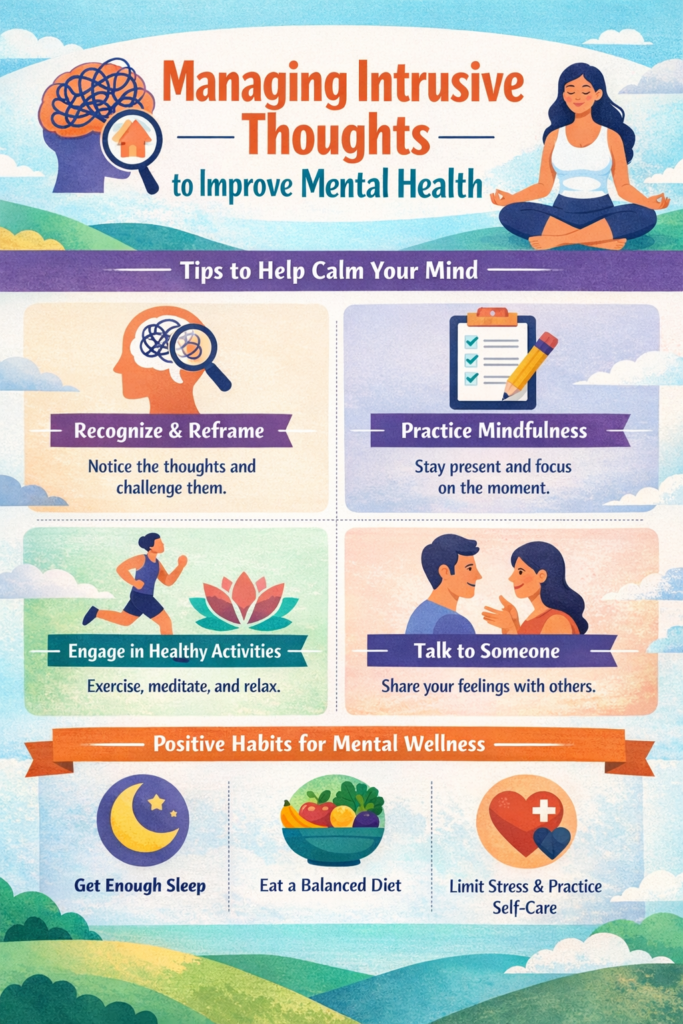
Intrusive thoughts are a common yet often misunderstood part of mental health. These unwanted, automatic thoughts can feel distressing, especially when they conflict with your values or sense of self. Many people struggle not because of the thoughts themselves, but because of how they respond to them—trying to suppress, analyze, or control them. Learning to manage intrusive thoughts is essential for improving mental well-being, as it allows individuals to reduce their intensity, break the cycle of overthinking, and develop a healthier relationship with their own mind.
🧠 Taking Back Control: Managing Intrusive Thoughts for Better Mental Health
Intrusive thoughts can feel overwhelming, confusing, and even distressing. They often appear suddenly—unwanted, repetitive, and difficult to ignore. These thoughts can involve fears, doubts, or images that don’t align with your values, making them even more unsettling. The key thing to understand is that intrusive thoughts are a normal part of the human experience. What matters most is not the thoughts themselves, but how you respond to them. Learning how to manage intrusive thoughts can help you regain a sense of control and improve your overall mental well-being.
🧠 What Are Intrusive Thoughts?
Intrusive thoughts are unwanted, involuntary thoughts that enter your mind without intention. They can be random, irrational, or even disturbing.
Examples include:
- Sudden fears or “what if” scenarios
- Thoughts that contradict your beliefs or values
- Repetitive worries or mental images
Having these thoughts does not mean you want them or that they reflect who you are.
⚠️ Why Trying to “Stop” Them Doesn’t Work
A common reaction is to try to push intrusive thoughts away—but this often makes them stronger.
This happens because:
- The brain interprets resistance as importance
- Suppression increases attention on the thought
- The thought becomes more frequent and intense
Instead of eliminating them, the goal is to change your relationship with them.
🔄 Change Your Response, Not the Thought
Managing intrusive thoughts starts with shifting how you react.
Helpful strategies:
- Acknowledge the thought without engaging (“That’s an intrusive thought”)
- Avoid judging yourself for having it
- Let it pass rather than trying to solve or analyze it
This reduces the thought’s power over time.
💭 Practice Cognitive Defusion
Cognitive defusion is a technique that helps you create distance from your thoughts.
Try:
- Saying the thought in a silly voice
- Adding “I’m having the thought that…” before it
- Visualizing the thought floating away
These techniques remind you that thoughts are not facts.
🌿 Ground Yourself in the Present
Intrusive thoughts often pull you into fear or uncertainty. Grounding helps bring you back to the present moment.
Examples:
- Focus on your breathing
- Name 5 things you can see, hear, or feel
- Engage in a physical activity like walking
Grounding interrupts the cycle of overthinking.
🧩 Reduce Reinforcement Behaviors
Certain behaviors can unintentionally “feed” intrusive thoughts.
Be mindful of:
- Repeatedly seeking reassurance
- Overanalyzing or trying to “figure out” the thought
- Avoiding situations out of fear
These can strengthen the cycle rather than break it.
🤝 When to Seek Support
If intrusive thoughts are frequent, distressing, or interfering with daily life, professional support can help.
Consider:
- Therapy (especially cognitive-behavioral approaches)
- Support groups
- Mental health resources
You don’t have to manage this alone.
🌱 Final Thoughts
Intrusive thoughts can feel powerful, but they do not define you. They are simply mental events—not reflections of your character or intentions. By learning to respond differently—through acceptance, awareness, and grounding—you can reduce their impact and regain a sense of control. Over time, these thoughts lose their intensity, and you can move forward with greater confidence and peace of mind.
🧠 Regaining Control: Self-Management Strategies to Manage Intrusive Thoughts and Improve Mental Health
Intrusive thoughts can feel intense, persistent, and difficult to ignore—but they are not a reflection of who you are. The key to managing them isn’t eliminating them entirely but learning to respond in ways that reduce their power. With the right self-management strategies, you can break the cycle of overthinking, reduce distress, and strengthen your overall mental well-being.
🧠 Build Awareness Without Judgment
The first step is recognizing intrusive thoughts for what they are—automatic mental events, not truths or intentions.
Try to:
- Label them: “This is an intrusive thought.”
- Notice when they occur and what triggers them
- Avoid reacting with fear or self-criticism
Awareness helps you step back rather than get pulled in.
🔄 Shift Your Response to Thoughts
How you respond determines whether intrusive thoughts grow stronger or fade.
Helpful strategies:
- Let the thought exist without trying to “fix” it
- Avoid engaging in mental debates or analysis
- Remind yourself: “I don’t need to act on this thought.”
This approach reduces the cycle of reinforcement.
💭 Practice Cognitive Defusion
Cognitive defusion techniques help you create distance from your thoughts.
Examples:
- Say: “I’m having the thought that…”
- Imagine the thought floating away like a cloud
- Repeat the thought in a neutral or silly tone
These techniques weaken the emotional impact of the thought.
🌿 Ground Yourself in the Present Moment
Intrusive thoughts often pull you into fear or “what if” scenarios. Grounding helps anchor you back to reality.
Try:
- Deep breathing exercises
- The 5-4-3-2-1 sensory technique
- Engaging in physical movement (walking, stretching)
Grounding interrupts the mental spiral.
🚫 Reduce Reinforcing Behaviors
Certain habits can unintentionally make intrusive thoughts stronger.
Be mindful of:
- Seeking constant reassurance
- Avoiding situations out of fear
- Replaying or analyzing the thought repeatedly
Reducing these behaviors helps break the cycle.
🧩 Develop Healthy Coping Alternatives
Replace mental over-engagement with supportive habits.
Consider:
- Journaling to release thoughts
- Practicing mindfulness or meditation
- Engaging in hobbies or creative activities
- Exercising to reduce stress
These outlets help regulate emotions in a healthier way.
📅 Create a Consistent Self-Care Routine
Mental health improves with consistency and structure.
Include:
- Regular sleep patterns
- Balanced nutrition
- Daily moments of relaxation or reflection
A stable routine supports emotional resilience.
🤝 Know When to Seek Additional Support
Self-management is powerful, but support can enhance your progress.
Consider professional help if:
- Thoughts feel uncontrollable or highly distressing
- They interfere with daily functioning
- You feel stuck despite trying strategies
Therapies like cognitive-behavioral therapy (CBT) can be especially effective.
💬 Final Thoughts
Managing intrusive thoughts is not about achieving a “quiet mind,” but about building a healthier relationship with your thoughts. With awareness, patience, and consistent self-management strategies, you can reduce their intensity and regain control. Over time, what once felt overwhelming can become manageable—and your mental space can feel calmer, clearer, and more grounded.
👨👩👧👦 Supporting the Mind: Family Strategies to Help Manage Intrusive Thoughts and Improve Mental Health
Intrusive thoughts can be confusing and distressing—not only for the person experiencing them, but also for their loved ones. Family support plays a powerful role in helping individuals manage these thoughts and improve their mental health. Through understanding, patience, and the right approach, families can create a safe environment that reduces fear, shame, and isolation while encouraging healthier coping strategies.
🧠 Learn What Intrusive Thoughts Are (and Aren’t)
One of the most important ways families can help is by understanding intrusive thoughts.
Key points to remember:
- Intrusive thoughts are unwanted and involuntary
- They do not reflect a person’s character or intentions
- They are a common mental experience
Educating yourself reduces misunderstandings and helps you respond with empathy instead of fear.
❤️ Create a Judgment-Free Environment
Individuals with intrusive thoughts may feel ashamed or afraid to open up.
Families can:
- Listen without reacting with shock or criticism
- Avoid labeling thoughts as “bad” or “wrong.”
- Reassure them that they are safe and supported
A non-judgmental space encourages honesty and reduces emotional distress.
🗣️ Encourage Open and Safe Communication
Talking about intrusive thoughts can reduce their intensity.
Supportive communication includes:
- Asking open-ended, gentle questions
- Letting them share at their own pace
- Validating feelings without reinforcing the thought
For example:
Instead of saying “Why would you think that?” → say “That sounds really distressing—do you want to talk about it?”
🧩 Avoid Reinforcing the Thought Cycle
Families often want to help by reassuring—but too much reassurance can unintentionally strengthen intrusive thoughts.
Be mindful to:
- Avoid repeatedly confirming that fears aren’t true
- Gently redirect focus rather than engaging in the thought
- Encourage coping strategies instead of “solving” the thought
This helps break the cycle rather than feed it.
🌿 Support Healthy Coping Strategies
Families can play an active role in encouraging positive habits.
Helpful support includes:
- Joining them in calming activities (walking, breathing exercises)
- Encouraging mindfulness or relaxation techniques
- Supporting hobbies or distractions that reduce overthinking
Shared activities can make coping feel less overwhelming.
🔄 Promote a Balanced Perspective
Intrusive thoughts can feel very real and convincing.
Families can gently remind:
- Thoughts are not facts
- Everyone experiences random or unwanted thoughts
- It’s okay to let thoughts come and go without acting on them
This reinforces a healthier relationship with thoughts.
🤝 Encourage Professional Support When Needed
If intrusive thoughts are persistent or distressing, professional help can be very beneficial.
Families can:
- Normalize therapy as a helpful tool
- Offer to help find resources or attend appointments
- Be supportive of treatment plans
Approaching this with care reduces stigma and resistance.
🌱 Practice Patience and Consistency
Managing intrusive thoughts takes time, and progress may be gradual.
Families should:
- Be patient during setbacks
- Celebrate small improvements
- Continue offering steady support
Consistency helps build trust and emotional safety.
💬 Final Thoughts
Family support can make a meaningful difference in managing intrusive thoughts and improving mental health. By creating a safe, understanding, and non-judgmental environment, families help reduce fear and empower their loved one to develop healthier coping strategies. While they cannot control the thoughts, they can provide something just as powerful—connection, reassurance, and unwavering support.
🌍 Community Support Matters: Resource Strategies to Manage Intrusive Thoughts and Improve Mental Health
Intrusive thoughts can feel isolating and overwhelming, but no one has to manage them alone. Beyond individual coping and family support, community resources provide essential tools, connections, and professional guidance. By accessing these supports, individuals can learn effective strategies, reduce distress, and build a stronger foundation for long-term mental well-being.
🧠 Access to Mental Health Services
Professional support is one of the most effective ways to manage intrusive thoughts.
Community resources include:
- Licensed therapists and counselors
- Community mental health clinics
- Low-cost or sliding-scale services
Therapies such as cognitive-behavioral approaches can help individuals change how they respond to intrusive thoughts.
🤝 Support Groups and Peer Networks
Connecting with others who understand intrusive thoughts can reduce feelings of isolation.
Benefits include:
- Shared experiences and validation
- Learning practical coping strategies
- Feeling less alone in the experience
Peer support creates a sense of belonging and normalizes these challenges.
🏫 Educational Workshops and Programs
Many communities offer mental health education that can empower individuals with the knowledge and skills they need.
Examples:
- Workshops on anxiety and thought management
- Mindfulness and stress-reduction classes
- Psychoeducation programs about intrusive thoughts
These programs help individuals better understand and manage their mental processes.
🧘 Access to Wellness and Mindfulness Resources
Community-based wellness programs can support emotional regulation and reduce stress.
Options may include:
- Yoga or meditation classes
- Relaxation and breathing workshops
- Fitness and wellness programs
These activities help calm the mind and reduce the intensity of intrusive thoughts.
💻 Online Communities and Digital Resources
Support is also widely available online, making it more accessible for many people.
Helpful resources:
- Online support forums and mental health communities
- Educational videos and guided exercises
- Apps focused on mindfulness and thought management
Digital platforms provide flexible, immediate access to support.
📢 Reducing Stigma Around Mental Health
Communities play a key role in shaping how people view mental health.
Efforts can include:
- Promoting open conversations about intrusive thoughts
- Sharing accurate information to reduce fear and misunderstanding
- Encouraging help-seeking behaviors
Reducing stigma makes it easier for individuals to reach out.
🧩 Crisis and Immediate Support Services
For individuals experiencing intense distress, immediate help is crucial.
Community resources may offer:
- Crisis hotlines
- Emergency mental health services
- 24/7 support lines
Knowing that help is available can provide reassurance and a sense of safety.
🌱 Building a Supportive Community Environment
A strong community fosters connection, understanding, and resilience.
This includes:
- Creating inclusive, supportive spaces
- Encouraging empathy and compassion
- Providing accessible mental health resources for all
💬 Final Thoughts
Intrusive thoughts become more manageable when supported by a strong community network. Access to education, professional care, peer support, and wellness resources can make a meaningful difference in reducing distress and improving mental health. By reaching out and engaging with these resources, individuals can feel less alone and more empowered in their journey toward a calmer, healthier mind.
Frequently Asked Questions
Here are some common questions:
What are intrusive thoughts?
Answer:
Intrusive thoughts are unwanted, automatic thoughts that enter your mind without intention. They can be disturbing, irrational, or out of character—but they are normal and do not reflect your true desires or identity.
Why do intrusive thoughts happen?
Answer:
Intrusive thoughts are a natural function of the brain. They often increase with:
- Stress or anxiety
- Overthinking
- Fatigue or lack of sleep
The brain sometimes “misfires,” producing random thoughts that feel important but aren’t.
Can intrusive thoughts be controlled?
Answer:
You can’t always stop them from appearing, but you can control how you respond to them. Managing your reaction—rather than trying to eliminate the thought—is the key to reducing their impact.
Why do intrusive thoughts feel so real or distressing?
Answer:
They often target your fears or values, which makes them feel important or threatening. The more you focus on them or try to “figure them out,” the more intense they can become.
What is the best way to manage intrusive thoughts?
Answer:
Effective strategies include:
- Acknowledging the thought without reacting
- Letting it pass without analyzing it
- Practicing mindfulness or grounding
- Reminding yourself: “This is just a thought, not a fact.”
Consistency with these strategies reduces their intensity over time.
Should I try to suppress intrusive thoughts?
Answer:
No. Trying to suppress them often makes them stronger. This is known as the “rebound effect,” where the brain brings the thought back more frequently because you’re trying to avoid it.
What is cognitive defusion?
Answer:
Cognitive defusion is a technique that helps you separate yourself from your thoughts.
Examples:
- Saying: “I’m having the thought that…”
- Imagining the thought floating away
- Repeating the thought until it loses meaning
This reduces the emotional impact of the thought.
Do intrusive thoughts mean something is wrong with me?
Answer:
No. Everyone experiences intrusive thoughts at times. They only become a concern if they are persistent, highly distressing, or interfere with daily life.
When should I seek professional help?
Answer:
Consider support if:
- Thoughts are frequent or overwhelming
- You feel unable to manage them on your own
- They interfere with daily functioning
Therapies like cognitive-behavioral therapy (CBT) are highly effective.
Can lifestyle habits help reduce intrusive thoughts?
Answer:
Yes. Healthy habits support mental well-being and reduce stress, including:
- Getting enough sleep
- Exercising regularly
- Practicing mindfulness or relaxation
- Maintaining a balanced routine
How long does it take to see improvement?
Answer:
It varies for each person. With consistent practice of coping strategies, many people begin to notice a reduction in intensity and frequency over time.
Conclusion
Managing intrusive thoughts is not about eliminating them entirely, but about changing how you relate to them. With awareness, self-compassion, and effective coping strategies, it is possible to reduce their impact and regain a sense of control. Over time, these thoughts become less powerful and less disruptive, allowing for greater emotional balance and clarity. By practicing these skills consistently and seeking support when needed, individuals can improve their mental health and create a more peaceful, resilient mindset.
Video: Intrusive Thoughts Won’t Leave Until You Stop Doing This #psychology