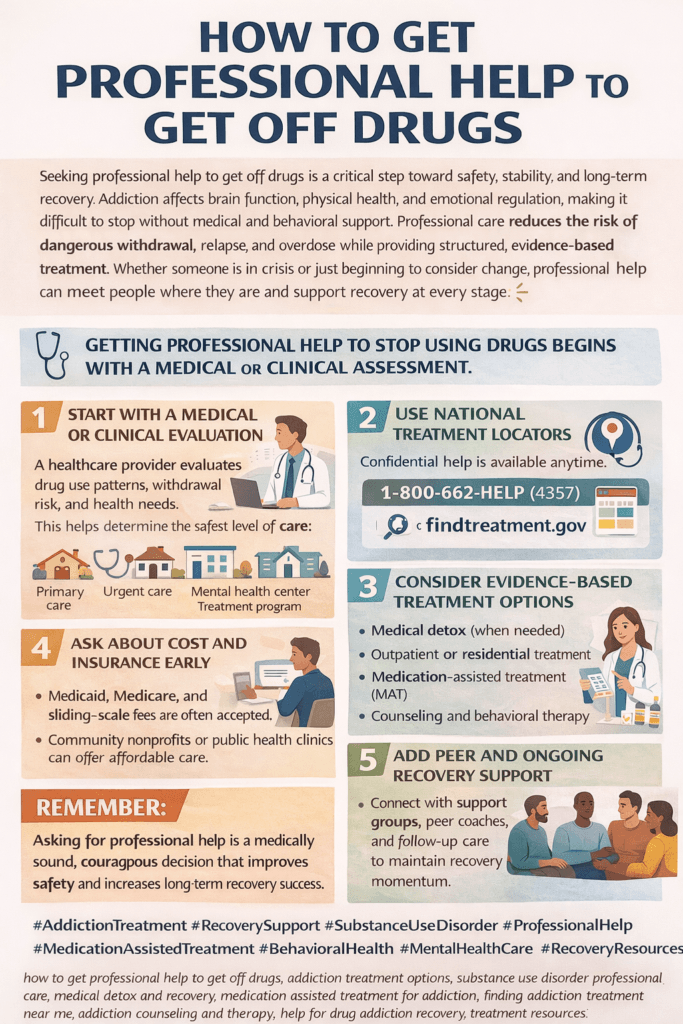
If you’re struggling with drug use and thinking about making a change, reaching out for professional help can be a powerful and practical step forward. Addiction affects the brain, behavior, and emotions in ways that often make quitting alone extremely difficult, but you don’t have to navigate it by yourself. Professional treatment offers medical care, counseling, structure, and accountability that can greatly improve safety and long-term success. While the process may feel overwhelming or unfamiliar at first, understanding what help is available can ease fear and build confidence. This guide breaks down what professional support looks like, how to access it, and what to expect along the way, so you can move forward with clarity, support, and hope.
Why Getting Off Drugs Is a Big Step (And Why Professional Help Helps)
Drug addiction affects millions of people around the world. For a lot of folks, it goes beyond a physical craving; it connects to stress, mental health, or tricky parts of daily life. Professional help is provided to address all aspects of the issue, not just the habit. This means support with both the mental and physical side effects, learning healthier coping skills, and making fundamental, lasting changes.
Missing out on support makes getting clean way tougher than it needs to be. Relapses are common, and even people with strong willpower might struggle with withdrawal, triggers, or setbacks. Trained professionals know how to spot patterns, offer guidance, and put together a treatment plan that actually fits your story. I always tell people that getting help isn’t a weakness; it’s just using every tool available to feel better.
Understanding Your Professional Help Options
Professional support for drug issues comes in lots of shapes and sizes. What you pick can depend on your situation, the substances involved, and what feels comfortable to you. Here’s a quick guide to what’s out there:
- Counselors and Therapists: A counselor or therapist is trained to help you look at why you use drugs, work through trauma, and learn new ways of handling triggers. They might use approaches such as cognitive-behavioral therapy (CBT), which has been shown to help people build new habits and change old thinking patterns (source).
- Medical Detox Programs: For people with a strong physical dependency, medical detox can make withdrawal safer. Doctors supervise as you stop using, sometimes with medications that ease withdrawal symptoms.
- Inpatient and Residential Treatment: Inpatient means you stay at a rehab center, usually for anywhere from 2 weeks to a few months. These programs are structured and focus on recovery day and night.
- Outpatient Treatment: With outpatient care, you live at home but attend regular appointments or group sessions. This is really handy if you can’t leave work or family for a long time.
- Support Groups: Groups like Narcotics Anonymous (NA) or SMART Recovery bring people together for peer support, which works well alongside therapy or as extra support (learn more about NA).
Some people use a mix of these options. The big thing is to find what matches up with your needs and feels doable for you right now. Mixing options can make the process smoother and give you access to more support when you need it.
How to Find a Professional Who Fits
Searching for the right therapist, counselor, or program doesn’t have to be overwhelming, but there are a few things I always keep in mind:
- Credentials and Licensing: Make sure anyone you consider is licensed in addiction counseling, social work, psychology, or medicine. This shows they have a basic level of training and professionalism.
- Experience with Addiction: Not all therapists focus on addiction or substance misuse. It helps if they’ve got experience with challenges like yours, including your specific drug issues or any mental health situations you’re facing.
- Approach to Treatment: Some professionals use evidence-based methods such as CBT, while others use medication-assisted treatment (MAT). It’s smart to ask about their style and see if it fits what you’re looking for. The SAMHSA Treatment Locator can help you track down reputable providers.
- Comfort Level: Trust your gut; with therapy, you want someone you feel comfortable talking to and being honest with.
It’s completely normal to try a session or two and then decide to keep looking for that just-right match.
Getting Started: Steps to Take When You’re Ready
If you’re getting serious about asking for help, here are some pointers for getting started:
- Reach Out: Call, email, or use online scheduling to start the first contact. Sometimes providers ask a few questions up front or offer a screening to get a sense of your needs.
- Assess Your Support Network: Think about who in your life can give you a boost—friends, family, or someone you trust. Having backup really helps.
- Prepare for Assessment: At your first appointment, expect some questions about your drug use, health background, and life situation. This info helps shape your customized plan.
- Be Honest: Even if it feels awkward, the more open you are about your struggles and worries, the more likely you’ll get the kind of help that works for you.
- Create a Plan: You and your provider will work as a team to choose the best treatment approach, whether that’s inpatient, outpatient, medication management, therapy, or a mix of these.
Common Challenges When Reaching Out for Help
Asking for help is a brave move, but it doesn’t happen without a few hiccups. Here are some stumbling blocks a lot of folks deal with, plus ways to manage them:
- Stigma and Judgment: Worrying about what others might think is pervasive. Remember, addiction is a health condition, not a character flaw. You deserve support, just as you would with any other health problem.
- Finding the Right Fit: Sometimes the first professional you meet isn’t the right one. Keep looking until you feel comfortable—it’s worth the effort.
- Cost and Insurance: Treatment can be pricey, especially inpatient care. Luckily, lots of options exist for those with lower incomes. Community clinics, health departments, and telehealth services might offer sliding scales or free care. Always ask about payment options up front.
- Time Commitments: Rehab or ongoing counseling can take a chunk out of your schedule. Many programs offer flexible options or help you plan around work and family.
Having trouble with these barriers doesn’t mean you aren’t ready or able to get help. Resources like FindTreatment.gov or local helplines can help you sketch out the next best steps and provide information about local programs you might have missed.
Treatments and Tools Used by Professionals
Most drug treatment plans are tailored to your needs, but here’s what you’ll usually find:
- Talk Therapy: This is where you work one-on-one with a trained therapist to talk through triggers, mental health, and future goals. Sometimes group therapy is offered, giving you a chance to hear from peers and share your own story.
- Medication Assisted Treatment (MAT): Medications like buprenorphine, methadone, or naltrexone can ease cravings and lower relapse rates, especially for opioid addiction (see more).
- Skills and Relapse Prevention Training: Learning to spot high-risk situations and respond in healthy ways makes long-term recovery a lot more likely.
- Holistic Treatments: Some treatment centers offer yoga, meditation, art therapy, or exercise as part of the healing journey. These extras can really boost your overall well-being and help lower stress levels during recovery.
You might use just one or a mix of these methods, depending on your personalized plan.
Real World Examples and Community Success
Plenty of people have made fundamental, lasting changes by working with professional help. For example, I’ve known several folks who started with outpatient counseling while keeping up with their jobs and later moved to all online support as their confidence grew. Others have shared how medication made detox smoother and gave them more energy to focus on building a new life. Community support can play a big part too; being in touch with people who genuinely get it lightens the load and keeps motivation up.
- Combining Approaches: It’s pretty standard for someone to use inpatient care for a short time, then step down to outpatient support to help maintain progress as they slide back into everyday life.
- Success with Peer Groups: Many folks stick with peer-led meetings even after formal treatment ends—sometimes for years—because it’s just that helpful and grounding.
Frequently Asked Questions
Question: How do I know if I need professional help for my drug use?
Answer: If you’re struggling to stop using drugs on your own, seeing negative impacts on your health, relationships, or work, or feeling overwhelmed by cravings or withdrawal, professional help is worth checking out for all the support and strategies you may need.
Question: What if I can’t afford expensive rehab?
Answer: Numerous clinics, nonprofits, and community health centers offer affordable or free treatment. Calling a local helpline or searching online can usually connect you to sliding scale options, so cost doesn’t hold you back from getting help.
Question: How long does it take to recover?
Answer: Recovery is different for everyone. Some folks see progress in a few weeks, while others have a longer road ahead. Consistency and support really make the difference, so don’t get discouraged if it takes time—every small step forward counts.
Getting Started: Taking That First Step Today
Finding professional help to get off drugs can line you up for real, lasting change. I’ve seen people go from feeling stuck and discouraged to hopeful and back in charge of their own lives, all with the proper support. Whether you’re just curious, ready to call a therapist, or planning to join a group session, each step forward is progress. Reach out for help, gather your resources, and remember that support is genuinely out there for you every step of the way.
Video: The Real Process of Getting Addiction Help #substance #mentalhealth