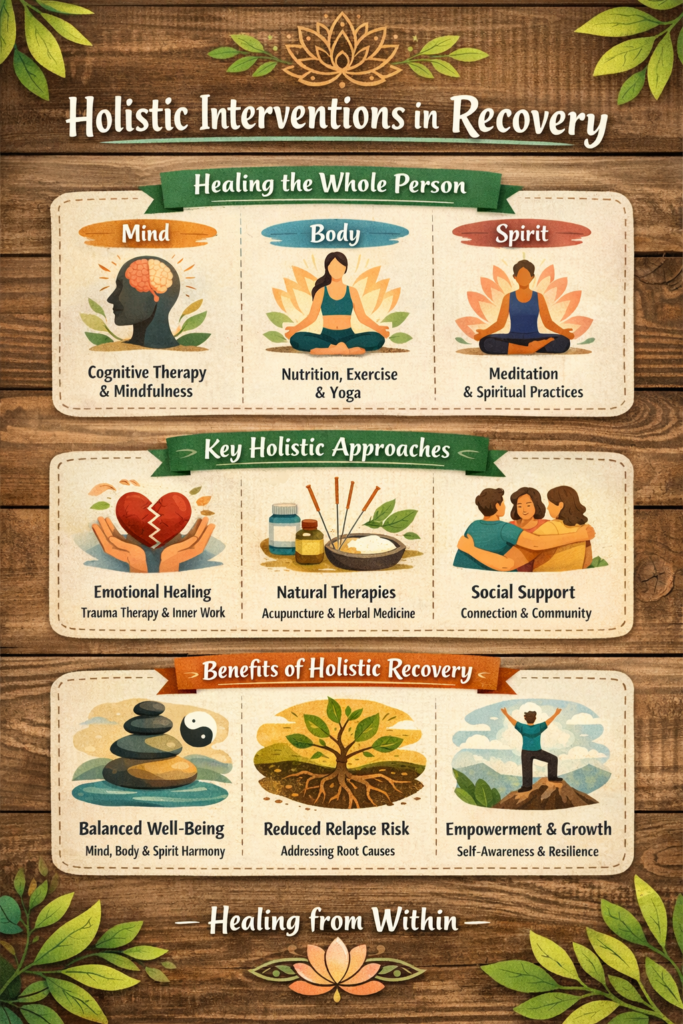
Holistic interventions in substance use recovery offer a fresh perspective for people looking for more than just traditional treatments. I’ve seen how bringing the whole person into focus—not just the addiction—can make the road to recovery feel more supportive and lasting. Whether you’re curious about new options for yourself or someone you care about, understanding how holistic methods work can help you decide what feels right and practical in real life.
What Are Holistic Interventions in Recovery?
Holistic interventions look at all parts of a person’s life: body, mind, emotions, and environment. Instead of only treating the physical side of addiction, these approaches recognize how things like mental health, lifestyle habits, relationships, and sense of purpose play into staying sober. Many people find this approach more human and supportive because it meets them where they are—not just focusing on symptoms, but on the underlying factors in their everyday lives.
This kind of care doesn’t replace clinical treatment for substance use; it can be a valuable add-on. Holistic strategies include nutrition guidance, mindfulness meditation, yoga, creative therapies (such as art and music), and social connection. In my experience, weaving these pieces together can make recovery programs feel friendlier and more doable for many people. For example, someone struggling with cravings might benefit from a combination of guided relaxation exercises, cooking healthy meals, and medical support.
Research published by NIH shows that combining traditional and holistic methods can boost engagement and improve mental health during recovery. Many treatment centers now offer a blend of these ideas because people tend to stick with recovery longer when their whole selves are considered. In short, holistic care treats people as more than just a diagnosis, which leads to more fulfilling and sustained progress.
Core Holistic Methods in Substance Use Recovery
Holistic recovery isn’t just about relaxing practices or alternative health. It’s practical, too. Here are a few popular methods that I think are worth checking out if you’re exploring a more well-rounded recovery adventure:
- Mindfulness and Meditation: Teaching attention skills helps people manage cravings and anxiety. Guided meditation apps or group classes can make this easier to start. Slow breathing or focusing on the present moment is a powerful tool for those tough moments of temptation or stress.
- Physical Exercise: Even light walks, gentle yoga, or stretching routines help the body recover from substance use and reduce stress. Some programs include structured workout classes or outdoor hikes, which not only strengthen the body but also boost mood and confidence.
- Creative Activities: Drawing, playing music, or journaling gives people new outlets for coping with tough feelings. Expressive arts therapy often lets people process what they can’t always put into words. These forms of creativity offer a safe space to let out emotions, and many find them surprising sources of relief during recovery.
- Nutrition and Sleep: Healthy food and regular rest support the healing of the brain and body. Many programs offer basic nutrition education and sleep hygiene support as part of recovery planning. Relearning how to plan meals or establish bedtime routines can be a gamechanger for mental and physical health.
- Social and Community Support: Shared meals, support groups, and peer mentorship all help people feel less alone. This is one of the big barriers to staying sober, based on what I’ve seen and read. Forming connections and accountability in a supportive environment makes a major difference in long-term success.
Adding these elements to your toolkit helps cover all the bases, especially for those who don’t feel seen or supported by traditional treatment models alone.
Building a Personal Holistic Recovery Toolkit
No single plan works for everyone. The most practical approach is to start with just one or two new practices and build from there. Here’s my go-to list for building a toolkit that fits your life and can change as you grow:
- Start with Basics: Try short daily practices, like writing down a gratitude list or taking five deep breaths before bed. Small changes often lead to bigger shifts over time.
- Lean on Community: Connect with local or online support circles. Even a weekly check-in or group chat can keep you from falling off track. Sharing stories and struggles helps ease the sense of isolation.
- Mix and Match: Choose what clicks for you—maybe that’s cooking balanced meals, doing a quick yoga video, or listening to calming music after work. The right combination of activities is unique for everyone, and sometimes even fun to discover.
- Get Outside: Simply getting fresh air or taking a stroll in nature can clear your mind and reset your body’s stress levels. Nature adds another layer of calm and perspective, supporting your recovery process without much cost or effort.
- Ask for Guidance: Chat with a medical or mental health professional before making big changes, especially if you’re already in treatment. Professionals can point you to safe, supportive options that work with, not against, your main recovery plan. This step makes sure everything you’re putting into your toolkit is safe and effective for your needs.
Experimenting with small, manageable steps makes holistic recovery less overwhelming and more likely to stick.
Barriers to Using Holistic Interventions in Recovery
Holistic care sounds appealing, but it’s not always simple in practice. Here are a few challenges people run into along the way, based on both my experience and what the research says:
- Cost and Access: Not all programs are covered by insurance, so financial stress can be a hurdle. Looking for sliding scale centers or free online resources can help. Sometimes community organizations or nonprofits offer free classes or group sessions, so it’s worth looking around.
- Finding Time: Many people juggling families, jobs, or school feel they simply don’t have a spare minute. Starting small and choosing practices that fit into your daily routine (like mindful breathing while commuting) makes things more realistic. It’s okay to start with what works for your real schedule, and add more as you’re able.
- Stigma and Misunderstanding: Sometimes, holistic practices are seen as “fluffy” or unscientific. Reminding yourself and others that there’s good research showing benefits can help chip away at this skepticism. Conversations with open-minded friends or professionals sometimes reveal shared interests where you least expect them.
- Lack of Consistency: It takes time for new habits to stick. Support from others and gentle reminders can make a big difference. Some people find that adding a new habit to something they already do—like listening to relaxing music while washing dishes—helps make it second nature.
Cost and Access
Therapies like acupuncture, massage, or certain nutrition programs might come with a hefty price tag unless you find a clinic with grants or community support. Free apps or YouTube videos for mindfulness and at-home yoga can be practical starting points if you’re on a tight budget. Most public libraries now offer free DVDs or classes, which can be an unexpected resource for those starting out.
Stigma and Misunderstanding
Family, friends, or even healthcare providers might not always understand the value of art therapy or breathwork. Sharing research or asking them to try out a session can sometimes break the ice, making it easier to ask for support. Educating yourself and gently sharing what you learn is a practical way to shift perceptions step by step.
Practical Tips for Mixing Holistic and Traditional Methods
Pairing holistic programs with standard treatments, such as counseling or doctor-supervised medication, often yields better results. Here are a few tips I usually recommend:
- Keep Your Providers in the Loop: Tell your counselor or doctor about any holistic activities you include. They can help monitor how everything works together and alert you to any concerns or safety issues you might miss.
- Set Small, Achievable Goals: Write down what you want to try, like meditating three times a week or eating a healthy breakfast each day. Marks on a calendar or notes in your phone can keep you accountable and show your progress.
- Be Patient with Progress: Results might come slowly, but tracking how you feel over time can be motivating. Small wins matter, and it’s worth celebrating them. Taking stock of positive changes, even if subtle, helps build momentum.
- Look for Feedback: Get honest opinions from your support group or mentors on how specific practices are helping (or not). Listening to what works for others may even spark new ideas to try yourself.
Merging holistic methods with conventional care is about balance—honoring your needs while using proven tools.
Holistic Interventions in Real Life: What Success Looks Like
Real-life stories and experiences often give the best sense of what works for people facing addiction. For example, I know a few people who found journaling and art therapy surprisingly effective for handling urges or difficult emotions. In some cases, these tools gave them a way to check in with themselves when traditional meetings weren’t available, making them feel more independent and equipped to face daily triggers.
Peer support groups are another area where holistic ideas come alive. The sense of belonging and shared experience make sticking with recovery more realistic. Volunteering, creative project nights, or hiking meetups sometimes provide that extra bit of motivation that group therapy alone can’t always match. Activities like preparing meals together or working on group art projects add social connection and purpose to the recovery experience.
- Nature-Based Recovery: switch-upNature-Based Recovery: Spending time outdoors, group gardening, or nature walks helps with anxiety and builds social connections.
- Mindful Movement: Slow yoga or Tai Chi classes help with body awareness, especially for people coping with restlessness or anxiety in early recovery. Movement therapies support both physical and emotional health at a gentle, accessible pace.
- Creative Workshops: From free community music jams to online painting classes, creative hobbies can help fill empty time with positive, engaging activities. These activities are especially helpful for people who might feel boredom or restlessness—two well-known relapse triggers.
Holistic interventions bring new options and hope to the table, encouraging each person to tailor their recovery in ways that make sense for them.
Frequently Asked Questions
Here are a few questions people often have about holistic recovery, straight from my inbox and conversations:
Question: Are holistic methods safe during detox?
Answer: It’s really important to talk with your doctor or program director before starting anything new during detox. Some methods, like gentle mindfulness or breathing exercises, are often safe, but you’ll want professional advice for anything more involved. Safety should come first, especially when your body is going through big changes.
Question: How can I know if holistic strategies are helping?
Answer: Keep a daily journal rating your mood, energy, and cravings. After a few weeks, look for patterns. You can also ask your counselor or support group for feedback. These notes can make it easier to spot progress or areas needing a switch-up as you go along.
Question: Are holistic approaches effective without other treatments?
Answer: Most research shows that using holistic ideas alongside medical or evidence-based therapy gives better outcomes than going solo on either path. Think of holistic interventions as a support tool, not a full replacement. Blending approaches gives a better chance at long-lasting change.
Moving Forward with Holistic Recovery
Starting with holistic recovery doesn’t mean tossing out proven medical or therapy tools. It’s about finding habits and support systems that make lasting change feel realistic and not overwhelming. If you’re curious, start small, reach out for expert advice, and see how a few tiny changes can build a big impact. The path is personal, but you don’t have to walk it alone. With patience, an open mind, and support, holistic recovery can be a sustainable and rewarding choice for many.
Video: