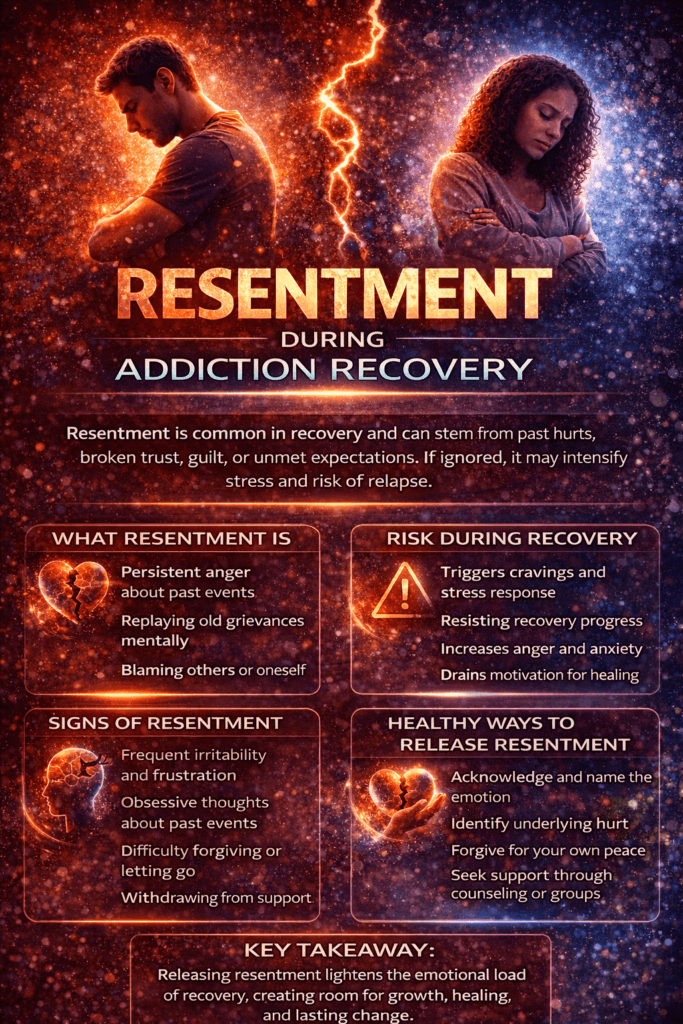
Resentment is a common emotional experience during addiction recovery, often rooted in past pain, broken trust, guilt, or unresolved conflict. While it is a natural reaction to difficult experiences, resentment can become a barrier to healing if it is ignored or suppressed. It may intensify stress, trigger cravings, and keep individuals emotionally tied to the past rather than focused on growth. Recognizing resentment as a signal—not a flaw—allows individuals to explore underlying emotions, understand their sources, and begin the process of releasing them in healthy, constructive ways.
Resentment in Addiction Recovery: Understanding and Letting Go
Resentment is one of the most common—and most dangerous—emotions people experience during addiction recovery. It can develop from past hurts, broken relationships, guilt, shame, or feelings of injustice. While resentment is a natural emotional response, holding onto it can quietly undermine healing by increasing stress, triggering cravings, and keeping individuals emotionally stuck in the past. In recovery, learning to recognize and release resentment is not about ignoring pain; it is about freeing oneself from the emotional weight that can threaten sobriety and personal growth.
What Resentment Really Is
Resentment is a persistent emotional reaction to perceived unfairness, betrayal, or hurt. It often includes:
- Anger that lingers
- Replaying past events mentally
- Blaming others or oneself
- Feeling emotionally “stuck.”
Unlike temporary frustration, resentment tends to build over time and can become part of a person’s mindset if not addressed.
Why Resentment Is Risky in Recovery
Resentment can act as a relapse trigger because it activates stress responses and emotional discomfort. When unresolved, it may:
- Increase anxiety and irritability
- Fuel negative thinking
- Reinforce victim mentality
- Lower motivation for recovery
- Trigger urges to escape emotions
Many recovery programs emphasize addressing resentment because unresolved emotional pain can quietly drive relapse behavior.
Common Sources of Resentment During Recovery
People in recovery may feel resentment toward:
- Family members who lost trust
- Friends who distanced themselves
- Employers or institutions
- They themselves for past mistakes
- Life circumstances or trauma
Recognizing the source helps individuals process emotions rather than suppress them.
Signs Resentment May Be Affecting Recovery
Some warning signs include:
- Frequent irritability or anger
- Obsessive thoughts about past events
- Difficulty forgiving
- Emotional numbness
- Withdrawal from supportive relationships
These signs often indicate unresolved emotional wounds that need attention.
Healthy Ways to Process Resentment
1. Acknowledge the Emotion
Suppressing resentment gives it more power. Naming the feeling is the first step toward releasing it.
2. Separate Feelings From Facts
Emotions may intensify perceptions. Reflecting on what actually happened versus how it felt can bring clarity.
3. Practice Emotional Expression
Healthy outlets include:
- Journaling
- Talking with a therapist or sponsor
- Creative expression
- Support groups
Expression prevents emotions from building into resentment.
4. Work Toward Forgiveness (Not Forgetting)
Forgiveness is not excusing harm—it is choosing not to let past pain control present peace. It benefits the person healing more than the person forgiven.
5. Focus on Present Growth
Redirecting attention toward progress, goals, and self-improvement weakens resentment’s grip.
Letting Go of Self-Resentment
Many people in recovery struggle most with resentment toward themselves. Self-forgiveness is essential for healing and includes:
- Accepting past mistakes without denial
- Taking responsibility
- Making amends where possible
- Recognizing growth
Self-compassion reduces shame, which is a major relapse risk factor.
The Role of Support Systems
Support networks help individuals process resentment safely and constructively. Helpful supports include:
- Therapists or counselors
- Recovery groups
- Mentors or sponsors
- Trusted friends or family
Talking through resentments often reduces their intensity and provides new perspectives.
Transforming Resentment Into Growth
When addressed constructively, resentment can become a powerful teacher. It can reveal:
- Unmet needs
- Personal boundaries
- Emotional wounds
- Areas needing healing
Viewed this way, resentment becomes information rather than a burden.
Conclusion
Resentment during addiction recovery is not a sign of failure—it is a sign that healing is still unfolding. Left unaddressed, it can quietly sabotage progress, but when faced with honesty and support, it can become an opportunity for emotional growth and deeper self-understanding. Learning to release resentment does not erase the past; it frees individuals from being controlled by it.
Key Takeaway:
Recovery is not only about letting go of substances—it is also about letting go of the emotional weights that made them feel necessary. When resentment is processed and released, space opens for peace, resilience, and lasting transformation.
Self-Management Strategies to Understand and Release Resentment During Addiction Recovery
Resentment can be one of the most persistent emotional obstacles in addiction recovery. It often arises from past pain, broken trust, guilt, or feelings of injustice, and if left unresolved, it can quietly fuel stress, anger, and relapse risk. While resentment is a normal emotional response, holding onto it can keep individuals emotionally tied to past wounds instead of moving forward. Self-management strategies empower people in recovery to recognize resentment early, process it constructively, and release it in healthy ways. By learning to work with emotions rather than suppress them, individuals can transform resentment from a barrier into a catalyst for healing and growth.
Recognize Resentment Early
Awareness is the first step toward change. Early signs may include:
- Replaying past events repeatedly
- Feeling easily irritated or defensive
- Holding grudges
- Experiencing emotional heaviness
Identifying resentment early prevents it from building into overwhelming emotional distress.
Name and Validate the Emotion
Acknowledging resentment reduces its power. Instead of judging the feeling, try saying:
“I feel resentful because something hurt me.”
Validation does not mean approval of the situation—it simply means recognizing the emotion honestly.
Identify the Root Cause
Resentment often masks deeper emotions such as hurt, fear, shame, or disappointment. Ask yourself:
- What exactly am I upset about?
- What need wasn’t met?
- What belief was challenged?
Understanding the underlying cause helps target the real issue rather than reacting to surface emotions.
Separate Past From Present
Many resentments persist because the mind repeatedly revisits old experiences. Grounding techniques help anchor attention in the present:
- Focus on current surroundings
- Practice mindful breathing
- Remind yourself what is different now
This reduces emotional reactivity tied to past memories.
Practice Cognitive Reframing
Reframing changes how you interpret events. For example:
- Instead of: “They ruined everything,”
- Try: “That experience hurt me, but I’m learning from it.”
Reframing does not deny pain—it shifts perspective toward growth.
Release Emotional Tension Safely
Physical and emotional release prevents resentment from building. Healthy outlets include:
- Exercise or movement
- Writing letters you don’t send
- Creative expression
- Talking with a counselor or sponsor
Expressing emotions safely reduces their intensity and prevents internal buildup.
Work Toward Forgiveness Gradually
Forgiveness is a process, not a single decision. It often involves:
- Accepting what happened
- Letting go of revenge thoughts
- Choosing peace over resentment
Forgiveness benefits emotional health even if reconciliation is not possible.
Address Self-Directed Resentment
Many individuals struggle most with resentment toward themselves. Healing self-resentment includes:
- Accepting responsibility without self-punishment
- Recognizing progress
- Making amends where possible
- Practicing self-compassion
Self-forgiveness strengthens motivation and reduces shame, a major relapse trigger.
Build a Daily Emotional Reset Routine
Regular emotional maintenance prevents resentment from accumulating. Helpful habits include:
- Evening reflection or journaling
- Gratitude practice
- Mindfulness meditation
- Checking in with emotions
These practices keep emotional buildup from becoming overwhelming.
Seek Support When Needed
Self-management does not mean managing alone. Support systems provide perspective and guidance. Talking through resentments with trusted people can quickly reduce their intensity and help uncover solutions.
Conclusion
Releasing resentment during addiction recovery is not about forgetting the past—it is about freeing yourself from its emotional grip. Through self-awareness, emotional processing, reframing, and forgiveness, individuals can gradually transform resentment into understanding and personal growth. These self-management strategies strengthen emotional resilience, making it easier to navigate stress without returning to harmful coping patterns.
Key Insight:
Resentment fades when it is understood. By learning to recognize, process, and release difficult emotions, individuals in recovery reclaim their energy, protect their progress, and create space for peace, clarity, and lasting healing.
Family Support Strategies to Understand and Release Resentment During Addiction Recovery
Resentment is a common emotional response for families affected by addiction. Loved ones may carry lingering hurt, anger, disappointment, or fear stemming from broken trust, past conflicts, or difficult experiences during active substance use. At the same time, individuals in recovery may feel resentment toward family members for perceived judgments, boundaries, or past misunderstandings. If left unaddressed, these feelings can quietly strain relationships and interfere with healing. Families who learn how to recognize, understand, and release resentment create an environment where recovery and relationship repair can grow together. Supportive strategies can transform resentment from a barrier into an opportunity for understanding, compassion, and emotional healing.
Recognize That Resentment Is Normal
Resentment does not mean someone is unwilling to heal—it often means they are still hurting. Families can help by:
- Acknowledging emotions without shame
- Understanding that healing takes time
- Avoiding pressure to “move on” quickly
Normalization reduces guilt and encourages honest emotional expression.
Encourage Open and Safe Conversations
Resentment often grows in silence. Families can reduce emotional tension by creating space for calm discussions. Helpful approaches include:
- Choosing neutral, low-stress times to talk
- Listening without interrupting
- Asking curious rather than accusatory questions
- Reflecting back on what was heard
Safe communication helps emotions be processed instead of suppressed.
Focus on Understanding, Not Winning
Arguments fueled by resentment often revolve around proving who is right. A more healing approach is to ask:
- What hurt you most?
- What did you need at that time?
- What would help now?
Seeking understanding builds empathy and weakens resentment’s hold.
Validate Feelings Without Blame
Validation does not mean agreeing—it means acknowledging someone’s experience. Statements such as:
- “I can see why that hurt you.”
- “That must have been really hard.”
help people feel heard, which often reduces emotional intensity.
Avoid Rehashing Past Mistakes Repeatedly
While it is important to process the past, constantly bringing up old events can keep resentment alive. Families can instead:
- Address issues once with intention
- Focus on present behavior
- Recognize current progress
Shifting attention toward growth supports forward movement.
Model Emotional Regulation
Families influence emotional tone. Demonstrating calm responses, patience, and respectful communication shows that conflict can be handled safely. When loved ones model emotional stability, it becomes easier for everyone to respond thoughtfully rather than react impulsively.
Encourage Healthy Emotional Outlets
Families can support the release of resentment by encouraging constructive expression, such as:
- Journaling
- Counseling
- Physical activity
- Creative hobbies
Healthy outlets help emotions move through rather than remain stuck.
Support Forgiveness as a Process
Forgiveness is not instant and cannot be forced. Families can help by:
- Allowing each person to heal at their own pace
- Respecting emotional readiness
- Avoiding pressure for reconciliation
Patience helps forgiveness develop naturally.
Address Self-Resentment With Compassion
Many individuals in recovery feel deep resentment toward themselves. Families can reduce this by:
- Encouraging self-compassion
- Recognizing progress
- Reinforcing positive change
- Avoiding harsh criticism
Supportive feedback strengthens confidence and emotional healing.
Seek Professional Guidance When Needed
Family therapy or counseling can help navigate complex emotions safely. Professionals can:
- Facilitate balanced conversations
- Teach communication skills
- Help resolve lingering conflicts
- Guide emotional processing
Guided support often accelerates healing and reduces tension.
Conclusion
Releasing resentment during addiction recovery is a shared emotional journey that requires patience, understanding, and compassion from everyone involved. Families who approach resentment with empathy rather than judgment create a safe space where healing can occur, and relationships can be rebuilt. Over time, open communication, validation, and supportive actions gradually replace anger with understanding and distance with connection.
Key Takeaway:
Resentment fades when it is acknowledged, understood, and processed together. When families support emotional healing alongside sobriety, they help create stronger relationships, deeper trust, and a more stable foundation for lasting recovery.
Community Resource Strategies to Understand and Release Resentment During Addiction Recovery
Resentment is a powerful emotion that can quietly interfere with addiction recovery if it is not addressed. It may stem from past trauma, damaged relationships, stigma, or feelings of injustice experienced during active substance use. While individuals and families play key roles in emotional healing, community resources provide broader support systems that help people process and release resentment in healthy, constructive ways. When communities offer safe spaces, education, mental health services, and opportunities for growth, they create environments where individuals can work through difficult emotions rather than suppress them. Community involvement transforms resentment from an isolating burden into a shared opportunity for healing, understanding, and resilience.
Provide Access to Counseling and Emotional Support Services
Professional guidance is one of the most effective ways to address lingering resentment. Communities can support healing by offering:
- Affordable therapy services
- Trauma-informed counseling programs
- Group therapy sessions
- Crisis support resources
These services help individuals process unresolved emotions safely and develop healthier coping strategies.
Expand Peer Support Networks
Peer groups allow individuals to share experiences with others who understand similar struggles. Community-based support groups:
- Normalize emotional challenges
- Reduce feelings of isolation
- Offer perspective and validation
- Provide encouragement for growth
Hearing others’ stories often helps individuals release resentment and replace it with understanding.
Promote Education About Addiction and Emotional Health
Public education reduces stigma and misunderstanding—two major sources of resentment. Community programs that teach about:
- The science of addiction
- Emotional regulation skills
- Trauma and recovery
- Communication strategies
can foster empathy and reduce blame within the community.
Create Safe Spaces for Expression
Communities can support emotional release by offering environments where individuals feel heard and respected, such as:
- Community wellness centers
- Recovery cafés
- Faith or spiritual support groups
- Creative arts programs
Safe spaces encourage the expression of feelings that might otherwise remain bottled up.
Encourage Restorative Justice and Reconciliation Programs
When harm has occurred, restorative programs allow individuals to repair relationships and make amends constructively. These initiatives focus on:
- Accountability
- Dialogue
- Understanding impact
- Healing relationships
Such programs can significantly reduce resentment on all sides.
Support Skill-Building and Personal Growth Opportunities
Growth-focused programs help individuals shift attention from past pain to future progress. Communities can offer:
- Job training programs
- Educational courses
- Volunteer opportunities
- Life skills workshops
Engaging in purposeful activities strengthens self-worth and reduces rumination on past grievances.
Train Community Gatekeepers in Emotional Awareness
Teachers, employers, mentors, and first responders often encounter individuals struggling with unresolved emotions. Training these community members to recognize signs of emotional distress or resentment allows early support and referral to appropriate resources.
Foster Inclusive and Nonjudgmental Environments
Communities that reduce stigma create conditions where healing can occur. Inclusive policies and attitudes:
- Encourage people to seek help sooner
- Reduce shame and defensiveness
- Promote mutual understanding
- Strengthen social connection
Belonging is a powerful antidote to resentment.
Encourage Healthy Social Connection
Isolation strengthens resentment, while connection weakens it. Communities can promote healing by supporting:
- Group activities
- Mentorship programs
- Volunteer projects
- Recovery events
Positive social experiences replace negative emotional loops with supportive relationships.
Conclusion
Understanding and releasing resentment during addiction recovery becomes far more achievable when communities provide resources that support emotional healing. Counseling services, peer networks, education, restorative programs, and inclusive environments all work together to help individuals process difficult emotions and move forward. Communities that actively support emotional health don’t just help individuals recover—they help them thrive.
Key Takeaway:
Resentment fades when people feel heard, supported, and understood. When communities invest in resources that promote healing, connection, and growth, they create powerful pathways for individuals in recovery to release the past and build healthier, more hopeful futures.
Frequently Asked Questions
Here are some common questions:
1. Is resentment normal during addiction recovery?
Yes. Resentment is a common emotional response, especially after experiences involving hurt, betrayal, guilt, or shame. It often surfaces as individuals begin processing emotions they may have avoided during active substance use.
2. Why is resentment considered risky in recovery?
Resentment can increase stress, trigger cravings, and reinforce negative thinking patterns. If left unresolved, it may lead to emotional overwhelm or relapse because individuals may try to escape painful feelings.
3. What are common sources of resentment in recovery?
Resentment may be directed toward:
- Family members or friends
- Authority figures or institutions
- Past circumstances or trauma
- Oneself for past decisions
Identifying the source helps individuals understand what emotional wounds need healing.
4. How can someone tell if they’re holding onto resentment?
Signs may include:
- Frequent irritability or anger
- Replaying past conflicts repeatedly
- Difficulty forgiving
- Feeling emotionally stuck
- Withdrawing from others
These patterns often indicate unresolved emotional tension.
5. Is resentment the same as anger?
Not exactly. Anger is usually temporary, while resentment is long-lasting anger that has been held onto over time. Resentment tends to linger and can shape attitudes and behavior if not addressed.
6. Can resentment be helpful in any way?
Yes—when recognized and processed, resentment can signal unmet needs, unresolved pain, or violated boundaries. It can serve as useful information about what requires healing or change.
7. How can someone start releasing resentment?
Helpful steps include:
- Acknowledging the feeling honestly
- Identifying the root cause
- Talking with a therapist or support group
- Practicing forgiveness gradually
- Redirecting focus toward growth and recovery goals
Healing resentment is a process, not a single decision.
8. What about resentment toward oneself?
Self-resentment is very common in recovery. It often comes from guilt or shame about past actions. Self-compassion, accountability, making amends, and recognizing progress can help reduce this burden.
9. Does forgiveness mean forgetting what happened?
No. Forgiveness does not erase the past or excuse harmful behavior. It means choosing not to carry the emotional weight of resentment so it no longer controls your present life.
10. Can therapy help with resentment?
Absolutely. Therapy can help individuals process painful experiences, understand emotional triggers, and learn coping strategies that support healing and emotional regulation.
11. What if resentment keeps coming back?
Recurring resentment usually indicates deeper emotions that still need attention. Continued reflection, support, and emotional work can gradually reduce their intensity.
12. Is releasing resentment part of recovery?
Yes. Emotional healing is a core component of long-term recovery. Letting go of resentment often leads to improved mental health, stronger relationships, and reduced relapse risk.
Conclusion
Addressing resentment is essential to recovery because emotional healing supports long-term stability and resilience. When individuals learn to process hurt, practice forgiveness, and develop healthier coping strategies, resentment gradually loses its power. This does not mean forgetting the past, but rather choosing not to let it control the present. By facing resentment with honesty and support, people in recovery can transform emotional pain into insight, strengthen their relationships, and build a more peaceful and balanced life.
Video: