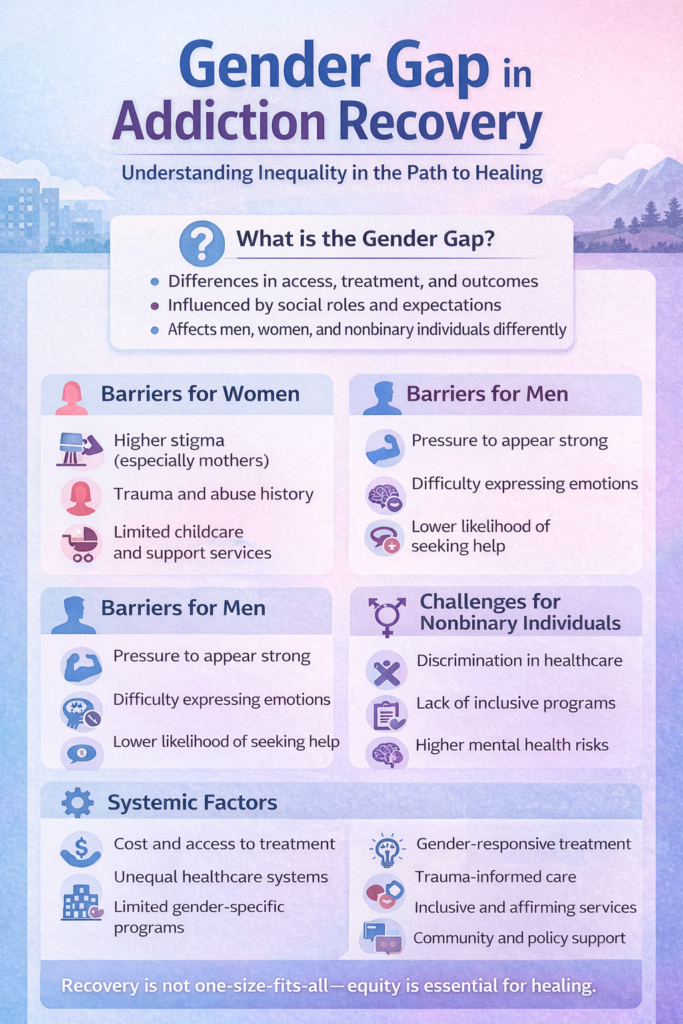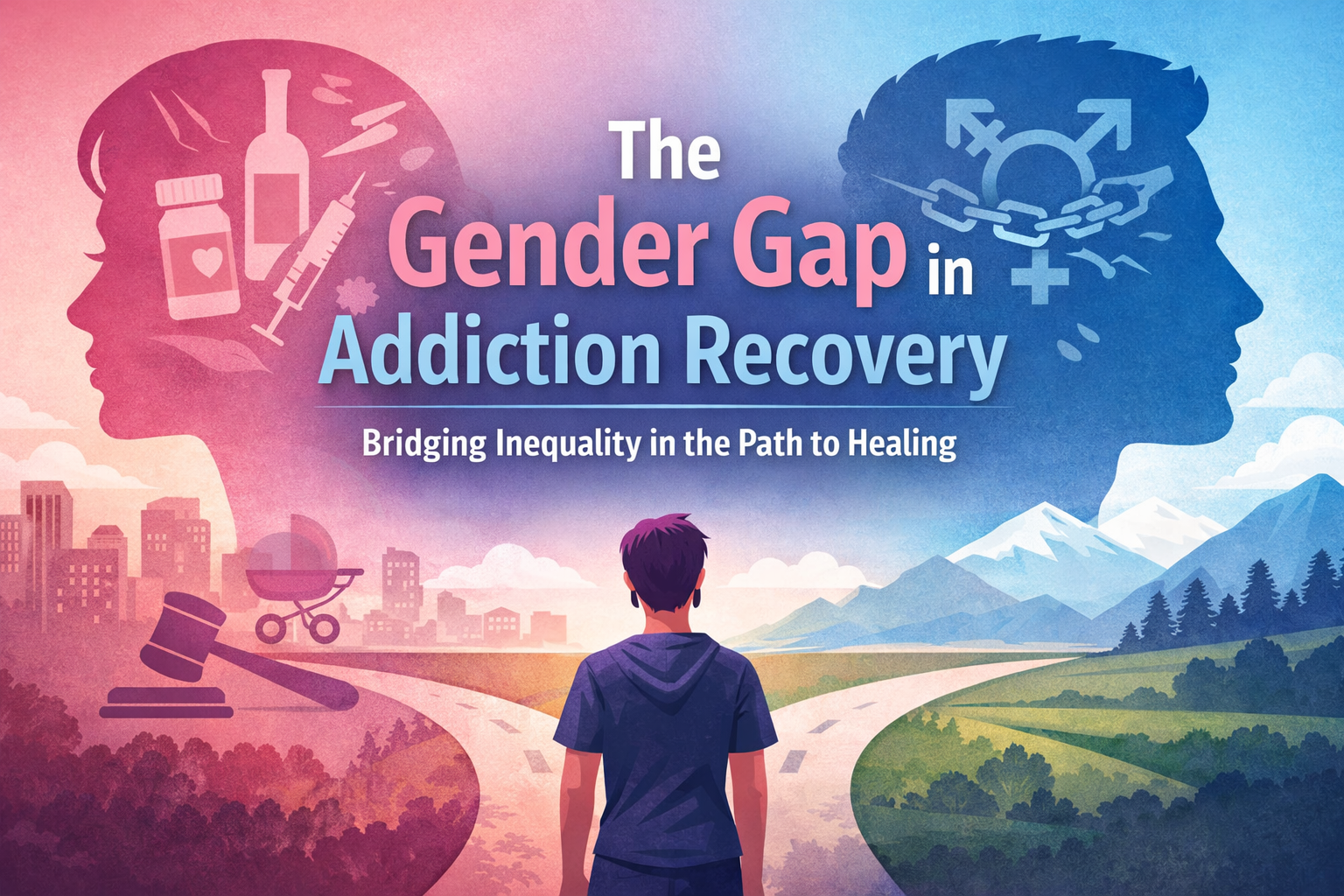
Addiction recovery is often treated as a universal experience, but this view overlooks the important role gender plays in shaping both the experience of addiction and access to treatment. Men, women, and nonbinary individuals face different social expectations, varying levels of stigma, and unique structural barriers that influence their recovery paths. These differences are not merely individual but stem from broader cultural and systemic inequalities. Recognizing the gender gap in addiction recovery is crucial for creating more effective and inclusive approaches that address diverse needs rather than relying on a one-size-fits-all model.
Unequal Paths to Healing: The Gender Gap in Addiction Recovery
Addiction recovery is often presented as a universal process, but in reality, it is shaped by gender in significant ways. Men, women, and nonbinary individuals experience addiction differently and face unique barriers when seeking treatment. These differences are not just biological—they are deeply influenced by social expectations, stigma, and access to resources. Understanding the gender gap in addiction recovery reveals how inequality extends into healthcare and affects outcomes.
- Recovery is influenced by:
- Social expectations
- Access to care
- Cultural stigma
- Gender shapes both addiction experiences and recovery pathways
Barriers Women Face in Recovery
Women often encounter structural and social barriers that make recovery more difficult. These challenges are frequently tied to caregiving roles and societal judgment.
- Common challenges include:
- Fear of losing custody of children
- Greater social stigma, especially for mothers
- Higher likelihood of experiencing trauma (e.g., abuse, domestic violence)
- Many treatment programs:
- Lack of trauma-informed care
- Do not address gender-specific needs
These factors can delay treatment or make recovery less accessible for women.
Challenges Men Face in Recovery
Men face a different set of obstacles rooted in traditional ideas about masculinity. Social expectations often discourage emotional expression and help-seeking behavior.
- Key barriers include:
- Pressure to appear strong and self-reliant
- Difficulty expressing vulnerability
- Delayed or avoided treatment
- Outcomes may include:
- Higher substance use rates
- Lower engagement in therapy
While men may face less stigma in some cases, these cultural norms can limit their recovery success.
Disparities for Nonbinary and Transgender Individuals
Nonbinary and transgender individuals often face the most significant barriers due to discrimination and a lack of inclusive care.
- Common issues include:
- Limited access to affirming treatment programs
- Healthcare discrimination
- Higher rates of mental health challenges
- As a result:
- Recovery can feel unsafe or inaccessible
These gaps highlight the need for more inclusive and culturally competent care systems.
Systemic Factors Behind the Gender Gap
The gender gap in addiction recovery is reinforced by broader systemic issues that affect access and outcomes.
- Contributing factors include:
- Financial barriers
- Lack of childcare support
- Unequal healthcare access
- Limited availability of specialized programs
- Systems that ignore these factors:
- Reinforce inequality
- Reduce the effectiveness of treatment
Rethinking Recovery Approaches
Addressing the gender gap requires more inclusive and adaptive treatment strategies that reflect diverse experiences.
- Effective approaches include:
- Gender-responsive treatment programs
- Trauma-informed care
- Inclusive and affirming services
- Also important:
- Challenging stereotypes (e.g., “men shouldn’t show emotion”)
- Expanding access to resources
Recovery must be tailored, not one-size-fits-all.
Conclusion
The gender gap in addiction recovery reveals that healing is not experienced equally. While individuals may share similar struggles with addiction, their paths to recovery are shaped by social, cultural, and systemic forces that create unequal opportunities for support and success. Addressing these disparities requires not only improving treatment systems but also challenging the norms and structures that reinforce inequality. Recovery is both a personal journey and a socially influenced process, shaped by the environments in which individuals live. True progress depends on systemic change, greater awareness of gender-specific challenges, and a commitment to equity in treatment so that all individuals have a fair opportunity to heal.
Bridging the Divide: Self-Management Strategies in Understanding the Gender Gap in Addiction Recovery
Addiction recovery is not experienced equally across genders, and self-management strategies must reflect these differences. Men, women, and nonbinary individuals face unique emotional, social, and structural challenges that influence how they manage recovery. Effective self-management requires both personal awareness and an understanding of gender-specific barriers.
- Recovery is shaped by:
- Gender roles and expectations
- Access to resources
- Social stigma
- Self-management must be adaptable and personalized
Understanding Self-Management in a Gendered Context
Self-management involves regulating thoughts, emotions, and behaviors to maintain recovery. However, gender influences how individuals experience triggers, cope with stress, and seek support.
- Self-management includes:
- Emotional regulation
- Behavioral control
- Awareness of triggers
- Gender impacts:
- Willingness to seek help
- Types of coping strategies used
- Exposure to stigma and trauma
Strategy 1: Gender-Specific Awareness of Triggers
Recognizing triggers is essential, but these triggers often differ by gender due to lived experiences.
- Women may experience triggers related to:
- Trauma or abuse
- Caregiving stress
- Social judgment
- Men may experience triggers related to:
- Emotional suppression
- Pressure to appear strong
- Nonbinary individuals may face:
- Discrimination
- Identity-related stress
- Awareness allows individuals to anticipate and manage risks effectively
Strategy 2: Developing Adaptive Coping Mechanisms
Coping strategies must align with individual experiences and gender-shaped challenges.
- Healthy coping strategies include:
- Therapy or counseling
- Mindfulness and stress management
- Physical activity
- Creative outlets
- Gender considerations:
- Women may benefit from trauma-informed approaches
- Men may need support in developing emotional expression
- Inclusive spaces are critical for nonbinary individuals
- Goal:
- Replace harmful coping with sustainable, healthy alternatives
Strategy 3: Building Support Systems
Support networks are essential, but access and comfort with support vary by gender.
- Effective support includes:
- Peer groups
- Family involvement
- Community resources
- Gender differences:
- Women may rely more on relational support
- Men may need encouragement to seek support
- Nonbinary individuals require inclusive, affirming spaces
- Strong support reduces isolation and improves outcomes
Strategy 4: Challenging Internalized Stigma
Stigma affects all genders differently and can become internalized, impacting self-management.
- Examples of internalized beliefs:
- “I should handle this alone” (common in men)
- “I am failing my family” (common in women)
- Effects:
- Shame
- Avoidance of help
- Increased relapse risk
- Strategy:
- Replace stigma with self-compassion and realistic expectations
Strategy 5: Establishing Boundaries and Self-Care
Self-management requires maintaining personal well-being, which can be difficult when social roles create added pressure.
- Important practices:
- Setting limits in relationships
- Prioritizing mental and physical health
- Gender challenges:
- Women may struggle with overextending in caregiving roles
- Men may neglect self-care due to cultural expectations
- Boundaries support long-term recovery stability
Limits of Self-Management
While self-management is important, it cannot fully address the gender gap without systemic change.
- Limitations include:
- Unequal access to treatment
- Lack of gender-specific programs
- Social and economic barriers
- Self-management should be combined with:
- Professional care
- Community support
- Policy and system improvements
Conclusion
Self-management strategies play a vital role in addiction recovery, but they must be understood within the context of gender inequality. Recovery is not one-size-fits-all, and effective strategies must reflect the diverse experiences and challenges individuals face. By combining personal effort with an awareness of systemic and gender-based barriers, individuals can better navigate their recovery while also advocating for more equitable systems. In this sense, self-management becomes both a tool for personal growth and a response to unequal conditions. However, closing the gender gap requires more than individual strategies—it demands broader social change that promotes equity, inclusion, and access to effective treatment for all.
Supporting Recovery at Home: Family Strategies and the Gender Gap in Addiction Recovery
Addiction recovery is not only an individual journey but also a family experience. Families often serve as the primary source of emotional, social, and practical support. However, the way families respond to addiction and recovery is shaped by gender norms and expectations. Men, women, and nonbinary individuals face different challenges, and families may unknowingly reinforce these differences. Understanding the gender gap in addiction recovery allows families to provide more effective, equitable, and supportive care.
- Recovery is influenced by:
- Family dynamics
- Gender roles and expectations
- Access to support systems
- Family support must be intentional and gender-aware
Understanding Gender in Family Support
Family responses to addiction are often shaped by societal beliefs about gender. These beliefs influence how support is given, withheld, or misunderstood.
- Gender influences:
- How individuals express struggle
- How families interpret behavior
- Expectations around responsibility and care
- Without awareness, families may:
- Be more protective of one gender
- Be more critical of others
- Understanding these patterns helps create fair and effective support
Strategy 1: Providing Equal but Personalized Support
Families should aim to support all individuals equally while recognizing that needs differ based on gendered experiences.
- Women may need support related to:
- Trauma recovery
- Caregiving responsibilities
- Social stigma
- Men may need support with:
- Emotional expression
- Overcoming pressure to appear strong
- Nonbinary individuals may need:
- Affirmation of identity
- Safe and inclusive environments
- Goal:
- Balance fairness with individualized care
Strategy 2: Encouraging Open and Safe Communication
Communication is essential, but gender norms often shape how comfortable individuals feel expressing themselves.
- Effective communication includes:
- Active listening
- Non-judgmental responses
- Emotional validation
- Gender challenges:
- Men may struggle to express vulnerability
- Women may fear judgment or blame
- Families should create:
- A safe space where all emotions are accepted
Strategy 3: Avoiding Gender-Based Assumptions
Families may unintentionally apply stereotypes that affect recovery.
- Common assumptions to avoid:
- “Men should handle problems alone.”
- “Women are responsible for maintaining family stability.”
- These beliefs can:
- Increase pressure
- Delay help-seeking
- Reinforce unhealthy behaviors
- Strategy:
- Focus on the individual, not stereotypes
Strategy 4: Setting Healthy Boundaries
Boundaries are necessary to support recovery without enabling harmful behavior, and they should be applied consistently across genders.
- Boundaries may include:
- Limits on financial or emotional support
- Clear expectations for behavior
- Gender considerations:
- Avoid being overly lenient with one gender
- Avoid being overly strict with another
- Boundaries promote:
- Accountability
- Stability within the family
Strategy 5: Supporting Access to Resources
Families can play a key role in connecting individuals to external support systems, especially when gender-related barriers exist.
- Encourage:
- Therapy and counseling
- Gender-specific or inclusive support groups
- Address barriers such as:
- Childcare needs (often affecting women)
- Stigma around seeking help (often affecting men)
- Goal:
- Ensure access to appropriate and inclusive care
Strategy 6: Supporting Family Well-Being
Families must also take care of themselves to provide sustainable support.
- Family members should:
- Seek their own support (e.g., counseling, support groups)
- Maintain personal boundaries
- Prevents:
- Burnout
- Resentment
- Reinforces that recovery is a shared but balanced responsibility
Challenges in Addressing the Gender Gap
Families operate within broader systems that may reinforce inequality.
- Common challenges:
- Cultural expectations
- Limited access to gender-specific treatment
- Social stigma
- These factors can:
- Complicate family support efforts
- Reinforce unequal recovery experiences
Conclusion
Family support is a powerful influence in addiction recovery, but it must be approached with an awareness of gender differences. By recognizing how gender shapes experiences, expectations, and challenges, families can provide more balanced, effective, and compassionate support. This includes maintaining open communication, setting healthy boundaries, and developing an informed awareness of gender-specific needs. However, closing the gender gap in recovery requires more than family effort alone—it also depends on building equitable systems that support all individuals. True recovery is both a personal journey and a shared process, strengthened through individual effort, consistent family support, and broader societal commitment to fairness and inclusion.
Closing the Gap: Community Resource Strategies in Addressing Gender Inequality in Addiction Recovery
Addiction recovery is not solely an individual or family responsibility—it is deeply influenced by the availability and quality of community resources. However, these resources are not always equally accessible or effective across genders. Men, women, and nonbinary individuals face different barriers shaped by social expectations, stigma, and structural inequalities. Community resource strategies play a critical role in addressing these disparities by providing inclusive, accessible, and gender-responsive support systems.
- Recovery is influenced by:
- Community support systems
- Accessibility of resources
- Gender-specific barriers
- Community strategies must be inclusive and equitable
Understanding the Gender Gap in Community Resources
Community resources are meant to support recovery, but they often reflect broader societal inequalities. Without intentional design, they may fail to meet the needs of diverse populations.
- Gender disparities in resources include:
- Limited programs for women with caregiving responsibilities
- Lack of spaces encouraging emotional expression for men
- Insufficient inclusive services for nonbinary individuals
- Result:
- Unequal access and outcomes in recovery
Strategy 1: Expanding Gender-Responsive Treatment Programs
Community programs must be designed to address the specific needs of different genders rather than using a one-size-fits-all model.
- Key approaches:
- Trauma-informed care for women
- Programs encouraging emotional openness for men
- Inclusive and affirming care for nonbinary individuals
- Benefits:
- Increases engagement
- Improves treatment effectiveness
Strategy 2: Improving Accessibility of Resources
Access to community resources is often limited by practical barriers that affect people of different genders in different ways.
- Common barriers:
- Cost of treatment
- Lack of transportation
- Childcare responsibilities (often affecting women)
- Solutions:
- Low-cost or free services
- Mobile outreach programs
- On-site childcare options
- Goal:
- Remove barriers to equal participation in recovery
Strategy 3: Promoting Inclusive Support Networks
Community-based support systems help reduce isolation and provide shared understanding, but they must be inclusive.
- Types of support:
- Peer recovery groups
- Community centers
- Outreach programs
- Gender considerations:
- Safe spaces for emotional expression (especially for men)
- Affirming environments for LGBTQ+ individuals
- Outcome:
- Stronger sense of belonging and accountability
Strategy 4: Community Education and Stigma Reduction
Education plays a vital role in changing how addiction is perceived across genders. Reducing stigma can improve access to care and willingness to seek help.
- Focus areas:
- Addiction as a health issue, not a moral failure
- Gender-specific challenges in recovery
- Effects:
- Increased empathy
- Reduced discrimination
- Earlier intervention
Strategy 5: Integrating Social and Support Services
Addiction is often linked to broader social issues, and community resources must address these interconnected factors.
- Integrated services include:
- Mental health care
- Housing assistance
- Employment support
- Gender impact:
- Women may need support with caregiving and safety
- Men may need help addressing emotional and social isolation
- Holistic care improves long-term recovery outcomes
Challenges in Community-Based Approaches
Even well-designed community resources face limitations due to systemic issues.
- Common challenges:
- Underfunding of programs
- Unequal distribution of services
- Cultural and institutional bias
- These challenges can:
- Limit effectiveness
- Reinforce existing inequalities
Conclusion
Community resources are essential in addressing the gender gap in addiction recovery, but they must be intentionally designed to meet diverse needs. By expanding access, promoting inclusivity, and addressing systemic barriers, communities can play a powerful role in creating more equitable recovery pathways. Effective strategies include developing gender-responsive programs, increasing access to services, and creating inclusive support networks that reflect the realities of all individuals. However, lasting change requires more than community-level efforts—it depends on systemic reform that addresses the root causes of inequality. True progress is achieved through active community engagement and a broader societal commitment to equity, ensuring that recovery opportunities are fair, accessible, and effective for everyone.
Frequently Asked Questions
Here are some common questions:
1. What is the gender gap in addiction recovery?
The gender gap refers to differences in how men, women, and nonbinary individuals:
- Access treatment
- Experience recovery
- Achieve outcomes
These differences are shaped by social norms, stigma, and systemic inequalities.
2. Why does gender matter in addiction recovery?
Gender influences:
- How addiction develops
- Willingness to seek help
- Type of support received
Recovery is not the same for everyone because social expectations and lived experiences differ by gender.
3. What barriers do women face in recovery?
Women often experience:
- Greater stigma, especially as mothers
- Fear of losing custody of children
- Higher rates of trauma (e.g., abuse)
- Limited childcare and support services
These factors can make accessing and maintaining treatment more difficult.
4. What barriers do men face in recovery?
Men often face challenges related to masculinity norms, such as:
- Pressure to appear strong and independent
- Difficulty expressing emotions
- Reluctance to seek help
This can lead to delayed treatment and lower engagement in recovery programs.
5. What challenges do nonbinary and transgender individuals face?
They often encounter:
- Discrimination in healthcare
- Lack of inclusive or affirming treatment programs
- Higher rates of mental health challenges
These barriers can make recovery feel unsafe or inaccessible.
6. How does stigma affect different genders?
Stigma impacts genders differently:
- Women may feel judged as caregivers or parents
- Men may feel ashamed for showing vulnerability
- Nonbinary individuals may face identity-based discrimination
Stigma increases shame, isolation, and avoidance of treatment.
7. Are treatment programs designed equally for all genders?
No. Many programs are:
- Not gender-specific
- Lacking trauma-informed care
- Not inclusive of diverse identities
This can lead to ineffective or unequal treatment outcomes.
8. How do social roles contribute to the gender gap?
Social roles influence expectations:
- Women are often expected to be caregivers
- Men are expected to be emotionally strong
- Nonbinary individuals may not fit traditional roles
These expectations affect how individuals experience and manage recovery.
9. What role do family and community play in this gap?
Family and community can:
- Provide support or reinforce stigma
- Influence access to resources
- Shape attitudes toward seeking help
Support systems can either reduce or worsen gender disparities.
10. What are gender-responsive treatment approaches?
These are programs tailored to specific needs, such as:
- Trauma-informed care for women
- Emotional expression support for men
- Inclusive, affirming care for nonbinary individuals
They improve engagement and recovery outcomes.
11. Can self-management strategies help reduce the gender gap?
Yes, but they must be adapted:
- Recognizing gender-specific triggers
- Developing personalized coping strategies
- Challenging internalized stigma
Self-management helps individuals navigate recovery within unequal systems.
12. What systemic factors contribute to the gender gap?
Key factors include:
- Unequal healthcare access
- Financial barriers
- Lack of gender-specific resources
- Cultural and institutional bias
These create uneven opportunities for recovery.
13. How can the gender gap in recovery be reduced?
Solutions include:
- Expanding gender-specific and inclusive programs
- Reducing stigma through education
- Improving access to care and support services
- Addressing broader social inequalities
A combined approach is necessary for lasting change.
14. Is recovery equally achievable for all genders?
Recovery is possible for everyone, but:
- The path is not equal
- Some individuals face more barriers than others
Equity—not equality—is needed to ensure fair opportunities for recovery.
15. What is the key takeaway about the gender gap in addiction recovery?
Addiction recovery is:
- A personal journey
- Shaped by social and systemic factors
Understanding gender differences leads to:
- More effective treatment
- More inclusive support systems
- Better long-term outcomes
Conclusion
The gender gap in addiction recovery highlights the unequal conditions under which individuals attempt to heal. While recovery ultimately depends on personal effort, it is deeply influenced by social norms, access to resources, and systemic support. Addressing these disparities requires more than individual treatment—it demands changes in how society understands addiction, reduces stigma, and provides equitable care. By acknowledging and addressing gender-specific challenges, we can move toward a more just and effective recovery system that supports all individuals in their path toward healing.
Video: This Gender Gap in Recovery Is Costing Lives #AddictionRecovery #MentalHealthMatters