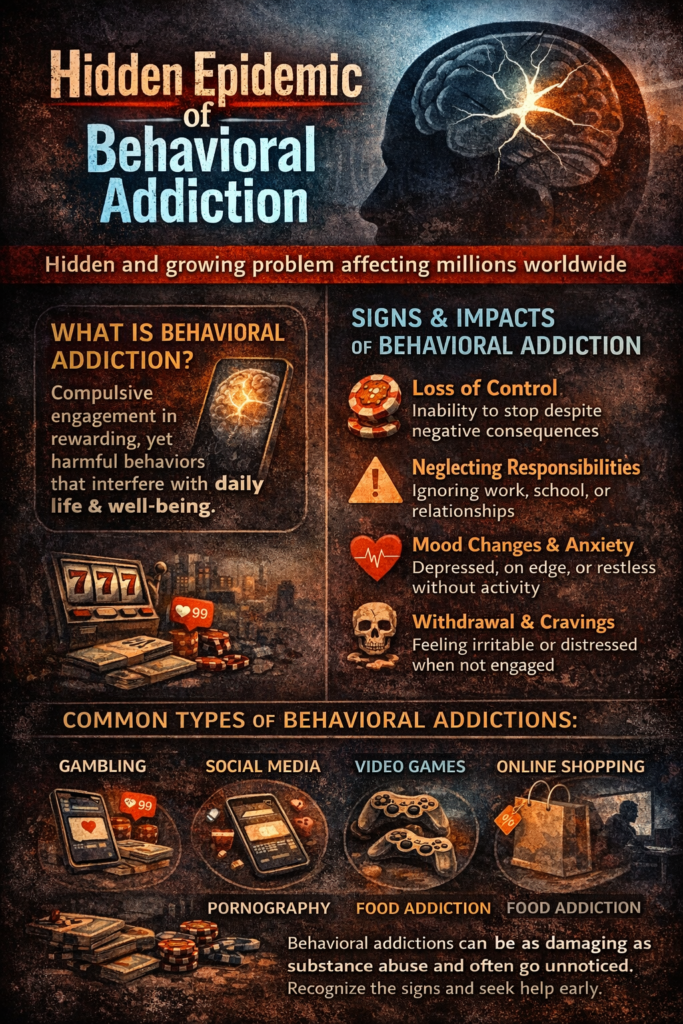
Behavioral addiction is an increasingly common yet often unnoticed issue, embedded in everyday activities like gaming, social media, and shopping. What may begin as normal behavior can gradually turn compulsive, driven by the brain’s reward system and unmet emotional needs. Because these habits are widely accepted, many individuals fail to recognize the problem. To fully understand this “hidden epidemic,” it’s important to look beyond the behavior and examine the underlying psychological and environmental influences.
The Hidden Epidemic of Behavioral Addiction
Behavioral addiction is a growing yet often overlooked issue, embedded in everyday activities like gaming, gambling, social media, shopping, and even work. Unlike substance addiction, it doesn’t involve a chemical, but instead centers on compulsive engagement in rewarding behaviors despite harmful consequences. Because these activities are socially accepted—and sometimes encouraged—the problem often goes unnoticed. What may start as harmless entertainment or productivity can gradually become a cycle driven by the brain’s reward system, emotional escape, and environmental influences. Understanding this hidden epidemic requires looking beyond surface behaviors to the deeper psychological, neurological, and cultural factors that sustain it.
Key Points
- What is Behavioral Addiction?
- Compulsive engagement in activities without substance use
- Continues despite negative consequences
- Why It’s “Hidden”
- Socially accepted behaviors (e.g., gaming, work, social media)
- Often mistaken for habits rather than addiction
- Lack of visible physical signs
- Brain Mechanisms
- Driven by dopamine and the brain’s reward system
- Reinforced by “wins,” likes, or achievements
- Leads to:
- Tolerance (needing more engagement)
- Withdrawal (irritability, anxiety)
- Loss of control
- Common Examples
- Gaming
- Gambling
- Social media use
- Online shopping
- Work addiction
- Underlying Causes
- Emotional escape (stress, loneliness, trauma)
- Unmet psychological needs
- Low self-esteem or dissatisfaction
- Cultural Influences
- Society promotes constant stimulation and instant gratification
- Technology and apps are designed to increase engagement
- Environments reinforce repetitive behavior
- Impact on Life
- Neglect of responsibilities
- Strained relationships
- Decline in mental health
- Barriers to Recognition
- Stigma and misunderstanding
- Seen as a lack of willpower rather than a psychological issue
- Path to Change
- Increase awareness of patterns and triggers
- Recognize warning signs
- Seek support (therapy, community, coping strategies)
- Address underlying emotional needs
Key Takeaway:
Behavioral addiction may be hidden in everyday life, but its effects are real. By understanding its roots and recognizing its signs, individuals can move toward healthier, more balanced ways of living.
Taking Back Control: Self-Management Strategies for Behavioral Addiction
Behavioral addiction is often described as a “hidden epidemic” because it develops within everyday habits that appear harmless at first. Activities like scrolling, gaming, gambling, or overworking can gradually shift from simple coping mechanisms into behaviors that feel difficult to manage. Importantly, this is not about a lack of willpower—these patterns are shaped by the brain’s reward system and emotional needs such as stress relief, escape, or validation. Effective self-management focuses on understanding these patterns and intentionally redirecting them. By building awareness, setting boundaries, and developing healthier coping strategies, individuals can move from automatic behavior to more intentional control and balance.
Key Points
- Understanding Behavioral Addiction
- Not a willpower issue, but a brain-based pattern
- Reinforced by emotional needs (stress, escape, validation)
- Self-Awareness
- Observe habits without judgment
- Identify triggers (e.g., boredom, anxiety, loneliness)
- Use journaling or notes to track patterns
- Setting Boundaries
- Limit time on apps or activities
- Create “no-screen” or structured time periods
- Reintroduce control rather than eliminate behavior entirely
- Alternative Coping Strategies
- Replace unhealthy habits with healthier ones
- Examples: exercise, hobbies, social interaction, mindfulness
- Address emotional needs in constructive ways
- Mindfulness
- Pause before acting on urges
- Observe cravings without immediately responding
- Build tolerance for discomfort
- Environmental Changes
- Reduce triggers (e.g., notifications, app placement)
- Create spaces that support healthier habits
- Make positive choices easier and impulsive ones harder
- Self-Compassion
- Accept that change takes time
- View setbacks as learning opportunities
- Avoid self-criticism
- Support Systems
- Talk to trusted individuals
- Join support groups or seek professional help
- Build accountability and connection
Key Takeaway:
Behavioral addiction becomes easier to manage when it is understood. Through awareness, structure, and supportive strategies, individuals can shift from reactive habits to intentional choices and gradually regain control.
Stronger Together: Family Support Strategies for Behavioral Addiction
Behavioral addiction is often difficult to recognize because it is embedded in everyday activities like gaming, social media, gambling, or work. What may seem like normal behavior can gradually become harmful, making it challenging for families to distinguish between habits and addiction. Family support plays a vital role in recognizing the signs—such as loss of control, preoccupation, withdrawal, and continued behavior despite consequences—and responding effectively. By focusing on understanding, communication, and structure, families can create a supportive environment that encourages awareness, accountability, and recovery for everyone involved.
Key Points
- Recognizing the Signs
- Loss of control over behavior
- Constant focus on the activity
- Irritability or withdrawal when not engaged
- Continued use despite negative consequences
- Open Communication
- Use non-judgmental, supportive language
- Express concern with “I” statements
- Encourage honest conversations without blame
- Family Education
- Learn how behavioral addiction affects the brain
- Understand emotional and psychological factors
- Reduce stigma and increase empathy
- Setting Healthy Boundaries
- Establish limits around time, money, and responsibilities
- Avoid enabling harmful behaviors
- Create structure and accountability
- Encouraging Connection
- Promote shared activities and family time
- Reduce isolation linked to addictive behaviors
- Strengthen relationships through engagement
- Modeling Healthy Behavior
- Demonstrate balanced use of technology and work
- Practice healthy coping and emotional expression
- Create a supportive home environment
- Family Self-Care
- Acknowledge emotional strain on family members
- Seek support through counseling or groups
- Maintain personal well-being
- Seeking Professional Help
- Consider therapy or support programs
- Address both individual and family dynamics
- Build long-term strategies for recovery
Key Takeaway:
Behavioral addiction may be hidden, but families can bring it into the open. Through empathy, education, clear boundaries, and ongoing support, families can play a powerful role in promoting understanding, healing, and lasting change.
Beyond the Individual: Community Resources for Addressing Behavioral Addiction
Behavioral addiction often goes unnoticed because it develops through everyday activities like gaming, social media, gambling, and shopping. What may begin as normal behavior can gradually interfere with mental health, relationships, and daily life. While individuals and families play important roles in addressing these patterns, communities are essential in raising awareness and providing support. Through education, accessible services, and a culture of connection, communities can help individuals better understand behavioral addiction and access the resources needed for change.
Key Points
- Raising Awareness
- Educate the public on behavioral addiction as a real issue
- Use workshops, school programs, and campaigns to reduce stigma
- Promote understanding of psychological and neurological factors
- Accessible Support Services
- Provide counseling centers and mental health programs
- Offer affordable and easy-to-access resources
- Create safe spaces for individuals to seek help
- Support Groups
- Encourage shared experiences and peer support
- Reduce isolation and increase accountability
- Provide practical strategies for managing behaviors
- Early Intervention
- Focus on youth through schools and community programs
- Teach healthy habits, emotional regulation, and digital balance
- Identify risky behaviors before they escalate
- Collaboration Across Systems
- Connect educators, healthcare providers, and social workers
- Create coordinated support networks
- Ensure individuals receive timely and appropriate help
- Digital Resources
- Utilize apps, online therapy, and educational platforms
- Provide flexible and private access to support
- Reach individuals who may avoid in-person services
- Advocacy and Policy
- Promote responsible design in apps and platforms
- Support regulations that protect user well-being
- Address environmental factors contributing to addiction
- Building Community Connection
- Foster belonging through events and shared spaces
- Encourage social engagement and support networks
- Reduce reliance on addictive behaviors for fulfillment
Key Takeaway:
Behavioral addiction cannot be addressed in isolation—it requires a collective effort. By combining education, accessible resources, early intervention, and strong community connections, society can better support individuals and foster a healthier, more informed environment.
Frequently Asked Questions
Here are some common questions:
1. What is behavioral addiction?
Behavioral addiction refers to compulsive engagement in activities—such as gaming, gambling, social media, or shopping—that stimulate the brain’s reward system, even when they cause harm to a person’s life, relationships, or mental health.
2. Why is it called a “hidden epidemic”?
It’s considered “hidden” because these behaviors are often socially accepted and part of daily life. Unlike substance addiction, there are no obvious physical signs, making it easier for the problem to go unnoticed or dismissed.
3. How is behavioral addiction different from substance addiction?
The main difference is that behavioral addiction does not involve ingesting a substance. However, both types activate similar brain pathways, particularly those involving dopamine and reward, leading to similar patterns of dependency and loss of control.
4. What are common types of behavioral addictions?
Common examples include:
- Gambling
- Video gaming
- Social media use
- Online shopping
- Food-related behaviors
- Work addiction
5. What are the warning signs of behavioral addiction?
Key signs include:
- Loss of control over the behavior
- Neglecting responsibilities
- Continued behavior despite negative consequences
- Mood changes (irritability, anxiety) when not engaging
- Preoccupation with the activity
6. What causes behavioral addiction?
Behavioral addiction is influenced by a combination of factors:
- Brain chemistry (dopamine reward system)
- Emotional needs (stress, loneliness, trauma)
- Environmental factors (easy access, digital design)
- Personality traits (impulsivity, sensation-seeking)
7. Can behavioral addiction affect mental health?
Yes. It is strongly linked to anxiety, depression, low self-esteem, and increased stress. It can also worsen existing mental health conditions.
8. Who is most at risk?
Anyone can develop a behavioral addiction, but higher risk groups include:
- Adolescents and young adults
- Individuals with high stress or trauma
- People with existing mental health conditions
- Those with limited social support
9. How can someone manage or reduce behavioral addiction?
Effective strategies include:
- Increasing self-awareness of triggers
- Setting limits and boundaries
- Replacing the behavior with healthier alternatives
- Practicing mindfulness
- Seeking support from others or professionals
10. What role do families and communities play?
Families and communities provide education, support, and accountability. They help reduce stigma, encourage early intervention, and create environments that promote healthier behaviors.
11. When should someone seek professional help?
Professional help is recommended when the behavior:
- Interferes with daily life
- Causes distress or harm
- Feels uncontrollable
- Persists despite attempts to stop
12. Is recovery from behavioral addiction possible?
Yes. With awareness, support, and appropriate strategies (such as therapy and lifestyle changes), individuals can regain control and develop healthier coping mechanisms.
Conclusion
The hidden nature of behavioral addiction does not diminish its impact—it simply makes it harder to confront. As awareness grows, so does the opportunity to respond with compassion, knowledge, and effective strategies. Whether through self-management, family support, or community resources, addressing behavioral addiction requires a multifaceted approach that prioritizes understanding over judgment. By recognizing the signs, challenging stigma, and fostering supportive environments, individuals and communities can begin to break the cycle of silent struggle. Bringing this issue into the open is the first step toward restoring balance, promoting well-being, and empowering lasting change.
Video: