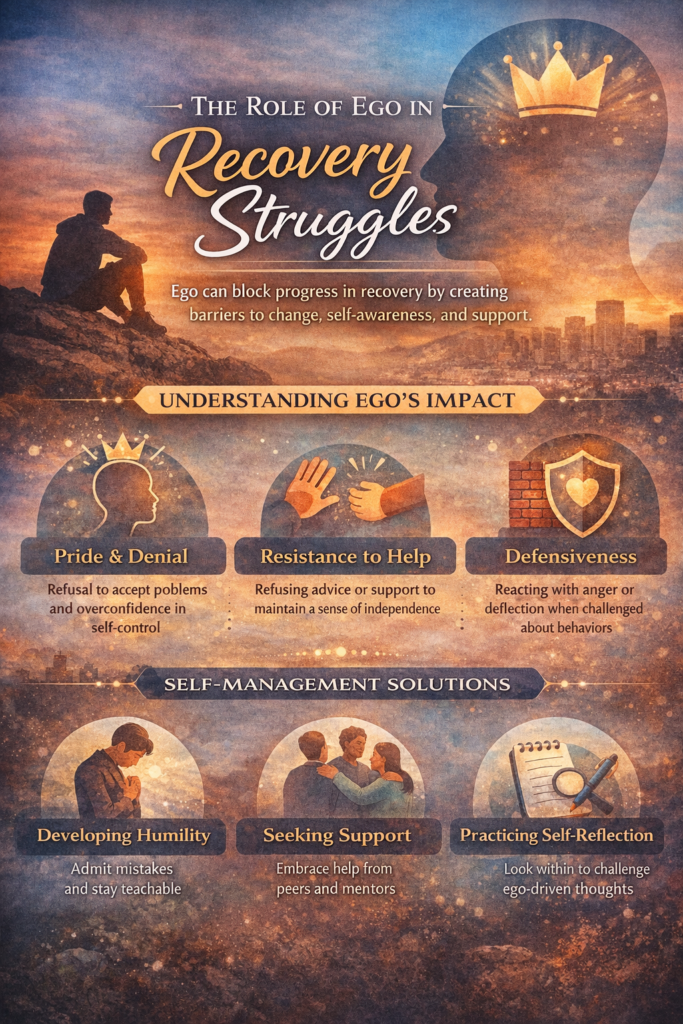
The process of recovery involves more than changing behaviors—it requires a deep shift in mindset and self-perception. One of the most significant internal challenges individuals face is the ego, which often acts as a protective barrier against vulnerability, accountability, and change. While the ego can provide a sense of identity and control, it can also interfere with recovery by promoting denial, defensiveness, and resistance to help. Understanding the role of the ego is essential for recognizing why progress can feel difficult and why letting go of certain thought patterns is necessary for long-term healing.
The Inner Obstacle: Understanding the Role of Ego in Recovery Struggles
Recovery is often viewed as a battle against external behaviors—substance use, unhealthy habits, or destructive patterns. However, one of the most significant challenges lies within: the ego. The ego, or one’s sense of self-identity and self-protection, can both help and hinder the recovery process. While it may provide a sense of control and stability, it can also resist change, deny problems, and block personal growth. Understanding the role of the ego is essential for navigating recovery with greater awareness and success.
What Is the Ego in Recovery?
In psychological terms, the ego represents how individuals see themselves and how they protect that identity. In recovery, the ego often works to maintain a familiar sense of self—even if that identity is tied to harmful behaviors.
This can show up as:
- Denial of the severity of a problem
- Resistance to feedback or help
- Overconfidence in one’s ability to control behavior
- Fear of vulnerability or change
The ego’s primary goal is protection, but in recovery, that protection can become a barrier.
How Ego Interferes with Progress
Recovery requires honesty, openness, and a willingness to change. The ego, however, may resist these steps by:
- Minimizing the impact of past behaviors
- Avoiding accountability
- Rejecting guidance from others
- Holding onto pride instead of accepting support
This resistance can slow progress and increase the risk of relapse, as individuals may rely on old patterns instead of developing new ones.
The Fear Behind the Ego
At its core, the ego is often driven by fear—fear of failure, judgment, or losing control. Letting go of the ego can feel like losing a part of oneself, especially if identity has been shaped by past behaviors.
This fear can lead to:
- Defensive reactions
- Avoidance of difficult conversations
- Reluctance to admit struggles
Recognizing this underlying fear helps reframe the ego not as an enemy, but as a response that needs to be understood and managed.
The Importance of Humility in Recovery
One of the most powerful counterbalances to ego is humility. Humility does not mean weakness—it means being open to learning, accepting limitations, and recognizing the need for support.
Practicing humility allows individuals to:
- Accept help from others
- Acknowledge mistakes without shame
- Stay open to growth and change
This mindset creates space for genuine progress.
Letting Go of Control
The ego often seeks control, but recovery requires a willingness to let go of rigid control and trust the process. This includes:
- Following structured programs or guidance
- Being open to new coping strategies
- Accepting that progress is not always linear
Letting go does not mean giving up—it means allowing room for transformation.
Building a Healthier Identity
Recovery is not just about removing harmful behaviors—it is about building a new, healthier sense of self. This involves:
- Developing self-awareness
- Practicing honesty and accountability
- Creating values-based goals
As the ego shifts from protection to growth, it becomes a supportive force rather than a barrier.
Balancing Self-Confidence and Self-Awareness
While ego can be harmful when unchecked, a balanced sense of self is important. Healthy confidence helps individuals stay motivated and resilient, while self-awareness keeps them grounded.
The goal is not to eliminate the ego, but to align it with recovery goals.
A Path Toward Growth
Understanding the role of ego in recovery struggles provides valuable insight into why change can feel so difficult. By recognizing defensive patterns, embracing humility, and building a new identity, individuals can move forward with greater clarity and purpose.
In summary, recovery is not just about changing behavior—it is about transforming how you see yourself. When the ego shifts from resisting change to supporting growth, it no longer stands in the way—it becomes part of the healing process.
Mastering the Self: Self-Management Strategies for Understanding the Role of Ego in Recovery Struggles
Recovery is not only about changing behaviors—it is about transforming the way individuals think, respond, and see themselves. One of the most subtle yet powerful barriers in this process is the ego. Often operating beneath awareness, the ego can resist change, avoid accountability, and protect familiar patterns, even when they are harmful. Developing self-management strategies to understand and work with the ego is essential for sustained growth and long-term recovery.
Recognizing Ego-Driven Patterns
The first step in self-management is awareness. Ego-driven behaviors often appear as:
- Defensiveness when receiving feedback
- Minimizing or justifying past behaviors
- Overconfidence in handling situations alone
- Resistance to asking for help
By identifying these patterns, individuals can begin to separate their true intentions from ego-based reactions.
Building Self-Awareness Through Reflection
Reflection is a powerful tool for understanding how the ego operates. Taking time to pause and ask questions such as:
- “Why am I reacting this way?”
- “Am I protecting myself or avoiding growth?”
- “What am I afraid of in this moment?”
…can reveal underlying fears or insecurities that drive ego responses. Journaling or quiet reflection helps bring these patterns into conscious awareness.
Practicing Mindful Pause
Ego reactions are often automatic and immediate. Learning to pause before responding creates space for more intentional choices.
Simple strategies include:
- Taking a few deep breaths before reacting
- Stepping away from emotionally charged situations
- Giving yourself time to think before responding
This pause helps shift control from automatic ego responses to conscious decision-making.
Challenging Ego-Based Thoughts
The ego often distorts thinking to maintain control or protect self-image. Self-management involves questioning these thoughts.
For example:
- Replace “I don’t need help” with “Support can strengthen my progress.”
- Replace “I’ve got this under control” with “What can I learn from others?”
Challenging these thoughts encourages openness and growth.
Developing Humility as a Strength
Humility is a key counterbalance to ego. It allows individuals to remain open, teachable, and willing to grow.
Practicing humility includes:
- Accepting feedback without defensiveness
- Acknowledging mistakes without shame
- Being open to learning from others
Humility does not weaken self-worth—it strengthens resilience and adaptability.
Letting Go of the Need for Control
The ego often seeks certainty and control, but recovery requires flexibility and trust in the process. Self-management involves:
- Accepting uncertainty as part of growth
- Following structured guidance or support systems
- Allowing change to happen gradually
Letting go of control creates space for new, healthier patterns to develop.
Strengthening a Healthier Identity
Recovery involves building a new sense of self that is not driven by ego or past behaviors. This can be supported by:
- Setting values-based goals
- Practicing honesty and accountability
- Focusing on long-term growth rather than short-term comfort
Over time, this new identity becomes more stable and aligned with recovery.
Responding to Setbacks with Awareness
The ego can react strongly to setbacks, often leading to shame or denial. Instead, self-management encourages:
- Viewing setbacks as learning opportunities
- Reflecting on what triggered the situation
- Recommitting to growth without self-judgment
This approach reduces the ego’s influence and promotes resilience.
A Balanced Approach to Self
The goal is not to eliminate the ego, but to manage it effectively. A balanced sense of self includes both confidence and self-awareness, allowing individuals to move forward without being controlled by pride or fear.
In summary, recovery is a journey of inner change. By developing self-management strategies to understand and navigate the ego, individuals can remove one of the most significant internal barriers to progress. When the ego shifts from resistance to awareness, it no longer interferes with recovery—it becomes part of the process of growth and transformation.
Supporting Growth Together: Family Strategies for Understanding the Role of Ego in Recovery Struggles
Recovery is not only an individual journey—it is deeply influenced by relationships and environment. One of the most complex internal barriers individuals face is the ego, which can resist change, avoid vulnerability, and protect familiar patterns. For families, understanding the role of the ego is essential in providing effective support. With the right strategies, families can help reduce ego-driven resistance and create an environment that encourages openness, accountability, and growth.
Understanding Ego as a Protective Response
The ego is not simply arrogance or pride—it is a psychological defense mechanism designed to protect a person’s sense of identity. In recovery, this can show up as:
- Denial of problems or progress
- Defensiveness when confronted
- Resistance to advice or support
- Fear of vulnerability or change
When families recognize that these behaviors are rooted in protection rather than defiance, they can respond with empathy instead of frustration.
Creating a Safe and Non-Judgmental Environment
The ego tends to strengthen in environments where individuals feel judged, criticized, or misunderstood. Families can reduce this defensiveness by:
- Using supportive and respectful language
- Avoiding blame or harsh criticism
- Focusing on understanding rather than correcting
A safe environment allows individuals to lower their defenses and become more open to reflection and change.
Encouraging Open and Honest Communication
Communication is key to helping individuals move beyond ego-driven patterns. Families can support this by:
- Asking open-ended questions instead of making assumptions
- Listening without interrupting or immediately offering solutions
- Validating feelings, even when they don’t agree with behaviors
This approach builds trust and helps individuals feel heard rather than challenged.
Gently Challenging Ego-Based Thinking
While support is important, families can also help individuals recognize when ego is interfering with recovery.
This can be done by:
- Offering observations rather than accusations (“I’ve noticed…” instead of “You always…”)
- Asking reflective questions (“Do you think this is helping you move forward?”)
- Encouraging self-reflection rather than forcing change
The goal is to guide awareness, not to confront or control.
Modeling Humility and Growth
Families influence behavior not only through words, but through actions. Demonstrating humility—such as admitting mistakes, being open to feedback, and showing willingness to learn—can set a powerful example.
When individuals see these behaviors modeled, they are more likely to adopt them themselves.
Supporting Accountability Without Pressure
The ego often resists accountability, especially when it feels like criticism. Families can support accountability by:
- Encouraging responsibility in a supportive way
- Focusing on progress rather than perfection
- Celebrating efforts to be honest and self-aware
This balanced approach reduces resistance while still promoting growth.
Respecting Boundaries and Independence
While family support is valuable, it’s important to respect the individual’s autonomy. Over-controlling or constantly correcting behavior can strengthen ego defenses.
Healthy support includes:
- Allowing space for personal growth
- Avoiding micromanagement
- Offering help without forcing it
This balance encourages responsibility and self-directed change.
Responding to Setbacks with Compassion
When ego leads to setbacks—such as denial or defensiveness—family reactions matter. Responding with frustration can reinforce shame and resistance, while compassion can encourage reflection.
Helpful responses include:
- Acknowledging the difficulty of change
- Encouraging learning from the experience
- Reaffirming support without enabling harmful behavior
A Shared Path Toward Growth
Understanding the role of the ego in recovery helps families become more effective supporters. Instead of seeing resistance as opposition, they can recognize it as part of the process of change.
In summary, recovery is not just about overcoming external challenges—it is about navigating internal ones as well. With empathy, patience, and intentional support, families can help individuals move beyond ego-driven barriers and toward a more open, honest, and resilient path of healing.
Beyond the Self: Community Resource Strategies for Understanding the Role of Ego in Recovery Struggles
Recovery is not only shaped by personal effort and family support—it is also influenced by the broader environment in which an individual lives. One of the most challenging internal barriers in recovery is the ego, which can resist change, avoid vulnerability, and protect harmful patterns. While self-awareness is essential, community resources provide valuable tools, perspectives, and support systems that help individuals recognize and manage ego-driven behaviors more effectively.
Why Community Support Matters for Ego Awareness
Ego often operates in isolation, reinforcing thoughts like “I can handle this alone” or “I don’t need help.” Community resources challenge these patterns by providing:
- Shared experiences that normalize struggles
- External perspectives that increase self-awareness
- Accountability and structure that reduce avoidance
Being part of a community helps individuals move beyond self-protective thinking and toward growth-oriented behaviors.
Peer Support Groups and Shared Experience
Support groups offer one of the most powerful ways to understand the role of the ego in recovery. Hearing others openly discuss denial, pride, and resistance can help individuals recognize similar patterns in themselves.
Benefits include:
- Increased self-awareness through shared stories
- Reduced defensiveness by realizing others face similar challenges
- Encouragement to practice honesty and vulnerability
These environments create space for growth without judgment.
Educational Programs and Workshops
Community-based workshops often focus on personal development, emotional intelligence, and recovery skills. These programs can help individuals:
- Understand how the ego functions as a defense mechanism
- Learn strategies to reduce defensiveness and increase openness
- Practice communication and self-reflection skills
Education provides the language and tools needed to identify and manage ego-driven responses.
Access to Professional Guidance
Community resources frequently include access to therapists, counselors, and recovery coaches who can help individuals explore ego-related challenges more deeply.
Professionals can:
- Identify patterns of denial, control, or resistance
- Guide individuals through self-reflection and behavior change
- Teach techniques to balance self-confidence with humility
This structured guidance helps individuals move from awareness to action.
Mentorship and Sponsorship
Many recovery communities offer mentorship or sponsorship programs in which individuals receive guidance from someone with lived experience.
Mentors can:
- Provide honest feedback that challenges ego-driven thinking
- Model humility and accountability
- Offer support during moments of resistance or doubt
This relationship creates a safe space for growth while encouraging responsibility.
Online Communities and Digital Resources
Digital platforms expand access to support and learning. Online forums, apps, and virtual groups allow individuals to:
- Engage with recovery communities at any time
- Reflect on shared experiences and advice
- Access tools for self-monitoring and growth
These resources are especially helpful for maintaining connection and awareness outside of in-person settings.
Creating a Culture of Humility and Growth
Communities that emphasize openness, accountability, and learning help reduce the influence of ego. When individuals are surrounded by others who value honesty and progress, they are more likely to adopt similar attitudes.
A supportive community culture encourages:
- Vulnerability without shame
- Accountability without judgment
- Growth without fear of failure
Taking the First Step
Engaging with community resources can begin with small actions:
- Attending a support group or workshop
- Connecting with a mentor or sponsor
- Participating in an online recovery forum
Each step helps weaken ego-driven isolation and strengthens connection.
A Collective Path to Self-Awareness
The ego can be a powerful barrier, but it is not insurmountable. With the support of community resources, individuals gain access to new perspectives, guidance, and accountability that make change possible.
In summary, recovery is not meant to be a solitary journey. By engaging with community-based strategies, individuals can better understand their ego, reduce its interference, and build a more open, honest, and resilient path forward. In connection with others, growth becomes not only possible, but sustainable.
Frequently Asked Questions
Here are some common questions:
1. What is the “ego” in the context of recovery?
Answer:
In recovery, the ego refers to a person’s sense of identity and self-protection. It shapes how individuals see themselves and react to challenges. While it can provide confidence, it can also create resistance to change, feedback, and vulnerability.
2. How does ego interfere with recovery?
Answer:
Ego can interfere by promoting denial, defensiveness, and overconfidence. It may cause individuals to minimize problems, avoid accountability, or resist help, making it harder to grow and maintain recovery.
3. Why do people become defensive during recovery?
Answer:
Defensiveness is often a protective response driven by the ego. It arises from fear of judgment, failure, or loss of control. The ego tries to protect self-image, even if it prevents progress.
4. Is ego always a negative thing in recovery?
Answer:
No. A healthy ego can support confidence, motivation, and self-worth. The issue arises when the ego becomes rigid or defensive, blocking self-awareness and growth.
5. What are common signs of ego interfering with recovery?
Answer:
Common signs include:
- Refusing help or advice
- Minimizing the severity of past behaviors
- Feeling “in control” too quickly
- Difficulty accepting feedback
- Avoiding vulnerability or honesty
6. How does ego relate to denial?
Answer:
Denial is an ego defense mechanism. It helps individuals avoid uncomfortable truths, but in recovery, it prevents acknowledgment of problems and delays progress.
7. Why is humility important in recovery?
Answer:
Humility allows individuals to accept help, recognize limitations, and stay open to learning. It counteracts ego-driven resistance and supports long-term growth.
8. Can ego increase the risk of relapse?
Answer:
Yes. When ego leads to overconfidence (“I don’t need support anymore”) or denial of warning signs, individuals may ignore risks and return to old behaviors.
9. How can someone manage their ego in recovery?
Answer:
Effective strategies include:
- Practicing self-reflection
- Staying open to feedback
- Seeking support from others
- Challenging defensive thoughts
- Developing humility and accountability
10. How can support systems help with ego-related struggles?
Answer:
Support systems provide outside perspectives, accountability, and encouragement. They can gently challenge ego-driven thinking and help individuals stay grounded.
11. What is the difference between confidence and ego?
Answer:
Confidence is a balanced belief in one’s abilities, while ego often involves protecting self-image at all costs. Confidence supports growth; ego can resist it.
12. Can the ego change during recovery?
Answer:
Yes. With awareness and effort, individuals can reshape their ego—shifting from defensiveness and control to openness, humility, and growth.
Conclusion
The ego plays a complex role in recovery, acting both as a source of protection and a potential obstacle to growth. When left unchecked, it can limit self-awareness, block support, and reinforce harmful patterns. However, by developing humility, openness, and a willingness to reflect, individuals can begin to manage the ego’s influence rather than be controlled by it. Ultimately, recovery is not about eliminating the ego, but about reshaping it—transforming it from a barrier into a tool that supports honesty, growth, and lasting change.
Video: