Overwhelming anxiety can feel intense, disorienting, and difficult to control, often affecting both the mind and body at the same time. In these moments, thoughts may race, physical symptoms may escalate, and a sense of urgency or fear can take over. However, anxiety is a natural response—not a permanent state—and there are effective ways to manage it. Understanding how to ease overwhelming anxiety involves recognizing what is happening internally and learning practical strategies that help restore a sense of calm and control. By developing these tools, individuals can respond to anxiety more effectively rather than feeling consumed by it.
Ways to Ease Overwhelming Anxiety: Finding Calm in Intense Moments
Anxiety can feel all-consuming—racing thoughts, physical tension, and a sense of losing control. In overwhelming moments, it may seem like there is no immediate way out. However, anxiety is not permanent, and there are practical strategies that can help regulate both the mind and body in real time. Learning how to respond to anxiety, rather than react to it, is key to regaining a sense of stability and control.
Easing overwhelming anxiety does not require eliminating it entirely. Instead, it involves developing tools that help you move through it more effectively.
Understanding What’s Happening
When anxiety spikes, the body enters a heightened state of alert. This “fight-or-flight” response can cause:
- rapid heart rate
- shallow breathing
- muscle tension
- racing or intrusive thoughts
Recognizing that these sensations are part of a natural response—not a sign of danger—can help reduce fear about the experience itself.
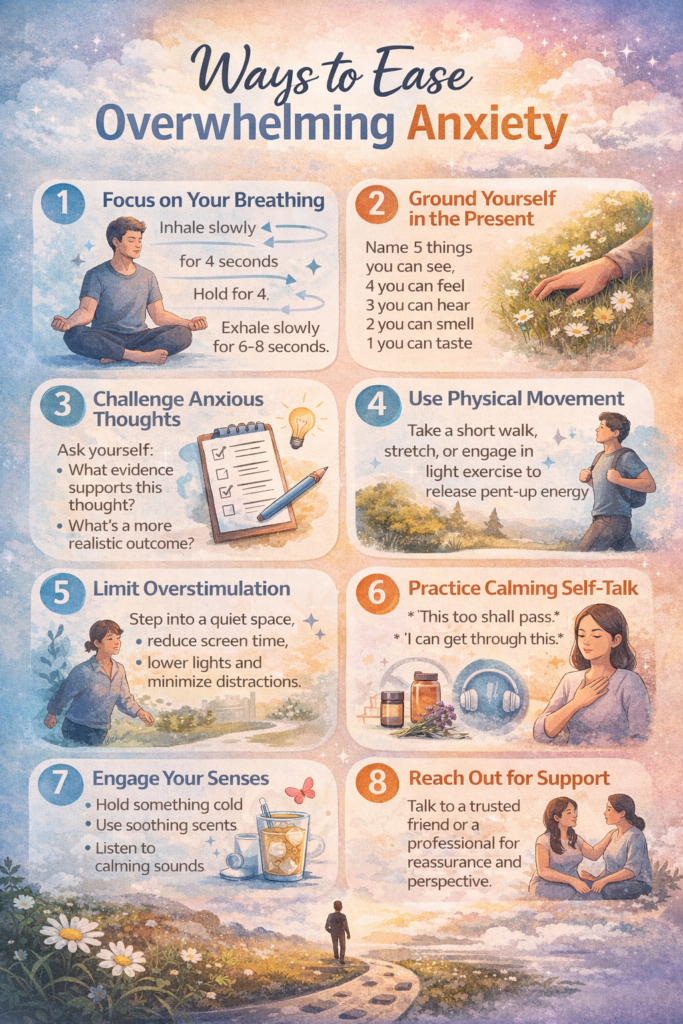
1. Focus on Your Breathing
Breathing is one of the fastest ways to calm the nervous system. Anxiety often leads to quick, shallow breaths, which can intensify symptoms.
Try:
- inhaling slowly through your nose for 4 seconds
- holding for 4 seconds
- exhaling slowly for 6–8 seconds
Slowing your breath signals to your body that it is safe to relax.
2. Ground Yourself in the Present
Anxiety often pulls attention into the future or worst-case scenarios. Grounding techniques bring your focus back to the present moment.
A simple method:
- name 5 things you can see
- 4 things you can feel
- 3 things you can hear
- 2 things you can smell
- 1 thing you can taste
This shifts your attention away from anxious thoughts and into your surroundings.
3. Challenge Anxious Thoughts
Overwhelming anxiety is often fueled by distorted or exaggerated thinking.
Ask yourself:
- What evidence supports this thought?
- What is a more realistic outcome?
- Am I assuming the worst-case scenario?
Replacing extreme thoughts with balanced ones can reduce emotional intensity.
4. Use Physical Movement
Anxiety creates physical energy in the body. Movement helps release that energy and regulate stress.
Helpful options include:
- taking a short walk
- stretching or light exercise
- shaking out tension in your arms or legs
Even a few minutes of movement can make a noticeable difference.
5. Limit Overstimulation
When anxiety is high, too much input (noise, screens, conversations) can make it worse.
Try to:
- step into a quiet space
- reduce screen time temporarily
- lower lights or minimize distractions
Creating a calmer environment supports emotional regulation.
6. Practice Self-Talk That Calms, Not Escalates
The way you talk to yourself during anxiety matters.
Instead of:
- “I can’t handle this.”
Try:
- “This is uncomfortable, but I can get through it.”
- “This feeling will pass.”
Supportive self-talk reduces panic and reinforces a sense of control.
7. Engage Your Senses
Sensory input can help anchor you in the present and interrupt anxious spirals.
Examples:
- holding something cold (like ice or a cold drink)
- smelling a calming scent
- listening to soothing or familiar sounds
These small actions can help shift your focus away from internal distress.
8. Reach Out for Support
You don’t have to manage overwhelming anxiety alone. Talking to someone can provide reassurance and perspective.
This might include:
- a trusted friend or family member
- a therapist or counselor
- a support group
Connection can reduce the intensity of anxiety and help you feel less isolated.
Conclusion: Moving Through, Not Fighting Against Anxiety
Overwhelming anxiety can feel powerful, but it is not permanent. By using practical strategies—such as breathing, grounding, and reframing thoughts—you can begin to regulate your response and regain a sense of control.
The goal is not to eliminate anxiety entirely.
It is to learn how to move through it with greater awareness and resilience.
Each time you practice these techniques, you strengthen your ability to respond calmly—even in intense moments. Over time, what once felt overwhelming can become something you know how to manage.
Self-Management Strategies to Implement Ways to Ease Overwhelming Anxiety
Experiencing anxiety is one thing—knowing how to manage it in real time is another. While there are many effective techniques to ease overwhelming anxiety, the key to long-term relief lies in self-management. Self-management involves consistently applying strategies, building awareness, and creating habits that allow you to respond to anxiety with intention rather than reaction.
Instead of waiting for anxiety to pass, self-management empowers you to actively work through it.
Why Self-Management Matters
In moments of intense anxiety, it’s easy to feel out of control. Without a plan, reactions may become automatic—avoidance, panic, or negative thinking. Self-management provides structure and tools that help you:
- recognize anxiety early
- respond effectively
- reduce intensity over time
- build confidence in your ability to cope
It shifts the mindset from “I can’t handle this” to “I know what to do when this happens.”
1. Build Awareness of Early Warning Signs
Anxiety rarely appears suddenly—it builds. Recognizing early signs allows you to intervene before it becomes overwhelming.
Common early signs:
- restlessness or tension
- racing thoughts
- irritability
- physical sensations (tight chest, shallow breathing)
By noticing these signals early, you can begin using calming strategies sooner.
2. Create a Personalized Anxiety Plan
Having a plan reduces uncertainty during stressful moments. This plan should include specific strategies that work best for you.
For example:
- breathing exercises you prefer
- grounding techniques that feel effective
- supportive statements you can repeat
- people you can reach out to
A clear plan makes it easier to act, even when your mind feels overwhelmed.
3. Practice Techniques Before You Need Them
Self-management is most effective when strategies are practiced regularly—not just during high anxiety.
This includes:
- daily breathing exercises
- short grounding practices
- mindfulness or relaxation routines
Practicing in calm moments strengthens your ability to use these tools under stress.
4. Regulate Your Environment
Your surroundings can either increase or decrease anxiety. Self-management includes adjusting your environment to support calmness.
Helpful changes:
- reducing noise or distractions
- creating a quiet, comfortable space
- limiting exposure to overwhelming stimuli (e.g., excessive screen time)
A supportive environment makes it easier to regulate your emotions.
5. Use Consistent Breathing and Grounding Techniques
When anxiety rises, your body needs signals of safety. Returning to familiar techniques helps stabilize your response.
Make it a habit to:
- slow your breathing intentionally
- focus on physical sensations (feet on the ground, hands on an object)
- bring attention back to the present moment
Consistency reinforces these responses as automatic coping tools.
6. Monitor and Restructure Your Thoughts
Anxiety often intensifies through patterns of thinking. Self-management involves noticing and adjusting these patterns.
Steps include:
- identifying anxious thoughts
- questioning their accuracy
- replacing them with balanced, realistic alternatives
This reduces the emotional impact of distorted thinking.
7. Incorporate Physical Movement Into Your Routine
Movement helps regulate the nervous system and release built-up tension.
This can include:
- walking
- stretching
- light exercise
Regular movement not only reduces immediate anxiety but also improves overall stress resilience.
8. Track Your Progress and Patterns
Self-monitoring helps you understand what works and where adjustments are needed.
You might:
- journal about anxiety triggers and responses
- note which strategies were effective
- reflect on improvements over time
Tracking builds awareness and reinforces a sense of progress.
9. Practice Self-Compassion During Difficult Moments
Self-management is not about perfection. There will be times when anxiety feels overwhelming despite your efforts.
In those moments:
- avoid harsh self-judgment
- acknowledge that anxiety is difficult but manageable
- remind yourself that progress takes time
Self-compassion supports persistence rather than discouragement.
10. Build a Support System Into Your Plan
Even with strong self-management skills, support is essential.
Include:
- trusted friends or family
- professional support (therapy, counseling)
- peer or support groups
Knowing you are not alone strengthens your ability to cope.
Conclusion: Turning Strategies Into Habits
Learning ways to ease overwhelming anxiety is only the first step—consistently applying those strategies is what creates lasting change. Through self-management, you develop the ability to recognize, respond to, and reduce anxiety in a structured and effective way.
You don’t need to eliminate anxiety to feel in control.
You need tools—and the practice to use them.
Over time, these strategies become habits, and those habits become resilience.
Family Support Strategies to Implement Ways to Ease Overwhelming Anxiety
Overwhelming anxiety does not only affect the individual experiencing it—it also impacts the family system. Loved ones often want to help but may feel unsure of what to say or do in high-anxiety moments. Without guidance, responses can unintentionally increase stress, such as offering quick solutions, minimizing feelings, or reacting with frustration.
Family support plays a powerful role in helping individuals manage anxiety. When families learn how to respond effectively, they can become a stabilizing force—helping to de-escalate intense emotions and reinforce healthy coping strategies.
Why Family Support Matters
During overwhelming anxiety, individuals may struggle to regulate their thoughts and physical responses. Support from family can:
- provide reassurance and grounding
- reduce feelings of isolation
- help interrupt anxious thought patterns
- reinforce coping strategies
A calm and supportive presence can make a significant difference in how quickly anxiety decreases.
1. Stay Calm and regulate yourself
One of the most important things a family member can do is remain calm. Anxiety can be contagious—if you react with panic or urgency, it can intensify the situation.
Helpful approaches:
- speak in a steady, calm tone
- slow your own breathing
- avoid rushing or overwhelming the person
Your calmness acts as a model for regulation.
2. Validate Feelings Without Reinforcing Fear
Validation helps the person feel understood, but it’s important not to reinforce anxious beliefs.
For example:
- “I can see this feels really intense right now” (validation)
- instead of “You’re right, this is terrible” (reinforcing fear)
This balance supports emotional safety while maintaining perspective.
3. Encourage Grounding Techniques
Families can gently guide individuals toward techniques that bring them back to the present moment.
You might say:
- “Let’s focus on what’s around us right now”
- “Can you name a few things you can see or feel?”
Participating with them can make it feel less isolating.
4. Support Breathing Exercises
When anxiety escalates, breathing becomes shallow and rapid. Families can help slow this down.
Try:
- guiding a slow inhale and exhale together
- counting breaths out loud
- reminding them to breathe without pressure
Even simple guidance can help regulate the nervous system.
5. Avoid Overloading with Advice
During intense anxiety, the brain is not in a state to process complex solutions. Offering too many suggestions can feel overwhelming.
Instead:
- keep communication simple and clear
- focus on one strategy at a time
- allow space for the person to respond
Support is more effective when it is calm and focused.
6. Create a Calming Environment
The surrounding environment can either increase or decrease anxiety.
Families can help by:
- reducing noise or distractions
- dimming lights if needed
- moving to a quieter, more comfortable space
A calmer environment supports emotional regulation.
7. Offer Reassurance Without Dismissal
Reassurance helps reduce fear, but it should not dismiss the person’s experience.
For example:
- “You’re safe right now, and this feeling will pass.”
- instead of “There’s nothing to worry about.”
This approach acknowledges the experience while providing comfort.
8. Encourage Ongoing Coping Outside of Crisis Moments
Family support should not only occur during high-anxiety episodes. Encouraging regular coping practices helps reduce the intensity of future episodes.
This might include:
- supporting routines like exercise or relaxation
- encouraging therapy or support groups
- checking in about stress levels regularly
Consistency strengthens long-term anxiety management.
9. Respect Boundaries and Individual Needs
Not everyone wants the same type of support during anxiety. Some may want guidance, while others prefer quiet presence.
Families can:
- ask what kind of support is helpful
- respect requests for space
- avoid forcing interaction
Personalized support is more effective than a one-size-fits-all approach.
10. Take Care of Yourself as a Supporter
Supporting someone with anxiety can be emotionally demanding. Family members also need to manage their own stress.
This includes:
- setting healthy boundaries
- seeking support if needed
- maintaining your own well-being
When you are regulated, you are better able to support others.
Conclusion: Supporting Calm Through Connection
Helping someone ease overwhelming anxiety is not about fixing the situation—it is about creating a sense of safety and stability. Families have the ability to influence how anxiety is experienced and managed by offering calm, understanding, and consistent support.
Small, intentional actions—like listening, guiding breathing, or simply being present—can make a powerful difference.
Anxiety may feel overwhelming in the moment,
but with the right support, it becomes something that can be navigated—not faced alone.
Community Resource Strategies to Implement Ways to Ease Overwhelming Anxiety
Overwhelming anxiety is not just an individual experience—it is influenced by environment, access to support, and available resources. While personal coping strategies are essential, community resources play a critical role in helping individuals implement and sustain those strategies. When communities provide accessible, structured, and supportive options, they create a network that reinforces calm, stability, and resilience.
Community-based approaches ensure that individuals are not left to manage anxiety alone. Instead, they are supported by systems that promote both immediate relief and long-term well-being.
Why Community Resources Matter
Anxiety can intensify when individuals feel isolated, unsupported, or overwhelmed by daily demands. Community resources help by:
- providing guidance and education
- offering safe spaces for support
- reinforcing healthy coping strategies
- reducing stigma around mental health
When resources are accessible, individuals are more likely to use effective techniques consistently.
1. Expanding Access to Mental Health Services
Professional support is one of the most effective ways to manage anxiety. Community access to therapy and counseling helps individuals learn and implement coping strategies.
Key resources include:
- outpatient counseling services
- community mental health clinics
- crisis hotlines and support lines
These services provide both immediate support and long-term skill development.
2. Promoting Peer Support Groups
Peer support groups offer shared understanding and connection. Being around others who experience anxiety can normalize feelings and reduce isolation.
Benefits include:
- learning coping strategies from others
- gaining emotional validation
- building a sense of belonging
Peer environments make it easier to practice anxiety-management techniques in a supportive setting.
3. Offering Stress-Reduction and Wellness Programs
Communities can provide programs that teach and reinforce anxiety-reduction techniques.
Examples include:
- mindfulness or meditation classes
- yoga or relaxation workshops
- stress management seminars
These programs help individuals practice calming strategies regularly, not just during moments of crisis.
4. Creating Safe and Calming Public Spaces
The physical environment can influence anxiety levels. Communities that offer calm, accessible spaces support emotional regulation.
This might include:
- parks or quiet green spaces
- community centers with relaxation areas
- libraries or low-stimulation environments
Having a place to step away and reset can significantly reduce anxiety intensity.
5. Increasing Accessibility and Inclusivity
Not all individuals have equal access to mental health resources. Communities must work to remove barriers such as cost, transportation, or stigma.
Strategies include:
- low-cost or sliding-scale services
- virtual or online support options
- outreach programs for underserved populations
Accessibility ensures that more people can benefit from available support.
6. Integrating Education Into Community Programs
Understanding anxiety is a key part of managing it. Community education initiatives can teach individuals how to recognize and respond to anxiety effectively.
Topics may include:
- recognizing early signs of anxiety
- practicing grounding and breathing techniques
- understanding the mind-body connection
Education empowers individuals to apply coping strategies with confidence.
7. Encouraging Social Connection and Engagement
Isolation can worsen anxiety, while connection can ease it. Communities that promote social interaction help individuals stay grounded and supported.
This can include:
- group activities and events
- volunteer opportunities
- hobby-based clubs or classes
Connection reinforces emotional stability and reduces the intensity of anxious experiences.
8. Coordinating Resources Across Systems
Anxiety management is most effective when resources are connected. Collaboration between healthcare providers, schools, workplaces, and community organizations ensures consistent support.
This coordination:
- reduces gaps in care
- provides clear pathways to help
- reinforces coping strategies across different environments
A connected system strengthens both access and effectiveness.
Conclusion: Building Communities That Support Calm
Implementing ways to ease overwhelming anxiety is not just an individual responsibility—it is a shared effort supported by community resources. When communities provide education, access, and supportive environments, they make it easier for individuals to apply coping strategies consistently.
Anxiety may feel overwhelming, but it becomes more manageable when support is available and accessible.
Communities that invest in mental health don’t just provide services—
They create environments where individuals can find calm, connection, and the tools to navigate life with greater confidence.
Frequently Asked Questions
Here are some common questions:
1. What does “overwhelming anxiety” feel like?
Overwhelming anxiety can involve intense physical and emotional symptoms such as a racing heart, shortness of breath, muscle tension, restlessness, and intrusive or catastrophic thoughts. It often feels urgent and difficult to control in the moment.
2. Can anxiety be reduced quickly in the moment?
Yes, while anxiety may not disappear instantly, its intensity can be reduced using techniques such as slow breathing, grounding exercises, and shifting attention to the present moment. These strategies help calm the nervous system.
3. Why does breathing help with anxiety?
Anxiety activates the body’s stress response, which often leads to rapid, shallow breathing. Slow, controlled breathing signals safety to the brain and helps regulate heart rate and physical tension, reducing overall anxiety.
4. What is the most effective grounding technique?
One widely used method is the 5-4-3-2-1 technique, which involves identifying:
- 5 things you can see
- 4 things you can feel
- 3 things you can hear
- 2 things you can smell
- 1 thing you can taste
This helps shift focus away from anxious thoughts and back to the present.
5. Can changing my thoughts really reduce anxiety?
Yes. Anxiety is often fueled by distorted or exaggerated thinking. Challenging these thoughts and replacing them with more realistic perspectives can reduce emotional intensity and improve coping.
6. Why does physical movement help anxiety?
Anxiety creates excess physical energy in the body. Movement—such as walking or stretching—helps release that energy and reduces muscle tension, which can lower anxiety levels.
7. Should I avoid situations that trigger anxiety?
Avoidance may provide short-term relief but can reinforce anxiety over time. Gradual, supported exposure to triggers—combined with coping strategies—helps build tolerance and confidence.
8. How can I calm anxiety at night or before sleep?
Helpful strategies include:
- reducing screen time before bed
- practicing deep breathing or relaxation exercises
- creating a calm, consistent bedtime routine
- writing down worries to clear your mind
These steps help signal to your body that it’s time to rest.
9. Is anxiety dangerous?
While anxiety can feel intense and uncomfortable, it is not inherently dangerous. It is a natural response designed to protect you. However, chronic or severe anxiety may require support to manage effectively.
10. When should I seek professional help for anxiety?
You should consider professional support if anxiety:
- interferes with daily functioning
- occurs frequently or intensely
- leads to avoidance of important activities
- feels unmanageable despite self-help strategies
Therapy and counseling can provide structured tools and support.
11. Can anxiety be completely eliminated?
No, anxiety is a normal human emotion. The goal is not to eliminate it but to manage it effectively so it does not interfere with your life.
12. What role does self-talk play in anxiety?
Self-talk can either escalate or reduce anxiety. Negative, catastrophic thoughts increase distress, while calm, reassuring statements help regulate emotional responses.
13. How long does an anxiety episode usually last?
The intensity of an anxiety spike often peaks within minutes and gradually decreases. However, lingering symptoms may last longer depending on the situation and individual response.
14. Can lifestyle habits affect anxiety levels?
Yes. Factors such as sleep, nutrition, exercise, and caffeine intake can significantly influence anxiety. Consistent, healthy habits support overall emotional regulation.
15. What is the most important thing to remember during overwhelming anxiety?
The most important thing to remember is that the feeling is temporary. Even though it feels intense, it will pass. Focusing on simple, immediate strategies can help you move through the moment safely.
Conclusion
Easing overwhelming anxiety is not about eliminating it entirely, but about learning how to navigate it with greater awareness and confidence. Through techniques such as grounding, controlled breathing, and supportive thinking, individuals can reduce the intensity of anxious moments and regain a sense of stability. Over time, consistently applying these strategies builds resilience and strengthens the ability to cope with stress. Anxiety may still arise, but it no longer has to feel unmanageable. With the right tools and practice, it becomes something that can be understood, approached, and eased—one moment at a time.
Video: