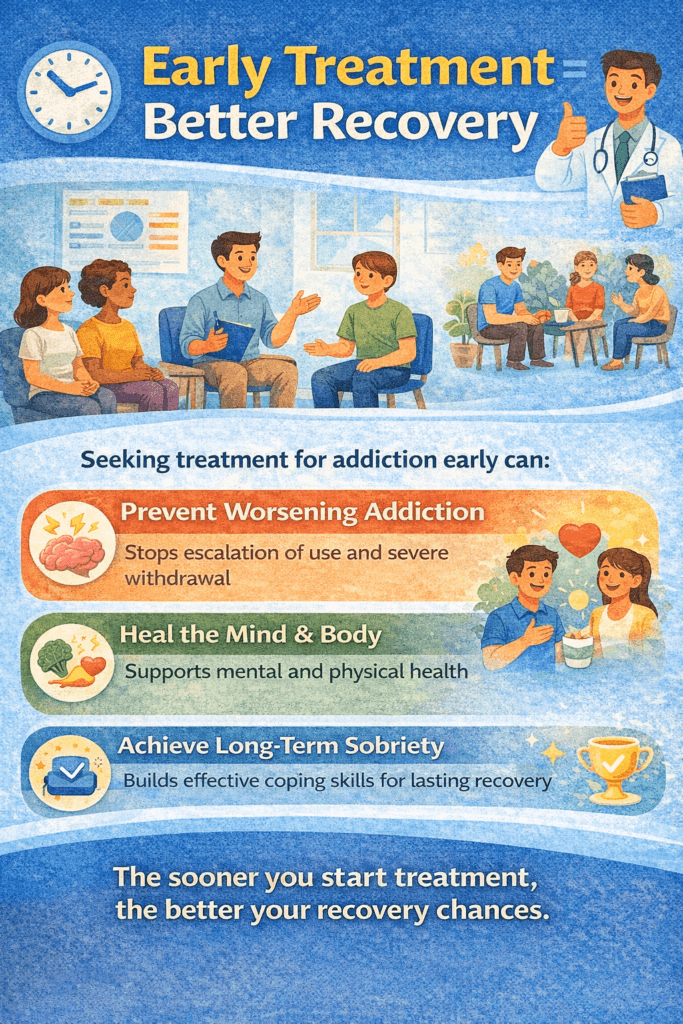
Early addiction treatment plays a vital role in improving recovery outcomes by addressing substance use before it develops into severe physical, emotional, and social harm. When individuals recognize early warning signs, manage triggers, and seek medical or behavioral support, they are more likely to begin treatment at a stage when recovery is safer, less overwhelming, and more effective. Family members strengthen this process by offering compassion, setting healthy boundaries, and helping connect their loved ones to appropriate care. At the same time, community resources such as walk-in screenings, peer recovery programs, mental health services, and accessible treatment centers remove barriers to getting help. Together, early self-action, family involvement, and community support create a strong foundation for long-term recovery and lasting well-being.
How Early Addiction Treatment Improves Recovery
1. Prevents the Addiction From Becoming More Severe
Addiction is a progressive brain disease. Over time:
- Cravings intensify
- Tolerance increases
- Withdrawal becomes more severe
- Substance use becomes more compulsive
Entering treatment early interrupts this progression, making recovery faster, safer, and more successful.
2. Reduces Long-Term Brain Changes
Chronic drug or alcohol use alters:
- Reward pathways
- Impulse control
- Stress response
- Memory and motivation circuits
Early treatment reduces the duration of exposure to these changes, allowing the brain to heal more fully and quickly.
3. Lowers Risk of Overdose, Injury, and Medical Complications
Delaying treatment increases the likelihood of:
- Overdose
- Liver disease
- Heart problems
- Cognitive impairment
- Infectious diseases (HIV, hepatitis C)
- Trauma and accidents
Early treatment prevents these risks before they become life-threatening.
4. Enhances Mental Health Stability
Many individuals become trapped in a cycle of:
- Anxiety
- Depression
- Trauma symptoms
- Insomnia
These conditions worsen addiction. Early intervention provides access to therapy and medication that stabilize mental health before symptoms escalate.
5. Improves Success Rates and Lowers Relapse
Research consistently shows that people who seek treatment earlier are:
- More motivated
- More responsive to therapy
- Less likely to relapse
- More able to maintain lifestyle changes
Recovery becomes smoother, less chaotic, and more sustainable.
6. Protects Relationships and Social Stability
Untreated addiction damages:
- Family relationships
- Employment
- Finances
- Parenting and custody stability
Getting help early prevents these losses, allowing people to rebuild their lives more easily and with less long-term fallout.
7. Strengthens Support Systems
Early treatment connects individuals to:
- Counselors
- Peer support (AA, SMART Recovery)
- Case managers
- Recovery coaches
- Medication-assisted treatment (MAT)
These supports build a network of accountability and encouragement—a key factor in long-term sobriety.
8. Increases Access to Medication-Assisted Treatment
Medications such as:
- Buprenorphine and methadone (opioids)
- Naltrexone (alcohol and opioids)
- Acamprosate (alcohol)
- Topiramate (off-label, reduces cravings)
work best when used before addiction becomes severe. Early use improves stabilization and cuts relapse risk dramatically.
9. Reduces Legal and Financial Consequences
Early treatment prevents the progression to:
- DUIs
- Job loss
- Evictions
- Criminal charges
- Loss of custody
Addressing addiction early lowers the likelihood of life-altering financial and legal harm.
10. Helps Rebuild Identity and Purpose
The earlier a person receives help, the sooner they can:
- Reconnect with personal values
- Develop healthy routines
- Replace addiction-driven behaviors
- Build confidence and self-esteem
Early intervention supports the development of a strong recovery identity, which protects long-term sobriety.
Summary
Early addiction treatment improves recovery by reducing the severity of addiction, preventing physical and mental health complications, strengthening relationships, increasing success rates, and protecting individuals from long-term social and legal consequences. The earlier a person receives help, the smoother and more successful their recovery journey becomes.
Obstacles to Not Getting Treatment Early for Addiction
1. Addiction Progresses and Becomes More Severe
Without early intervention, the brain becomes increasingly dependent on the substance. This leads to:
- Stronger cravings
- Higher tolerance
- Compulsive use
- Loss of control
The longer addiction continues, the harder it is to stop.
2. More Damage to the Brain’s Reward and Stress Systems
Delayed treatment allows addiction to cause bigger changes in:
- Dopamine pathways
- Prefrontal cortex (decision-making)
- Emotion regulation centers
These changes make recovery more difficult and relapse more likely.
3. Increased Risk of Overdose and Medical Emergencies
Not seeking treatment early increases the chance of:
- Overdose (especially with fentanyl, alcohol, or benzos)
- Heart attacks, strokes
- Liver failure
- Seizures
- Respiratory depression
- Infections (HIV, hepatitis C)
The longer someone waits, the greater the risk of life-threatening complications.
4. Worsening Mental Health Conditions
Untreated addiction intensifies:
- Depression
- Anxiety
- PTSD
- Insomnia
- Suicidal thoughts
People often enter a dangerous cycle where mental illness fuels substance use, and substance use worsens mental illness.
5. Breakdown of Relationships and Support Systems
Without early help, addiction can destroy:
- Trust within families
- Partnerships
- Parenting stability
- Friendships
- Social support networks
By the time treatment is sought, the person may feel isolated with fewer resources for recovery.
6. Financial and Job-Related Decline
Not entering treatment early increases the likelihood of:
- Job loss
- Lower performance at work
- Missed shifts
- Reduced income
- Debt or financial instability
Untreated addiction disrupts professional life, making recovery more complicated.
7. Legal Consequences
Without early intervention, addiction may lead to:
- DUIs
- Arrests or charges
- Probation violations
- Loss of custody
- Court fees
These consequences can make entering treatment later more stressful and complex.
8. Higher Risk of Homelessness or Unsafe Living Conditions
As addiction worsens, people may:
- Lose stable housing
- Rely on unsafe environments
- Become vulnerable to violence or exploitation
Lack of early treatment increases instability.
9. Physical Health Decline Becomes Harder to Reverse
Chronic substance use causes long-term damage to:
- Liver
- Kidneys
- Heart
- Lungs
- Gastrointestinal system
- Immune system
Early treatment prevents or minimizes these lifelong complications.
10. Loss of Motivation and Hope
The longer addiction goes untreated, the more people feel:
- Hopeless
- Ashamed
- Stuck in the cycle
- Unmotivated to change
- Fearful of withdrawal
These emotional barriers can become major obstacles to beginning recovery later.
11. Increased Withdrawal Severity
Delaying treatment increases:
- Physical withdrawal dangers (opioids, alcohol, benzos)
- Psychological distress
- Risk of relapse during withdrawal
Early treatment makes detox safer and more manageable.
12. Deeper Social and Community Impact
Untreated addiction affects:
- Public safety
- Community resources
- Healthcare costs
- Workplace productivity
- Family systems
Not addressing addiction early creates larger ripple effects across society.
Summary
Not getting addiction treatment early creates obstacles that make recovery harder, riskier, and less successful, including worsening physical and mental health, increased overdose risk, damaged relationships, job loss, legal consequences, and higher withdrawal severity. Early treatment prevents these challenges and supports a safer, more effective recovery journey.
Self-Management Strategies to Get Early Addiction Treatment for Recovery
1. Recognize Early Warning Signs
Being honest with yourself about the early indicators of addiction helps you act before things worsen. Signs include:
- Increasing tolerance
- Using more than intended
- Cravings
- Hiding use
- Missing work or responsibilities
- Used to cope with stress or emotions
Self-awareness is the first step to early intervention.
2. Track Your Substance Use Patterns
Use a journal or app to track:
- When you use
- How much
- Why do you use (triggers)
- Emotional states before and after
Patterns reveal when help is needed and strengthen motivation to seek treatment.
3. Set a Personal Limit and Notice When You Exceed It
Examples:
- “Only on weekends.”
- “No more than 1–2 drinks”
- “No using alon.e”
When you consistently break those limits, it’s a sign to seek treatment early.
4. Educate Yourself About Addiction Symptoms
Learning the science helps reduce denial and stigma.
Understand:
- How addiction changes the brain
- How tolerance and dependence develop
- The risks of overdose and mental health decline
Knowledge increases willingness to get help sooner.
5. Identify Your Motivations for Change
Write down specific reasons to seek early treatment:
- Protecting health
- Being present for family
- Saving money
- Avoiding legal trouble
- Maintaining job performance
Having clear motivations builds internal motivation to act.
6. Create a Request-for-Help Plan
Prepare a simple plan that outlines:
- Who you will contact (doctor, counselor, hotline, trusted friend)
- What will you say
- How will you get there or access telehealth
Planning makes it easier to seek help the moment you feel ready.
7. Use Brief Self-Motivational Check-Ins
Ask yourself regularly:
- “Is my use getting in the way of my goals?”
- “Has my use increased compared to last month?”
- “Do I need extra support right now?”
Regular self-reflection leads to earlier help-seeking.
8. Build a Sober-Support Network Early
Reach out to:
- A trusted friend
- A family member
- Recovery groups (AA, SMART, Celebrate Recovery)
- Online peer support
Talking openly about your concerns increases accountability and decreases shame.
9. Reduce High-Risk Situations
Avoid:
- Drinking or using environments
- Peers who encourage use
- Events where substances are central
- Stress-inducing situations without coping tools
Reducing triggers helps you think clearly about treatment options.
10. Develop Healthy Coping Tools
Replacing substance use with healthier strategies helps prevent escalation:
- Physical activity
- Meditation
- Hobbies
- Journaling
- Deep breathing
- Nature walks
Effective coping decreases dependence on substances and supports early treatment.
11. Seek a Primary Care Visit Early
A simple doctor visit can open the door to:
- Screening for addiction
- Counseling
- Medication options
- Referrals to outpatient or intensive programs
Primary care is one of the easiest entry points for early treatment.
12. Try a Brief Consultation With a Therapist
One session can:
- Clarify your level of risk
- Provide feedback on next steps
- Offer harm-reduction strategies
- Reduce fear of the unknown
A single appointment often leads to early engagement in treatment.
13. Use Digital Tools to Start the Process
Apps and online programs can help with early action:
- Quit plans
- Recovery apps
- Telehealth addiction specialists
- Online support communities
Digital options increase privacy and reduce barriers.
14. Develop an Emergency Plan for Cravings
Write down:
- Who you’ll call
- What coping actions do you try
- Which activities distract you
- Where can you go to calm down
Having a plan prevents small slips from becoming a full relapse.
15. Make a Commitment to Safety
Promise yourself:
- No using alone
- No mixing substances
- No driving under the influence
- No escalating doses
Safety steps prevent crises while you seek early treatment.
Summary
Self-management for early addiction treatment relies on self-awareness, planning, motivation, safe behaviors, and early connection to support systems. The earlier someone recognizes a problem and reaches out, the easier and more effective the recovery becomes.
Family Support Strategies to Encourage Early Addiction Treatment
1. Use Compassionate, Non-Judgmental Communication
Early help is more likely when families communicate with:
- Empathy
- Curiosity
- Concern instead of criticism
Use phrases like:
- “I’m worried about you because I care.”
- “You deserve support, and you don’t have to do this alone.”
Avoid shame-based language, which delays treatment.
2. Recognize and Talk About Early Warning Signs
Families should gently point out changes such as:
- Increased use
- Mood swings
- Withdrawal from activities
- Declining work or school performance
- Health issues or sleep problems
Early, honest conversations increase insight and reduce denial.
3. Offer to Help Arrange a Professional Assessment
Families can:
- Help schedule a doctor or therapist visit
- Drive or accompany the person
- Help fill out paperwork
- Explore telehealth or local clinics
Removing logistical barriers increases the likelihood of entering treatment early.
4. Encourage a Primary Care Visit
Primary care is a low-stigma entry point for early help.
Families can suggest:
- A routine check-up
- Screening for mental health or substance use
- Medication options
People are more willing to accept help in a familiar medical setting.
5. Avoid Enabling Behaviors
Families should not:
- Give money that can be used for substances
- Cover up consequences
- Make excuses to employers or friends
- Replace responsibilities
Gentle boundaries help the individual see the need for early treatment.
6. Provide Practical Support
Families can help the person seek care by:
- Driving them to appointments
- Watching children
- Helping them take time off work
- Providing transportation or internet access
Reducing life stressors makes treatment more accessible.
7. Encourage Healthy Routines
Support them in creating a structure that reduces worsening addiction:
- Regular meals
- Consistent sleep
- Exercise or walks
- Calming routines
- Reduced exposure to high-risk friends or environments
Stability increases readiness for early treatment.
8. Promote Positive Reinforcement
Celebrate small steps:
- Cutting back
- Attending one meeting
- Researching treatment options
- Completing an assessment
Positive reinforcement boosts motivation and confidence.
9. Educate the Family About Addiction
When families understand addiction as a medical condition, not a moral failure, they can:
- Communicate better
- Reduce stigma
- Approach recovery with patience and realism
Education empowers healthier interactions and earlier help-seeking.
10. Encourage Engagement in Support Groups
Examples include:
- Al-Anon
- Families Anonymous
- CRAFT (Community Reinforcement and Family Training)—the most evidence-based family method for early treatment
Families learn effective communication and how to motivate change without confrontation.
11. Create a Safety-Focused Environment
Families can help by:
- Removing alcohol and drugs from the home
- Reducing exposure to triggering social situations
- Encouraging safe transportation (no driving impaired)
- Monitoring for overdose warning signs
Safety planning supports earlier recognition of the need for help.
12. Support Mental Health Treatment
Since many addictions begin with untreated depression, anxiety, trauma, or stress, families can:
- Encourage therapy
- Help access psychiatric care
- Normalize mental health conversations
Addressing mental health early often leads to seeking addiction treatment sooner.
13. Remain Patient but Consistent
People may resist early treatment at first. Families should:
- Stay steady in their message of concern
- Maintain boundaries
- Keep offering help
- Avoid giving up after one difficult conversation
Consistency builds trust and eventually increases willingness to seek help.
Summary
Family support plays a critical role in helping individuals access addiction treatment early. By using compassionate communication, reducing logistical barriers, establishing healthy routines, avoiding enabling, and reinforcing positive steps, families can motivate earlier engagement in treatment—leading to safer, more successful recovery outcomes.
Community Resource Strategies to Support Early Addiction Treatment
1. Provide Low-Barrier Access to Screening & Early Assessment
Communities can reduce delays in treatment by offering:
- Walk-in substance use screenings
- Drop-in mental health assessments
- Mobile clinics in high-need neighborhoods
- Free or low-cost SBIRT (Screening, Brief Intervention, and Referral to Treatment) services
Fast, easy access increases the likelihood that people will seek help early.
2. Expand Access to Primary Care–Based Treatment
Primary care is one of the most effective entry points for early intervention. Community clinics can:
- Train providers in addiction screening
- Offer same-day appointments
- Integrate behavioral health services
- Provide medication-assisted treatment (MAT) onsite
This reduces stigma and makes early treatment more acceptable.
3. Strengthen Community Education & Awareness Campaigns
Communities can run campaigns on:
- Early signs of addiction
- Benefits of early treatment
- Myths vs. facts about addiction
- How to access local treatment services
When people understand addiction as a medical condition, they seek help sooner.
4. Offer Peer Recovery Coaches & Navigators
Peer specialists help individuals:
- Identify early-stage symptoms
- Understand treatment options
- Navigate insurance and appointments
- Stay motivated to seek help
Peers increase trust, reduce fear, and promote early treatment engagement.
5. Build Local Recovery Community Centers
These centers offer:
- Support groups
- Workshops
- Early intervention services
- Social activities without substances
People can seek help before addiction intensifies and before crisis-level intervention is needed.
6. Improve Access to Mental Health Services
Since many addictions begin with untreated trauma, depression, or anxiety, communities should:
- Offer free or low-cost therapy
- Provide crisis counseling hotlines
- Expand access to tele-mental health
- Create school- and workplace-based mental health programs
Addressing mental health early often leads to seeking addiction treatment early.
7. Increase Availability of Transportation Assistance
Transportation is a major barrier. Communities can offer:
- Free bus passes
- Ride-share vouchers
- Non-emergency medical transport
- Mobile treatment units visit neighborhoods regularly
Reducing transportation barriers gets people into treatment sooner.
8. Support College & High School Early Intervention Programs
Schools can help by:
- Offering early screening
- Creating youth recovery clubs
- Training staff to identify early warning signs
- Providing confidential counseling
Early intervention among youth prevents future severe addiction.
9. Implement Workplace-Based Support Programs
Communities can encourage workplaces to:
- Offer Employee Assistance Programs (EAPs)
- Provide confidential addiction screening
- Promote wellness classes
- Train supervisors to recognize early signs
Workplaces are powerful early intervention points.
10. Offer Community Hotlines and Crisis Lines
Hotlines provide immediate access to:
- Screening
- Counseling
- Treatment referrals
- Safety planning
24/7 availability encourages people to seek help at the first sign of a problem.
11. Provide Housing and Social Support Services
People are more likely to seek treatment early if basic needs are met. Communities can support through:
- Transitional housing
- Case management
- Food assistance
- Employment support
Stability helps individuals feel safe enough to begin treatment.
12. Promote Harm-Reduction Services That Encourage Treatment
Harm-reduction programs can serve as early touchpoints:
- Syringe service programs
- Fentanyl test strip distribution
- Naloxone access
- Safe-use education
These programs often build trust and motivate people to seek treatment sooner.
Summary
Community resources help individuals access early addiction treatment by reducing barriers, offering supportive services, and creating low-stigma pathways to care. Through accessible clinics, peer support, education, transportation assistance, mental health services, and harm-reduction programs, communities can catch addiction early—leading to safer, more successful recovery outcomes.
Frequently Asked Questions
Here are some common questions:
1. What does “early addiction treatment” mean?
Early addiction treatment refers to seeking professional help as soon as substance use begins to cause problems, rather than waiting until addiction becomes severe. This may include medical care, counseling, or support programs at the first signs of risk.
2. Why is early treatment important for recovery?
Early treatment prevents addiction from progressing, reduces physical and psychological damage, and increases the likelihood of long-term recovery. The sooner treatment begins, the easier it is to regain control and rebuild healthy habits.
3. What are the early warning signs that treatment may be needed?
Common signs include increasing substance use, cravings, loss of control, using substances to cope with stress, relationship problems, declining work or school performance, or hiding substance use.
4. Does early treatment reduce relapse risk?
Yes. Addressing addiction before it becomes deeply ingrained in behavior and brain chemistry lowers relapse rates and improves treatment success.
5. Can early treatment prevent serious health complications?
Absolutely. Early intervention reduces the risk of liver disease, heart problems, brain impairment, overdose, and mental health disorders associated with long-term substance use.
6. Is early treatment only for severe addiction?
No. Early treatment is effective for mild or moderate substance use problems and can prevent them from progressing into severe addiction.
7. What types of early treatment are available?
Options include brief counseling, outpatient therapy, medication-assisted treatment, support groups, telehealth services, and primary care-based interventions.
8. Does early treatment improve mental health outcomes?
Yes. Early care helps address anxiety, depression, trauma, and stress that often contribute to substance use, improving overall emotional well-being.
9. Can family involvement help early recovery?
Yes. Family support increases treatment engagement, provides encouragement, and helps maintain accountability during early recovery stages.
10. Are there benefits to early treatment during pregnancy?
Yes. Early treatment during pregnancy greatly reduces risks of fetal abnormalities, preterm birth, and neonatal withdrawal, protecting both mother and baby.
11. What if I’m unsure whether I need treatment?
Speaking with a healthcare provider or counselor for a brief screening can clarify whether treatment would be helpful. Early conversations often prevent future problems.
12. Is early treatment confidential?
Yes. Medical and counseling services follow privacy laws that protect patient confidentiality.
13. How soon can someone see improvement after starting treatment?
Many people notice better sleep, mood, and reduced cravings within weeks. Long-term recovery strengthens over time with continued care.
14. Does early treatment cost less than late-stage treatment?
Yes. Early outpatient care is typically far less costly than hospitalization, emergency care, or long-term residential treatment required for advanced addiction.
15. Is long-term recovery possible after early treatment?
Yes. With early intervention, ongoing support, and healthy coping strategies, long-term recovery is highly achievable.
Conclusion
Engaging in addiction treatment early provides individuals with the best chance for meaningful and sustained recovery. By taking responsibility for their health through self-management strategies, people can recognize problems sooner and act before addiction becomes deeply entrenched. Families strengthen this process by providing encouragement, reducing stigma, and removing practical barriers to seeking care. Meanwhile, communities equip individuals with the services, education, and support networks needed to engage in treatment quickly and confidently. When self-management, family support, and community resources work in harmony, early addiction treatment becomes more accessible and effective—helping individuals rebuild their lives, protect their health, and move toward long-term recovery success.
Video: Early Addiction Treatment Matters