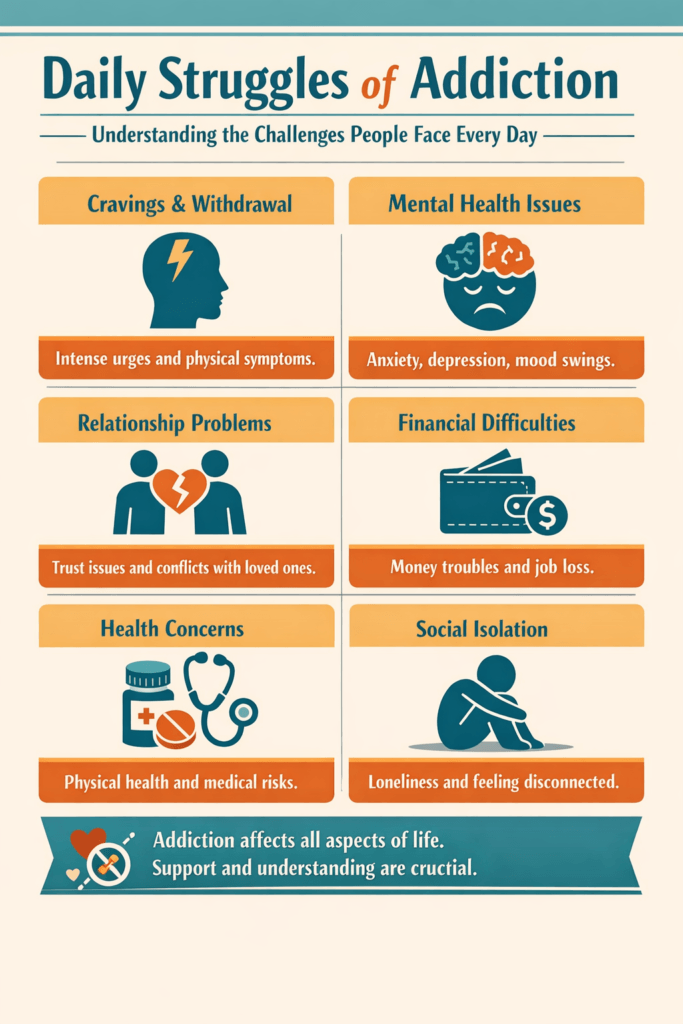
The daily struggles of addiction extend far beyond substance use itself. For many individuals, each day involves managing cravings, emotional swings, stress triggers, and internal conflict while attempting to maintain responsibilities and relationships. Addiction alters brain chemistry, particularly in reward, motivation, and impulse-control systems, making ordinary decisions feel disproportionately difficult. What may appear, from the outside, to be simple choices are often complex neurological and psychological battles occurring moment by moment. Understanding these daily challenges is essential for reducing stigma and recognizing that addiction is not a lack of willpower, but a condition requiring support, structure, and compassion.
Daily Struggles of Addiction: Understanding the Invisible Battle
Addiction is often misunderstood as a series of isolated choices, but for those living with it, it is a continuous daily struggle affecting thoughts, emotions, relationships, and physical health. Each day can feel like a cycle of cravings, internal conflict, and attempts to maintain normal functioning while battling urges that seem relentless. The struggle is not simply about resisting substances—it is about managing a complex condition that impacts brain chemistry, behavior, and identity.
One of the most difficult daily challenges is craving management. Cravings can arise suddenly, triggered by stress, memories, environments, or emotional states. These urges are rooted in neurobiological changes within the brain’s reward system, making them feel urgent and overpowering. Even after periods of abstinence, the brain can react strongly to cues associated with past substance use.
Emotional regulation is another ongoing hurdle. Many individuals with addiction experience heightened anxiety, irritability, or depression, especially during early recovery or withdrawal. Substances are often used as coping tools, so when they are removed, underlying emotions can feel more intense. Learning to tolerate distress without substances becomes a central daily task.
Addiction also disrupts routines and responsibilities. Maintaining employment, attending school, caring for family, and managing finances can become difficult when mental energy is consumed by substance-related thoughts. Shame, guilt, and fear of judgment may further isolate individuals, making it harder to seek help.
Relationships are frequently strained as well. Trust may be damaged, communication may break down, and loved ones may struggle to understand the condition. This can lead to loneliness, which paradoxically increases vulnerability to continued substance use.
Physical health challenges compound these struggles. Sleep disturbances, fatigue, appetite changes, and withdrawal symptoms can make each day feel exhausting. The body, like the mind, must heal over time.
Despite these difficulties, it is important to recognize that daily struggle does not equal failure. In fact, the act of continuing to try—attending therapy, resisting urges, reaching out for support—is evidence of resilience. Recovery is built through small victories repeated daily.
Understanding the daily struggles of addiction fosters compassion. When society shifts from judgment to support, individuals are more likely to seek treatment, remain engaged in recovery, and rebuild their lives. Behind every person facing addiction is not a lack of willpower, but a human being navigating one of the most demanding internal battles imaginable.
Self-Management Strategies to Control Daily Struggles of Addiction
Living with addiction often means facing daily internal battles—cravings, emotional swings, stress triggers, and moments of doubt. While professional treatment and social support are essential, self-management strategies form the foundation of day-to-day stability. These practical tools empower individuals to navigate challenges in real time, strengthen emotional regulation, and build resilience against relapse.
One of the most effective strategies is a structured routine. Predictable daily schedules help stabilize mood, reduce impulsivity, and minimize idle time that can lead to cravings. Consistent sleep, meals, and planned activities regulate the nervous system and reinforce a sense of control. Structure provides a framework within which recovery can function reliably.
Mindfulness practices also play a powerful role. Techniques such as breathing exercises, meditation, or grounding exercises help individuals observe cravings without acting on them. Instead of fighting urges, mindfulness teaches acceptance and detachment, allowing cravings to rise and fall naturally without dictating behavior.
Physical activity is another cornerstone of self-management. Exercise stimulates the release of endorphins and dopamine in healthy ways, improving mood and reducing stress hormones. Even short walks or light stretching sessions can interrupt craving cycles and reset emotional states.
Cognitive self-monitoring strengthens awareness. Tracking triggers, mood patterns, and coping responses helps individuals identify what increases risk and what promotes stability. Journaling or using recovery apps can transform vague feelings into clear data, making it easier to proactively plan strategies.
Healthy distraction techniques are equally valuable. Engaging in hobbies, calling a supportive friend, or completing a small task redirects attention away from urges. These activities do not suppress cravings but shorten their intensity and duration.
Another essential skill is self-compassion. Many individuals struggling with addiction experience guilt and self-criticism, which can worsen stress and relapse risk. Practicing supportive self-talk and recognizing progress—even small steps—builds emotional resilience and motivation.
Finally, goal-setting provides direction. Short-term achievable goals create momentum and reinforce self-efficacy. Each completed goal naturally activates the brain’s reward system, helping restore pathways affected by addiction.
Self-management does not eliminate the daily struggles of addiction, but it transforms how they are handled. Through routine, mindfulness, movement, self-monitoring, healthy distraction, self-compassion, and goal-setting, individuals gain practical tools to meet challenges with strength rather than avoidance. Over time, these strategies turn daily survival into daily progress—one intentional choice at a time.
Family Support Strategies to Help Control the Daily Struggles of Addiction
Addiction is not only an individual experience—it is a family experience. The daily struggles of addiction often include cravings, emotional volatility, shame, fatigue, and difficulty maintaining routines. While treatment and personal coping strategies are essential, family support can be one of the most stabilizing forces in recovery. When families understand how to respond constructively, they become powerful partners in helping loved ones manage daily challenges and build resilience.
One of the most important strategies is creating a sense of emotional safety. Individuals coping with addiction often carry intense guilt or fear of judgment. Families who communicate calmly, avoid criticism, and listen without interruption foster an environment where honesty is possible. Emotional safety reduces stress responses, which in turn lowers craving intensity and relapse risk.
Consistent structure at home is equally valuable. Predictable routines—shared meals, regular sleep schedules, planned activities—provide stability that counteracts the chaos addiction can create. Routine helps regulate mood and reinforces a sense of normalcy and accountability.
Another effective approach is supportive accountability. Rather than monitoring or policing behavior, families can collaborate on goals and check in respectfully. Questions such as “How can I support you today?” or “What helps when cravings hit?” encourage autonomy while still offering guidance.
Encouraging healthy coping outlets also strengthens recovery. Families can invite loved ones to join walks, creative projects, volunteer activities, or social gatherings that do not involve substances. Shared sober experiences reinforce that connection and enjoyment are possible without use.
Education is a crucial but often overlooked tool. Families who learn about addiction as a medical and psychological condition—not a moral failing—are better equipped to respond with empathy rather than frustration. Understanding triggers, withdrawal symptoms, and relapse warning signs helps families intervene early and appropriately.
Boundaries must also be part of family support. Healthy boundaries protect both the individual and the family system. Support does not mean enabling harmful behavior; it means offering help while maintaining expectations that encourage responsibility and growth.
Finally, families should care for themselves. Support groups, counseling, and self-care practices help loved ones manage stress and avoid
Community Strategies to Control the Daily Struggles of Addiction
Addiction is often experienced as a private battle, but its daily struggles—cravings, emotional instability, isolation, and stress—are deeply influenced by the surrounding environment. Communities play a crucial role in shaping recovery outcomes by providing structure, connection, resources, and opportunities that individuals may not be able to create on their own. When communities intentionally develop supportive systems, they transform recovery from an individual effort into a collective pathway toward stability and healing.
One of the most effective community strategies is access to recovery-centered spaces. Community centers, peer-support groups, and sober recreational programs offer safe environments where individuals can socialize, learn skills, and build relationships without exposure to substance-related triggers. These spaces reduce isolation, which is a major contributor to relapse risk, and replace it with belonging and accountability.
Another key approach is integrating addiction support into public health systems. Partnerships between local clinics, mental health providers, social services, and outreach organizations create coordinated care networks. When individuals can access counseling, medication-assisted treatment, case management, and crisis services within a single system, daily stressors become more manageable, and treatment engagement improves.
Education initiatives also strengthen community response. Public workshops, school programs, and awareness campaigns that explain the science of addiction reduce stigma and increase empathy. When communities understand addiction as a medical and psychological condition, they are more likely to support treatment funding, early intervention, and compassionate policies.
Employment and housing programs are equally essential. Stable housing and meaningful work provide routine, purpose, and financial security—factors strongly associated with sustained recovery. Community job training programs, transitional housing, and supportive employment initiatives help individuals rebuild independence and reduce daily stressors.
Transportation assistance and accessible services further remove barriers. Many individuals struggle to attend therapy, support groups, or medical appointments due to logistical challenges. Community-based solutions such as ride programs, mobile clinics, or telehealth access make recovery resources more reachable.
Finally, peer leadership is a powerful community asset. Individuals in recovery who mentor others provide hope, credibility, and practical guidance. Their lived experience bridges the gap between professional treatment and real-world application, showing that daily struggles can be managed and overcome.
Community strategies do more than support recovery—they reshape the environment in which recovery happens. When communities offer connection, resources, education, stability, and opportunity, they reduce the weight of daily addiction struggles and replace isolation with collective strength. Recovery then becomes not just possible but sustainable because it is supported by a network rather than carried out alone.
Frequently Asked Questions
Here are some common questions:
1. What are the daily struggles of addiction?
Daily struggles can include cravings, emotional ups and downs, stress triggers, guilt, fatigue, and difficulty maintaining routines or responsibilities. These challenges often occur even when someone genuinely wants to stop using substances.
2. Why do cravings happen so often?
Cravings result from changes in the brain’s reward system. Addiction strengthens neural pathways associated with substances, making urges feel automatic when triggered by stress, emotions, or environmental cues.
3. Are daily struggles a sign of failure?
No. Daily challenges are a normal part of addiction and recovery. Experiencing urges or emotional difficulty does not mean someone is failing—it means the brain is still healing and adapting.
4. Why is addiction mentally exhausting?
Addiction affects attention, decision-making, and emotional regulation. Constantly resisting urges, managing stress, and coping with guilt or shame can drain mental energy, making everyday tasks feel overwhelming.
5. Do daily struggles continue even after someone stops using?
Yes. Many people experience ongoing cravings, mood changes, or stress sensitivity after stopping substances. These symptoms often decrease over time as the brain and body recover.
6. What triggers daily struggles the most?
Common triggers include stress, boredom, loneliness, conflict, certain environments, and exposure to people or places associated with past substance use.
7. How can someone manage daily struggles effectively?
Strategies include structured routines, therapy, support groups, exercise, mindfulness practices, and engaging in meaningful activities. Combining multiple supports is usually most effective.
8. Why is support so important?
Support reduces isolation and provides accountability, encouragement, and practical coping tools. Recovery is significantly more sustainable when individuals are connected to supportive people and resources.
9. Can daily struggles ever disappear completely?
For many people, they become much less frequent and intense over time. While occasional urges may persist, strong coping skills and support systems can help make them manageable.
10. What is the most hopeful truth about daily struggles in addiction?
They are temporary and manageable. With treatment, support, and persistence, the brain can heal, coping skills improve, and daily life gradually becomes more stable and fulfilling.
Conclusion
Daily struggles with addiction represent an ongoing process rather than a single crisis. Progress is often measured in small victories—resisting a craving, attending a meeting, asking for help, or simply getting through a difficult day without relapsing. These moments, though quiet, are powerful indicators of resilience and healing. When individuals receive consistent support from themselves, their families, professionals, and communities, daily battles gradually become more manageable. Over time, coping skills strengthen, emotional stability improves, and life begins to feel less dominated by struggle. Recognizing the reality of these daily challenges fosters empathy, encourages treatment engagement, and reminds us that recovery is not defined by perfection, but by persistence.
Video: POV: You’re Fighting Addiction Every Single Day #MentalHealthMatters #Recovery