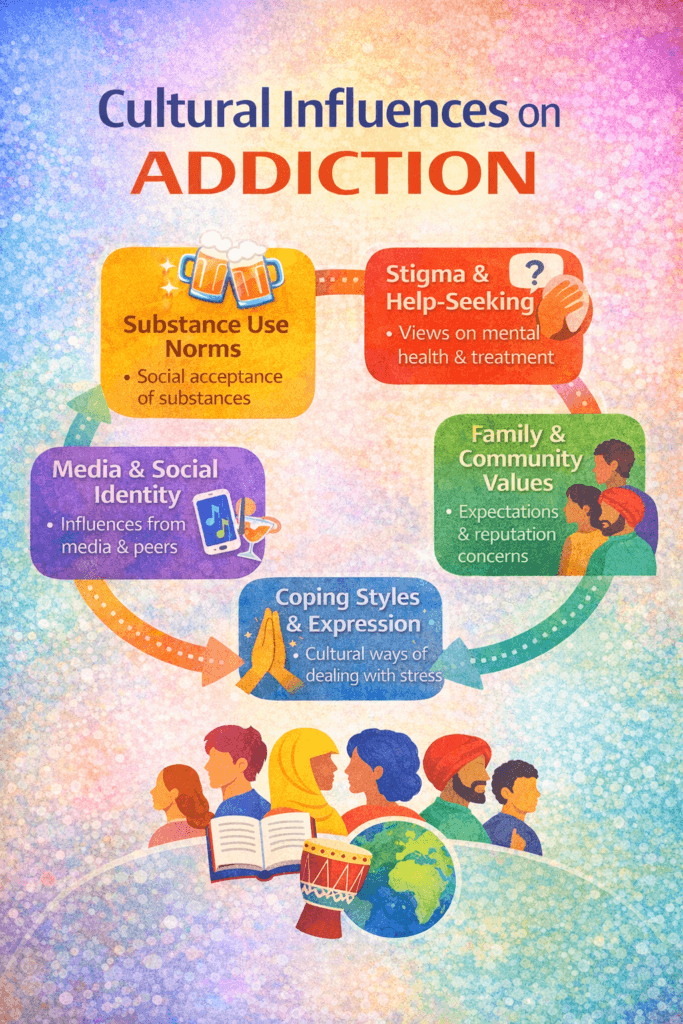
Cultural influences play a powerful role in shaping how addiction develops, is perceived, and is addressed. Culture affects beliefs about substances, coping strategies, emotional expression, and attitudes toward seeking help. These influences are often learned early through family traditions, social norms, media, and community expectations, making them deeply ingrained and sometimes invisible to the individual. Understanding cultural context is essential because behaviors that seem purely personal are often shaped by shared values and environments. Recognizing these influences allows individuals, families, and professionals to interpret addiction more accurately and respond with approaches that are respectful, effective, and culturally informed.
Cultural Influences on Addiction: How Society Shapes Risk, Recovery, and Resilience
Addiction does not develop in isolation—it is deeply shaped by culture. Cultural beliefs, traditions, social norms, and community expectations influence how people view substances, coping behaviors, mental health, and treatment. While biology and psychology play important roles, culture often determines what behaviors are acceptable, how distress is expressed, and whether seeking help is encouraged or discouraged. Understanding cultural influences helps clinicians, families, and communities provide more effective, respectful, and personalized support for prevention and recovery.
Cultural Norms and Substance Use
Different cultures have different attitudes toward substances. In some societies, alcohol use is normalized during celebrations or rituals; in others, it is discouraged or prohibited. These norms shape exposure, perception of risk, and early learning about substances. When use is culturally accepted, individuals may underestimate potential harms. Conversely, strict cultural prohibitions may reduce use—but they can also increase stigma and secrecy if someone struggles.
Stigma and Help-Seeking
Cultural stigma is one of the strongest barriers to treatment. In some communities, addiction may be viewed as a moral failing rather than a health condition. This perception can lead individuals to hide symptoms, delay treatment, or avoid discussing struggles altogether. Cultures that promote openness about mental health and addiction tend to have higher rates of early intervention and better recovery outcomes.
Family and Community Expectations
Cultural values often emphasize family roles, honor, or collective reputation. In such environments, individuals may feel pressure to conceal difficulties to avoid bringing shame to loved ones. At the same time, strong family-centered cultures can be protective when they provide support, accountability, and encouragement for recovery. The same cultural value can function as either a risk factor or a protective factor, depending on its expression.
Cultural Coping Styles
Culture shapes how people cope with stress and emotional pain. Some cultures encourage emotional expression and social support, while others value restraint, privacy, or endurance. Individuals who grow up in environments that discourage emotional expression may be more likely to use substances or behaviors as a form of self-medication. Conversely, cultures that promote healthy coping traditions—such as storytelling, spirituality, music, or communal activities—can reduce the risk of addiction.
Media, Environment, and Social Identity
Cultural messages conveyed through media, music, advertising, and peer groups also influence behavior. When substance use is portrayed as glamorous, rebellious, or socially rewarding, it can increase curiosity and experimentation, especially among youth. Cultural identity and belonging play a major role in decision-making; people often adopt behaviors they believe align with their social group’s values.
Protective Cultural Factors
Not all cultural influences increase risk. Many traditions act as powerful protective forces against addiction, including:
- Strong community bonds
- Spiritual or religious practices
- Structured rites of passage
- Intergenerational mentorship
- Collective accountability
These elements foster belonging, meaning, and purpose—three psychological needs strongly associated with resilience and reduced substance misuse.
Why Cultural Awareness Matters in Treatment
Culturally informed care improves outcomes by respecting the individual’s worldview. Treatment that aligns with a person’s language, beliefs, traditions, and values is more likely to be trusted and followed. For example, incorporating family involvement, faith leaders, or culturally relevant coping practices can strengthen engagement and long-term recovery success.
Final Insight
Addiction is not only a medical or psychological condition—it is also a cultural experience. The beliefs people inherit, the environments they live in, and the communities they belong to all shape how addiction develops, how it is perceived, and how recovery unfolds. Recognizing cultural influences allows society to move beyond one-size-fits-all approaches and toward compassionate, culturally responsive solutions. When prevention and treatment honor cultural context, they become more effective, more inclusive, and better able to help individuals reclaim healthy, meaningful lives.
Self-Management Strategies to Understand Cultural Influences on Addiction
Understanding addiction requires more than recognizing substances or behaviors—it also involves recognizing how culture shapes beliefs, habits, coping styles, and attitudes toward help-seeking. Cultural background influences how individuals interpret stress, express emotions, and view substance use. Self-management strategies can help people become aware of these influences, empowering them to make informed choices rather than unconsciously repeating learned patterns. By examining cultural messages and personal experiences, individuals can develop healthier coping systems and stronger self-awareness, both of which are essential for prevention and recovery.
1. Reflect on Cultural Beliefs About Substances and Coping
Every person grows up absorbing spoken and unspoken cultural messages. These may include beliefs such as “stress should be handled alone,” “drinking is part of social bonding,” or “seeking help means weakness.” Writing down messages learned from family, community, media, or peers can help individuals identify which beliefs are helpful and which may increase risk. Awareness allows intentional choice rather than automatic behavior.
2. Identify Cultural Triggers and Social Pressures
Certain environments or traditions may increase vulnerability. For example, some social gatherings may normalize heavy drinking, while others may discourage emotional expression. Recognizing these patterns helps individuals prepare strategies in advance—such as setting limits, bringing a supportive friend, or planning alternative responses.
3. Reframe Cultural Strengths as Protective Tools
Culture is not only a risk factor; it can also be a powerful source of resilience. Many traditions promote values such as community connection, spirituality, storytelling, music, and shared meals. Self-management involves intentionally leaning into these strengths. When individuals use cultural practices as healthy coping tools, they reinforce identity, belonging, and emotional stability.
4. Develop Cultural Self-Awareness Skills
Cultural self-awareness means asking reflective questions such as:
- How did my culture teach me to handle stress?
- What messages did I receive about addiction or mental health?
- When do I feel pressure to act a certain way socially?
Practicing mindfulness or journaling helps individuals observe thoughts and reactions without judgment, making it easier to distinguish personal values from inherited expectations.
5. Build a Personalized Cultural Recovery Toolkit
A useful strategy is creating a list of culturally meaningful supports that promote well-being, such as:
- Spiritual or faith practices
- Traditional art, music, or movement
- Community gatherings
- Language or heritage connection
- Mentorship from elders or leaders
Having these supports readily available provides alternatives to unhealthy coping methods during stressful moments.
6. Learn and Challenge Stigma Narratives
Some cultures hold stigmatizing views about addiction or mental health that discourage people from seeking help. Self-management includes questioning these narratives and replacing them with an accurate, evidence-based understanding. Education helps individuals distinguish between myths and facts and reduces internalized shame.
Why Self-Management of Cultural Awareness Works
Cultural influences often operate automatically because they are learned early and reinforced repeatedly. When individuals become aware of these influences, they can choose which beliefs to keep and which to change. This process strengthens autonomy, emotional regulation, and decision-making—key protective factors against addiction.
Final Insight
Culture shapes how people think, cope, connect, and seek help, making it a powerful force in addiction risk and recovery. Self-management strategies that increase cultural awareness allow individuals to understand their own influences rather than being controlled by them. By reflecting on beliefs, recognizing pressures, embracing strengths, and challenging stigma, people can transform cultural influence into a source of resilience instead of risk. Ultimately, understanding one’s cultural context is not just a personal insight—it is a practical tool for building healthier habits and sustaining long-term well-being.
Family Support Strategies to Understand Cultural Influences on Addiction
Families are one of the strongest influences on how individuals understand stress, coping, substance use, and help-seeking. Cultural values—such as beliefs about emotional expression, responsibility, independence, and community reputation—are often first learned within the family. Because of this, families play a vital role in helping loved ones recognize how cultural messages can either increase vulnerability to addiction or strengthen resilience. When families approach culture with curiosity, openness, and respect, they create a foundation for prevention, understanding, and recovery that honors identity rather than ignoring it.
1. Encourage Open Conversations About Cultural Beliefs
Families can support awareness by talking openly about cultural traditions, expectations, and attitudes toward substances or coping behaviors. Questions like “What did we learn growing up about stress or drinking?” or “How does our culture view asking for help?” can spark meaningful dialogue. These conversations help individuals recognize which beliefs support well-being and which may unintentionally create pressure or risk.
2. Normalize Emotional Expression Across Generations
Some cultural traditions emphasize emotional restraint or silence during hardship. Families can balance respect for these traditions with healthy communication by modeling safe emotional expression. When family members validate feelings rather than dismiss them, they reduce the likelihood that individuals will suppress distress or turn to substances as coping tools.
3. Identify Cultural Strengths That Protect Against Addiction
Many cultural values act as powerful protective factors, including:
- Strong family loyalty
- Spiritual or faith traditions
- Respect for elders
- Community connection
- Shared rituals and celebrations
Families can intentionally highlight these strengths and use them as supportive resources. Emphasizing belonging and purpose can reduce isolation and increase resilience.
4. Address Cultural Stigma Together
In some cultures, addiction or mental health struggles may be misunderstood or stigmatized. Families can help by educating themselves together and reframing addiction as a health condition rather than a moral failure. When families collectively challenge stigma, individuals feel safer seeking help and discussing their struggles honestly.
5. Support Individual Identity Within Cultural Context
Not everyone relates to cultural traditions the same way. Families can strengthen trust by respecting individual differences in beliefs, coping styles, or values. Allowing space for personal identity—while still honoring shared heritage—reduces pressure and promotes emotional security. This balance supports healthy development and reduces the risk of hidden struggles.
6. Collaborate With Culturally Responsive Resources
Families can seek professionals, programs, or support groups that understand their cultural background. Culturally informed care improves communication, trust, and treatment engagement by respecting language, traditions, and worldviews. When families participate in culturally aligned support systems, individuals often feel more understood and supported.
Why Family Cultural Awareness Matters
Cultural influences often operate silently, shaping behavior without conscious awareness. Families who intentionally explore these influences help bring them into the open, where they can be understood and used constructively. This awareness reduces misunderstandings, strengthens relationships, and promotes healthier coping patterns.
Final Insight
Understanding cultural influences on addiction is not about blaming traditions—it is about recognizing how beliefs and environments shape behavior. Families who foster open dialogue, challenge stigma, and highlight cultural strengths provide a powerful protective environment that supports emotional health and resilience. Over time, this kind of intentional, culturally aware support helps individuals build confidence, make informed choices, and develop coping skills that support lasting well-being.
Community Resource Strategies to Understand Cultural Influences on Addiction
Addiction is shaped not only by biology and psychology but also by culture—the shared beliefs, values, traditions, and social norms that influence how people think, cope, and seek help. Communities play a critical role in helping individuals understand these cultural influences and how they affect risk, prevention, and recovery. When community resources intentionally address cultural context, they create more inclusive systems that recognize diversity in experiences, reduce stigma, and improve access to support. By designing culturally informed programs, communities can transform understanding into action and build environments that promote resilience and well-being.
1. Cultural Education and Awareness Programs
Community workshops, seminars, and public campaigns can help people understand how culture shapes attitudes toward substances, mental health, and coping. Educational initiatives that explore cultural beliefs about stress, emotional expression, and help-seeking empower individuals to reflect on their own experiences. When communities provide accurate, culturally relevant information, they reduce misconceptions and encourage early intervention.
2. Multilingual and Inclusive Support Services
Language barriers can prevent people from accessing treatment or understanding resources. Communities can improve accessibility by offering multilingual services, interpreters, and culturally adapted materials. Inclusive environments ensure individuals feel respected and understood, thereby increasing trust and participation in support programs.
3. Partnerships With Cultural Leaders and Organizations
Faith leaders, elders, cultural mentors, and community advocates often hold trusted positions within their communities. Collaborating with these leaders can help bridge gaps between formal healthcare systems and individuals who may hesitate to seek help. Community partnerships increase credibility, improve outreach, and ensure that prevention and treatment programs align with cultural values.
4. Culturally Responsive Prevention Programs
Prevention programs that incorporate cultural traditions—such as storytelling, art, music, or traditional practices—can strengthen identity and a sense of belonging. These elements promote protective factors such as self-esteem, purpose, and community connection, which are strongly associated with reduced risk of addiction. Programs that honor culture rather than ignore it are more engaging and effective.
5. Community Dialogues That Reduce Stigma
Public forums, discussion groups, and awareness campaigns can help communities openly address cultural myths and stigma related to addiction. When communities normalize conversations about mental health and substance use, individuals are more likely to seek help early. Reducing stigma at the community level creates a supportive atmosphere that encourages honesty and healing.
6. Data-Informed Community Planning
Communities can analyze local trends, cultural demographics, and service utilization patterns to design targeted interventions. Understanding which populations face the greatest barriers allows leaders to allocate resources strategically and tailor programs to meet specific cultural needs. Evidence-based planning ensures that services are both relevant and effective.
Why Community Strategies Matter
Cultural influences often shape behavior subtly and continuously. Community-level initiatives can raise awareness of these influences, helping individuals recognize how social norms, expectations, and traditions shape their choices. When communities provide culturally informed resources, they not only reduce the risk of addiction but also strengthen social cohesion, trust, and collective well-being.
Final Insight
Understanding cultural influences on addiction requires more than individual insight—it requires supportive environments that value diversity and inclusion. Communities that invest in culturally responsive education, outreach, and support systems empower individuals to understand their own experiences and make healthier decisions. In this way, community resource strategies do more than prevent addiction; they build stronger, more connected societies where every person has the opportunity to thrive.
Frequently Asked Questions
Here are some common questions:
1. What are cultural influences on addiction?
Cultural influences are the beliefs, values, traditions, and social norms that shape how people view substances, coping behaviors, mental health, and treatment. These influences affect risk, prevention, and recovery.
2. Why does culture matter in addiction?
Culture shapes attitudes toward substance use, emotional expression, and help-seeking. It can either increase vulnerability or act as a protective factor, depending on the values and supports present.
3. Can culture increase addiction risk?
Yes. Cultural environments that normalize heavy substance use, discourage emotional expression, or stigmatize mental health treatment may increase risk by limiting healthy coping and delaying support.
4. Can culture protect against addiction?
Absolutely. Strong community bonds, family support, spiritual traditions, and positive social norms can reduce risk and promote resilience.
5. How does stigma affect addiction in different cultures?
In some cultures, addiction may be viewed as a moral failure rather than a health condition. This stigma can cause individuals to hide struggles, avoid treatment, or delay seeking help.
6. Do cultural beliefs affect treatment outcomes?
Yes. Treatment is often more effective when it respects a person’s cultural background, language, traditions, and values. Culturally responsive care improves trust, engagement, and long-term success.
7. How does family culture influence addiction?
Family beliefs about coping, responsibility, and emotional expression strongly shape behavior. Supportive families can protect against addiction, while environments with secrecy or pressure may increase risk.
8. What role does media culture play?
Media can influence perceptions of substances by portraying them as glamorous, rebellious, or socially acceptable. These messages can affect curiosity, experimentation, and social norms, especially among youth.
9. Can cultural identity impact recovery?
Yes. A strong sense of cultural identity often provides meaning, belonging, and purpose—factors associated with improved recovery outcomes and reduced relapse risk.
10. Why is cultural awareness important for prevention?
Understanding cultural influences helps individuals recognize pressures, triggers, and beliefs that may affect behavior. Awareness allows people to make intentional choices rather than follow unconscious patterns.
11. How can communities address cultural barriers to treatment?
Communities can provide multilingual services, culturally informed education, partnerships with local leaders, and inclusive programs that respect traditions and values.
12. What is the biggest takeaway about culture and addiction?
Addiction is not shaped by biology alone—it is influenced by environment, identity, and social context. Recognizing cultural factors allows for more compassionate, effective prevention and treatment.
Conclusion
Acknowledging cultural influences on addiction broadens our understanding beyond biology and behavior to include the social and environmental forces that shape human choices. When cultural factors are considered, prevention and treatment efforts become more inclusive, compassionate, and effective. Awareness of these influences helps reduce stigma, encourages early help-seeking, and supports strategies that align with an individual’s identity and values. Ultimately, recognizing culture’s role in addiction does not assign blame—it provides insight. And with insight comes the ability to design better interventions, strengthen resilience, and support recovery in ways that honor both personal experience and cultural background.
Video: This Is Why Addiction Looks Different in Every Culture #addiction #awareness #culturallysensitive