Healthy boundaries are an important part of addiction recovery. When I first committed to my own recovery, even understanding what boundaries were felt like a challenge. It’s not just about saying “no” to temptation—it’s about protecting your time, energy, and progress. Whether you’re just starting out or have some sober time behind you, learning to set and maintain boundaries can help you stay grounded and continue moving forward.
When I think about all the pitfalls I’ve witnessed, both personally and through others’ experiences, blurry boundaries keep popping up. Recovery isn’t just swapping out old habits for new ones. It’s switching up your entire approach to relationships, work, stress, and even free time. Healthy boundaries work like a filter, letting in what’s good for you and keeping out what isn’t.
Addiction often blurs these lines. People start to overcommit, say yes out of guilt, or feel forced to tolerate disrespect or pressure. Without boundaries, little triggers start to chip away at progress. Over time, this can leave you burned out, resentful, or vulnerable to relapse. Good boundaries, on the other hand, create space for healing and build your confidence around what you need to feel safe and supported.
It’s pretty common for those in early recovery to worry about letting others down or losing relationships if they start speaking up. But real recovery is about growing into assertiveness, not aggression, and learning to ground your interactions in respect. It also means learning to say a gentle “no” and knowing when to walk away for your own well-being.
Types of Boundaries That Actually Help in Recovery
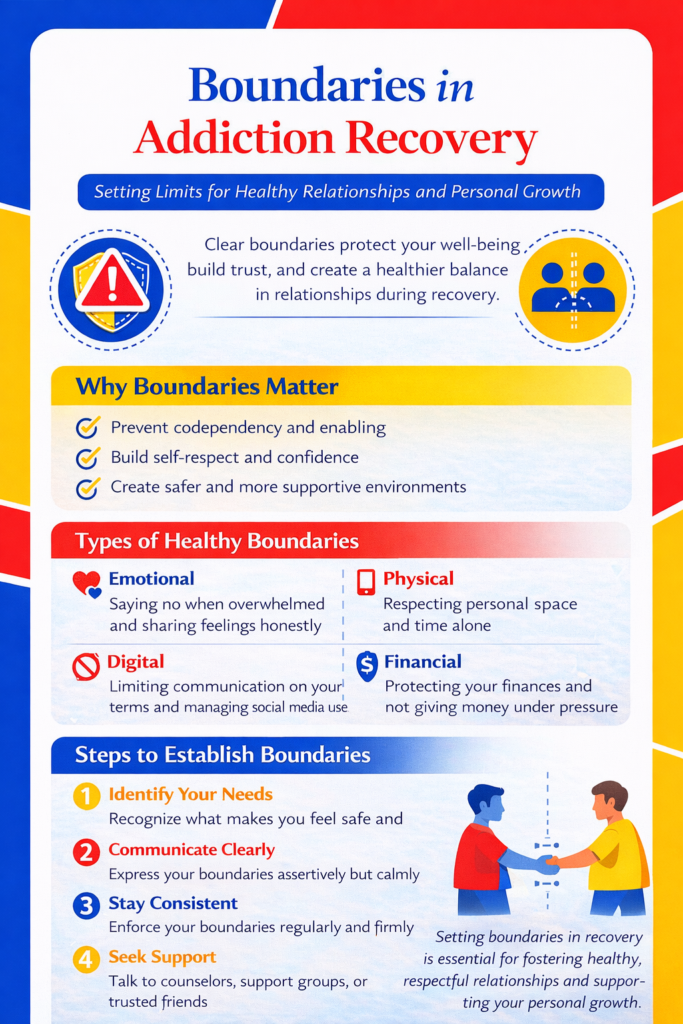
All boundaries aren’t created equal. I break these into a few main categories that have helped people I’ve supported over the years:
- Physical Boundaries: These concern personal space and physical touch. It’s ok to tell someone you’d rather have a fist bump than a hug, or that you’re not up for crowds early on in sobriety.
- Emotional Boundaries: Pretty vital, and sometimes the hardest. Emotional boundaries mean you’re not responsible for fixing other people’s feelings or letting their bad moods wreck your progress.
- Time Boundaries: Managing commitments and plans without feeling overwhelmed is key. You do not have to take every call or go to every event.
- Social Boundaries: Protect yourself by limiting exposure to triggers, including toxic friendships or situations tied to old patterns. Sometimes that means switching up your hangouts, blocking numbers, or skipping certain parties.
- Financial Boundaries: Money management can get tricky in recovery. Healthy financial boundaries include saying no to lending cash you can’t afford or being open about not joining expensive outings.
Most folks in recovery find that one type of boundary is the hardest for them. I had to work the hardest on emotional boundaries since I wanted to help everyone, and I ended up drained. Setting those limits took time, but now they serve as guardrails for healthier relationships and self-respect.
How to Start Setting Boundaries (Without the Guilt)
One of the biggest things I had to unlearn was feeling guilty about prioritizing my own needs. Setting boundaries is not selfish. It’s actually super helpful for everyone involved because it leads to more honest and respectful interactions. Here’s how I usually get the ball rolling:
- Notice Where You Feel Uncomfortable: Pay attention to moments when you feel resentful, anxious, or overwhelmed. Those are usually boundaries that are being pushed or are missing altogether.
- Get Clear on Your Limits: Think about what you need more or less of, such as alone time after work or not discussing past mistakes with relatives.
- Practice Assertive (Not Aggressive) Communication: Statements like “I’m not comfortable with that,” or “I need some space,” are simple but effective.
- Expect Some Pushback: Some folks are used to you saying yes, and might react when you start saying no. Remember, this discomfort usually gets better with time.
Over time, staying consistent with your boundaries helps them feel more natural. They’re there to help you and others know where the line is, for everyone’s benefit.
Practical Ways to Hold Your Boundaries
It’s easy to write out what you want, but the tough stuff starts when you have to apply boundaries in real-life situations. I’ve run into stumbling blocks plenty of times, so here’s what helps me keep my boundaries in check day to day:
- If someone starts pushing for something you’re not comfortable with, don’t jump into a long explanation. A simple “That doesn’t work for me” is enough.
- Use reminders or mantras. I keep sticky notes where I can see them, like “Say yes only when you mean it,” to prompt me before I agree out of habit.
- Have safe people in your circle. Run boundary-set scenarios with someone in your support group or a trusted friend to get feedback or moral support.
- Practice self-care routines when you need to recharge after a boundary-pushing situation (nature walks and good music always help me reset).
- Build in easy outs. If a social outing is making you anxious, drive your own car or plan an “early out.” If a conversation gets heated, practice saying you need a break.
The main goal is to back yourself up and stay consistent. Each time you honor your own boundary, you reinforce that you deserve respect and protection in your new life.
Common Boundary Pitfalls in Recovery & How to Deal With Them
I wish I could say boundaries get easier overnight, but a few stumbling blocks show up along the way. Here are some common ones I faced and how I handled them:
- Feeling guilty about saying no: I remind myself that saying no is about preserving my wellness, not hurting anyone’s feelings.
- Getting pushback from family or friends: This happens when people aren’t used to the “new you.” Sometimes talking it out, writing a letter, or bringing someone from your support network for backup helps.
- Boundary burnout: If I overexplain or argue every decision, it gets exhausting. Short, direct answers are my go-to now.
- Feeling responsible for others’ happiness: It’s not my job to fix all outcomes. Therapy, group support, and reading up on codependency have helped me let go of that.
The reality is, struggling with boundaries is part of recovery for most people. Each setback is a chance to reflect and tighten up the game for next time.
Tips for Maintaining Boundaries Over Time
Just like recovery itself, boundaries aren’t a one-and-done kind of deal. Here are a few things I keep in mind to keep my boundaries intact long term:
Check in with yourself regularly: Recovery is a moving target. What worked last month may need tweaking as circumstances or your confidence grow.
Reevaluate relationships: As you grow, you may notice some relationships reinforce your boundaries, while others make it harder. Give yourself permission to step back where you need to.
Celebrate progress (even the small stuff): Every time you honor your boundaries, congratulate yourself! It’s a big marker of respect and growth, and it adds up over time.
Stay connected to your support system: Whether it’s 12-step meetings, group therapy, or friends who “get it,” being around people who respect your limits is a total game-changer.
Real Life Examples of Setting Boundaries in Recovery
- I once had to set a clear social boundary: I stopped going to Friday night dinners at a friend’s house, where drinking was always front and center. I let my friend know, without drama, that I was taking a break from those gatherings to focus on my own goals.
- A friend in recovery set financial boundaries by deciding not to lend money to family members who didn’t support their sobriety. She simply said, “I’m focusing on staying financially secure while I’m rebuilding my life.”
- Another person I know had to set emotional boundaries with their partner around discussing certain stressful topics late at night, to avoid anxiety and sleep loss. This helped them sleep better and keep their recovery a top priority.
These aren’t dramatic examples, but they’re the sort of day-to-day decisions that protect your progress and sanity. Regularly practicing these kinds of boundaries helps make them more natural with time. If you ever question whether your boundaries are working, check in with how you feel: feeling more relaxed, focused, and empowered means you’re headed in the right direction.
Frequently Asked Questions About Boundaries in Addiction Recovery
Q: Is it normal to feel bad about saying no to old friends?
A: Totally normal, but it usually passes with time. Remember that real friends want what’s best for you, and your recovery is the priority.
Q: How do I set boundaries without making people angry?
A: You can’t always control other people’s reactions, but you can stay respectful and calm. Most people adjust, even if it takes a few tries. Stick to your reasons without over-explaining.
Q: Can boundaries change over time?
A: Absolutely. What feels too hard now may get easier as you gain confidence. It’s ok to readjust when you notice something isn’t working for you anymore.
Wrapping Up: Protecting Your Recovery With Boundaries
Setting and keeping boundaries isn’t always simple, and it can feel awkward at first, especially if you’re new to recovery. But the more you practice, the more you protect the progress you’ve made, minimize stress, and open up space for genuine connection and growth. Healthy boundaries make recovery sustainable, rewarding, and way more doable. Staying self-aware, asking for help when needed, and forgiving yourself for the occasional stumble all play a role. You deserve to feel safe in your own life and recovery, and setting boundaries is a big step in making that happen.
Video: