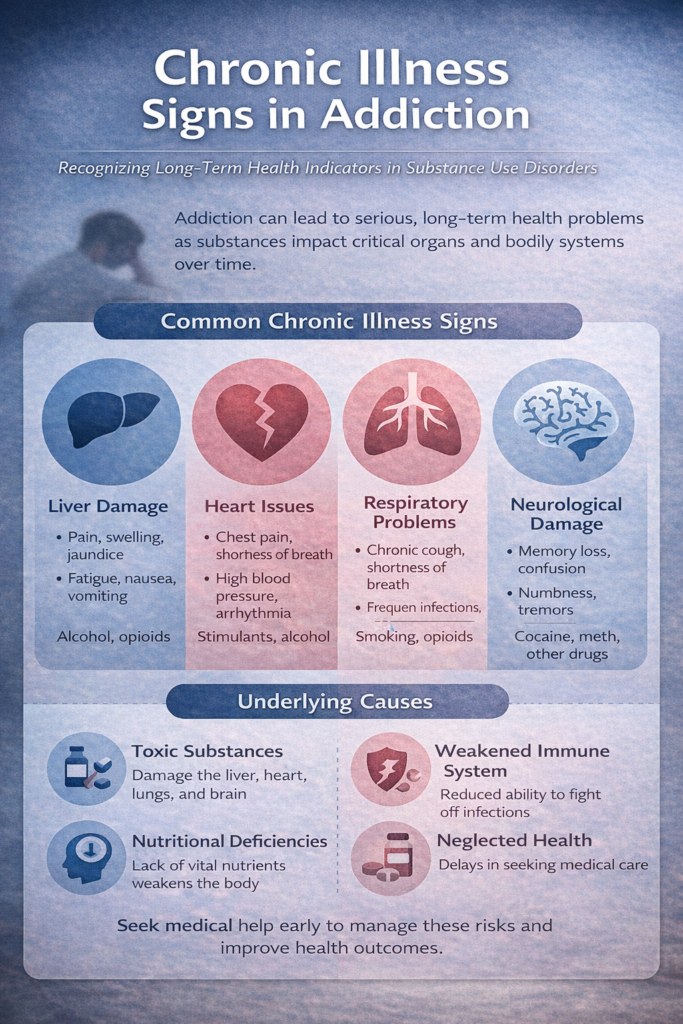
If you’ve ever wondered how addiction can shape someone’s long-term health, you’re not alone. While substance use often starts with short-term effects, prolonged use can lead to serious chronic conditions that develop quietly over time. Issues like liver disease, heart problems, respiratory complications, or neurological damage may not show clear symptoms at first, making them easy to miss. This is why it’s important to recognize early warning signs such as ongoing fatigue, unexplained pain, mood changes, or declining physical health. Understanding these risks helps individuals and their loved ones seek help sooner, allowing for earlier intervention and better long-term health outcomes.
Understanding Chronic Illness in Addiction
Addiction isn’t just about cravings or not being able to put down a bottle or pill. It’s tied into a person’s whole life and health. When someone deals with substance use for a long time, it puts a strain on every organ system and can set off, or speed up, chronic illnesses like heart disease, liver troubles, lung conditions, diabetes, and even certain kinds of cancer. Recognizing signs early can have a huge impact on getting the right treatment and improving quality of life.
According to the Centers for Disease Control and Prevention (CDC), chronic diseases are responsible for 7 out of every 10 deaths in the United States. Substance misuse ramps up the risk factor for developing illnesses that stick around and need ongoing care. For more on how addiction and chronic disease are linked, check out resources like those from the Substance Abuse and Mental Health Services Administration (SAMHSA).
Common Chronic Illnesses Linked to Addiction
Certain conditions tend to show up more often in people with a history of substance use. Here are the most common ones I see:
- Liver Disease: Long-term alcohol or drug use (especially opioids or certain prescriptions) can damage the liver, leading to hepatitis, fatty liver disease, or cirrhosis.
- Cardiovascular Disease: Stimulants (like cocaine or meth), tobacco, and even heavy alcohol use stress the heart and blood vessels, increasing the risk of heart attacks, stroke, and long-standing high blood pressure.
- Lung Diseases: Smoking tobacco or other substances (including marijuana or vaping products) raises the risk of chronic bronchitis, emphysema, and infections like pneumonia.
- Diabetes and Metabolic Problems: Both alcohol and certain drugs disrupt how the body controls blood sugar, sometimes leading to weight gain, insulin resistance, and eventually type 2 diabetes.
- Cancer: Tobacco and alcohol, in particular, are linked with various cancers—mouth, throat, liver, lung, and even pancreatic cancer top the list.
Outside these main examples, substance use can add to risks of kidney disease, gastrointestinal troubles, and weakened immune function. The longer the use persists, the greater the strain on multiple parts of the body, creating a domino effect of problems that can be tough to reverse without early action.
How to Spot Chronic Illness Signs if Addiction is Present
It’s easy to think some symptoms are just part of getting older or the result of a hangover, but chronic illness symptoms can develop slowly and get missed. Here are some warning signs that might pop up in someone with an ongoing struggle with addiction:
- Chronic Fatigue: Never really feeling rested, even after a full night’s sleep, can signal underlying problems such as liver issues, heart problems, or ongoing inflammation.
- Unexplained Weight Changes: Sudden or ongoing weight loss (or gain) shouldn’t be ignored. Significant changes can signal diabetes, liver disease, or even cancer.
- Constant Cough or Wheezing: Persistent lung issues can indicate chronic bronchitis, COPD, or infections related to drug or tobacco use.
- Pain in the Upper Abdomen: Ongoing discomfort or swelling in the upper abdomen, just below the ribs, may indicate liver or pancreatic problems.
- Persistent Skin Changes: Itching, yellowing (jaundice), or chronic sores can all be tied to liver disease, diabetes, or infections common with long-term substance use.
- Swelling in Feet or Ankles: Fluid buildup can be a sign of heart, liver, or kidney problems that have been brewing for a while.
Don’t forget mental health clues as well: feeling down, anxious, or dealing with memory problems can be linked to deeper health issues. For a more detailed look at symptoms and specific health risks associated with substance use, the CDC offers a bunch of super helpful guides and fact sheets worth CDC checking out.
Main Risk Factors and Causes to Keep in Mind
Addiction is already tough to beat, but certain conditions or behaviors can make someone even more likely to develop chronic illness:
- Polysubstance Use: Mixing different drugs or combining substances like alcohol and tobacco increases the risk and severity of chronic health issues.
- Poor Nutrition: Substance misuse can disrupt normal eating habits, leading to malnutrition or vitamin deficiencies that weaken the immune system and organs.
- Lack of Regular Medical Care: People who avoid or delay doctor visits may miss early signs and end up with more serious health problems down the line.
- Chronic Stress: Ongoing anxiety or depression, which often goes along with addiction, can raise inflammation in the body and speed up disease processes.
- Family History: Genetics can play a role; a family background of addiction, diabetes, heart disease, or cancer can increase risk.
- Environmental Factors: Homelessness, unstable housing, or living in high-stress environments can make it even more challenging to keep up with medical care and healthy routines, making chronic illness more likely to set in.
Challenges and Barriers to Early Detection
Catching chronic illness early in someone who’s dealing with addiction usually isn’t easy. Here are some reasons symptoms might fly under the radar:
- Stigma: People often feel embarrassed about speaking honestly with doctors, which can lead to warning signs being overlooked.
- Overlap with Withdrawal or Intoxication: Shaky hands, fatigue, or changes in appetite can resemble normal withdrawal, but sometimes they indicate something more serious.
- Irregular Health Routines: Missing routine checkups means chronic issues go undetected longer.
- Mental Health Overlaps: Anxiety, depression, or memory issues might distract from noticing pain or other physical clues.
Building trust with health professionals and encouraging open, judgment-free conversations makes a huge difference in catching issues early. Family members and friends play a key role here, sometimes being the first to spot subtle changes or to encourage a check-in with a doctor.
Practical Steps for Spotting and Managing Chronic Illness
If you want to stay active in your own care (or help someone out), tracking a few basics really helps:
- Keep a Symptom Log: Tracking things like fatigue, pain, appetite changes, or skin changes can make it easier to notice patterns.
- Routine Medical Checkups: Regular doctor visits, blood work, and screenings catch illnesses even before symptoms get obvious.
- Open Up to Loved Ones: Acting early is easier with support—family and friends can help spot subtle changes or encourage you to schedule appointments.
- Address Mental Health: Tackling stress, anxiety, or depression can lower the risk (and slow down the damage) of chronic illness.
- Focus on Nutrition and Hydration: Even small steps toward better nutrition can boost the body’s ability to repair itself.
- Set Small, Achievable Goals: Drink more water, prioritize good sleep, and keep medical appointments. Small changes add up over time and help solidify progress.
Treatments, Recovery, and Long-Term Support
The good news is, a lot of these illnesses can improve or stabilize with the right combo of addiction treatment and medical care. Depending on the condition, doctors might suggest:
- Medication-Assisted Treatment (MAT): This can help people move away from substance use and stabilize chronic conditions at the same time.
- Chronic Disease Management Programs: Some clinics offer programs where you get support for issues like diabetes, heart health, or liver support while also addressing addiction.
- Group Therapy and Peer Support: Sharing experiences in a group setting can help maintain motivation and teach practical ways to manage chronic symptoms.
- Integrating Mental Health Support: Addressing anxiety, depression, or trauma helps create better overall recovery and keep symptoms more manageable.
There are also new approaches in which mental health, physical health, and addiction services are integrated into all-in-one clinics. These can be easier to access and can help break down the barriers that come with seeing multiple specialists. It’s super useful to check out local clinics and national organizations for treatment advice. For more information on finding nearby resources, check FindTreatment.gov.
Real-World Tips for Staying on Top of Chronic Illness Signs
Managing chronic illness in the context of addiction isn’t about being perfect. Small, steady changes can make a huge difference. Here’s what I usually recommend:
- Start Small with Healthier Habits: Trying one or two new habits, like drinking more water, prepping nutritious snacks, or taking short walks, helps your body manage symptoms.
- Build a Healthcare Team: Having both a doctor and a counselor on your side can help you spot changes in your body before they become bigger problems.
- Learn Your Triggers and Patterns: Notice when pain, fatigue, or cravings pop up; this can give you a heads-up about chronic illness-related flare-ups.
- Stay Curious: Read up on your condition, ask questions, and don’t be afraid to push for more screenings or second opinions.
- Celebrate Progress: Even small wins, like a good lab result or a week of steady energy, deserve to be noticed and enjoyed.
- Use Reminders and Support Tools: Apps or calendars for medication, appointments, or mood tracking help keep things on track and lessen overwhelm.
Frequently Asked Questions
Question: Can chronic illness develop even if addiction is short-term?
Answer: Sometimes, yes. Certain substances can trigger chronic illness pretty quickly, like liver problems from heavy drinking, lung trouble from intense smoking, or heart risk from binge use. The risk keeps rising the longer the use continues, but short-term heavy use can also cause damage.
Question: How do doctors tell the difference between withdrawal symptoms and chronic illness?
Answer: Detailed health exams, lab work, and talking through symptoms over time help doctors distinguish between them. Keeping a written record of symptoms or noticing what happens when substance use changes can also help clear things up for your healthcare provider.
Question: Can chronic illnesses triggered by addiction get better if substance use stops?
Answer: Many chronic conditions stabilize or even improve. Especially things like liver problems and high blood pressure. The earlier substance use stops, the easier it is for the body to bounce back with medical help.
Why Keeping an Eye Out Matters
Recognizing the signs of chronic illness in the context of addiction isn’t just about catching problems; it’s about getting a real shot at feeling better and living a longer, more comfortable life. The sooner you notice and tackle these issues, the more options you have for treatment and support. Staying aware, working with a trusted healthcare team, and being honest about symptoms can significantly improve the outcome. That’s something worth working toward every day.
Video: